

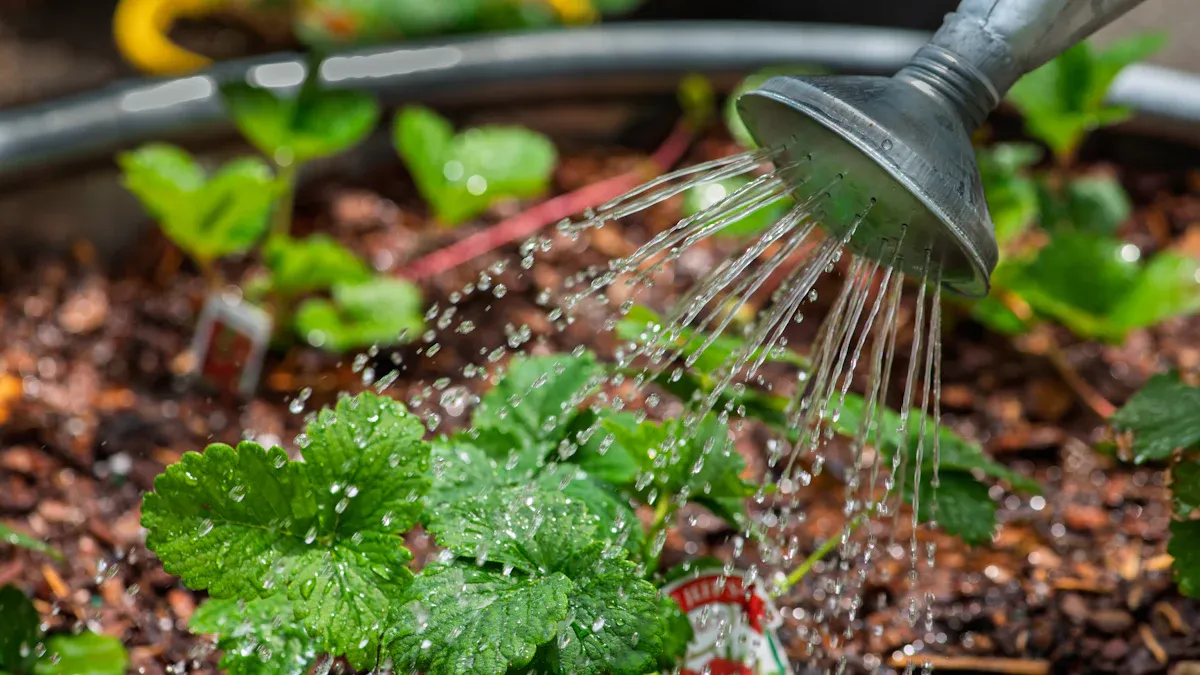
Summer brings heat that can stress your plants. Did you know that for every 10°F increase in temperature above 60°F, your plants need an extra ½ inch of water per week? Standard advice suggests giving them about 1 inch of water weekly, but in hot, dry weather, that can double. Understanding how to water plants properly helps keep them healthy and thriving.
Plant Water Needs
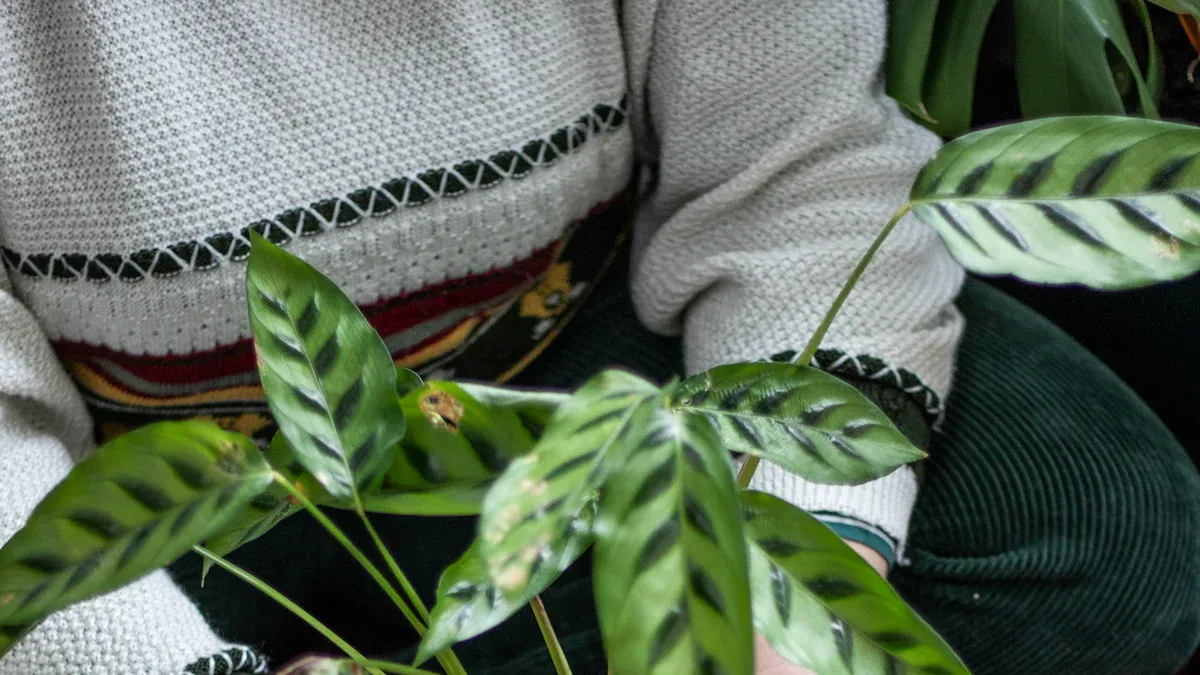
Understanding your plants’ water needs is crucial, especially during the hot summer months. Several factors influence how much water your plants require:
Factors Influencing Water Needs
Climate: In sunny and hot climates, your plants need more water than in cooler, cloudy areas.
Crop Type: Different plants have varying water needs. For example, rice and sugarcane require more water than beans and wheat.
Growth Stage: Mature plants typically need more water than newly planted ones.
Humidity: Higher humidity can reduce water needs, while dry conditions increase them.
Windspeed: Windy days lead to higher water usage, as plants lose moisture more quickly.
Research shows that during summer, dry air and high temperatures significantly increase how much water plants need. In fact, some studies indicate that water uptake can be three to four times greater in summer compared to winter!
Signs of Watering Issues
It’s essential to recognize when your plants are not getting the right amount of water. Here are some common signs:
Sign | Description |
|---|---|
Yellowing Leaves | Leaves turn yellow, especially around the midrib, indicating stress. |
Wilting | Leaves droop due to lack of water, making them appear lifeless. |
Dark Brown Tips | Leaf tips dry out, signaling potential root damage from overwatering. |
Leaf Drop | Both new and old leaves may drop as a response to excess water. |
By paying attention to these signs, you can adjust your watering routine to keep your plants healthy and thriving throughout the summer.
Proper Watering Techniques
Timing for Watering
When it comes to watering your plants, timing is everything. You want to make sure your plants get the moisture they need without losing it to the sun. Here are some tips for the best times to water:
Water in the Morning: Aim to water your plants early, ideally before 10 AM. This timing allows the plants to absorb moisture before the heat of the day kicks in. Plus, it helps tissues fill out, which is great for plant health.
Avoid Midday Watering: Watering during the hottest part of the day can lead to significant evaporation. Your plants won’t get the hydration they need, and you’ll waste water.
Evening Watering: While watering in the evening can be tempting, it’s not the best choice. Leaves may stay wet overnight, creating a perfect environment for fungal diseases.
Factor | Morning Watering (Before 10 AM) | Evening Watering (After 6 PM) |
|---|---|---|
Water Efficiency | Excellent. Minimal evaporation, maximum soil absorption. | Good. Low evaporation, but water sits on soil overnight. |
Disease Prevention | Excellent. Foliage dries quickly in the sun, preventing fungal growth. | Poor. Leaves stay wet overnight, creating ideal conditions for mildew and blight. |
Plant Hydration | Excellent. Prepares plants for the heat of the day. | Good. Rehydrates plants after a hot day, but they enter the night wet. |
Weed Growth | Less encouragement for weed germination on the surface. | Can encourage germination of weed seeds on the damp surface overnight. |
Techniques for Effective Watering
Now that you know when to water, let’s talk about how to do it effectively. Here are some techniques to ensure your plants get the right amount of water:
Deep Watering: This technique involves watering deeply and less frequently. It encourages roots to grow deeper into the soil, making them more drought-resistant. Aim to water 12 to 18 inches down, where the roots can access moisture more effectively. Deep watering helps prevent wilting and browning foliage during those hot summer days.
Avoid Leaf Wetting: When watering, try to keep the foliage dry. Wet leaves can lead to fungal diseases, especially in humid conditions. Use a soaker hose or drip irrigation to deliver water directly to the soil.
Container Plants: If you’re growing plants in pots, choose the right pot and soil. Unglazed pots dry out faster, while self-watering pots help maintain moisture. Always check moisture levels using the finger test—stick your finger into the soil to see if it feels dry before watering. Make sure to water thoroughly so that moisture reaches the bottom of the pot.
Monitor Plant Needs: Different plants have different moisture requirements. Newly planted plants need daily watering for the first week, while established plants thrive on deep, infrequent watering. Adjust your routine based on the specific needs of your plants.
By following these proper watering techniques, you can ensure your plants stay healthy and vibrant throughout the summer months.
Adjusting for Hot Summer Months
Soil Moisture Checks
Checking soil moisture is essential during the hot summer months. You want to ensure your plants get enough water without overdoing it. Here are some effective ways to check for soil moisture:
Finger Test: Stick your finger into the soil about 2 inches deep. If it feels dry, it’s time to water. For potted plants, check the top 1-3 inches of soil.
Garden Trowel: Use a garden trowel or a wooden dowel to dig a small hole. This method helps you see how deep the moisture reaches.
Soil Moisture Meter: Consider using a soil moisture meter for a quick reading. These devices can give you a good idea of moisture levels deeper in the soil. However, remember that they may not be as accurate as manual checks. Experienced gardeners often prefer the finger test for its reliability.
By regularly checking for soil moisture, you can adjust your watering schedule based on your plants’ needs. During extreme heat, you might need to water more frequently, especially for new plantings that have smaller root systems.
Frequency of Watering
The frequency of watering can vary based on temperature, plant type, and soil conditions. Here are some tips to help you determine how often to water:
New Plantings: Prioritize watering new plants. They need more attention as they establish their roots. Water them daily if the soil feels dry.
Established Plants: For established plants, aim to water deeply 2-3 times a week. This encourages deeper root growth, helping them withstand heat better.
Container Plants: If you have plants in pots, they may need watering twice a day, especially in hot and windy conditions. Always check the soil moisture before watering.
Mulch Application: Applying mulch around your plants can significantly reduce watering frequency. Mulch retains moisture, keeps the soil temperature stable, and creates a healthier environment for roots. Organic mulches, like wood chips, are particularly effective in conserving moisture during high temperatures.
During heatwaves, check soil moisture daily. If the soil is dry 2-3 inches below the surface, it’s time to water. Water early in the morning to minimize evaporation and help your plants hydrate before the heat of the day.
By adjusting your watering frequency and checking soil moisture regularly, you can keep your plants healthy and thriving throughout the hot summer months.
To keep your plants thriving in the summer heat, remember these key tips:
Water early in the morning to reduce evaporation.
Use mulch to help retain soil moisture.
Check soil moisture regularly to avoid under-watering.
By following these practices, you can ensure your plants stay healthy and resilient throughout the summer.
