

Have you ever watched your beloved houseplant wilt after a few days of care? Overwatering often sneaks up on even the most dedicated plant parents. Recent studies show that overwatering ranks as the leading cause of houseplant death, affecting everyone from beginners to seasoned gardeners. Understanding how to prevent overwatering can keep your plants healthy and thriving.
Key Takeaways
Overwatering is the leading cause of houseplant death. Recognize signs like yellowing leaves and mushy roots to act quickly.
Always check soil moisture before watering. Stick your finger into the soil; if it feels dry, it’s time to water.
Use pots with drainage holes to prevent water accumulation. Proper pot selection helps maintain healthy roots and soil.
What is Overwatering?
Overwatering happens when you give your houseplants too much water or when the soil stays wet for too long. This can lead to serious problems for your plants. Here are some common signs of overwatering:
Soft, limp leaves with yellow or brown tips.
A yellow halo between green and brown areas on leaves.
Brown spots on leaves.
Mushy stems, especially at the base.
Lack of new growth.
Roots that look mushy or discolored.
Soil that feels excessively wet and may smell bad.
Fungus or mold growing on the soil.
Fungus gnats buzzing around the soil.
Understanding the causes of overwatering is crucial for keeping your plants healthy. Here are some common reasons why overwatering occurs:
Roots sit in waterlogged soil, which prevents them from breathing.
Overwatering is more likely during slow growth periods, like winter or in low-light conditions.
Pots without proper drainage can trap excess water, leading to overwatering.
The effects of overwatering can be severe. When plants receive too much water, it can lead to root rot, which is the decay of plant roots due to excess moisture. This creates a perfect environment for harmful fungi and mold to thrive. Here are some effects of overwatering on your plants:
Limited oxygen causes roots to switch to anaerobic respiration, which produces less energy.
Waterlogged soil restricts oxygen availability, damaging roots and weakening the plant.
Beneficial microorganisms that help plants thrive decline in poorly aerated soil, allowing harmful pathogens to take over.
Nutrient leaching occurs, making essential nutrients less available to the plant.
Increased humidity from overwatering can encourage mold growth in your home.
Preventing overwatering is essential for long-term plant health. A balance of air and water is vital for healthy growth, and overwatering disrupts this balance. By understanding what overwatering is and its impact, you can take steps to ensure your houseplants thrive.
Signs of Overwatering
Recognizing the signs of overwatering early can save your plants from serious damage. Two of the most common indicators are yellowing leaves and root rot. Let’s dive into these signs so you can keep your houseplants healthy.
Yellowing Leaves
One of the first signs of overwatering is yellowing leaves. You might notice that the leaves start to turn a pale yellow or even brown, especially at the tips. This discoloration often indicates that the roots are struggling to absorb nutrients due to excess moisture.
Here are some key signs to look for:
Yellow or brown limp leaves: These leaves may droop and feel soft to the touch.
Dropping leaves: Both old and new leaves may fall off the plant.
Brown spots or edges: You might see these accompanied by a yellow halo around the affected areas.
Mold or fungus: If you spot mold on the soil surface, it’s a clear sign that your plant is getting too much water.
Over 60% of yellowing leaf cases in houseplants are attributed to overwatering. If you catch this issue early, you can often reverse the damage. Dr. Torres notes that early intervention can lead to recovery rates exceeding 80% for common houseplants. So, keep an eye on those leaves!
Root Rot
Root rot is another serious consequence of overwatering. When roots sit in waterlogged soil, they can decay, leading to a host of problems for your plant. Here’s what to watch for:
Yellowing or wilting leaves: These symptoms indicate that the plant is not effectively absorbing water and nutrients.
Brown or black roots: Healthy roots should be white or light tan. If they appear dark and mushy, rot is likely present.
Foul smell: A strong, unpleasant odor from the soil can signal decaying root tissues.
Mushy or slimy roots: Healthy roots should feel firm, while rotten roots will feel soft and squishy.
If you suspect root rot, take immediate action. Stop watering your plant and remove any standing water. You can also aerate the soil by poking holes to introduce air. If the roots are severely damaged, consider trimming the affected areas or even repotting the plant in fresh, dry soil.
By being vigilant and recognizing these signs of overwatering, you can help your houseplants thrive and avoid the pitfalls of root rot.
Best Practices to Prevent Overwatering
To keep your houseplants happy, you need to adopt some best practices. Here are two key strategies to help you prevent overwatering.
Check Soil Moisture
Before you water, always check the soil moisture. This simple step can save your plants from soggy soil and waterlogged roots. Here’s how you can do it:
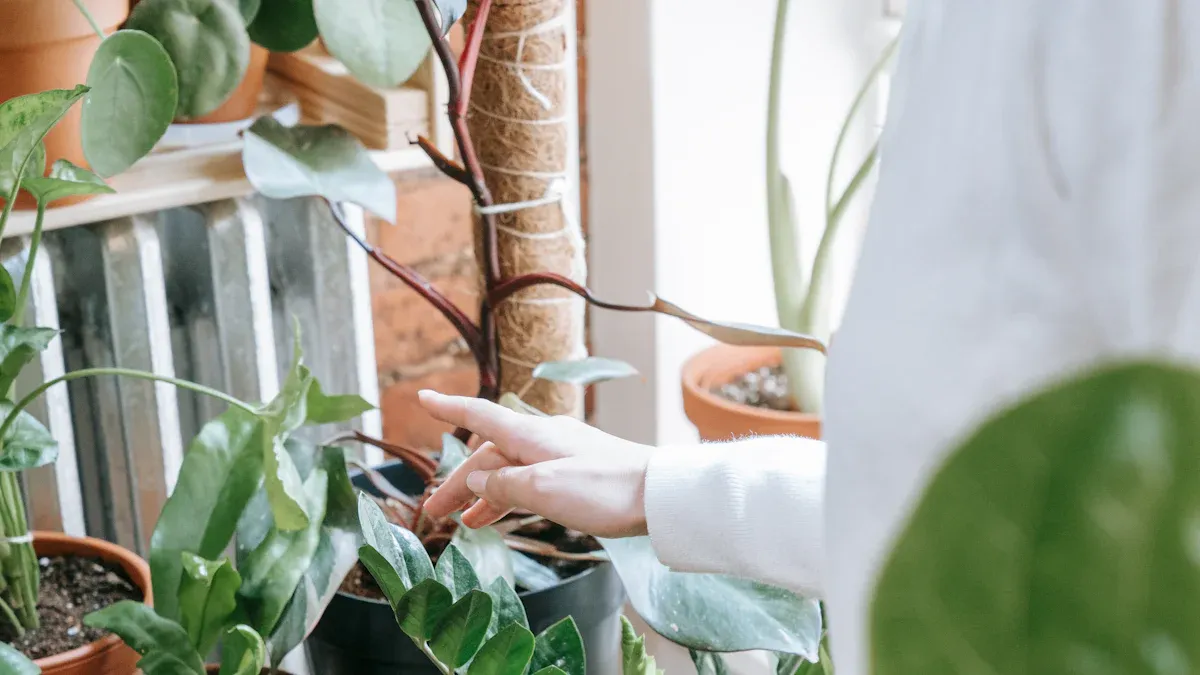
Stick your finger into the soil up to the second knuckle. If it feels dry at that depth, it’s time to water.
Use a moisture meter for larger pots. These tools can help you gauge moisture levels more accurately.
Wait an extra day or two before watering if you’re unsure. Underwatering is generally less harmful than overwatering.
By checking the top inch or two of soil for dryness, you can develop proper watering techniques that keep your plants thriving.
Use Proper Pots
Choosing the right pot is crucial for preventing overwatering. Here are some tips:
Ensure drainage holes: Always select pots with drainage holes. This feature allows excess water to escape, preventing root rot.
Consider pot materials: Unglazed clay pots are great because they naturally regulate moisture. Self-watering containers can also help maintain consistent hydration.
Avoid water accumulation: Without proper drainage, water can pool at the bottom, leading to soggy soil and unhealthy roots.
By following these practices, you can create a healthy environment for your houseplants. Remember, a little attention to soil moisture and pot selection goes a long way in keeping your plants vibrant and flourishing!
To keep your houseplants thriving, remember these key points:
Overwatering can lead to root rot and attract pests.
Monitor for signs like yellowing leaves and drooping.
Ensure pots have drainage holes and water deeply, allowing soil to dry out.
Stay mindful of your watering habits, and your plants will flourish! 🌱
FAQ
How often should I water my houseplants?
Water your plants when the top inch of soil feels dry. This usually means watering every 1-2 weeks, depending on the plant type and environment.
Can I save a plant from overwatering?
Yes! Remove it from the pot, trim damaged roots, and repot in dry soil. Adjust your watering habits to prevent future issues.
What type of pot is best for houseplants?
Choose pots with drainage holes. Materials like unglazed clay help regulate moisture, keeping your plants healthy and happy.
