

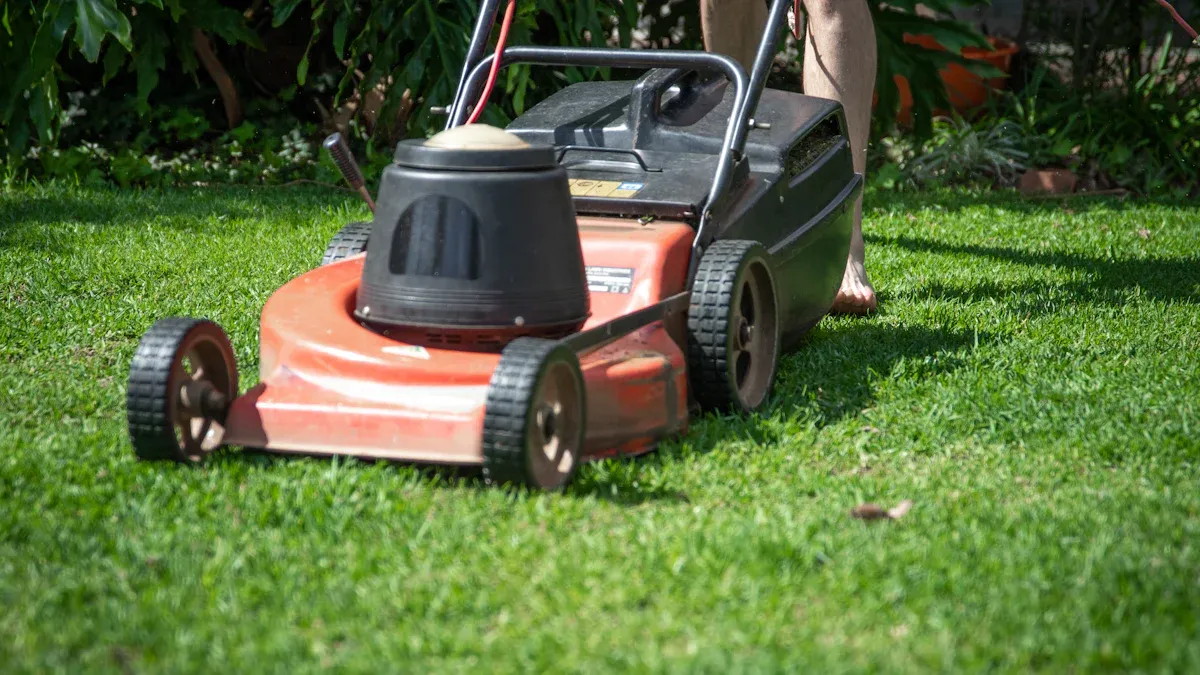
Seasonal lawn care plays a vital role in achieving healthy grass. Each season presents unique challenges and opportunities for your lawn. For instance, applying balanced fertilizer in spring promotes abundant growth. Deep watering encourages strong root systems, while slow-release fertilizers enhance winter resilience. By following specific lawn care tips tailored to each season, you ensure your grass remains lush and vibrant throughout the year.
Key Takeaways
Each season requires specific lawn care tasks to maintain healthy grass.
Proper preparation in spring, summer, fall, and winter ensures year-round lawn health.
Regular maintenance, like mowing and watering, improves the longevity of your lawn.
Address common lawn problems promptly to prevent long-term damage.
Implementing these seasonal tips can enhance your lawn’s appearance and property value.
Spring Lawn Care Tips
Spring Tasks
Spring is the perfect time to rejuvenate your lawn after winter. Start by cleaning up any debris left from the colder months. This includes fallen branches and leaves. Raking the lawn helps break up thatch, which promotes healthy grass growth. Additionally, consider conducting a soil test. This test evaluates soil health, identifies pH levels, and reveals nutrient deficiencies. Knowing this information allows you to apply targeted treatments that foster a vibrant lawn.
Here are some essential tasks to complete in spring:
Clean up winter debris.
Rake the lawn to promote growth.
Test your soil for nutrient levels.
Water your lawn to ensure it receives about one inch of water per week. You can use empty tuna cans to measure the water applied.
Common Spring Problems
As your lawn wakes up, you may encounter some common issues. One prevalent problem is dead patches of grass. These patches often result from factors like cold, wet winters, excessive nitrogen, or poor soil drainage. Another issue is the emergence of grassy weeds, such as crabgrass and yellow nutsedge. These weeds compete with your grass for nutrients and water.
Problem Type | Example | Description |
|---|---|---|
Grassy Weeds | Crabgrass | An annual weed that thrives in compacted lawns and can outcompete other grasses over time. |
Sedge Weeds | Yellow Nutsedge | Competes with lawn grass shortly after emergence in spring and continues throughout the summer. |
Soil Issues | Compacted Soil | Affects lawn health by creating conditions favorable for disease due to improper aeration. |
Solutions for Spring Issues
To tackle dead grass and bare spots, follow these steps:
Remove dead grass and debris.
Loosen the soil by scratching the surface.
Scatter grass seed suitable for your climate.
Lightly rake the seeds into the soil for good contact.
Optionally, fertilize to boost growth.
Cover with mulch to retain moisture.
Water regularly until seeds germinate.
By implementing these spring lawn care tips, you can ensure a healthy and vibrant lawn throughout the season. Remember, consistent seasonal lawn maintenance is key to preventing future issues and promoting lush grass growth.
Summer Lawn Care Tips
Summer Tasks
During summer, your lawn needs special attention to thrive. Start by mowing your grass at the right height. For warm-season grasses like Bermuda, keep the height between 1 to 2 inches. For cool-season grasses, aim for 3 to 4 inches. Here’s a quick reference table for mowing heights:
Grass Type | Recommended Mowing Height |
|---|---|
Cool Season Grasses | 3 to 4 inches |
Warm Season Grasses | 2 to 2.5 inches |
Bermuda Grass | 1 to 2 inches |
Kentucky Bluegrass | 2.5 to 3.5 inches |
Tall Fescue | 3 to 4 inches |
Zoysia Grass | 1 to 2 inches |
St. Augustine Grass | 2.5 to 4 inches |
Watering is crucial during hot months. Aim for about 1 inch of water per week, including rainfall. This helps your grass develop deep roots, making it more drought-resistant.
Common Summer Problems
Summer brings its own set of challenges for your lawn. You may notice issues like:
Soil compaction
Thatch buildup
Fungal diseases (e.g., brown patch, dollar spot)
Heat stress
Drought damage
Pest infestations
These problems can hinder your lawn’s health and appearance.
Solutions for Summer Issues
To combat drought and heat stress, focus on deep watering practices. Water your lawn early in the morning to minimize evaporation. Aerating your lawn can also help reduce soil compaction, allowing roots to grow deeper.
For pest control, regularly inspect your lawn for signs of infestations. If you spot pests, consider using organic treatments or insecticidal soaps.
Incorporate preventive measures like overseeding and proper fertilization. Use slow-release fertilizers to avoid stressing your grass during hot weather.
By following these summer lawn care tips, you can maintain a healthy and vibrant lawn even in the heat.
Fall Lawn Care Tips

Fall Tasks
As fall approaches, you should focus on preparing your lawn for winter. Start with final mowing. Lower your mower height to about 2 to 3 inches. This helps prevent snow mold from developing under snow cover. Next, manage fallen leaves. Heavy leaf accumulation can smother your grass. Rake or mulch leaves to keep your lawn healthy.
Consider aerating your lawn. Aeration relieves soil compaction and promotes healthy grass growth. This process allows air, water, and nutrients to reach the roots more effectively. Additionally, overseeding is crucial during this season. It targets thin areas by adding new grass seed, improving density and overall lawn health. Fall is ideal for this because cooler temperatures encourage new grass growth.
Here’s a quick checklist of essential fall tasks:
Final mowing at a lower height.
Leaf removal or mulching.
Aeration to relieve compaction.
Overseeding to enhance density.
Applying fall fertilizer to strengthen roots.
Common Fall Problems
Fall brings its own set of challenges. You may notice fungal diseases like brown patch and dollar spot. Brown patch causes circular brown patches in cool, damp conditions. Dollar spot leaves small tan spots with reddish-brown borders, often in low-nitrogen lawns. Other issues include leaf spot and rust, which thrive in wet conditions.
Solutions for Fall Issues
To prevent and treat these fungal problems, follow these tips:
Fertilize with slow-release fertilizers instead of high nitrogen ones.
Water your lawn deeply but less frequently, about an inch per week.
Ensure good drainage to prevent water accumulation.
Clean up debris regularly to reduce breeding grounds for fungus.
If you spot visible fungus symptoms, treat them promptly with fungicides. Consider organic treatments like neem oil for smaller areas. By implementing these fall lawn care tips, you can maintain a healthy lawn and prepare it for the winter months ahead.
Winter Lawn Care Tips
Winter Tasks
Winter preparation is essential for maintaining a healthy lawn. Start by performing a final mow at the optimal height for your grass type. This helps prevent snow mold. Next, aerate the soil to improve root health and reduce puddling. You should also add a thin layer of compost or mulched leaves. This layer retains moisture and provides nutrients. Limit foot traffic on frozen grass to prevent damage. Clean up heavy layers of leaves and debris to avoid mold growth. Finally, winterize your irrigation system to prevent freezing.
Here’s a checklist of winter tasks:
Perform a final mow at the correct height.
Aerate the soil to enhance drainage.
Add compost or mulched leaves for nutrients.
Limit foot traffic on frozen grass.
Clean up leaves and debris.
Winterize your irrigation system.
Common Winter Problems
During winter, lawns face several challenges. Common issues include winterkill, which occurs due to extreme cold and fluctuating temperatures. This can lead to turfgrass dying from cold-related stress. Another problem is winter desiccation, where grass loses moisture from dry winds and frozen soil. This often results in straw-colored patches. Snow mold is a fungal disease that thrives under snow cover, especially in moist conditions with poor airflow.
Solutions for Winter Issues
To mitigate winter problems, you can take several proactive steps. Prevent snow mold by mowing your grass shorter in the fall and improving drainage. Water the soil late in autumn to prevent desiccation. Avoid standing water to minimize ice damage. You can also dethatch your lawn to improve airflow and water penetration. Core aeration enhances drainage and reduces compaction, which helps prevent snow mold. Consider using a balanced or low-nitrogen fertilizer in late fall to promote root growth and reduce disease susceptibility.
By following these winter lawn care tips, you can protect your lawn from cold damage and ensure it recovers quickly in spring.
Maintaining healthy grass requires attention throughout the year. Each season brings specific tasks that you must complete to ensure your lawn thrives. Here are some key takeaways:
Each season requires specific lawn care tasks.
Proper preparation ensures year-round health.
Regular maintenance improves lawn longevity.
Professional care enhances growth and resilience.
By following these seasonal tips, you can enjoy a vibrant lawn that enhances your property’s curb appeal. Studies show that a well-maintained lawn can increase property values by up to 20%. Additionally, consistent care reduces the need for chemical fertilizers and pesticides, promoting a healthier environment. Start implementing these practices today for a lush, green lawn tomorrow! 🌱
FAQ
What is the best time to fertilize my lawn?
You should fertilize your lawn in early spring and fall. This timing promotes healthy growth and strengthens roots. Use a slow-release fertilizer for optimal results.
How often should I water my lawn?
Water your lawn about once a week, providing around 1 inch of water. Adjust based on rainfall and temperature to keep your grass healthy.
How can I prevent weeds in my lawn?
To prevent weeds, maintain a healthy lawn through proper mowing, watering, and fertilization. Regularly aerate your lawn and overseed to improve density.
What should I do if my lawn has brown patches?
Brown patches often indicate drought stress or disease. Water deeply and less frequently. If the problem persists, consider aerating and applying fungicides as needed.
How can I prepare my lawn for winter?
Prepare your lawn for winter by mowing at the correct height, aerating the soil, and adding compost. Clean up debris to prevent mold growth.
