A front yard can look better fast with a few simple garden updates. Fresh flower beds, neat edging, and mulch make the space look cleaner right away. Layered shrubs, easy flowers, and entry planters add color and structure without a lot of upkeep. Porch accents, soft lighting, and a bold front door pull the whole yard together and boost curb appeal.
Refresh Your Front Yard Garden Beds
As your front yard beds feel flat or messy, a simple refresh can make the whole house look more welcoming. You create that inviting feeling via giving each plant a clear role. Try layered planting, with low groundcovers in front, shrubs through the middle, and taller grasses or small trees behind. This builds depth, adds movement, and makes your home feel thoughtfully cared for.
Then bring in vertical elements to lift the whole space. A tall planter, slim trellis, or decorative screen can frame your entry and soften blank walls. These touches help a small yard feel styled, not crowded.
As you reshape the beds, avoid lining everything up in one row. Instead, group plants with purpose, so your yard feels warm, balanced, and ready to welcome neighbors, friends, and family home.
Add Easy Front Yard Flowers
Because front yard flowers should make your home feel cheerful, not turn into a full-time job, start with easy bloomers that look good with very little fuss. Choose reliable favorites like zinnias, marigolds, coneflowers, salvia, and black-eyed Susans, so your yard feels welcoming without constant work.
To keep things friendly and pulled together, repeat a few flower types instead of planting one of everything. That simple rhythm gives you seasonal bloom color and helps your entrance feel warm, calm, and cared for.
Whenever you love a relaxed look, tuck in cottage flower mixes with sturdy annuals and perennials that fill gaps fast. Then add a few flowering shrubs or roses nearby for longer-lasting color. You’ll get a front yard that looks lived in, loved, and easy to belong to, even on busy weeks.
Define Beds With Clean Edging
You can make your front yard look instantly neater whenever you define each bed with crisp borders and sharp lines.
Choose edging like brick, stone, metal, or river rock to give your plants a clear frame and add a polished feel.
Provided you want less upkeep, stick with low-maintenance edging that keeps grass out and helps your garden stay tidy with less work.
Crisp Border Materials
Although plants bring the color and softness, crisp border materials give your front yard its shape and make each bed look neat on purpose, not like it slowly wandered into the lawn.
When you add stone edging or brick borders, your garden feels settled, welcoming, and clearly cared for, which helps your whole home fit beautifully into the block.
You don’t need anything flashy. Choose materials that match your house style and repeat them across beds for a calm, pulled-together look.
Stone edging feels sturdy and timeless, while brick borders add warmth and classic charm. Concrete, metal, and river rock can work too when you want a simpler mood.
Keep the scale right for your yard, and your planting areas will feel framed, polished, and easy to maintain, like they truly belong there every season.
Sharp Bed Lines
Once your border materials are in place, sharp bed lines make the whole front yard look cleaner, calmer, and far more intentional. They give every plant a home, so your space feels welcoming instead of scattered.
Whenever you shape curves or angles with care, bed geometry guides the eye and helps your yard feel connected to the house. Just as significant, steady edge alignment keeps the layout neat from the street, walkway, and porch.
That quiet order helps your home feel like it belongs in the neighborhood, and so do you.
- Match curves to your walkway shape
- Keep corners crisp and easy to read
- Check lines from the street often
- Repeat shapes for a unified feel
- Refresh edges whenever soil or mulch shifts
Even simple lines can make your planting beds feel thoughtful, finished, and proudly yours.
Low-Maintenance Edge Options
Because bed lines only stay sharp whenever they’ve support, low-maintenance edging gives your front yard the clean structure that keeps mulch, rock, and soil where they belong. It also helps your whole yard feel finished, welcoming, and easy to trust.
For a classic look, choose stone edging. It blends with shrubs, groundcovers, and gravel, and it handles weather without much fuss. If you want a sleeker style, metal border accents create crisp lines that quietly guide the eye toward your walk and entry.
Both options reduce spreading, limit trimming, and make routine care feel lighter. That matters when you want a yard that looks pulled together without stealing your weekends. With the right edge in place, your planting beds look intentional, your home feels more inviting, and you feel right at home too.
Mulch Garden Beds for a Polished Look
When you add mulch to your front garden beds, the whole yard looks cleaner, richer, and more put together right away. It gives your home that cared-for look neighbors notice and admire. You also help the soil hold moisture, block weeds, and protect roots, so your beds stay neat with less effort. Choose mulch texture contrast to make plants stand out, and try decorative mulch colors that fit your home’s style.
- Dark mulch makes green leaves and blooms pop.
- Pine bark adds a warm, natural feel.
- Fine mulch looks smooth and tidy near formal homes.
- Chunky mulch suits relaxed, cottage-style spaces.
- Fresh mulch tells everyone this home is loved.
That simple layer helps your entry feel welcoming, connected, and ready to belong beautifully on your street every single season.
Layer Shrubs for Fuller Planting
Whenever your front yard feels flat or a little empty, layering shrubs can fix that fast and make the whole space feel fuller, softer, and more welcoming. You create depth whenever you group shrubs in front, middle, and back zones instead of lining them up in one stiff row. That simple shift makes your yard feel designed, not pieced together.
Start with plant layering that uses mixed heights, rounded forms, and different leaf textures. Place lower shrubs near the walkway, medium growers closer to the house, and taller choices near corners or porch edges. This helps frame your home and makes everything feel connected. You can repeat two or three shrub types to keep the look calm and friendly. Even a small space feels richer this way, like it truly belongs in the neighborhood and welcomes people in.
Cover Bare Spots With Ground Cover
After layering shrubs for fullness, you can use ground cover to fill the empty spaces and make your front yard look finished.
Fast-spreading options work especially well along walkways, around trees, and on small slopes where grass often struggles.
Should you want less upkeep, you can choose low-maintenance varieties that spread well, soften bare soil, and keep your beds looking neat.
Fast-Spreading Ground Covers
Often, the fastest way to make a front yard feel full and cared for is to cover bare soil with fast-spreading ground covers that knit the space together.
You get quick color, softer edges, and better soil erosion control without making the yard feel fussy. Even better, many choices offer shade tolerance, so you can fill tricky areas and still keep everything welcoming.
- Creeping thyme brings color and a light scent near paths.
- Ajuga spreads fast and adds rich leaves where turf struggles.
- Sedum handles heat and dry spots with very little fuss.
- Sweet woodruff gives a gentle, neighborly look in dim spaces.
- Vinca fills gaps quickly and helps your yard look connected.
When your front yard looks stitched together, your home feels like it truly belongs on the block.
Best Spots To Plant
A few smart planting spots can turn patchy, empty areas into a front yard that feels finished and welcoming.
Start upon noticing where soil shows through near walkways, mailbox posts, tree bases, and along foundation edges. Those gaps make your yard feel disconnected, so filling them helps everything belong.
Next, use sun exposure mapping to see which areas get full sun, part shade, or deep shade. That simple step helps you choose the best planting zones instead of guessing and replanting later. Also look for spots where rain runs off, where mulch slides, or where grass struggles on slopes. These trouble areas often welcome ground cover best.
In case you want a richer look, connect bare spots between shrubs, borders, and entry beds so your whole front yard feels tied together and cared for.
Low-Maintenance Coverage Options
When grass won’t fill in and mulch keeps washing away, ground cover gives you an easy, attractive fix that makes bare spots feel intentional instead of forgotten. You can choose drought tolerant covers that spread neatly, soften edges, and make your yard feel welcoming without constant work.
In shadier spots, evergreen filler plants keep the front view tidy through every season, so your home always feels cared for.
- Use creeping thyme where you want color and light foot traffic.
- Plant ajuga or pachysandra to knit shady gaps together fast.
- Edge beds initially, so ground cover looks planned, not messy.
- Pair low mats with shrubs to create the layered look neighbors admire.
- Repeat one or two varieties, so your yard feels calm, connected, and inviting.
That way, your front yard looks like it truly belongs.
Pick Low-Maintenance Front Yard Plants
Start with low-maintenance plants that look good in every season, so your front yard feels welcoming without turning into a full-time job. You want a space that fits your life and still makes the whole block feel cared for. Choose evergreens like boxwood, arborvitae, or taxus for year round greenery, then mix in drought tolerant shrubs and a few native flowering shrubs for easy color.
| Plant type | Why it works |
|---|---|
| Boxwood | Neat shape, simple care |
| Arborvitae | Privacy and strong structure |
| Native shrubs | Less watering, local charm |
| Succulents in pots | Texture with almost no fuss |
This mix gives your yard a settled, friendly look. It also helps your home feel connected to the neighborhood, without asking for your weekends back. You’ll keep things polished, calm, and easy.
Line Your Walkway With Garden Borders
Because your walkway leads every guest to the front door, the border around it should do more than fill space. It should guide people in and make your home feel welcoming from the initial step.
Use walkway border patterns that feel tidy yet warm, like layered groundcovers, rounded shrubs, and a few ornamental grasses. Then add path edge accents with brick, stone, or river rock to give the line a clear, cared-for finish.
- Layer short and medium plants for depth
- Repeat shapes to create calm rhythm
- Use stone edging for neat definition
- Keep colors balanced, not busy
- Match both sides for a sense of harmony
When your borders feel intentional, your entry feels easier to trust. That quiet order helps guests feel like they already belong before they even knock.
Use Front Yard Planters by the Entry
A pair of front yard planters near the entry can make your home feel cared for before anyone reaches the door. They create warm entry accents that help guests feel welcome and help you feel proud every time you come home.
To make them work hard, choose porch containers that fit your home’s style and your daily life. Go with sturdy pots, then add easy plants like boxwood, grasses, herbs, succulents, or seasonal flowers for color. Next, repeat one or two plant types so the look feels calm, not busy.
If your yard is small, use tall planters to lift the eye and add height without taking much space. Also, refresh the soil, trim faded blooms, and swap plants throughout the season. That simple habit keeps your entry feeling alive, friendly, and beautifully lived in year-round.
Frame the Porch With Symmetrical Plants
You can give your porch an instant sense of order by placing matching planters on both sides of the entry.
Then keep the look calm and polished by choosing balanced plants with similar shape, height, and color.
This simple setup makes your front yard feel welcoming, intentional, and easy to build on later.
Matching Planter Placement
For an easy upgrade that looks polished right away, place matching planters on both sides of the porch to create a clean, balanced frame around your entry. This simple move makes your home feel welcoming and pulled together.
Once you choose the right planter scale, your porch feels connected to the house instead of crowded or empty. Container repetition also gives your entry a calm rhythm that helps guests feel at home before they even knock.
- Match planter height to porch width for visual comfort
- Repeat shape and finish to build a sense of order
- Keep spacing even so the entry feels intentional
- Align planters with railings, columns, or steps for unity
- Use sturdy containers that echo your home’s style and make everyone feel they belong
Balanced Plant Selection
Few design choices make a porch look more calm and polished than framing it with matching plants on both sides.
As you mirror shapes and sizes, your entry feels welcoming, settled, and easy to love. You don’t need many varieties, either. A pair of boxwoods, dwarf evergreens, or flowering shrubs can create instant balance.
To keep the look natural, match the plants’ height to your porch scale and repeat the same containers or bed shapes. Then add subtle contrast through texture and form, like rounded shrubs with upright grasses or smooth leaves with soft blooms. This keeps symmetry from feeling stiff.
For even more unity, use plant color harmony while choosing two or three related shades instead of a busy mix. Your porch will feel thoughtfully styled, and your home will fit right into the neighborhood beautifully.
Add Front Yard Garden Lighting
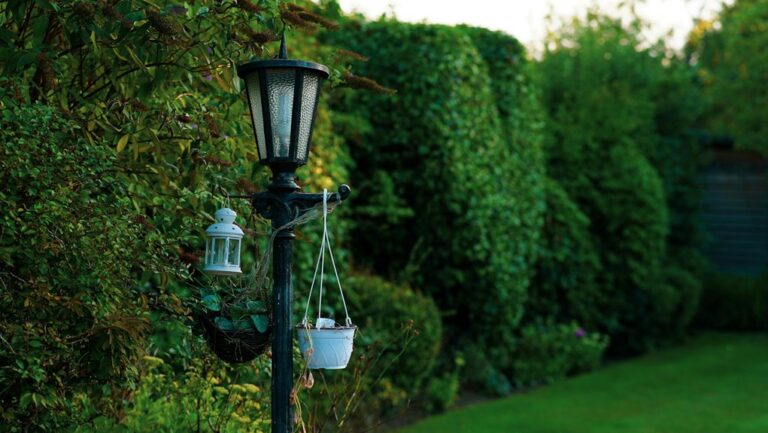
Because front yard lighting does more than help you see at night, it can shape the whole feeling of your garden and make the entrance look warm, safe, and carefully designed.
As you choose soft, inviting light, your home feels easier to approach and more connected to the neighborhood after sunset.
- Use path lighting placement to guide guests clearly.
- Tuck lights near shrubs to add depth and comfort.
- Choose solar accent fixtures for an easy, welcoming upgrade.
- Highlight texture in stone, mulch, or grasses with gentle beams.
- Keep brightness low so your yard feels calm, not harsh.
This works especially well after balanced planting, because light helps every layer feel noticed.
You create a space that says people belong here, starting at the curb and continuing with every step toward home each night.
Add a Focal Point by the Front Door
While lighting helps your yard feel warm after dark, a focal point near the front door gives people a clear place to look the moment they arrive. You create welcome fast with entry focal accents that feel personal, not staged. Try a tall planter, a bench, or decorative doorway features that echo your home’s style and invite neighbors in.
| Feature | Feeling |
|---|---|
| Tall planter | Warm, grounded welcome |
| Small bench | Friendly gathering spot |
| Trellis with vines | Soft height and charm |
| Bold pot color | Easy personality uplift |
| Seasonal wreath | Shared sense of care |
To deepen that effect, frame the door with symmetry or layered plants so the focal point feels intentional. A pair of evergreens, a flowering container, or a simple ornament helps your entrance feel like it truly belongs.
Frequently Asked Questions
How Do I Choose Plants for My Climate Zone?
Check your USDA zone first, then pick native plants that fit the sun, wind, moisture, and temperature patterns in your yard. This approach helps you build a landscape that grows well in local conditions, asks for less maintenance, and supports steady, healthy color through the seasons.
What Front Yard Upgrades Add the Most Home Value?
Front yard upgrades that raise home value most often include a balanced entryway, layered planting, and durable materials such as stone edging or pavers. These choices give the home a finished look, create a stronger first impression, and make the property feel more inviting from the street.
How Can I Improve Curb Appeal on a Tight Budget?
Refresh curb appeal on a small budget with fresh mulch, clean edging, seasonal containers, and layered planting. Frame the entry with matching evergreens or a tall planter to give the front of the home a neat, inviting finish.
What Are the Best Front Yard Ideas for Small Spaces?
Use layered planting, vertical planters, and balanced symmetry to make a small front yard feel larger. Designers note that layered views can make the space seem up to 30% deeper. Add narrow planting beds, compact evergreens, and one strong focal point to create a polished, welcoming entry.
Do I Need Permits for Walls, Lighting, or Walkways?
Permit requirements for walls, lighting, and walkways depend on your city’s building codes, setback rules, and the scope of the project. Contact your local building department before starting, especially for electrical installations and retaining walls above the height limit set by your municipality.