

A sharp, well-balanced blade makes the difference between a graft that heals cleanly and one that frays at the cambium. Hobbyists restoring an old apple tree, orchard managers running a full season of budding, and curious first-timers all face the same first decision: a dedicated knife, a folding pruner, or a full grafting kit. The picks below cover each of those routes, from a precision Swiss-made straight blade to a 3-in-1 tool that cuts matching scion-and-rootstock profiles in a single squeeze. Think of it as a cheat sheet for matching a tool to the way you actually graft, not just the way the listing describes it.
A Side-By-Side Look

NAYE Grafting Gardening Knife, Curved/Straight Blades

FELCO 3.90 20 Grafting Knife

SZCO Rite Edge Hawkbill Pruning Knife

NAYE 2-in-1 Garden Grafting Tool Kit

PUELDU Grafting Knife With 2 Blades & Tapes

PUELDU Professional Grafting Tool Kit 3-in-1
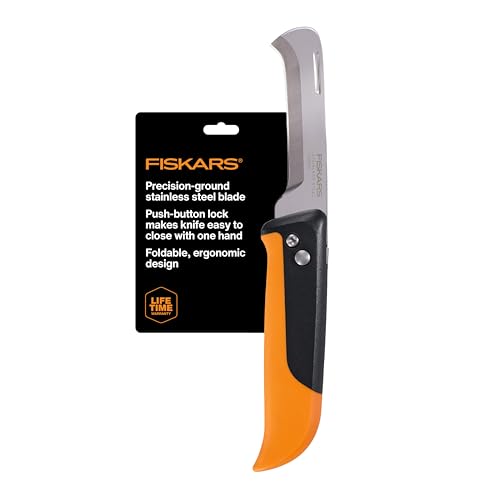
Fiskars Folding Produce Knife

Opinel No. 10 Pruning Folding Knife

Victorinox V39020 Budding Knife

MIDOUWEST Double Blade Grafting Knife
Why These Options Stand Out
For a first grafting knife, simplicity tends to teach the craft better than a feature-loaded option. The NAYE pocket-style knife pairs a curved 2-5/8″ blade and a straight blade in a single tool, with a bark lifter on the back edge for nudging rootstock flaps open without snapping them. The 5CR stainless holds a working edge through a busy weekend of budding, and the natural wood handle stays grippy in cool morning dew.
Anyone restoring a backyard fruit tree, a small rose collection, or a few nursery rootstocks will find the dual-purpose format handy. Unlike the FELCO below, there’s no Swiss pedigree, but the learning curve is gentle and the price stays approachable for someone who isn’t sure how often they’ll graft.
Well-Handled Touches
- Curved and straight blades share one handle, cutting the gear list in half for new grafters.
- The 5CR stainless resists corrosion during long outdoor sessions in damp soil.
- Natural wood handle offers a warm, secure feel that doesn’t get slippery in spring rain.
- Includes grafting tape and plant tags, so the kit is genuinely ready to use on day one.
Trade Offs To Consider
- The 5CR steel sharpens easily but loses its edge faster than harder alloys like SK5.
- The pocket-style design lacks a lockback, so extra care matters around tool belts.
Feature Snapshot
Right Fit For
Beginners grafting a handful of backyard trees each spring who want one tool that handles both cuts without a learning curve.
Swap It Out When
Grafters running long orchard sessions should consider the Victorinox V39020 Budding Knife, whose compact 51 mm straight blade is easier on the wrist during repetitive cuts.
The FELCO 3.90 20 is the kind of tool that disappears in your hand after a few cuts. A 57 mm stainless blade, bevelled on one side and gently curved at the tip, gives you the kind of control that makes whip-and-tongue grafts feel almost automatic. The bark lifter rides the spine of the blade, ready to lift rootstock flaps without slipping.
This is a right-handed tool, and that single detail matters for clean cuts. In a nursery or commercial setting where you might run a hundred grafts a day, the red nylon handle with its standard alloy lining stays comfortable and resists solvents. Compared to the NAYE above, FELCO trades the dual-blade versatility for a noticeably more refined edge geometry.
Strengths Worth Knowing
- Swiss-made stainless blade holds geometry through heavy budding sessions.
- Bark lifter on the blade spine means one less tool in your apron.
- Light, balanced handle keeps fatigue low during long grafting runs.
- Trusted in commercial nurseries for crown, whip, and tongue grafts.
Things To Weigh
- Right-handed bevel means left-handed grafters get a less clean cut.
- The fixed design offers no folding lock for pocket carry between rows.
Feature Snapshot
Best Suited To
Right-handed orchardists and nursery pros who want a precision single-purpose blade for daily grafting work.
Reach For A Different Pick When
Left-handed grafters looking for ambidextrous comfort will get on better with the Opinel No. 10, whose double-beveled curved blade suits either hand.
The hawkbill shape pulls a scion toward you as you cut, which is a real advantage when you’re reaching into a dense bush or a tightly trained espalier. SZCO’s 4″ folding knife leans into that geometry with a stainless blade, a wooden handle that feels honest in the hand, and a lockback mechanism that holds the blade open during real work.
Grafters who also keep a vegetable patch will find the hawkbill curve useful for harvesting cucumbers, peppers, and squash without twisting the stem. The lockback is a step up in safety over the NAYE pocket knife covered above, though it adds a bit of bulk in your apron pocket.
Everyday Perks
- Hawkbill curve draws cuts toward the user, ideal for tight grafting angles.
- Lockback keeps the blade secure during heavy pruning pressure.
- Wooden handle offers a warm, traditional feel for slow, careful work.
Room For Improvement
- Hawkbill geometry isn’t ideal for flat, straight cambium cuts on bench grafts.
- Folding design adds a pivot to clean and oil after each season.
Who Should Grab It
Grafters who also tend a small orchard and want a single folding knife for both budding and produce trimming.
Where A Sibling Pick Shines
Flat-cut specialists working primarily on bench grafts will appreciate the straight geometry of the FELCO 3.90 20 more than this curved hawkbill.
Grafting tool kits promise to take the math out of matching scion and rootstock, and NAYE’s 2-in-1 design leans hard into that idea. The shear body uses a #65 stainless cutting core paired with Japanese SK5 double-edged blades, and three replaceable grafting profiles, including Ω-cut, U-cut, and V-cut, let you match the cut to the species you’re working on.
The included pruning blade is 1/8″ thick and handles leaves, twigs, and small stems without swapping tools. Cuts work on twigs from 3/16″ up to 17/32″ in diameter, which covers most fruit tree work. Compared to a dedicated knife like the FELCO above, the trade-off is bulk in exchange for repeatable, mechanical cuts.
Real-World Strengths
- Three swappable cut profiles remove the trial-and-error of freehand grafting.
- SK5 cutting edges handle repeated use without constant resharpening.
- Twigs between 3/16″ and 17/32″ diameter match most common fruit tree stock.
- ABS plastic body stays light during longer bench sessions.
Honest Caveats
- Mechanical cuts lack the finesse of a hand blade for ornamental species.
- Replacement blades must match the holder exactly, so spares matter.
Key Product Details
Perfect Match For
Home orchardists running multiple fruit tree species who want consistent matching cuts without years of knife practice.
A Better Fit Elsewhere
Traditionalists who prefer the feel of a hand blade and tighter cambium contact will get more satisfaction from the PUELDU Grafting Knife With 2 Blades.
PUELDU’s foldable grafting knife comes with both a curved and a straight blade, plus a bark lifter integrated into the spine, in a body small enough to slip into a back pocket. The rosewood handle gives the tool a noticeably warmer, less plasticky feel than the budget folders, and the stainless steel resists rust through damp spring grafting runs.
Two grafting tapes come in the box, so the kit is ready to use on the first tree. The folding form makes it a friendlier carry than the fixed-blade FELCO above, and the rosewood sets it apart from generic nylon-handled competitors. For light weekend work on a small home orchard, it lands in a comfortable middle ground.
Points In Its Favor
- Curved and straight blades cover both budding and pruning styles.
- Rosewood handle adds grip security in wet conditions.
- Folding design makes it safe to carry in an apron or back pocket.
- Bundled grafting tapes save an extra supply order.
A Few Limitations
- Rosewood needs an occasional conditioning to stay smooth.
- The folding pivot benefits from light oiling after heavy outdoor use.
Whose Shelf It Belongs On
Home growers who want a portable, attractive folder that pulls double duty for grafting and light pruning around the yard.
Consider Something Else When
Anyone running commercial-scale budding will want the heavier, fixed-blade stability of the FELCO 3.90 20 over a folder.
PUELDU’s 3-in-1 kit is built for the orchardist who wants everything in one box: a 2-in-1 pruner with Japanese SK5 high-carbon steel blades, a separate curved and straight grafting knife, plus grafting tapes, labels, and clips. The SK5 edge is hardened to roughly HRC 58-60, which is a noticeable step up from softer stainless options.
The pruner handles branches up to about 1/2″ in diameter, and dual-edge Ω/U/V blades aim to prevent stem crushing on tender scions. This is the most complete package in the roundup, and it’s worth weighing against the simpler NAYE 2-in-1 covered earlier if you want both a pruner and a hand knife in one purchase.
The Case For It
- SK5 high-carbon steel stays sharp through long bench sessions.
- Bundled pruner, knife, tapes, labels, and clips cut separate supply runs.
- Dual-edge blade profiles aim to reduce cambium crushing.
- ABS handles keep the kit light in the field.
Softer Spots
- More parts mean more pieces to keep track of during a busy grafting day.
- Hardened SK5 steel requires a quality stone when sharpening finally comes.
Feature Card
Built With In Mind
Multi-variety orchard owners who want a pruner-and-knife combo without sourcing each tool separately.
Not Your Match When
Minimalists who prefer to keep one tool in their pocket will be happier with the Opinel No. 10 Pruning Folding Knife.
The Fiskars Folding Produce Knife isn’t a grafting knife in the strict sense, but it earns a spot on this list because so many grafters also tend a kitchen garden. A precision-ground stainless blade with a curved tip slips past dense tomato vines or squash leaves to reach the stem without nicking the fruit, and the push-button lock keeps the blade secure during use.
It folds small enough to ride in a garden tote alongside a dedicated grafting knife. For pure budding work, the FELCO above is a stronger choice, but for clean harvest cuts on peppers, eggplant, and soft-stemmed produce, this folder does the job with very little fuss.
Where It Helps
- Curved tip reaches into dense foliage without damaging nearby fruit.
- Push-button lock is intuitive even with cold or gloved hands.
- Folding form factor slips into a garden tote without a sheath.
Small Caveats
- Not designed for bark lifting or cambium cuts, so it complements rather than replaces a grafting knife.
- The push-button lock can stiffen up if sand and soil work into the mechanism.
Who It Suits Best
Garden hobbyists who split their time between a small orchard and a vegetable plot and want one folder for the harvest side.
Look Elsewhere When
Anyone whose focus is heavy budding or bench grafting should reach for the Victorinox V39020 Budding Knife instead.
The Opinel No. 10 has been a vineyard and orchard favorite for generations, and for good reason. A curved 12C27 modified stainless blade, beveled on both sides, cuts ties, prunes shoots, and slices grafting scions with a geometry that feels equally natural in either hand. The Virobloc safety ring locks the blade open or closed, which is a nice touch for travel between rows.
Cleaning is straightforward: warm water, a sponge, and a little dish soap. Compared to the SZCO hawkbill above, the Opinel is a more generalist curve, well suited to grape picking, shrub pruning, and light grafting rather than dedicated bud work.
Useful Highlights
- Curved, double-beveled blade works comfortably for left- and right-handed users.
- 12C27 stainless resists corrosion with only basic cleaning.
- Virobloc ring locks the blade in both open and closed positions.
- Classic beech handle is light and balanced for long days in the vineyard.
Where It Is Less Suited
- The beech handle benefits from occasional oiling to prevent drying and cracking.
- Not a specialist budding blade, so dedicated nurseries may want a more focused tool.
Made For
Vineyard and small-orchard growers who want a versatile, ambidextrous folder that handles grafting, pruning, and tie-cutting in one tool.
Where Another Pick Suits Better
Producers running whip-and-tongue grafts all day will find the FELCO 3.90 20’s single-bevel precision more dependable than this generalist curve.
Victorinox’s V39020 is a compact, no-fuss budding knife built around a 51 mm straight stainless blade with a bark lifter on the back. The 100 mm nylon handle keeps the tool light and easy to control, which makes it a sensible starting point for newcomers who want a brand with a long track record in blades.
Budding and whip grafting are the natural fits here, since the straight geometry and bark lifter support both common techniques. The fixed design trades the folding convenience of the Opinel above for a slimmer profile in the hand during fine cuts.
Noteworthy Benefits
- Straight 51 mm blade gives clean cambium contact for budding cuts.
- Bark lifter on the spine handles the lifting step without a second tool.
- Lightweight 100 mm nylon handle reduces hand strain during practice.
Factors To Consider
- No folding lock, so storage in an apron pocket calls for a sheath or sleeve.
- The straight-only format lacks the versatility of dual-blade options.
The Right Fit
First-time grafters working on a small batch of fruit trees who want a simple, dedicated budding knife from a familiar brand.
Skip It When
Anyone wanting a dual-purpose setup for budding and pruning in one tool should look at the PUELDU Grafting Knife With 2 Blades instead.
MIDOUWEST’s double-blade grafting knife rounds out the list with a familiar format: 2CR13 stainless curved and straight blades paired with a rosewood handle and three rolls of buddy grafting tape. The 2CR13 alloy is a mid-range stainless that holds an edge through small orchard work and resists rust in damp spring soil.
The rosewood handle keeps the grip comfortable during longer runs, and the included buddy tape handles the wrapping step without a separate order. Compared to the PUELDU folder above, this is a fixed, slightly heavier tool, better suited to bench grafting than pocket carry.
What Makes Sense
- Curved and straight blades cover both common cut styles in one handle.
- Rosewood handle gives a warm, secure grip for long sessions.
- Three rolls of buddy tape included for immediate orchard use.
Some Limits To Know
- 2CR13 stainless sharpens easily but loses its edge sooner than higher-carbon options.
- Fixed, non-folding design means it needs a sheath for safe pocket storage.
Spec Overview
Best Suited To
Home orchardists who want a comfortable fixed-blade knife plus grafting tape in one affordable bundle.
Another Choice May Suit
Grafters who prefer a folding format for safer pocket carry will find the PUELDU 2-Blade folder a more travel-friendly alternative.
Matching The Right Grafting Knife To Your Work
Blade geometry and steel type drive most of the real-world difference between grafting knives, more than handle color or accessory counts. A single-bevel stainless blade like the FELCO 3.90 20 gives clean cambium contact for whip-and-tongue cuts, while double-beveled curved blades like the Opinel No. 10 trade a touch of precision for ambidextrous comfort and versatility across pruning, budding, and grape picking.
Steel Matters More Than You Think
5CR and 2CR13 stainless steels sharpen easily and resist rust, but they lose their edge faster than SK5 or 12C27 alloys. For a hobbyist running a few dozen grafts each spring, that trade-off is fine. For a nursery running hundreds of cuts a day, a higher-carbon steel holds geometry longer and means fewer stops to strop.
Folding Versus Fixed Designs
Folders like the Opinel, SZCO, and PUELDU are easier to carry and safer in a tool belt, but they introduce a pivot that benefits from occasional cleaning and oiling. Fixed blades like the FELCO, Victorinox, and MIDOUWEST are slimmer in the hand and free of moving parts, at the cost of needing a sheath for safe storage.
Matching Tool To Technique
Whip-and-tongue grafting rewards a straight, single-bevel blade. Budding calls for a short, controllable blade with a bark lifter, which the Victorinox V39020 and FELCO 3.90 20 both deliver. If you graft many species and want repeatable matching cuts, a 2-in-1 or 3-in-1 kit like the NAYE or PUELDU 3-in-1 reduces the learning curve by handling the geometry mechanically.
Key Considerations Across These Picks
Mistakes Worth Dodging
Choosing a single-blade folder when most of your grafting is bench work leaves you wishing for a fixed blade’s stability. On the flip side, picking a heavy fixed knife as your everyday carry turns into a chore when most of your time is spent walking rows. The honest read is to match the tool to the dominant task, not the one you imagine doing someday. Also, don’t skip stropping and oiling just because a blade is stainless; a five-minute habit extends the life of any knife on this list.
Where The Extra Money Goes
Stepping up to a FELCO or Victorinox tends to deliver tighter blade geometry, more consistent steel, and better long-term serviceability rather than flashy extras. For a casual home orchardist, that upgrade is often hard to justify, but for anyone grafting daily, the time saved on resharpening and the cleaner cambium cuts pay off across a season. Higher-tier kits like the PUELDU 3-in-1 also bundle supplies that cost extra individually, so the math changes once tapes, labels, and clips are part of the package.
Frequently Asked Questions
What Is The Difference Between A Grafting Knife And A Budding Knife?
A grafting knife typically has a straight blade suited to whip-and-tongue or cleft cuts, while a budding knife is shorter and often includes a bark lifter on the spine for T-budding and chip budding techniques.
Can I Use A Regular Pocket Knife For Grafting?
A sharp pocket knife can make grafting cuts, but most lack a bark lifter and aren’t hardened for clean cambium contact, which can lead to ragged unions and lower take rates on sensitive species.
How Often Should I Sharpen A Grafting Knife?
A quick strop before each session keeps the edge ready, and a full sharpening every few hundred cuts or whenever the blade starts to drag is enough for most home orchards.
Do I Need A Special Knife For Left-Handed Grafting?
Single-bevel blades like the FELCO 3.90 20 are right-handed, but ambidextrous options such as the Opinel No. 10 work comfortably in either hand for most cuts.
Are Grafting Knife Kits Worth The Extra Cost?
Kits make sense when you want the cutting tool and supplies together, but experienced grafters often prefer a quality hand knife plus their own preferred tape, since the included supplies sometimes go unused.
Wrap Up
A grafting knife earns its place in the shed by making clean cambium contact feel almost routine, and the right pick depends on whether you value precision, versatility, or a complete starter kit. Walk into the season knowing your dominant technique, your carry preference, and your tolerance for stropping, and any of the ten picks above can serve you well through a productive grafting year.
