

A summer lawn can turn from a weekend hangout into an itchy obstacle course once ants, ticks, and chinch bugs stake their claim. Granular bug killers for lawns offer a different kind of fix than sprays. You walk the yard with a spreader, drop the pellets, water them in, and the active ingredients move into the soil and down through the thatch where surface sprays rarely reach. That approach works well for homeowners with a half-acre lot, a rental property to maintain, or anyone who wants fewer refill trips than a hose-end sprayer demands.
The trade-off is timing. Granules need moisture to activate, and the residual window varies widely between formulas. Coverage numbers, target pest lists, and active ingredients differ enough across the category that picking the wrong bag means re-treating the same patches in three weeks. The list below covers ten solid granular bug killers for lawns, broken down by who each one suits best.
A Fast Comparison Of The Options

Hi-Yield Turf Ranger II Granular Insecticide, 20 lb

Ortho BugClear Lawn Insect Killer Granules, 20 lb
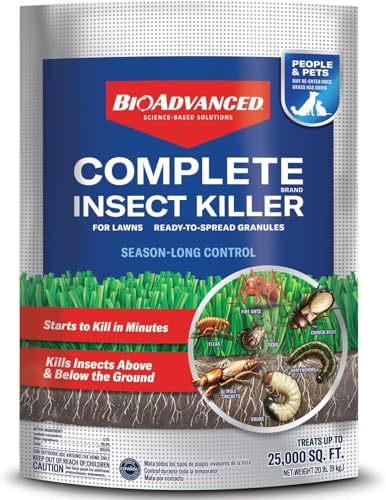
BioAdvanced Complete Brand Insect Killer for Lawns Granules, 20 lb
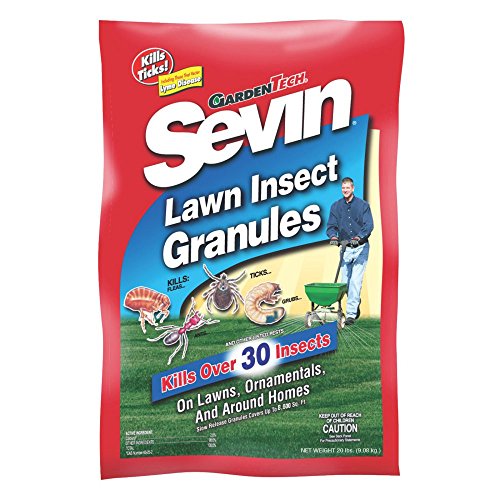
Sevin Lawn Insect Granules, 20 lb

Ortho Bug B Gon Max Insect Killer for Lawns, 10 lb

Ortho Lawn Insect Killer Granules, 20 lb

Bayer Merit 0.5 Granular Systemic Insect Control, 30 lb

Sevin Lawn Insect Granules, 10 lb
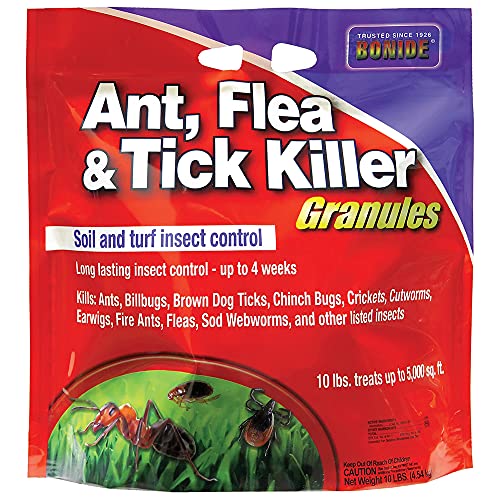
Bonide Ant, Flea & Tick Killer Granules, 10 lb

BioAdvanced 24 Hour Lawn Insect & Fire Ant Killer, 10 lb
A Closer Look At Each Pick
Hi-Yield Turf Ranger II uses two synthetic pyrethroid active ingredients, zeta-cypermethrin and bifenthrin, working together in a single granule. That pairing tends to matter in yards where ant colonies reappear every season and surface feeders like earwigs are also a problem. A 20-pound bag spreads across roughly 20,000 square feet, which lines up with a generous suburban lot when you skip the driveway and the foundation plantings.
You can apply it on turf, around flower beds, on shrubs, and along the home perimeter as a barrier band. Activation comes from rainfall or irrigation, so timing the spread right before a watering session saves a step. For most homeowners managing a half-acre or so, one bag covers the whole property in a single pass.
Everyday Perks
- Two active ingredients widen the pest reach beyond what most single-compound granules manage
- 20,000 square feet of coverage means one bag handles a typical lot without a refill
- Perimeter use around the foundation adds a buffer zone against bugs heading indoors
- Suitable for lawns, ornamentals, and flower beds, reducing the need to stock separate products
Things To Consider
- Two pyrethroids at once can be harsher on beneficial insects, so avoid treating blooming flower beds where bees forage
- Requires irrigation or rainfall to activate, so dry climates need a watering plan
Who It Suits Best
Homeowners with a mixed-use yard larger than a quarter acre who want one bag to cover turf, beds, and a perimeter band.
Consider Something Else When
Smaller city lots under 5,000 square feet will end up overbuying, and the Sevin Lawn Insect Granules, 10 Pounds makes more sense for that scale.
Ortho BugClear positions itself as a contact-kill granule that works both above and below the surface. Ants, ticks, armyworms, sod webworms, fleas, and spiders all sit on the target list, which covers the most common reasons homeowners reach for a bug product in the first place. The 20-pound bag covers up to 20,000 square feet, matching Hi-Yield’s footprint but with a different active ingredient profile.
Application uses a Scotts Drop, SpeedyGreen, or EdgeGuard spreader, then a watering pass to push the granules into the soil. You can spread it on lawns, around the home perimeter, on ornamentals, in flower beds, and in vegetable gardens for listed vegetables. Once it dries after watering, the area is open for foot traffic again, which tends to matter for households with dogs and kids.
Everyday Wins
- Contact kill above and below the surface targets grubs and top-dwelling pests in one pass
- 20,000-square-foot bag suits mid-to-large lawns without leftover clutter
- Listed for use on edible gardens, which removes the need for a separate food-crop product
- Compatible with common Scotts spreaders, so no specialty equipment is required
Worth Noting
- Drying time before re-entry may inconvenience households that use the yard heavily
- Always cross-check the vegetable list on the current label, since the included crops can change between revisions
Made For
Busy families with dogs and kids who need a fast knockdown and a clear re-entry signal after watering.
Look Elsewhere When
Homeowners chasing season-long grubs may want the BioAdvanced Complete Brand Insect Killer for Lawns Granules for its longer residual window.
BioAdvanced’s Complete Brand formula targets ants, fleas, ticks, chinch bugs, mole crickets, and grubs with a single application. The contact kill knocks down what’s already in the grass, while the residual protection aims to keep listed pests from coming back through the season. That two-phase approach tends to matter in southern lawns where chinch bugs and mole crickets return every summer.
You can spread it on lawns and on ant mounds around the home, which makes targeted mound work easier than broadcasting across the whole yard. The ready-to-spread granules drop straight from the bag into a standard spreader. For most homeowners dealing with the same problem insects showing up year after year, the season-long claim removes the calendar pressure of repeat treatments.
Bright Spots
- Targets both surface insects and soil-dwelling grubs in a single pass
- Season-long residual keeps the same pests from rebuilding mid-summer
- Mound application makes spot-treating fire ant colonies simpler than broadcasting
- 20-pound bag covers the typical suburban lot in one go
Trade Offs
- Some users report variable performance against mole crickets in heavily infested sandy soils
- Requires moisture activation, so a planned watering matters in dry stretches
Key Specs
Best Suited To
Homeowners in the Southeast and Gulf states who see the same chinch bug and mole cricket cycle every year.
A Better Fit Elsewhere
Homeowners with pure fire ant problems get faster results from the BioAdvanced 24 Hour Lawn Insect & Fire Ant Killer, 10 lb.
GardenTech’s Sevin Lawn Insect Granules lists over 30 target pests, which puts it near the top of the category for breadth. Ticks, fleas, armyworms, ants, earwigs, and several soil-dwelling larvae all sit on the label. The 20-pound bag suits larger properties where a 10-pound refill would only cover half the lawn.
Application is the standard load-spread-water routine, and the label covers lawns, ornamentals, flower beds, and listed vegetables. You can also run a band treatment along the foundation for an outside-in barrier. For most homeowners juggling multiple pest types at once, the wide label list means fewer separate products to track.
What Pays Off
- 30-plus pest list handles mixed infestations without product-switching
- Listed for use on vegetables, ornamentals, and lawns from one bag
- 20-pound size suits properties above 10,000 square feet
- Works as a perimeter band, which adds flexibility beyond a broadcast pass
Points To Note
- Coverage figures depend on pest target and spreader calibration, so plan a calibration pass before a full broadcast
- Carbaryl, the active ingredient, is regulated on some edible crops, so always check the vegetable list before treating the garden
Right Fit For
Property managers and homeowners with bigger lots who want one bag that covers lawn, beds, and a perimeter in a single session.
Swap It Out When
Small yards under 5,000 square feet overspend on the 20-pound bag, and the Sevin Lawn Insect Granules, 10 lb fits tighter budgets.
Ortho Bug B Gon Max stretches its label to over 100 listed insects with a three-month residual window, which puts it in a smaller group of granular products that outlast a single summer cycle. The 10-pound bag covers up to 10,000 square feet, which fits a typical city lot or the back half of a larger property where you’re focused on a specific problem zone.
Use sites include lawns, ornamentals, the home perimeter, vegetable gardens, and flower beds. Application follows the standard spread-then-water pattern, and the granules release their active ingredient into the soil where it works above and below the surface. For most homeowners who don’t want to reapply every month, the three-month residual removes the calendar juggling.
The Good Stuff
- Three-month residual cuts the season down to a single application for many yards
- 100-plus insect list covers ants, chinch bugs, fleas, and ticks in one bag
- Vegetable garden label removes the need for a separate edible-crop product
- 10-pound size is easier to handle than bulkier 20- and 30-pound bags
Room For Improvement
- Longer residual often means stricter re-entry intervals after watering, which can disrupt yard use
- 10,000-square-foot coverage means larger properties need multiple bags
Who Should Grab It
Homeowners with a quarter-acre lot who want a single spring application to carry through peak bug season.
Where Another Pick Suits Better
Property owners managing more than 10,000 square feet will find the Ortho Lawn Insect Killer Granules, 20 lb more cost-effective per square foot.
Ortho Lawn Insect Killer Granules lists 100-plus target insects with a three-month residual window. The pest list goes beyond the usual ants and fleas to include scorpions and pillbugs, which puts this product on the shortlist for arid Southwest lawns where those pests are constant. The 20-pound bag covers up to 20,000 square feet, matching the bigger 20-pound options in this category.
You apply it with a Scotts spreader, water thoroughly, and let the area dry before re-entry. Treat lawns, flower beds, vegetable gardens, and the home foundation from the same bag. For most homeowners in scorpion country, having a granular product that addresses both spiders and pillbugs without mixing products is a real convenience.
Key Advantages
- Scorpion and pillbug coverage is uncommon among granular bug killers for lawns
- Three-month residual limits re-treatment trips through peak season
- 20-pound bag covers a half-acre lot in one purchase
- Foundation application creates an outdoor-to-indoor buffer against crawling pests
Minor Gripes
- Drying time before re-entry can disrupt yards that host regular outdoor activities
- Performance against deep-nesting grubs can vary by soil type and watering schedule
Feature Snapshot
Perfect Match For
Homeowners in the arid Southwest and mountain west where scorpions and pillbugs move into lawn edges each summer.
Not Your Match When
Cooler northern climates rarely see scorpion pressure, so the Bonide Ant, Flea & Tick Killer Granules, 10 lb covers the more common northern pest mix at a smaller bag size.
Bayer Merit 0.5 uses imidacloprid at half a percent, which is the active ingredient most commercial lawn-care outfits use for soil-dwelling pests. The 30-pound bag is the largest single container on this list, sized for properties well over an acre or for anyone running a small grounds-care business. Annual application caps at 80 pounds per acre, which sets a real ceiling on repeat use.
The systemic action moves the active ingredient into the plant itself, so insects feeding on grass, ornamentals, or shrubs ingest it during normal feeding. That mechanism suits properties with established landscape beds where surface contact alone doesn’t reach. For most homeowners managing a complex yard with both turf and woody ornamentals, a single systemic product simplifies the rotation.
Useful Highlights
- Systemic uptake means insects don’t have to contact the granule directly to be controlled
- Works across turfgrasses, trees, shrubs, evergreens, flowers, and ground covers from one bag
- 30-pound size is the largest bag in the category, lowering cost per pound
- Imidacloprid is a familiar tool for commercial applicators, simplifying any handoff to a pro
Points To Keep In Mind
- Annual cap of 80 pounds per acre means you must track application rates carefully on repeat treatments
- 30-pound bag is heavy to lift and awkward for one person on a small property
- Not all surface insects sit on the systemic label, so you may need a contact product alongside it
Technical Reference
Built With In Mind
Property owners with more than an acre of mixed turf and ornamentals who want a single systemic tool for soil-dwelling pests.
Reach For A Different Pick When
Suburban lots under 10,000 square feet are easier to manage with the BioAdvanced Complete Brand Insect Killer for Lawns Granules, 20 lb at a friendlier weight.
Sevin Lawn Insect Granules in the 10-pound size delivers the same active ingredient and pest coverage as its 20-pound sibling, just in a smaller bag. The 30-plus pest list spans ants, ticks, fleas, earwigs, and several lawn-feeding worms, which covers the most common reasons a suburban homeowner reaches for a granular product. The smaller bag fits a typical city lot under 5,000 square feet of treatable area.
Application works on lawns, ornamentals, flower beds, around the home perimeter, and on listed vegetables. You load, spread, and water the same way as the larger bag, which means no new technique to learn if you’re already familiar with the Sevin system. For most homeowners with a modest yard, the 10-pound size avoids the storage problem of a leftover 20-pound sack.
Standout Benefits
- Same 30-plus pest list as the larger Sevin bag without the storage weight
- Listed for vegetable gardens, ornamentals, and lawns in a single product
- Smaller bag is easier to load, pour, and reseal between uses
- Works as a perimeter band or full broadcast, depending on the pest
A Few Limitations
- 10-pound bag is uneconomical for properties over 10,000 square feet
- Carbaryl restrictions on some edible crops require label-checking before garden use
Whose Shelf It Belongs On
Suburban homeowners with modest yards who want the Sevin pest list without committing to a 20-pound bag.
Where A Sibling Pick Shines
Lots above 10,000 square feet get better cost coverage from the Sevin Lawn Insect Granules, 20 lb in the same formula.
Bonide’s Ant, Flea & Tick Killer Granules narrows its focus to the pests that matter most for households with outdoor pets. Ants, fire ants, brown dog ticks, fleas, chinch bugs, earwigs, and crickets all sit on the label, which covers the usual complaints from dog owners in particular. The 10-pound bag treats up to 5,000 square feet, which is a tight fit for many properties.
You can broadcast it across the lawn, run a band treatment along the foundation, or spot-treat problem areas, which gives flexibility when only certain parts of the yard are affected. The four-week residual is shorter than some competitors, so timing the application around peak flea and tick pressure matters. For most dog owners, the targeted pest list removes the guesswork of broader-spectrum granules.
Reasons It Performs
- Pest list targets ants, fleas, and ticks specifically, the issues most pet households face
- Flexible application as broadcast, band, or spot treatment
- Listed for use on grass and dichondra lawns, covering a wider turf menu
- Pellet form goes straight from bag to spreader with no mixing
Honest Caveats
- Four-week residual means reapplication during long flea seasons
- 5,000-square-foot coverage is the smallest on this list, so larger yards need multiple bags
Feature Rundown
Who Will Love This
Dog owners with small to mid-size yards who want a targeted flea, tick, and ant product without broader-spectrum chemicals.
Another Choice May Suit
Yards where chinch bugs and mole crickets dominate need the BioAdvanced Complete Brand Insect Killer for Lawns Granules for its wider soil-pest list.
BioAdvanced’s 24 Hour formula leads with fire ant mound knockdown, which sets it apart from the slower-residual products on this list. The active ingredient works on contact and the granules reach into the soil to address listed pests at the surface and below. The 10-pound bag covers up to 12,500 square feet, which fits most mid-size properties in fire ant territory.
Target pests include fire ants, fleas, ticks, chinch bugs, grubs, and mole crickets, so the bag handles more than the headline fire ant problem. Application uses a standard broadcast or drop spreader, and the long-lasting protection helps prevent new fire ant mounds from forming after treatment. For most homeowners in fire ant country, the 24-hour window is the difference between stepping outside carefully and reclaiming the yard.
Notable Gains
- 24-hour fire ant knockdown is faster than most granular products in the category
- Targets multiple pests beyond fire ants, including grubs and mole crickets
- Helps prevent new mound formation after the initial kill
- 12,500-square-foot coverage from a 10-pound bag suits mid-size properties
Softer Spots
- Some users report needing a second application for deeply rooted mound colonies
- 10-pound bag is light enough to handle but limits very large properties
Made For
Homeowners in fire ant country from the Carolinas through Texas who need a fast knockdown before outdoor gatherings.
Skip It When
Yards without active fire ant pressure are better served by the broader BioAdvanced Complete Brand Insect Killer for Lawns Granules with its season-long residual claim.
What Matters Most Before Choosing Granular Bug Killers For Lawns
Coverage area tops the list of practical filters, since a 20-pound bag that treats 20,000 square feet is a poor fit for a 4,000-square-foot lot and vice versa. Measure your treatable area before browsing, then match it to the bag with the closest coverage rating.
Active ingredient profile matters more than the brand name once you get past coverage. Pyrethroid-based formulas like zeta-cypermethrin and bifenthrin tend to act fast on contact, while systemic options like imidacloprid move into the plant for longer soil-pest control. The pest list on the label is the fastest way to see which mechanism a product uses, since contact-kill and systemic products handle different problems.
Application timing depends on rainfall or irrigation, so homeowners in dry climates need a watering plan ready before spreading. Some products require drying time before re-entry, which affects households with pets and kids who use the yard daily. The 10-pound bags are easier to handle for older homeowners, while the 30-pound options lower the cost per pound for properties with an acre or more.
Key Considerations Across These Picks
Pitfalls Shoppers Hit
The most common slip is buying a 20-pound bag for a 5,000-square-foot yard and ending up with a stale, half-opened sack that loses effectiveness in storage. The opposite problem happens when a homeowner buys a 10-pound bag for a 15,000-square-foot property and runs out halfway through. Measuring the lawn before browsing removes both errors.
Another trap is treating a yard during the wrong season. Granular insecticides work best when target pests are active and feeding, which means spring through early fall for most regions. Winter applications sit on frozen ground and break down before insects encounter them.
Where The Extra Money Goes
The jump from a 10-pound bag to a 20-pound or 30-pound bag lowers the cost per square foot treated, which adds up over a few seasons. Higher-tier products also tend to combine two active ingredients or add a longer residual window, which means fewer repeat applications through the season.
For most homeowners, paying more makes sense when the alternative is two treatments a season versus one. When the pest list is similar across price points, the bigger bag is usually the smarter long-term pick.
Frequently Asked Questions
How long does it take for granular bug killers to start working? Most granular products begin working within 24 hours of activation by rainfall or irrigation, with full effect over the following few days. Speed varies by active ingredient and pest type, so always check the product label for the specific timeline.
Can granular bug killers be used around vegetable gardens? Several products in this list include vegetable gardens on the label, but only for listed crops. Always check the current label before treating edible plants, since the approved crop list can change between product revisions.
Do granular bug killers need to be watered in? Yes, moisture activates the active ingredient and moves it into the soil. Plan a watering session or time the application right before expected rainfall for best results.
How often should granular bug killers be reapplied? Application frequency depends on the product’s residual window, which ranges from four weeks to season-long in this list. Reapply when pest pressure returns or when the residual window closes, whichever comes first.
Are granular bug killers safe for pets? Most products allow re-entry after the treated area dries, which typically takes a few hours after watering. Keep pets away during application and until the lawn is fully dry for safest use.
Wrap Up
The right granular bug killer for lawns depends on the size of the yard, the pests involved, and how often reapplication fits into the season. Big properties lean toward 20- and 30-pound bags with broad pest lists, while small yards benefit from 10-pound options that store easily. For most homeowners, matching the active ingredient to the specific pest problem and respecting the watering requirements is the difference between a clean lawn and a recurring headache.
