
Florida lawns live a different life than most. Sandy soil, summer humidity, sudden downpours, and the occasional surprise cold snap all shape what your turf actually needs. The right fertilizer here does more than feed grass; it helps St. Augustine, Bermuda, Zoysia, Bahiagrass, and Centipede hold their color through the long growing season without burning out or breaking local fertilizer ordinances.
This shortlist covers ten options built with those realities in mind, from high-phosphorus starters for new sod to slow-release nitrogen blends for steady summer feeding. Each pick is paired with a clear use case so you can match a formula to your grass type, lawn size, and how much hands-on time you want to spend.
A Side-By-Side Look

Jonathan Green Veri-Green Fertilizer for Seeding & Sodding

Fertilome Centipede Lawn Fertilizer 15-0-15, 16 lbs

PetraMax Liquid Nitrogen Fertilizer 28-0-0, 32 oz

PetraMax Neighbor’s Envy 7-in-1 Liquid Fertilizer, 1 Gallon
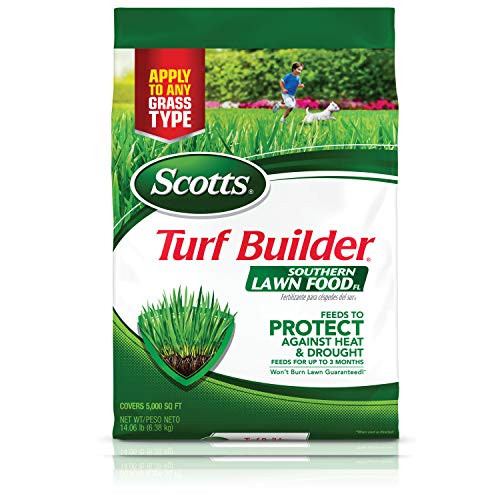
Scotts Turf Builder Southern Lawn Food
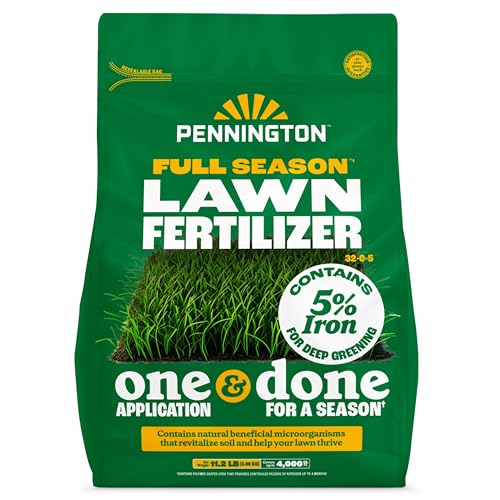
Pennington Full Season Lawn Fertilizer 32-0-5

Slow Release Lawn Fertilizer 25-5-10, 44 lb Bag

GreenView Lawn Food with GreenSmart, 16 lb Bag

O.M. Scott & Sons Natural Grass Food, 12.72 lb

Scotts Turf Builder Starter Food for New Grass, 3.27 lb
What Each Pick Brings To The Table
Starting a new lawn in Florida is mostly a race against heat and heavy rain, and Jonathan Green’s Veri-Green starter leans into that reality with a 12-18-8 NPK ratio, where the second number is phosphorus, a nutrient that supports root formation in fresh seedlings and newly laid sod. The high middle number is the headline feature; it is exactly what young roots crave before the summer monsoon pattern sets in.
For most homeowners laying St. Augustine or Bermuda sod, coverage on a 1,500-square-foot area lines up neatly with a small front yard or a side lawn. Granular application is straightforward, and a standard spreader handles it without drama. In Florida’s sandy ground, watering in well after spreading is the difference between a smooth start and a patchy one.
Key Advantages
- High phosphorus content supports rapid root establishment in new grass.
- Coverage area fits small-to-medium Florida yards without waste.
- Granular form spreads evenly with a standard rotary or drop spreader.
- Works across the warm-season grasses Floridians plant most often.
Things To Consider
- Best reserved for the establishment phase, not steady-state feeding later in the year.
- Small bag size means you may need multiple bags for a full-acre property.
- Granular prills can clump in high humidity if the bag is stored in a shed.
Built With In Mind
First-time sod or seed installers working on a small to mid-size Florida yard who want one starter bag that covers a known area cleanly.
Swap It Out When
PetraMax Liquid Nitrogen Fertilizer makes more sense once the lawn is established and only needs a fast color refresh.
Centipede grass is famously finicky about phosphorus, and many Florida counties restrict phosphorus applications by ordinance anyway. Ferti-lome’s 15-0-15 blend sidesteps that by going phosphate-free, leaning on nitrogen and potassium instead. That zero in the middle of the bag is not a marketing trick; it is exactly what centipede and Bahiagrass want once established.
The 16-pound bag covers around 5,000 square feet, which lines up with a typical suburban lot. Slow-release nitrogen helps the grass stay green without the rapid flush that often leads to thatch buildup. In central and north Florida, applying in early spring and once more in early summer usually does the job.
The Good Stuff
- Zero-phosphorus formula suits phosphorus-sensitive centipede and Bahiagrass.
- Slow-release nitrogen reduces burn risk during summer feeding windows.
- Coverage fits a typical suburban lot in a single bag.
- Balanced potassium supports heat and drought tolerance in summer.
Worth Noting
- Not a general-purpose lawn food; using it on St. Augustine or Bermuda is not advised.
- Granular form should be watered in immediately to prevent leaf-tip burn.
- One bag may run short on larger properties above 5,000 square feet.
Key Specs
Right Fit For
Homeowners with centipede or Bahiagrass lawns who want a fertilizer built for those exact species and not a generic blend.
Look Elsewhere When
Scotts Turf Builder Southern Lawn Food is the better match for mixed Southern turf that includes St. Augustine or Zoysia.
Liquid nitrogen fertilizers are the espresso shot of lawn care: a fast, visible response when the grass has gone pale and the season is not waiting around. PetraMax’s 28-0-0 concentrate splits its nitrogen into a 70/30 mix of quick-release and slow-release forms, so you get a green-up within days but avoid the sharp growth spike that comes with all-fast-release formulas. The 32-ounce bottle attaches to a hose-end sprayer and covers a meaningful area without weighing down the shed shelf.
For most Florida lawns, a mid-summer application after heavy rain or pest stress is where this shines. It is not a stand-alone feeding plan; think of it as a supplement between slow-release granular feedings.
What Helps Most
- Dual-release nitrogen gives rapid color and a longer tail of feeding.
- Concentrate format stores compactly in a hot Florida garage.
- Hose-end application skips the spreader and the cleanup.
- Useful for reviving yellowing turf after heavy summer rain.
Honest Caveats
- High nitrogen load raises burn risk on drought-stressed grass; water in promptly.
- Does not replace a balanced annual feeding program.
- 32 oz bottle is small for properties over a quarter acre.
Made For
Homeowners with small to mid-size lawns who want a quick color boost between scheduled granular feedings.
Not Your Match When
PetraMax Neighbor’s Envy covers more ground and adds iron, humic acid, and kelp for a fuller nutrient package.
Where the smaller PetraMax bottle is a single-nutrient boost, Neighbor’s Envy pulls together seven inputs in one jug, including nitrogen, iron, humic acid, and sea kelp. Humic acid is an organic compound that improves the soil’s ability to hold nutrients, and sea kelp brings a long list of trace minerals that granular fertilizers usually skip. The result is a liquid that aims at both turf color and underlying soil health.
One gallon covers up to 16,000 square feet, so this is the option for full-size Florida lots rather than postage-stamp yards. In our view, that kind of coverage makes the concentrate format worth the mixing time.
Practical Advantages
- Seven-in-one blend reduces the need to stack multiple products.
- Iron supports deep green color without forcing a growth surge.
- Sea kelp adds trace minerals that granular feeds typically miss.
- One-gallon format suits a full-size Florida property.
Points To Note
- Iron can stain concrete driveways and pavers if overspray is not rinsed off.
- Liquid concentration requires accurate dilution to avoid burn.
- Heavier jug is awkward to carry once full.
Feature Snapshot
Whose Shelf It Belongs On
Homeowners with larger Florida lawns who want a single liquid that handles color, soil biology, and stress recovery in one go.
A Better Fit Elsewhere
PetraMax Liquid Nitrogen Fertilizer suits a smaller yard that only needs a fast nitrogen pick-me-up.
Scotts built this formula specifically for Southern lawns, and the Florida version is dialed to handle the heat, humidity, and intermittent drought that define the state’s growing season. It is safe across common Florida grass types, which removes the guesswork for mixed lawns where St. Augustine runs up against Zoysia or Bahiagrass. The slow-release nitrogen extends feeding over several months, which matters when summer storms would otherwise wash nutrients through sandy soil fast.
Available in 5,000, 10,000, and 15,000 square foot coverage sizes, so you can match the bag to your lot rather than overbuying. Applied to a dry lawn and watered in, the results tend to show up within a week or two.
A Few Highlights
- Built for Southern climate stresses like heat and drought.
- Safe across multiple warm-season grasses grown in Florida.
- Multiple bag sizes match small, mid, and large Florida lots.
- Slow-release feeding reduces the number of summer applications.
A Few Limitations
- Granular prills can leave tracks if not watered in promptly.
- Higher cost per square foot than bulk generic blends.
- Not intended for new seed or sod projects; use a starter instead.
Best Suited To
Homeowners with established mixed-grass Florida lawns who want a single feed that handles heat and drought without juggling products.
Consider Something Else When
Jonathan Green Veri-Green Starter Food is the smarter pick for a brand-new sod or seed project.
Pennington’s Full Season formula is built around the idea that most homeowners don’t want to fertilize every six weeks. The 32-0-5 blend uses a polymer-coated urea (a slow-release nitrogen source that meters out nutrients over time) to feed the lawn for up to four months from a single pass. The 5% iron content pushes that deep green color without piling on phosphorus.
For most Florida lawns, one spring application covers the busy growing months. A second pass in early fall handles the back half of the year. That schedule is the main selling point for anyone tired of dragging a spreader out every month.
Notable Gains
- Polymer-coated nitrogen releases over up to four months per application.
- High nitrogen ratio supports fast green-up in spring.
- Iron content deepens color without forcing excessive growth.
- Compact 11.2 lb bag stores easily between uses.
Trade Offs
- Smaller bag size means more frequent repurchasing on large properties.
- One-application mindset is not ideal for lawns with severe nutrient deficiencies.
- Slow-release prills cost more per pound than basic urea blends.
Feature Card
Who Should Grab It
Homeowners who prefer a set-and-forget schedule and want one application to cover most of the Florida growing season.
Where Another Pick Suits Better
GreenView Lawn Food fits homeowners who want a more traditional multi-application feeding rhythm with mixed-release nutrients.
For larger Florida properties, bag size matters as much as nutrient ratio. Eco Solutions’ 25-5-10 blend ships in a 44-pound bag with 65% of its nitrogen in slow-release form, so a single spring application can keep feeding for up to 110 days. The high middle number (phosphorus) makes it well suited to lawns that are still building root depth, though it is worth checking local rules before applying any phosphate-heavy product.
The brand also markets the formula as kid and pet safe once watered in, which is a real concern for households with curious dogs. In our view, that claim is worth verifying against the label rather than taking at face value.
What Stands Out
- Large 44 lb bag suits properties over half an acre.
- Long feeding window of up to 110 days per application.
- High nitrogen ratio drives strong color and growth recovery.
- Slow-release form reduces the burn risk typical of high-N products.
Possible Compromises
- Phosphorus content may run afoul of local Florida fertilizer ordinances.
- 44 lb bag is heavy for one person to handle.
- Storage requires a dry, sealed space in humid Florida garages.
Who It Suits Best
Homeowners with large lots who want a long-feed granular product and are comfortable handling a 44-pound bag.
Another Choice May Suit
PetraMax Neighbor’s Envy is the better fit for someone who would rather apply liquid than wrestle a heavy bag.
GreenView’s Lawn Food uses a GreenSmart enhanced nutrient system that pairs quick-release and controlled-release nitrogen in the same granule. That mix gives a lawn a near-term color response while still feeding steadily over the following weeks, which is useful in Florida where the weather does not always cooperate with a slow-only feeding schedule. The 16-pound bag covers around 5,000 square feet, lining up well with a mid-size suburban lot.
For most homeowners with mixed turf, this is a safe middle-of-the-road pick. It does not specialize in any one grass type, but it also does not require you to identify yours precisely before applying.
Where It Delivers
- Dual-release nitrogen gives quick color and extended feeding.
- Works across most common warm-season grass types.
- Coverage aligns with the average Florida suburban lot.
- Granular form fits standard homeowner spreaders.
Soft Spots
- Not specialized for centipede, Bahia, or new sod projects.
- Higher cost per square foot than basic urea blends.
- Bag seal can let moisture in if stored in a humid garage.
Quick Facts
Who Will Love This
Homeowners with a typical mixed-grass Florida lawn who want balanced feeding without special-casing their turf type.
Reach For A Different Pick When
Fertilome Centipede Lawn Fertilizer is the better match for centipede- and Bahia-specific nutrient needs.
O.M. Scott & Sons leans on its long lawn-care history with this plant-based formula, which aims to feed the grass through natural nutrient sources rather than synthetic urea. The 12.72-pound bag sits at the lighter end of this list, which is helpful for anyone who would rather not wrestle a heavier container in the summer heat.
For homeowners who prefer a more traditional approach to feeding, this is a sensible middle ground. It does not promise the dramatic green-up of a high-nitrogen synthetic, but the trade-off is a gentler feeding pattern that works well alongside a consistent watering routine.
Strengths Worth Knowing
- Plant-based formula suits a more traditional lawn-care approach.
- Lightweight 12.72 lb bag is easy to handle and store.
- Trusted brand with a long lawn-care history.
- Steady feeding pattern pairs well with regular Florida watering.
Points To Keep In Mind
- Color response tends to be slower than synthetic high-nitrogen blends.
- Smaller bag means more frequent repurchasing on larger lots.
- Natural formulas can attract pet interest until watered in fully.
Perfect Match For
Homeowners who prefer plant-based lawn care and are willing to wait a bit longer for visible results.
Skip It When
PetraMax Liquid Nitrogen Fertilizer is the better fit for a fast green-up during peak summer stress.
When the project is a small patch of new sod or a reseeded corner of the yard, a 3.27-pound bag is plenty. Scotts’ Turf Builder Starter Food is designed for the establishment phase, supporting the root development that determines whether new grass survives its first Florida summer. The smaller bag is also less likely to sit half-used in a humid garage for months.
For most homeowners tackling a side-yard repair or a single rolled-out pallet of sod, this is the right scale. Bigger projects will burn through it fast, which is the natural trade-off for a starter formula in a starter-sized bag.
What Pays Off
- Compact 3.27 lb bag fits small patch and reseeding jobs.
- Starter nutrient profile supports root development in new grass.
- Easy to spread with a handheld or small drop spreader.
- Low risk of waste since the bag gets used up in a single project.
Small Caveats
- Not enough material for a full-size sod installation.
- Starter formula is not appropriate for established lawns.
- Smaller bag is sometimes priced higher per pound.
Who Will Love This
Homeowners with a small reseeding patch or a single roll of sod who want a starter fertilizer sized to the project.
Where A Sibling Pick Shines
Jonathan Green Veri-Green covers a larger seeding or sodding project on a single 1,500-square-foot bag.
Factors To Consider When Choosing Grass Fertilizers For Florida
Match The Formula To Your Grass Type
Florida lawns are not one thing. St. Augustine, Bermuda, Zoysia, Centipede, and Bahiagrass all have different sensitivities, especially around phosphorus. A 15-0-15 like Fertilome suits Centipede and Bahia, while a balanced starter like Jonathan Green Veri-Green supports fresh sod across multiple warm-season types. Knowing your grass is the first step; guessing usually means over- or under-feeding.
Read The NPK Ratio Before You Buy
NPK stands for Nitrogen, Phosphorus, and Potassium, the three macronutrients shown on every fertilizer bag. Nitrogen drives color and top growth, phosphorus supports root development, and potassium improves stress and disease tolerance. Florida’s sandy soil loses nitrogen fast, which is why most feeding programs here lean nitrogen-heavy, but the right balance depends on the season and the grass.
Decide Between Granular And Liquid
Granular products store well, spread evenly with a standard spreader, and feed over weeks. Liquid concentrates like PetraMax’s 28-0-0 act fast and skip the spreader, but they require mixing and are best as supplements rather than full feeding programs. For most Florida homeowners, a granular base plus an occasional liquid boost covers the year.
Plan Around Local Rules And Weather
Many Florida counties restrict phosphorus applications and summer nitrogen use. Check your county’s fertilizer ordinance before buying, and time applications around the rainy season to keep nutrients from washing through the soil before the grass can use them.
Key Considerations Across These Picks
Common Shopping Slip Ups
Picking a fertilizer before identifying your grass type is the most common mistake, and it usually ends with yellow centipede or burnt St. Augustine. Another frequent miss is ignoring the middle number in the NPK ratio. Phosphorus is restricted in many Florida counties for established lawns, so a 15-0-15 like Fertilome is often the safer legal choice. Bag size is the third trap; buying a 44-pound bag for a small yard leads to months of storage in a humid garage, where granules clump and lose effectiveness.
What The Higher Tier Buys
Premium picks in this list earn their place through longer feeding windows, multi-nutrient blends, or specialized formulations. Pennington’s Full Season feed costs more per pound but covers four months in a single pass, which is the real value calculation. PetraMax Neighbor’s Envy bundles seven nutrients into one jug, replacing several individual products. The honest read is that the upgrade pays off when the lawn is large enough to absorb the cost or when specialized needs (centipede, new sod) make a general formula inadequate. For a small yard with average grass, a basic slow-release granular is plenty.
