

Florida lawns live a different life than most. The sun bakes them, summer storms drench them, sandy soil drains them, and the occasional cool snap reminds you nothing stays green forever. Picking the right grass seed or fertilizer is less about brand loyalty and more about matching the variety to your region, your sun exposure, and how much time you actually want to spend watering and mowing. This roundup covers ten solid options for overseeding, patching, or starting fresh, with a Florida-specific fertilizer thrown in for good measure. Each pick gets sized up for shade tolerance, drought behavior, wear resistance, and the kind of homeowner who’ll be happiest with it.
A Fast Comparison Of The Options

Jonathan Green Black Beauty Dense Shade Grass Seed

Jonathan Green Black Beauty Heat & Drought Resistant Grass Seed

Jonathan Green Blue Panther Southern Lawn Grass Seed

Jonathan Green Blue Panther Bermudagrass Grass Seed

Jonathan Green Blue Panther Bermudagrass Grass Seed

Scotts Turf Builder Rapid Grass Bermudagrass

Scotts Turf Builder Grass Seed Sunny Mix

Pennington Bermudagrass Grass Seed

Scotts Kentucky 31 Grass Seed Mix
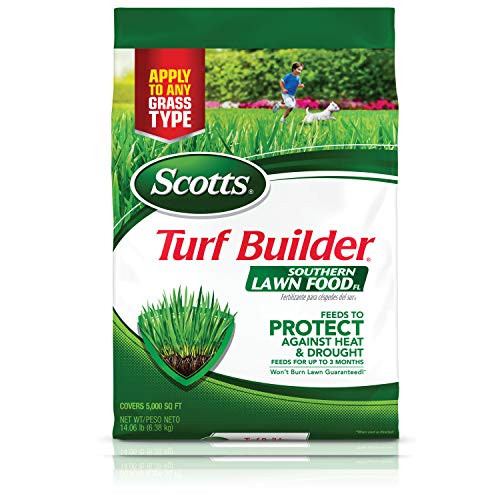
Scotts Turf Builder Southern Lawn FoodFL
The Picks, Examined More Closely
Florida yards with mature oaks, tall hedges, or two-story shadow lines can feel impossible to keep green. The Black Beauty Dense Shade mix from Jonathan Green leans into that reality instead of fighting it, with a blend (tall fescue is a cool-season bunch grass that handles low light better than most warm-season varieties) that establishes in partially shaded ground where Bermudagrass and St. Augustine would struggle. For North Florida lawns or shaded transitional zones, it can fill in bare patches beneath tree canopies that get filtered light for a chunk of the day.
Compared to the heat-and-drought-resistant Black Beauty in the second slot, this one trades drought tolerance for shade performance, so the trade-off is real. The seed produces a deep, dark green turf with a germination window (the time it takes for seeds to sprout) of 14 to 21 days, and the varieties carry beneficial endophytes (a natural fungus that lives inside the grass and helps deter insects). If your biggest frustration is moss and bare dirt under a tree, this is a reasonable place to start.
What Helps Most
- Shade-tolerant varieties handle filtered light under large trees and tall shrubs.
- Deep green color gives tired-looking shaded patches a richer appearance.
- 14 to 21 day germination window keeps renovation timelines reasonable.
- Endophyte-enhanced seed offers some natural resistance to surface-feeding insects.
Points To Keep In Mind
- As a cool-season fescue blend, it may struggle through peak Florida summer heat in exposed areas.
- Shade tolerance has limits; deep, year-round shade under dense evergreens can still thin out.
Who Should Grab It
Homeowners with mature tree canopies or shadow-heavy transitional-zone lawns in North Florida.
Look Elsewhere When
Your yard is wide-open and full sun, where the Jonathan Green Black Beauty Heat & Drought Resistant Grass Seed will perform better.
When the thermometer climbs past 90°F and water restrictions kick in, the waxy leaf coating on this Jonathan Green blend earns its keep. The mix combines tall fescue with Texas bluegrass, a hybrid that handles heat up to around 100°F and stores moisture like a camel. The waxy cuticle (a thin protective layer on each grass blade, similar to the skin of an apple) slows evaporation, so the lawn holds onto water between irrigation cycles or summer storms.
Unlike the shade-focused Black Beauty that came before, this one targets full sun to lightly shaded lawns, making it a better fit for most open Florida yards. The 3-pound bag covers a meaningful patch or overseeding project, and it stays a cool-season option, so expect some summer dormancy in the hottest zones. For North and Central Florida homeowners tired of watching their lawn crisp up, this is a sensible cooler-climate workhorse.
The Case For It
- Waxy leaf coating helps grass retain moisture during dry stretches.
- Heat tolerance up to roughly 100°F suits hot, sunny Florida yards.
- Tall fescue and Texas bluegrass blend offers better summer performance than straight fescue.
- Performs in full sun or light shade for flexible placement.
Trade Offs
- Still a cool-season blend, so growth slows during peak summer and may go semi-dormant in South Florida.
- Watering still matters; the waxy coating helps but won’t replace irrigation during extended drought.
Quick Facts
Made For
Homeowners in North and Central Florida with full-sun lawns who battle heat stress and dry spells.
Not Your Match When
You live in South Florida or want a warm-season lawn year-round, where the Jonathan Green Blue Panther Bermudagrass Grass Seed is a closer fit.
The Blue Panther Southern blend is Jonathan Green’s answer to the messy middle of the country: warm summers, surprise frosts, and lawns that need to handle both. It’s a Bermudagrass, Texas bluegrass, and tall fescue mix, which is unusual, because most southern blends are single-species. That three-way combo gives the lawn a better chance of holding color through the cooler months without losing the heat tolerance that Bermudagrass is famous for.
Where the second Black Beauty pick leans cool-season, and the Bermudagrass picks in slots four and five lean fully warm-season, this one straddles the line. Bermudagrass (cynodon dactylon) drives the summer density and traffic tolerance, while the fescue and Texas bluegrass add some shoulder-season color. The trade-off is that you’ll see slightly less uniform Bermudagrass dominance, so purists who want a pure Bermuda lawn should look at the dedicated picks below.
Useful Strengths
- Three-species blend provides heat and cold tolerance in one bag.
- Bermudagrass component offers strong summer density and wear resistance.
- Texas bluegrass and tall fescue help maintain color into cooler months.
- Well-suited for transitional climates and southern states.
Things To Consider
- Not a pure Bermudagrass, so the lawn texture will be slightly less uniform than dedicated Bermuda picks.
- Establishment requires patience; three species germinate on slightly different schedules.
Right Fit For
Homeowners in North Florida or transitional zones who want one seed that handles both heat and occasional cold snaps.
Where A Sibling Pick Shines
Your priority is a pure Bermudagrass look and feel, where the Jonathan Green Blue Panther Bermudagrass Grass Seed delivers a more uniform result.
This is the dedicated Bermudagrass option from Jonathan Green, and it behaves like classic Bermuda: aggressive, sun-loving, and tough under foot traffic. Blue Panther is formulated specifically for southern climates and is bred to reduce the need for winter overseeding, which is the practice of spreading a cool-season grass over a warm-season lawn in fall to keep it green through winter. That alone makes it appealing for anyone tired of the annual overseed cycle.
Compared to the Southern blend in slot three, this is a single-species seed, so the lawn will look more uniform once established. The 4-pound bag covers a sizable area, and the strong vertical and lateral rooting (roots that push both down and sideways) helps it knit together fast. Where it struggles is exactly where most turfgrass does: shade. Give it full sun, and it rewards you with a dense, durable carpet.
A Few Strong Suits
- Pure Bermudagrass gives a uniform, classic southern lawn texture.
- Strong vertical and lateral rooting helps the lawn establish quickly.
- Reduces the need for winter overseeding compared to traditional Bermuda.
- Handles heavy foot traffic from kids, pets, and backyard games.
Honest Caveats
- Needs full sun; shaded yards will see thinning and slow growth.
- Goes dormant and turns brown in cooler months, which can bother some homeowners.
- Aggressive growth means edges and flower beds need regular management to prevent spread.
Feature Snapshot
Best Suited To
Homeowners with full-sun, high-traffic lawns who want a uniform, traditional southern Bermuda look.
Swap It Out When
You have partial shade or want cool-season color through winter, where the Jonathan Green Blue Panther Southern Lawn Grass Seed is a more flexible pick.
Same Blue Panther Bermudagrass formula, smaller bag. If the 4-pounder in slot four is overkill for a few bare patches, this 1-pound version keeps the math simple. The aggressive lateral rooting and dense growth habit carry over, so small repair jobs knit in faster than you’d expect from a single-species seed.
The honest read is that you’re paying more per pound for the smaller bag, so the 4-pound pick is the better value for full renos. But for a pet-damaged corner, a thinning strip along a driveway, or a few bare spots under a removed tree, this is a tidy option. It behaves the same way as its bigger sibling: loves sun, dislikes shade, goes dormant in winter.
Good Reasons To Consider
- Smaller bag fits targeted repair jobs without excess leftover seed.
- Same aggressive Bermudagrass rooting and density as the larger Blue Panther bag.
- Reduces need for winter overseeding compared to traditional Bermuda.
- Good match for high-traffic patch areas.
Worth Noting
- Higher cost per pound than the 4-pound Blue Panther version.
- Same shade limitations as all Bermudagrass; needs full sun to thrive.
Who Will Love This
Homeowners patching small bare spots or repairing damage in an existing Bermuda lawn.
Consider Something Else When
You’re renovating a full lawn and want better per-pound value, where the Jonathan Green Blue Panther Bermudagrass Grass Seed (4 lb) is the smarter buy.
Scotts’ Rapid Grass line takes a different tack: the bag contains a seed-and-starter-fertilizer combo (a fertilizer blended specifically to feed young, newly germinated grass) so you get one product that both plants and feeds in a single pass. The Bermudagrass version is meant for full-sun southern lawns and is built to fill in faster than seed alone, when applied at the new lawn rate and given proper care.
The convenience comes with a few caveats. You have less control over fertilizer timing since the food is already mixed in, and warm-season Bermuda establishment is still a warm-soil process, so applying it in early spring can be slow. Compared to the Jonathan Green Blue Panther Bermuda, you trade some species purity for a faster establishment story. For homeowners who want a more streamlined reno with fewer product purchases, it’s a reasonable choice.
Where It Excels
- Seed plus starter fertilizer in one bag simplifies the renovation process.
- Designed for faster establishment than seed alone at the new lawn rate.
- 4-pound bag covers a meaningful patch or small yard area.
- Targets southern, full-sun Bermudagrass lawns specifically.
Practical Considerations
- Less flexibility on fertilizer timing since the feed is pre-mixed in.
- Establishment speed still depends on warm soil temperatures, so timing matters.
- Overapplication can lead to fertilizer burn on young grass.
Feature Card
Perfect Match For
Homeowners who want a single-product solution for establishing a new southern Bermudagrass lawn.
Another Choice May Suit
You prefer a pure seed without added fertilizer for more control, where the Jonathan Green Blue Panther Bermudagrass Grass Seed is the more flexible option.
Scotts redesigned the Turf Builder Sunny Mix to lean on a Root-Building Nutrition formula, which is a blend of ingredients aimed at pushing roots deeper and thicker rather than just greening up the top. For Florida yards, deeper roots mean more drought resilience between rains and less stress during irrigation restrictions. The mix is designed for full sun and light shade, with medium to high drought resistance built in.
Compared to the Bermudagrass picks earlier, this is a more general-purpose sun mix rather than a single warm-season species. That’s a trade-off: you get flexibility and easier establishment, but the lawn may not have the same summer density as a pure Bermudagrass stand. For homeowners with mixed sun conditions who don’t want to manage a full Bermuda overseeding routine, the Sunny Mix sits in a comfortable middle.
Bright Spots
- Root-Building Nutrition supports deeper, more drought-resilient root systems.
- Performs in full sun and light shade for versatile placement.
- Medium to high drought resistance built into the blend.
- 2.4-pound bag is a manageable size for typical patch and overseed jobs.
Factors To Consider
- Not a single warm-season species, so the lawn won’t match pure Bermuda density in peak summer.
- Shade tolerance stops at “light”; dense shade will still thin the stand.
Whose Shelf It Belongs On
Homeowners with sun-drenched yards who want a flexible, drought-tolerant blend without committing to a single species.
Reach For A Different Pick When
You want a classic southern Bermudagrass lawn, where the Jonathan Green Blue Panther Bermudagrass Grass Seed is a more species-pure choice.
Pennington’s Bermuda blend is built for yards that take a beating. The seed produces a thick, aggressively self-spreading lawn with improved cold-tolerant varieties tucked into the mix. That cold tolerance matters more than you’d think in North and Central Florida, where occasional winter snaps can ding a less-prepared Bermuda lawn. The deep root system also means better recovery from drought and foot traffic, both of which are practically a Florida way of life.
Pennington sits a bit differently from the Jonathan Green Blue Panther Bermuda in slot four. Both are warm-season Bermudas, but Pennington leans into wear resistance and self-spreading growth, while Blue Panther focuses on reducing winter overseeding needs. The 5-pound bag covers a meaningful area, and the low-growing nature of the blend means fewer grass clippings over the mowing season, a small but real quality-of-life win.
Everyday Perks
- Aggressively self-spreading growth fills in thin and worn areas.
- Improved cold-tolerant varieties handle occasional Florida winter snaps better.
- Extremely wear-resistant turf holds up to kids, pets, and play.
- Deep root system supports drought resilience and quicker recovery.
- Low-growing blend produces fewer grass clippings per mow.
Less Ideal Details
- Still a warm-season grass, so it goes dormant and turns brown in winter.
- Aggressive spread means edge management around beds and walkways is part of the routine.
Spec Overview
Built With In Mind
Active families and pet households that need a tough, traffic-tolerant Bermudagrass lawn.
Skip It When
You want minimal winter dormancy and fewer clippings, where the Jonathan Green Blue Panther Southern Lawn Grass Seed offers more season-long activity.
The Kentucky 31 mix is the most volume-heavy option in this roundup at 20 pounds, and it’s aimed at new lawns and overseeding for a reason. Kentucky 31 tall fescue has a long reputation for durability and low maintenance, and this Scotts version adds a curated blend to push the lawn thicker and greener than Kentucky 31 alone. For big yards, the per-pound value is hard to beat.
For Florida specifically, the honest caveat is that Kentucky 31 is a cool-season fescue, so it will struggle in the southernmost parts of the state and may go dormant in the worst of summer heat. It’s a much better match for North Florida lawns or for homeowners overseeding a transitional yard in cooler months. Where it beats the smaller Jonathan Green shade pick in slot one is sheer coverage and value at scale.
The Value In It
- Large 20-pound bag suits big new lawns and full overseeding projects.
- Kentucky 31 tall fescue base offers durability with relatively low maintenance.
- Curated blend aims for a thicker, greener result than Kentucky 31 alone.
- Good per-pound value compared to smaller fescue bags.
Potential Drawbacks
- Cool-season fescue can struggle through Central and South Florida summers.
- 20-pound bag is bulky to store if your project is smaller than expected.
Right Fit For
North Florida homeowners with large lawns who want durable fescue coverage without paying a premium per pound.
Where Another Pick Suits Better
You’re in Central or South Florida, where a warm-season option like the Pennington Bermudagrass Grass Seed is a smarter regional fit.
Seeds matter, but so does the food underneath. The Scotts Turf Builder Southern Lawn FoodFL is formulated specifically for Florida grasses, which means the nutrient ratio is tuned to what Bermudagrass, St. Augustine, Zoysia, and Centipede actually need rather than a generic cool-season blend. The bag feeds for up to about three months and is designed to help lawns stand up to heat and drought stress during the toughest part of the year.
Unlike every other pick in this roundup, this one is a fertilizer, not a seed. The bag is offered in multiple coverage sizes (5,000 to 15,000 square feet), so you can size it to your yard without a lot of waste. It can be applied to a dry lawn during the growing season, and it’s safe across grass types, which makes it handy for mixed lawns or homes where you’re not sure what’s actually growing.
Useful Touches
- Florida-specific formulation matches what southern grasses actually need.
- Up to about three months of feeding reduces reapplication frequency.
- Safe across multiple grass types for flexible use.
- Multiple coverage sizes help you match the bag to your yard.
Points To Note
- Should be applied during the active growing season, not winter dormancy.
- Spreader calibration (adjusting your broadcast or drop spreader to deliver the right rate) matters; overapplication can scorch southern grasses.
Perfect Match For
Florida homeowners looking for a fertilizer built around regional grass types and heat tolerance.
Skip It When
You’re overseeding a cool-season lawn in winter, where a starter fertilizer paired with a fescue bag like the Scotts Kentucky 31 Grass Seed Mix is a more appropriate approach.
What Matters When Choosing Grass Seed for Florida Yards
Match the Grass to Your Region First
Florida spans USDA zones roughly from 8a in the north to 11b in the Keys, and the grass that thrives in Jacksonville will not thrive in Miami. Warm-season grasses like Bermudagrass, Zoysia, and St. Augustine dominate the central and southern parts of the state, while North Florida lawns can support cool-season fescues and transitional blends. Choosing by zone first saves you from reseeding a year later.
Sun, Shade, and Soil Texture Change Everything
A yard shaded by oaks needs a different strategy than a sun-baked expanse, and sandy Florida soil drains fast, which means drought tolerance matters even when rainfall looks adequate on paper. The shade-tolerant Black Beauty blend in slot one fits under trees, while the Bermudagrass picks reward open, sunny exposure. Soil tests are cheap and tell you what you’re actually working with.
Think About Wear and Traffic Patterns
Homes with kids, dogs, or frequent backyard gatherings need a grass that recovers quickly from damage. Bermudagrass leads the pack for traffic tolerance thanks to aggressive lateral growth, while finer fescues can wear thin under heavy use. Match the seed’s strength to how the lawn actually gets used, not just how you want it to look.
Plan Around Establishment Windows
Warm-season Bermuda seeds germinate and establish best when soil temperatures stay above about 65°F, so spring through early summer is prime time. Cool-season fescues do their best work in fall. Planting out of season can mean slow germination and weak stands that struggle through their first stress test.
Key Considerations Across These Picks
Common Buying Mistakes to Dodge
Picking a grass type that doesn’t match your region is the single most common slip-up, and the second is underestimating how much sun or shade your yard actually gets across the day. Many homeowners also overseed at the wrong time of year, plant too thickly, or skip a soil test and end up fighting pH issues (soil acidity or alkalinity, measured on a 0-14 scale) for years. Sizing your bag to your actual square footage (minus non-lawn areas) avoids the frustration of running out halfway through a project.
Where Spending a Bit More Pays Off
A higher-tier seed often buys you improved varieties with better cold tolerance, deeper roots, or stronger disease resistance, which can mean fewer reseed cycles down the road. The trade-off shows up most in transition zones and high-traffic yards where a slightly better genetics stack pays you back across multiple seasons. For a tiny patch, the premium barely matters, but for full-lawn work, the upgrade often justifies itself through durability alone.
Frequently Asked Questions
What grass grows best in Florida overall?
For most of central and southern Florida, warm-season grasses like Bermudagrass, St. Augustine, Zoysia, and Centipede are the most practical picks because they handle heat, humidity, and salt air. North Florida has more flexibility and can support cool-season fescues alongside warm-season options.
When should you plant grass seed in Florida?
Warm-season grasses establish best from spring through early summer when soil temperatures stay consistently warm. Cool-season fescues are typically planted in fall so they can develop roots before summer stress arrives.
Can you mix different grass seed types together?
Blends are common and often intentional, but mixing incompatible species can lead to uneven color and texture. A pre-formulated blend like the Jonathan Green Blue Panther Southern Lawn Grass Seed is designed to work as a unit, while mixing random bags usually is not.
How long does it take for new grass seed to come up?
Germination varies by species: Bermuda can sprout in about a week under warm conditions, while fescue often takes 14 to 21 days. The Jonathan Green shade-tolerant blend cites a 14 to 21 day window as a realistic expectation.
Do you really need a Florida-specific fertilizer?
Generic fertilizers can work, but Florida-specific formulations like the Scotts Turf Builder Southern Lawn FoodFL match the nutrient ratios and minor elements that southern grasses use most. The difference is most noticeable during peak summer stress.
Wrap Up
Florida lawns don’t have to be a constant battle, but they do benefit from choices that match the climate, the sun, and how you use the yard. Whether you go with a tough Bermudagrass like Pennington’s blend, a shade-tolerant fescue mix, or a Florida-specific fertilizer to keep things fed through summer, the right pick is the one that fits your actual conditions. Start with your region and your sun exposure, and the rest of the decision tends to follow from there.
