

Bare patches show up at the worst times, right after a long winter, a dry stretch, or a dog decides your yard is a shortcut. Choosing the right seed for those gaps matters more than most people expect, since the wrong variety simply won’t take. This roundup covers ten options built to fill in thin or damaged areas, from quick-fix ryegrass to slow-and-steady fescue blends.
The Lineup, Simplified

Jonathan Green Blue Panther Bermudagrass Seed 4 lb

Jonathan Green Blue Panther Patcher 3 lb

Pennington Annual Ryegrass 10 lb
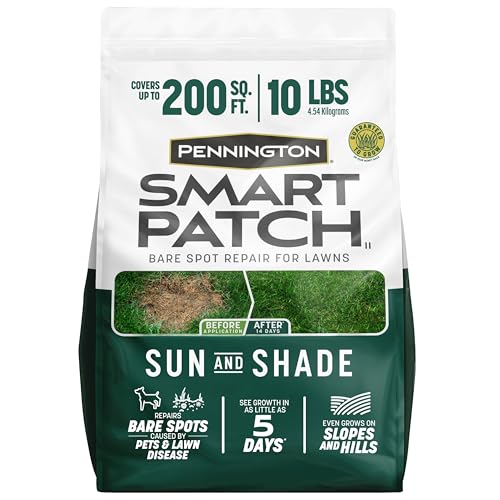
Pennington Smart Patch Sun and Shade 10 lb

Scotts Kentucky 31 Grass Seed Mix 7 lb

Pennington Smart Patch Tall Fescue 5 lb

Scotts Liquid Green Max Lawn Food 32 oz

Scotts Drought Tolerant Mix 4 lb

X-Seed Ultra Premium Quick and Thick 3 lb

O.M. Scott and Sons Tall Fescue Blend 8 lb
A Closer Look At Each Pick
Southern yards with thin or worn-out patches benefit from a warm-season grass that pushes roots fast. This Bermudagrass blend from Jonathan Green is built for that climate and forms a tough, traffic-tolerant turf once established.
Compared to the patch-style options coming up, this is a bag of pure seed, so you’ll prep the soil yourself rather than scattering a pre-mixed mulch blend. Most homeowners in the Transition Zone and Deep South get the best results seeding in late spring when soil temperatures stay warm.
The Upside
- Strong vertical and lateral rooting helps it knit into existing turf quickly
- Formulated to reduce the need for winter overseeding in southern climates
- Durable enough for backyards that see regular foot traffic from kids and pets
- Pure seed format gives you control over soil prep and seeding rate
Trade Offs
- Not suited to cool-season northern climates where Bermudagrass goes dormant early
- Requires a prepped seedbed, so it’s more work than an all-in-one patch product
Who It Suits Best
Homeowners in southern states with full-sun lawns who want a long-term Bermudagrass repair rather than a quick cover crop.
Where Another Pick Suits Better
Northern gardeners with mixed sun and shade should reach for Pennington Smart Patch Sun and Shade 10 lb instead, since Bermudagrass won’t thrive in cooler zones.
Where dog runs and foot traffic chew up the lawn, an all-in-one patch mix takes the guesswork out. The Blue Panther Patcher bundles Bermudagrass seed, coconut coir mulch, and starter fertilizer in one bag, so you don’t have to buy three separate products.
The coir, which is a fibrous material made from coconut husks, expands to hug the seed and holds moisture against the soil. For warm-season lawns with recurring pet damage, this is one of the most convenient repair kits you can buy.
Everyday Wins
- One bag covers seed, mulch, and fertilizer, simplifying the repair job
- Coir mulch absorbs into the soil, so there’s nothing to rake up later
- Blends visually with established warm-season turf
Points To Note
- Germination takes around 14 days, so patience matters during the repair window
- Only fits Bermudagrass climates, so cooler regions will see poor establishment
Feature Snapshot
Made For
Southern homeowners patching pet damage or small worn patches without buying separate seed, mulch, and fertilizer.
Not Your Match When
Cool-season lawns in northern states will do better with Pennington Smart Patch Tall Fescue 5 lb, which matches a fescue-based yard.
Annual ryegrass isn’t a permanent fix, but for fast seasonal cover it’s hard to beat. Pennington’s 10-pound bag throws down quick color in bare or thin areas, typically within a week in mild weather.
The 10 lb bag covers meaningful ground, useful when you have multiple thin spots or a wide patchy zone. Annual rye is commonly used as a winter overseed in southern lawns and as a temporary filler in northern ones where permanent grass is slow to recover.
Where It Delivers
- Germinates in roughly 3 to 7 days under good conditions
- Large bag format suits whole-lawn overseeding on a budget
- Works as a holding pattern while permanent seed establishes
Things To Consider
- Annual rye dies back in summer heat, so it won’t replace your permanent lawn
- Best in full sun, so shaded bare spots may struggle to fill in
Right Fit For
Homeowners wanting fast, temporary green cover during overseeding or a slow recovery period.
Skip It When
You want a permanent northern lawn, since the X-Seed Ultra Premium Quick and Thick 3 lb blend is built for that exact job.
Yards rarely have uniform light, and a mix of sun and shade is where most patch products stumble. Smart Patch handles both conditions in one bag, so a single repair trip covers the sunny strip and the shaded corner without buying two blends.
Microbials, which are beneficial microorganisms added to the mix, help suppress common lawn diseases during the vulnerable establishment phase. You may find this especially helpful if you’ve had patch failures in the past where seedling grass collapsed before thickening out.
The Good Stuff
- Formulated for lawns that see both sun and moderate shade in different zones
- Includes fertilizer and microbials to support seedling health
- Useful for repairing dog spots where grass repeatedly struggles
Honest Caveats
- Northern formulation, so southern Bermuda lawns will want a warm-season product
- 10 lb bag is large; overkill for a single small patch
Quick Facts
Best Suited To
Northern homeowners with a patchwork yard where some areas bake in sun and others sit under tree cover.
A Better Fit Elsewhere
Yards in dry climates will see better long-term results from Scotts Drought Tolerant Mix 4 lb, which is built for water-stressed soil.
Kentucky 31 is a tall fescue variety with a long reputation for toughness, and this Scotts mix builds on that lineage. It’s aimed at northern lawns that need durable, low-input coverage and doubles as both a repair seed and a full-lawn overseed.
For households with active kids or wide-open backyards, the fescue base handles foot traffic better than finer-bladed bluegrass. Compared to the Smart Patch products above, this is a pure seed bag, so you bring your own starter fertilizer and topdressing.
What Works In Its Favor
- Built around Kentucky 31 tall fescue, a proven heat- and wear-tolerant variety
- Works for both patching bare spots and overseeding thin lawns
- Lower maintenance profile than many Kentucky bluegrass-dominant blends
Points To Keep In Mind
- Coarser blade texture than bluegrass, so it’s not the most refined look
- Pure seed format means you’ll need separate fertilizer at seeding time
Who Will Love This
Homeowners in northern climates with active families who want a rugged lawn that doesn’t demand constant attention.
Reach For A Different Pick When
Refined appearance matters more than durability, in which case the O.M. Scott and Sons Tall Fescue Blend 8 lb offers a heritage alternative with a tighter visual finish.
When you want a patch product engineered specifically for fescue lawns, this Smart Patch jug keeps everything contained. The jug format means less mess than tearing open a paper bag, and the included mulch and fertilizer handle the repair basics.
It’s well matched to the same northern fescue yards that would otherwise buy the sun-and-shade Smart Patch, but with a fescue focus instead of a mixed-light formula. For most repair jobs, one jug covers a surprising number of small to mid-sized bare spots.
A Few Strong Suits
- All-in-one design removes the need to match separate seed, mulch, and fertilizer
- Jug container stores neatly in a garage without tearing
- Tailored to fescue lawns, so new growth blends with established turf
Worth Noting
- Only matches tall fescue lawns, so Bermuda or bluegrass yards will want a different blend
Whose Shelf It Belongs On
Northern homeowners with fescue-based lawns who want a tidy, all-in-one patch jug in the garage for recurring spot repairs.
Where A Sibling Pick Shines
Yards with deeper shade should look at Pennington Smart Patch Sun and Shade 10 lb, which tolerates lower light than straight fescue.
Liquid Green Max isn’t a seed, but it belongs in this conversation because bare spots rarely heal in dull, pale turf. This 2-in-1 liquid feeds the lawn while adding iron, which deepens green color faster than most granular options.
Pairing it with any of the seed products above, once the new grass has had a few weeks to establish, speeds up the visual payoff. It works on any grass type, so the same bottle covers a fescue front yard and a Bermuda backyard.
What It Does Well
- Liquid format is easy to apply with a standard hose-end sprayer
- Suitable for all common lawn grass types, no special match needed
- Visible color response within days when applied correctly
Small Caveats
- Doesn’t repair bare spots on its own, so it’s a partner to seed, not a substitute
Feature Card
Who Should Grab It
Homeowners who already seeded their bare spots and now want faster green-up across the wider lawn.
Consider Something Else When
Your priority is seeding first, since Scotts Kentucky 31 Grass Seed Mix 7 lb addresses the actual bare-ground problem.
Lawns in hot, dry regions need seed that reaches for water instead of browning out by midsummer. This blend combines tall fescue and Kentucky bluegrass, both known for deep roots that chase moisture below the surface.
You may find this works well in areas where water restrictions are common, since the deeper root system helps the lawn ride out dry spells. The mix also self-repairs to fill in thinning areas, which is useful for the gradual bare patches drought stress creates.
Strong Points
- Tall fescue and Kentucky bluegrass blend extends root depth for dry-soil access
- Self-repairing habit fills in small gaps without reseeding
- Listed as 99.99% weed-free seed for cleaner establishment
Things To Consider
- Best applied in spring or fall when air temperatures sit between 65°F and 85°F
- Shade tolerance is limited, so heavily shaded yards may struggle
Key Product Details
Built With In Mind
Homeowners in dry or sun-baked regions who want a lawn that stays green through water restrictions and heat waves.
Look Elsewhere When
Your lawn sits in heavy shade, since X-Seed Ultra Premium Quick and Thick 3 lb is mixed to handle lower-light conditions.
For a multi-species northern blend that germinates fast, X-Seed’s mix pairs perennial ryegrass, fine fescue, and Kentucky bluegrass. The combination is engineered to push quick top growth while the bluegrass thickens in underneath.
Coverage is generous for the bag size, useful for overseeding mid-sized lawns. The blend tolerates both sun and shade, which makes it a flexible choice when you don’t want to buy separate products for different light zones.
A Few Highlights
- Rapid germination gives visible results sooner than single-species blends
- Three-species mix balances quick cover with long-term thickening
- Handles sun-to-shade transitions within the same yard
Practical Considerations
- Best suited to central and northern climates, so southern lawns may want Bermuda instead
- High-traffic performance is decent but not as rugged as a pure fescue bag
Feature Card
The Right Fit
Northern and central homeowners who want a flexible, fast-establishing blend that works across sun and shade in the same yard.
Swap It Out When
You’re patching dog damage in a fescue yard, where Pennington Smart Patch Tall Fescue 5 lb matches existing turf more cleanly.
O.M. Scott and Sons has been in the lawn business for generations, and this 8 lb tall fescue blend leans on that heritage. It’s positioned as a natural-input option, with no added synthetic coating, for homeowners who prefer a simpler seed profile.
The 8 lb bag covers mid-size repair and overseeding projects without tipping into bulk territory. Tall fescue brings its usual durability, so this works well in cool-season lawns that need to bounce back from traffic or dry weather.
Practical Advantages
- Tall fescue base gives reliable cool-season durability
- No synthetic coating, appealing to homeowners who prefer minimal additives
- Mid-size bag suits both spot repairs and small overseeding jobs
Some Limits To Know
- Heritage brand positioning may carry a slightly higher cost than commodity fescue
- Coarse blade texture, similar to other tall fescue options
Perfect Match For
Cool-season homeowners who want a trusted fescue blend without coated or treated seed.
Another Choice May Suit
Yards in drought-prone areas will likely do better with Scotts Drought Tolerant Mix 4 lb, which is engineered for deep-root water access.
Matching Grass Seed To Your Repair Job
The first decision is climate. Warm-season Bermuda blends only thrive in southern states, while fescue and bluegrass mixes are built for northern and transition-zone lawns. Picking outside your climate zone is the most common reason patch seed fails to establish.
Next, consider light exposure. Mixed yards need a sun-and-shade formula, while a fully open lawn can take a more aggressive single-species bag. For pet spots or recurring traffic damage, an all-in-one patch mix with mulch and fertilizer reduces variables and improves seed-to-soil contact, which is how well the seed physically touches the surrounding dirt.
Timing matters more than most people realize. Fall and early spring are ideal because soil stays moist and temperatures are mild. Summer seeding in hot zones requires daily watering, and winter seeding in cold zones simply sits dormant. Match the seed to the season, not the calendar.
Finally, think about traffic. Fescue handles wear better than bluegrass, and Bermuda recovers quickly from foot traffic in southern lawns. Choosing a seed that matches how the lawn actually gets used is the difference between a repair that lasts and one that washes out by next season.
Practical Pointers Before You Buy
Where Shoppers Go Wrong
The most common mistake is seeding in the wrong season. Cool-season grasses planted in summer heat dry out before roots establish, and warm-season grasses planted too early in spring stall in cold soil. The second slip-up is skipping soil prep: bare spots need loose, raked soil for seed-to-soil contact, not just seed thrown onto hard ground. Watering schedule is the third pitfall, since inconsistent moisture during the first two weeks kills more seedlings than any other factor.
What The Higher Tier Buys
Bigger bags and brand-name blends cost more, but the extra money usually goes into seed purity, coatings that improve germination, and added fertilizer or mulch. For small repair jobs, the premium is hard to justify. For full-lawn overseeding or drought-prone regions, the upgraded blends earn their keep by establishing faster and surviving harsher conditions. The honest read is this: pay more when the seed has to do more, and save when you’re patching a single small bare spot.
Frequently Asked Questions
How long does it take for grass seed to fill in bare spots?
Most cool-season blends show visible growth in 7 to 14 days, with full coverage taking 4 to 6 weeks. Warm-season Bermuda typically germinates in 7 to 21 days depending on soil temperature, and you’ll see thickening over the rest of the growing season.
Can I just throw grass seed on bare spots?
Lightly raking the area first dramatically improves results, since seed needs contact with soil to germinate reliably. Seed scattered on top of hard-packed ground or dead grass usually washes away or dries out before rooting.
When is the best time to seed bare spots?
Early fall is ideal for cool-season grasses because soil stays warm while air temperatures drop. Spring works for warm-season grasses once soil temperatures consistently stay above 65°F.
Do I need to water new grass seed every day?
Yes, light daily watering for the first two weeks keeps the top layer of soil moist without drowning the seed. After germination, you can taper to deeper, less frequent watering to encourage root growth.
Will grass seed wash away in the rain?
Light rain helps, but heavy downpours on a freshly seeded slope can wash seed downhill before it roots. A thin layer of mulch or compost helps hold seed in place during the establishment window.
Final Verdict
The right seed depends on climate, light, and how the lawn actually gets used. Bermuda blends dominate the south, fescue and bluegrass handle northern wear, and patch-style kits remove guesswork for small repairs. Match the seed to the yard rather than the season, and the bare spots fill in before they become a recurring eyesore.
