

Those telltale yellow patches on an otherwise green lawn can turn a tidy yard into a polka-dot field, and most dog households have lived through that frustration at some point. A targeted grass seed, a soil-repair spray, or even a daily chew can break the cycle and bring turf back without ripping everything out. These ten options cover the three main approaches to the problem, so you can match the fix to your lawn and your dog.
The Leading Options At A Glance

Jonathan Green Black Beauty Heavy Traffic Grass Seed (3 lb)

Scotts EZ Seed Dog Spot Repair Tall Fescue (2 lbs)
Pennington Smart Patch Sun and Shade Mix (10 lb)

Back to the Roots Organic Wheatgrass Seeds (1 lb)
Yellow Spot Green Dog Urine Neutralizer (32 oz)

Sunday Pet Patch Hose-End Spot Repair (2-Pack)
Turf Titan K9 Correcter Neutralizer (32 oz)
Carmelie Lawn Burn Spot Chews (200 ct, DL-Methionine)

X-Seed Pet Proof Fescue Grass Seed (3 lb)

CHEWIA Grass Saver Lawn Chews
The Strengths Of Each Pick
Backyards that double as the family soccer field need a cool-season turf that can take a beating and still knit back together, which is exactly what this 3 lb blend from Jonathan Green aims to deliver. The mix leans on tall fescues paired with perennial rye, two grasses known for tough blades and quick recovery. Compared with the spot-fixing Scotts EZ Seed below, this is more of a whole-yard or large-patch overseeding play.
If your dog is one of several triggers wearing down the lawn, the wear tolerance here matters. For most backyards with active kids and roaming pets, the cool-season profile suits northern and transition-zone climates where fescue thrives.
The Good Stuff
- Cool-season blend of tall fescue and perennial rye designed for aggressive foot traffic.
- Works across sports fields, curb strips, and backyard play zones.
- Tall fescue root structure helps turf rebound after stress.
- Useful for overseeding thin areas before dog traffic peaks in spring.
Trade Offs To Consider
- Not specifically engineered for urine chemistry, so recovery still depends on watering and soil prep.
- Cool-season fescue can struggle in deep southern heat, so southern lawns may see thinning in midsummer.
- 3 lb covers a modest footprint, and large yards often need multiple bags.
Feature Snapshot
Made For
Cool-climate households with active dogs and kids who need a durable overseeding base for a worn lawn.
Look Elsewhere When
Your priority is repairing specific urine burns rather than rebuilding the whole turf, in which case the Scotts EZ Seed Dog Spot Repair is a more direct match.
Scotts built this 2 lb bag specifically for the small, dead patches that dogs leave behind, and the approach is more involved than plain seed. The mix bundles grass seed, an expanding mulch that hugs each seed, and a soil amendment designed to neutralize salts from urine. Compared with the all-purpose Jonathan Green above, this is a targeted one-step treatment for hot spots rather than a lawn-wide overseed.
For most dog owners, the appeal is convenience: one bag handles prep, seed, and starter in a single shake-on step. Tall fescue compatibility makes it a natural fit for cool-season lawns where the rest of the yard is already fescue.
Well-Handled Touches
- Built-in salt neutralizer addresses the chemistry behind urine burn, not just the bare spot.
- Expanding mulch helps keep seed in place on slopes and high-traffic edges.
- Designed for tall fescue lawns, so new growth blends with existing turf.
- 2 lb format is manageable for a season’s worth of spot repairs around a single dog.
Points To Keep In Mind
- Tall fescue-specific, so warm-season lawns may see color or texture mismatch.
- Spot treatment only, meaning whole-yard renovations will need a separate overseed product.
- Mulch needs consistent watering to expand and hold seed, so dry climates demand extra attention.
Who It Suits Best
Cool-season homeowners with one or two dogs who want a low-fuss patch kit for recurring burn spots.
Consider Something Else When
Your lawn is mixed sun and shade and you need broader repair coverage, in which case Pennington Smart Patch is the more flexible alternative.
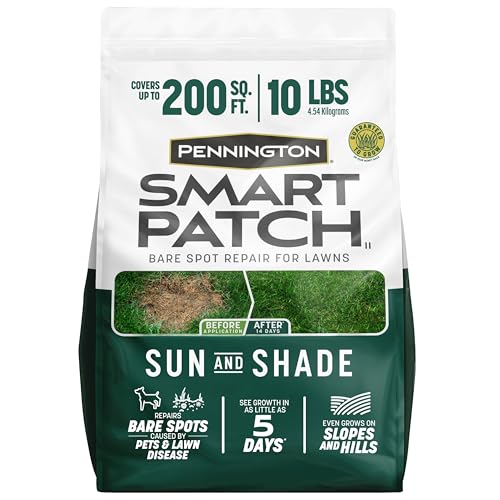
Pennington’s Smart Patch is the bag to reach for when a few isolated spots have grown into something resembling a quilt. The 10 lb bag stretches to roughly 600 square feet, and the formula folds in starter fertilizer plus microbials aimed at disease resistance. Compared with the smaller Scotts EZ Seed, this is a coverage play for yards that need broad rehabilitation after a season of pet damage.
The sun and shade versatility means you don’t have to play horticulturist, mapping light patterns before spreading. For most suburban lots with mixed exposure, that flexibility saves real time.
Standout Benefits
- Built-in fertilizer and microbials support seedling health without a separate starter step.
- Sun and shade blend adapts to lawns with patchy tree cover or changing light.
- Marketed for dog spot repair, so the formula anticipates common pet-related damage.
- 10 lb bag handles big repair jobs in a single purchase.
Worth Noting
- Smaller bags and spot-specific kits may be a better value for a yard with only one or two trouble zones.
- Microbial activity depends on soil temperature, so early-spring or late-fall applications may germinate slowly.
Best Suited To
Suburban homeowners with a heavily patterned lawn needing to repair multiple worn and urine-scarred areas in one project.
A Better Fit Elsewhere
You have just a handful of small burn spots, in which case the Scotts EZ Seed Dog Spot Repair is easier to apply without waste.
Not every pet household needs to wage war on the backyard, and this 1 lb bag of organic wheatgrass from Back to the Roots serves a different audience entirely. The seeds are designed to grow indoors as a “cat grass” planter option that gives pets a safe, pesticide-free alternative to nibbling on houseplants. Compared with the lawn-focused picks above, this one is about redirecting chewing behavior rather than repairing turf.
For cat owners especially, a tray of fresh wheatgrass on a windowsill is a small change that pays off in fewer nibbled leaves and a happier pet.
Noteworthy Benefits
- Organic and non-GMO seeds are safe for pets to nibble.
- 1 lb value pack suits multi-cat households or frequent replanting.
- Quick sprouting makes it easy to keep a rotation of fresh trays going.
Honest Caveats
- Wheatgrass is an indoor or container crop, so it will not repair an outdoor lawn.
- Tray setup and watering routine are required, which may not fit every household.
Whose Shelf It Belongs On
Cat owners who want a safe indoor grazing option and a low-effort way to enrich their pet’s environment.
Skip It When
Your priority is fixing outdoor yellow patches, where the Pennington Smart Patch or Scotts EZ Seed will actually address the turf damage.
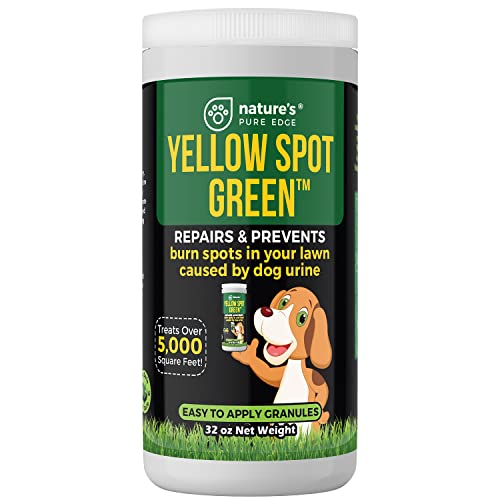
Yellow Spot Green is a liquid treatment rather than a seed, and the 32 oz bottle is designed to fix the soil so grass can return on its own. The formula targets urine-damaged soil pH, conditioning the root zone so future spots are less likely to burn. Compared with the seed-based picks above, this is a soil prep product, not a one-step fix.
For most homeowners facing a yard full of recurring burn patches, treating the underlying soil is the move that stops the cycle. The 32 oz size covers a meaningful area without constant refilling.
What It Does Well
- Targets urine-damaged soil pH at the root zone.
- Liquid format applies quickly with a standard hose-end or pump sprayer.
- 32 oz size covers a larger yard without running dry mid-treatment.
- Useful as a prep step before reseeding bare spots with any of the seed products on this list.
Potential Drawbacks
- Won’t push grass to sprout during dormancy or extreme heat, so timing matters for visible results.
- Best results require consistent application over several weeks, not a one-and-done treatment.
Perfect Match For
Homeowners tackling the root cause of recurring burn spots who plan to reseed and want the soil ready first.
Not Your Match When
You want a single product that both repairs and reseeds in one pass, where the Scotts EZ Seed Dog Spot Repair is the more direct tool.
Sunday’s Pet Patch takes a different approach: a 42 fl oz pouch with a hose-end sprayer built in, so there’s no spreader, no mixing, and no measuring cup. You hook it up to a garden hose and hit each spot for about 15 seconds. Compared with the spreader-required Pennington Smart Patch, this is the lazy-Sunday version of spot repair.
For most pet owners who want results without a trip to the garage for tools, the all-in-one sprayer format is genuinely convenient. The 2-pack doubles the coverage and keeps a backup ready.
Strengths Worth Knowing
- Hose-end sprayer design eliminates the need for a separate spreader or mixing container.
- 42 fl oz pouch covers multiple spot treatments across the average yard.
- 2-pack format means a second pouch is ready when the first runs out.
- 15-second per spot application fits easily into a weekend routine.
Less Ideal Details
- Hose-end sprayers can drift in wind, so calm mornings give the most accurate coverage.
- Pouch format can be harder to store long-term than a rigid bottle.
Feature Snapshot
Who Should Grab It
Busy pet owners who want a no-tool spot treatment they can knock out in a few minutes per session.
Reach For A Different Pick When
You prefer dry-application products and want the convenience of a spreader bag, where Pennington Smart Patch fits the routine better.
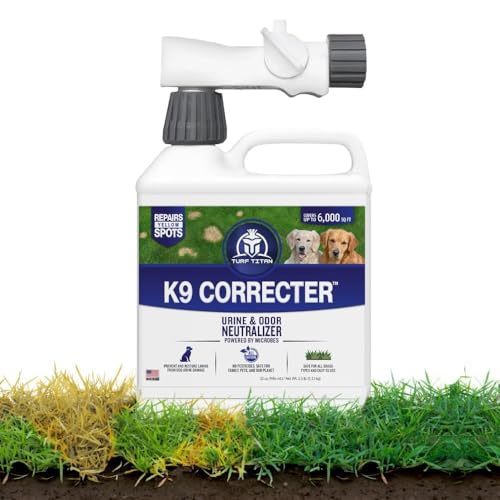
Turf Titan’s K9 Correcter is built for big lawns where one or two spots have multiplied into a recurring problem. The 32 oz bottle is rated to cover up to 6,000 square feet, and the formula works at the soil level to neutralize urine salts and tackle odor. Compared with the spot-focused Sunday Pet Patch, this is a maintenance product for the whole yard.
For most multi-dog households with a half-acre or more to protect, weekly application fits a routine that other treatments can’t match in scale.
Everyday Wins
- Up to 6,000 square feet of coverage from a single 32 oz bottle.
- Weekly application rhythm integrates easily into a regular lawn care schedule.
- Targets both yellow spots and odor at the soil level.
- Liquid concentrate spreads evenly with a standard pump or hose-end sprayer.
Factors To Consider
- Not a fast regrowth product, so visible results build over multiple weeks.
- Best paired with reseeding, meaning a separate seed purchase may be needed for bare spots.
Feature Rundown
The Right Fit
Owners of larger lawns with multiple dogs who want a once-a-week treatment to keep the whole yard ahead of damage.
Swap It Out When
You have a small yard with just a few trouble spots, in which case Sunday Pet Patch delivers similar benefits at a smaller scale.
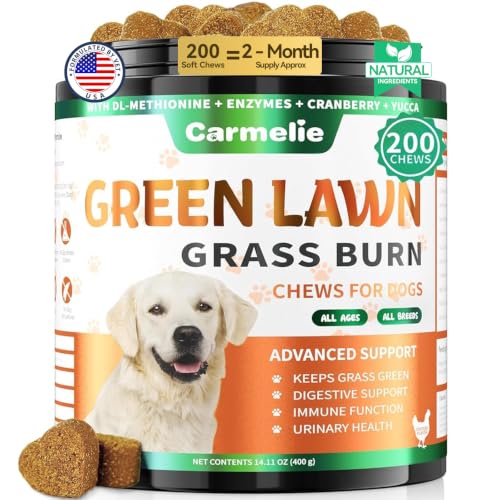
Where the rest of the list treats the lawn, Carmelie’s 200-count chew tackles the problem at the source: the dog’s urine itself. The chews are built around DL-methionine, an amino acid associated with reducing nitrogen concentration in urine. The chicken flavor and soft chew format make daily dosing straightforward for most dogs.
For most households, the appeal is preventive: less nitrogen in the urine means fewer scorch marks, which means less reseeding down the line. The 200-count tub keeps multi-dog homes stocked for months.
Real Benefits
- Addresses urine chemistry from inside, reducing the cause rather than the symptom.
- DL-methionine is a familiar ingredient in canine urinary support products.
- Soft chicken-flavored chew format suits picky eaters.
- 200-count tub suits multi-dog households and long-term routines.
Where It May Fall Short
- Results depend on consistent daily dosing, and missed days may limit effectiveness.
- Won’t reverse existing burn spots, so pairing with a seed or soil treatment is still useful for damaged areas.
Who Will Love This
Owners who want a daily preventive routine and are willing to commit to a long-term chew schedule.
Another Choice May Suit
You want a more comprehensive wellness chew blend, in which case the CHEWIA Grass Saver chews bring a broader ingredient profile.
X-Seed’s Pet Proof blend is one of the few grass seed products engineered specifically for dog households from the ground up. The 3 lb bag mixes tall fescue with perennial ryegrass for a dense, urine-resistant turf that establishes in both sun and shade. Compared with the all-purpose Jonathan Green at the top of the list, this one is tailored to pet wear patterns and recovery.
For most households starting fresh on a dog-friendly lawn, the rapid germination and dense fill make this a strong reseeding candidate. The blend tolerates sandy, loamy, and clay soils, which helps in tricky yard conditions.
Why It Works Well
- Specifically marketed for urine resistance and high-traffic pet use.
- Tall fescue and perennial ryegrass blend fills in quickly.
- Tolerates sandy, loamy, and clay soils, giving flexibility across regions.
- Cool-season profile greens up early in spring and holds color into fall.
Points To Note
- Cool-season grasses can struggle in deep southern heat, so warm-zone yards may see summer thinning.
- 3 lb bag is sized for smaller repair jobs, and large yards will need multiple bags.
Technical Sheet
Built With In Mind
Pet-focused households planning a reseeding pass who want a blend designed for the wear patterns dogs create.
Where A Sibling Pick Shines
You’re repairing broader thin areas with built-in fertilizer, where the Pennington Smart Patch is the stronger full-yard option.
CHEWIA’s Grass Saver chews sit at the intersection of lawn care and general canine wellness. The soft chew format delivers a lawn-targeted blend while also supporting digestive, immune, and heart health, depending on the formula. Compared with the DL-methionine-forward Carmelie chews, this option leans into a broader wellness story.
For most owners who already give a daily chew, swapping in a grass-focused formula is a small change with a dual payoff. The trick is consistency, since chews only help while the routine holds.
The Case For It
- Targets urine nitrogen levels to reduce lawn burn over time.
- Broader wellness angle covers digestive and immune support alongside lawn benefits.
- Soft chew format is easy to dose for most dogs.
- Fits households already running a daily supplement routine.
Some Limits To Know
- Less lawn-specific than methionine-led chews, so heavy burn patterns may need a more targeted formula.
- Daily commitment required, and missed doses reduce the lawn benefit.
Perfect Match For
Owners who want a daily chew that supports both the lawn and general canine wellness in one step.
Not Your Match When
You want a single-ingredient focus on urine nitrogen, where the Carmelie Lawn Burn Spot Chews offer a more lawn-specific approach.
Choosing Grass Seeds and Treatments That Actually Work
Picking a product starts with understanding the kind of damage you’re seeing. Yellow patches with green centers often point to classic urine burn, while thin, worn-down areas suggest traffic and compaction. Fescue and ryegrass blends hold up well to both, which is why they show up so often in pet-friendly formulas.
Soil health is the other half of the equation. Compacted, acidic, or salt-loaded soil won’t support new seedlings even with the best seed, which is where soil-treatment products like Yellow Spot Green and Turf Titan come in. A common mistake is seeding without addressing the underlying chemistry first.
Consider your climate. Cool-season grasses like fescue thrive in northern and transition zones, while warm-season grasses such as Bermuda handle southern heat but turn brown in winter. Match the seed to your region rather than chasing a one-size-fits-all bag.
Finally, think about prevention alongside repair. Daily chews that adjust urine chemistry, or hose-end treatments applied weekly, can reduce the rate of new damage so your repair work actually lasts.
Key Considerations Across These Picks
Mistakes Worth Dodging
Buying seed without checking your climate zone is a frequent slip, and it leads to bags that germinate slowly or die off midseason. Another common trap is treating the symptom without addressing the soil, which is why a neutralizer or soil amendment can save reseeding work later. Skipping watering during the establishment phase is the third big one, since most seed and patch products need consistent moisture to do their job.
What The Higher Tier Buys
Premium grass seed blends often include multiple cultivars, coated seed for moisture retention, and added fertilizer or microbial packages. Soil treatments at the higher end tend to cover larger areas per bottle and pair with broader lawn health benefits. Chew supplements in the higher tier usually offer larger counts and more comprehensive ingredient profiles. The upgrade pays off in yards with heavy pet traffic or recurring damage, where cheaper products require more frequent reapplication.
