

Steep yards shed topsoil in a hard rain, wash fertilizer into the street, and turn bare patches into muddy slides by mid-spring. Choosing the right seed matters more on a slope than on a flat lawn, because deep roots and quick germination are what actually anchor soil in place. This roundup walks through nine seed options built for the quirks of hillside work, from deep-rooted fescues to clover blends that hold their own in a downpour.
A Side-By-Side Look

Jonathan Green Black Beauty Dense Shade Grass Seed (1 lb)

Jonathan Green Black Beauty Heat & Drought Resistant Grass Seed (3 lb)

Jonathan Green Black Beauty Rocky Mountain Grass Seed Mix (7 lb)

Jonathan Green Black Beauty Tall Fescue Grass Seed Blend (15 lb)

Mountain Valley Seed Co Micro Clover Seed for Lawn (4 Oz)
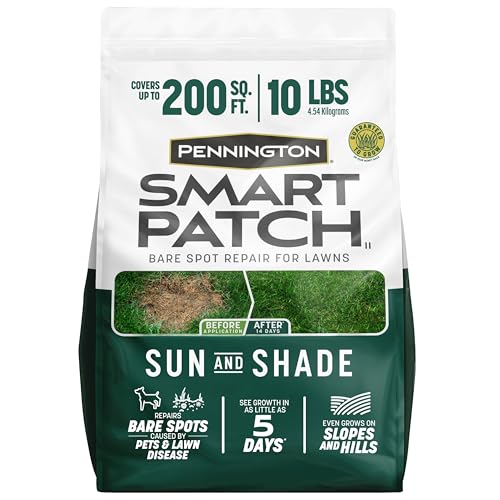
Pennington Smart Patch Sun and Shade Repair Mix (10 lb)

Pennington Clover Grass Seed Mix for Lawn (7 lb)

Scotts Kentucky 31 Grass Seed Mix (20 lbs.)

Eretz Creeping Red Fine Fescue Seed (10 lb)
Meet The Standout Selections
North-facing slopes under oak and maple canopies are the toughest corners of any yard, and most seed blends throw in the towel by midsummer. The Jonathan Green Black Beauty Dense Shade mix leans into that exact challenge, with varieties bred for limited light penetration beneath mature trees or alongside tall structures.
Endophytes (a natural fungal partnership inside the grass blades) help the plant fend off insects and stress, which matters when a hillside gets less airflow than a flat lawn. For backyards where the slope doubles as a shade garden, this blend fills a real gap. The dark-green color stays consistent once the stand matures, so the lawn reads as a single canvas even on uneven terrain.
Everyday Perks
- Shade-tolerant varieties keep color where other blends thin out
- Endophyte-enhanced blades resist surface pests naturally
- Dark-green tone blends well with surrounding landscape plantings
- Germinates in 14 to 21 days under reasonable soil prep
Points To Note
- One-pound bag covers a modest area, so larger slopes need multiple bags
- Without consistent moisture during the first three weeks, germination can stall on hot, dry inclines
Feature Snapshot
Right Fit For
Shaded hillside lawns beneath large trees where sunlight is a scarce resource through most of the day.
Look Elsewhere When
Your slope bakes in full southern sun all afternoon, where the Jonathan Green Black Beauty Heat & Drought Resistant Grass Seed handles the heat far more reliably.
South-facing slopes lose moisture faster than any other part of the yard, so a blend engineered around heat survival pays off where the previous pick would struggle. The Jonathan Green Black Beauty Heat & Drought Resistant mix combines tall fescue with Texas bluegrass, two cool-season species that hold their nerve when temperatures push toward 100°F.
The waxy leaf coating, similar to the skin of an apple, slows evaporation at the blade surface, which is exactly the kind of edge a sloped lawn needs during July and August. Compared to the Dense Shade option, this bag trades shade tolerance for raw heat endurance. Depending on your soil, you may find the deeper root system reaches into subsoil moisture that shallow-rooted blends never access.
What Makes Sense
- Waxy leaf coating helps each blade hold onto internal moisture
- Tolerates heat up to 100°F without going fully dormant
- Performs across full sun to lightly shaded conditions
- Cool-season blend keeps growth active into late fall
Some Limits To Know
- Not the right pick for heavily wooded slopes that stay shaded most of the day
- Texas bluegrass component may struggle in regions with very cold winters
Made For
Homeowners in the transition zone and southern states who need a cool-season seed that survives brutal summer afternoons on open slopes.
Swap It Out When
Your hillside is dense with tree cover, where the Jonathan Green Black Beauty Dense Shade Grass Seed is the more logical match.
High-elevation lawns face a different kind of abuse: thin air, intense UV, and long, dry winters that punish anything weak-rooted. The Jonathan Green Black Beauty Rocky Mountain mix is built specifically for Colorado, Montana, Utah, and Wyoming, blending turf-type tall fescue, Blue Panther Kentucky bluegrass, and elite perennial rye to handle both sunny and partially shaded exposures.
For a sloped yard at altitude, the deep-rooting fescue component does the heavy lifting against erosion during spring snowmelt. The Kentucky bluegrass adds self-repair through rhizomes (underground stems that send up new shoots), which is a quiet bonus when bare patches appear after a tough winter.
The Upside
- Tailored to cool, semi-arid high-elevation climates
- Triple-species blend handles both sun and partial shade
- Rhizomatous bluegrass helps fill in thin spots over time
- Seven-pound bag covers meaningful hillside acreage
Practical Considerations
- Outside its target states, you may find a more regionally tuned blend performs better
- Seven pounds spreads across roughly 2,800 square feet at overseeding rates, so very large properties need multiple bags
Right Fit For
Homeowners in the Rocky Mountain corridor reseeding hillsides that face temperature swings, intense sun, and drying winds.
Consider Something Else When
You live in a humid southern climate, where the Jonathan Green Black Beauty Heat & Drought Resistant Grass Seed handles heat and humidity more confidently.
On a steep grade, root depth is the single most important spec, because shallow roots let runoff carry seed and topsoil straight into the storm drain. The Jonathan Green Black Beauty Tall Fescue blend grows roots as deep as four feet, anchoring plants into subsoil that survives weeks of dry weather. The same waxy leaf coating from the heat-tolerant sibling shows up here, preserving internal moisture during hot spells.
Fifteen pounds is a serious quantity, so this bag makes sense for whole-yard reseeding or large hillside projects. The 100% tall fescue composition means you get a uniform, dark-green turf with consistent leaf texture. Mid-August through mid-October is the prime window, with mid-March through mid-May as the secondary planting season.
Real Benefits
- Four-foot root depth holds soil in place during heavy rain
- Waxy leaf coating reduces moisture loss in summer
- 100% tall fescue blend keeps leaf texture uniform across the slope
- Large fifteen-pound bag suits whole-yard reseeding projects
A Few Limitations
- Bag weight makes storage awkward in small garden sheds
- Pure tall fescue lacks the self-repairing rhizomes of bluegrass mixes
Quick Facts
Best Suited To
Owners of large erosion-prone hillsides in cool-season regions who want deep-rooted coverage from a single bag.
Skip It When
You only need to repair a few small worn patches, where the Pennington Smart Patch Sun and Shade Repair Mix is a more efficient use of seed.
Some homeowners are done with the mower altogether, and a sloped yard is exactly where low-maintenance groundcover earns its keep. The Mountain Valley Seed Co Micro Clover is Trifolium repens, a dwarf white clover with leaves roughly one-third to one-half the size of traditional clover, giving a finer, more lawn-like appearance.
It fixes nitrogen naturally, which means less fertilizer and richer soil over time. The four-ounce pack carries around 100,000 seeds, enough to overseed a small slope or blend into existing turf for a mixed groundcover. Perennial in zones 3 through 10, this is one of the rare lawn alternatives that adapts to most U.S. climates.
Notable Upsides
- Self-fertilizes through nitrogen fixation, cutting fertilizer needs
- Stays green year-round in mild climates with less water than grass
- Tiny leaves give a soft, fine-textured appearance
- Adapts to zones 3 through 10 as a perennial
Honest Caveats
- Flowers attract bees, which is a real consideration in yards with kids or barefoot traffic
- Not a one-to-one grass replacement; expectations matter for a traditional lawn look
Perfect Match For
Eco-minded homeowners with moderate slopes who want a soft, pollinator-friendly lawn alternative that needs less water and no nitrogen feeding.
Reach For A Different Pick When
You want a traditional turfgrass look, where the Eretz Creeping Red Fine Fescue Seed delivers a true fine-bladed lawn surface.
When a hillside has obvious bald patches, dog spots, or wear trails across an otherwise healthy lawn, the smartest play is targeted repair rather than a full reseed. The Pennington Smart Patch Sun and Shade Mix includes a starter fertilizer plus microbials (beneficial microorganisms) that help prevent disease and improve overall lawn health during the vulnerable establishment phase.
It handles both full sun and moderate shade, which is helpful on a slope where one side bakes and the other hides behind the house. The ten-pound bag covers up to 600 square feet in repair mode, which is plenty for several problem spots on a typical yard.
Practical Advantages
- Microbial content supports disease resistance during establishment
- Starter fertilizer is included, so no separate feeding at seeding
- Handles mixed sun and shade across the same slope
- Ten-pound bag covers up to 600 square feet of repair
Trade-Offs To Consider
- Not the right product for full-lawn reseeding on a bare slope
- Bag is heavy to carry up a hill during the actual repair work
Key Product Details
Who It Suits Best
Homeowners with established lawns that have isolated dead patches, dog damage, or thin spots needing targeted repair on a slope.
Not Your Match When
You are starting from bare soil on a brand-new hillside, where the Jonathan Green Black Beauty Tall Fescue Grass Seed Blend is the better wholesale option.
White clover mixed into a traditional lawn does a lot of quiet work: it crowds out weeds, feeds nearby grass through nitrogen fixation, and holds soil together on a slope where pure turf would wash out. The Pennington Clover Grass Seed Mix is formulated for the northern U.S., combining clover with cool-season grasses for a balanced, low-input stand.
The seven-pound bag covers up to 1,400 square feet, which is enough for most suburban front-and-back combinations. For a sloped yard in the north, this blend gives a softer look than straight fescue while improving soil over multiple seasons. Depending on your soil, the clover component may gradually thicken as the nitrogen it produces feeds surrounding grass.
Key Advantages
- Clover naturally feeds the soil, reducing fertilizer needs
- Covers up to 1,400 square feet per bag
- Tailored to northern U.S. growing conditions
- Holds soil on slopes better than pure turfgrass
Where It Is Less Suited
- Not formulated for southern heat and humidity
- Clover flowers still attract bees during the bloom window
Right Fit For
Northern homeowners who want a low-input lawn that mixes clover with cool-season grass on a moderately sloped yard.
A Better Fit Elsewhere
You live in the South or high-elevation West, where the Mountain Valley Seed Co Micro Clover Seed adapts more reliably to your climate.
Big properties need big bags, and the Scotts Kentucky 31 Grass Seed Mix brings twenty pounds of tall fescue blend to the table for new lawns and overseeding. Kentucky 31 is a classic tall fescue known for durability and lower maintenance, which translates well to a hillside that takes abuse from foot traffic, kids, or dogs.
Compared to the Black Beauty Tall Fescue blend, this option leans on the Kentucky 31 heritage for hardiness rather than deep waxy-leaf tech. For most backyards with sizable sloped sections, twenty pounds covers a generous area at standard overseeding rates. Assuming a standard rotary spreader, the application is straightforward.
A Strong Showing
- Twenty-pound bag suits large hillside overseeding jobs
- Tall fescue base holds up to foot traffic and rougher conditions
- Works for both new lawns and overseeding existing turf
- Kentucky 31 heritage is proven across decades of lawn use
Small Caveats
- Kentucky 31 has a coarser blade texture than turf-type fescues
- Bag is heavy and may require a wheelbarrow for hillside transport
Feature Card
Right Fit For
Owners of larger properties with extensive sloped areas who need a durable, high-volume seed at a single purchase.
Skip It When
You want a finer, darker green blade texture, where the Jonathan Green Black Beauty Tall Fescue Grass Seed Blend delivers a more refined look.
Fine fescues occupy a special niche: they thrive in shade, demand little fertility, and spread with aggressive tillering (the production of side shoots that knit a lawn together). The Eretz Creeping Red Fine Fescue is grown in Oregon’s Willamette Valley, a region famous for high-quality cool-season seed, and ships at 99.6% purity with zero weed or crop seed contamination.
For a shaded slope where you want a softer, fine-bladed look rather than a stiff fescue turf, this is a strong fit. The naturally short growth habit (six to eight inches uncut) means less mowing if you prefer a meadow style. Compared to the Eretz’s coarse-bladed competitors, this seed fills in bare patches quickly through its spreading habit.
The Good Stuff
- 99.6% pure seed with no weed or other-crop contamination
- Aggressive tillering fills thin areas faster than most fescues
- Strong disease resistance reduces chemical intervention
- Fine-bladed texture gives a soft, refined look
Factors To Consider
- Not the best match for hot, dry southern slopes
- Premium purity comes with a higher cost per pound than blended options
Technical Highlights
Best Suited To
Homeowners in cool, shaded regions who want a fine-textured, low-input lawn on a sloped yard and care about seed purity.
Where Another Pick Suits Better
You want a tall fescue stand with very deep roots for major erosion control, where the Jonathan Green Black Beauty Tall Fescue Grass Seed Blend is a stronger match.
Choosing The Right Seed For A Sloped Yard
Slopes reward depth. Deep-rooted species like tall fescue and creeping red fescue anchor soil against runoff in ways that shallow-rooted bluegrasses simply cannot match on a grade. Look for blends that list root depth or waxy leaf coatings when drought tolerance matters, because a slope dries out faster than a flat lawn on the same property.
Sun exposure drives the next decision. South- and west-facing inclines take the brunt of summer heat, which is where the Jonathan Green heat- and drought-resistant line earns its place. North-facing or tree-shaded slopes are better served by shade-tolerant blends or fine fescues, which evolved to photosynthesize efficiently under low light.
Bag size and coverage matter more on slopes than people expect. A ten-pound bag covering 600 square feet sounds generous until you measure the actual hillside and account for the fact that slopes require heavier seeding rates than flat ground. Buying one bag too few is a common mistake, so measure twice and round up.
Planting timing on a slope should follow soil temperature rather than the calendar. Mid-August through mid-October is the cool-season prime window, with mid-March through mid-May as a secondary option. Sowing right before a soaking rain is a real risk, because heavy runoff can carry fresh seed downhill before it roots.
Smart Buying Advice
Where Shoppers Go Wrong
The single biggest misstep is choosing a shade blend for a sun-baked slope, or a full-sun blend for a deeply shaded hillside. Mismatched exposure wastes seed and produces thin, weak turf that washes out in the first hard rain. Reading the bag’s stated light requirement carefully saves a season of frustration.
The second common slip is under-seeding because the bag “looks like enough.” Slopes need heavier application rates than flat lawns to compensate for gravity, runoff, and less consistent seed-to-soil contact. Buy ten to twenty percent more seed than your square-foot calculation suggests.
What Separates Premium From Basic
Premium blends cost more per pound because they ship at higher purity levels (the Eretz Creeping Red at 99.6% is a good example) and include species with deeper roots or specialized coatings. The extra money buys faster germination, stronger disease resistance, and a thicker mature stand that holds soil longer. The upgrade is worth it on large or steep hillsides where reseeding mid-season would be a chore.
Frequently Asked Questions
What is the best time of year to seed a hillside?
Cool-season blends establish best from mid-August through mid-October, when soil is warm but air is cooler. A second window runs mid-March through mid-May, though spring seedlings face more weed competition and summer stress sooner.
How do I keep seed from washing off a slope?
Lightly rake the seed into the top quarter-inch of soil, then cover with a thin layer of straw or erosion-control mulch. Water gently with a fine spray for the first two to three weeks until seedlings anchor.
Is clover a good choice for slopes?
Yes, clover’s dense root mat and nitrogen-fixing ability help it hold soil and feed surrounding grass. Micro clover varieties give a lawn-like appearance with far less mowing.
Can I mix two seed blends together on the same slope?
You can, but match them by climate and light requirement. A heat-tolerant fescue paired with a shade-loving fine fescue will produce uneven results on a slope that has both exposures.
How much seed do I need for a sloped yard?
Plan on ten to twenty percent more seed than the bag’s stated coverage for flat ground, because slopes lose seed to gravity and runoff. Measure the actual slope area, not the footprint below it.
Bottom Line
The right hillside seed comes down to root depth, sun exposure, and how much of the slope you actually need to cover. Deep-rooted fescues anchor soil best in full sun, fine fescues own the shaded corners, and clover blends cut down on long-term maintenance for anyone ready to rethink a traditional lawn. Pick the option that matches your slope’s conditions, and your yard will thank you the next time the rain comes down hard.
