

New Jersey lawns sit in a tricky spot, caught between the humid coastal plain and the colder highlands, and summers can punish grass as fast as a nor’easter punishes a shovel. You’re looking for seed that survives August heat, shrugs off a little foot traffic, and greens up fast when September rains finally arrive. Cool-season blends dominate this region, and the right mix depends on whether your yard is full sun, dappled shade, or a kids-and-dogs obstacle course. The eight options below cover the most common situations you’ll face in the Garden State.
A Quick View Of The Lineup
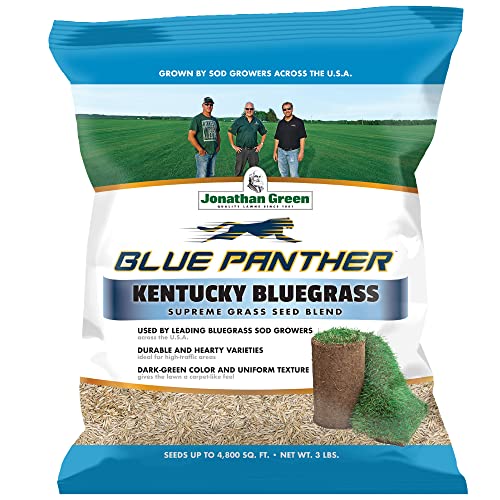
Jonathan Green Blue Panther Kentucky Bluegrass Seed – 3 lb

Jonathan Green Black Beauty Heavy Traffic Grass Seed – 3 lb

Jonathan Green Black Beauty Keystone PA Grass Seed – 7 lb

Jonathan Green Black Beauty Tall Fescue Blend – 15 lb

Jonathan Green Black Beauty Tall Fescue Blend – 25 lb

Scotts Turf Builder All-Purpose Mix, 20 lbs.

Lesco Sun & Shade Park Grass Seed – 10 lbs.

GreenView Turf Type Tall Fescue Sun & Shade, 3 lb.
A Deeper Look At The Lineup
Starting the list with a purist’s pick, the Blue Panther blend is 100% Kentucky bluegrass, the same cool-season species (a grass type that grows most actively in spring and fall when soil temps sit between 60 and 75 degrees) used by many of the country’s top sod farms. For New Jersey homeowners in the northern and central counties where bluegrass is the regional standard, this bag lets you match an existing KBG lawn or start a fresh one without introducing rye or fescue into the mix.
Bluegrass spreads through underground rhizomes (horizontal stems that send up new shoots), so thin spots gradually fill in on their own. In our view, that self-repair habit is the real long-term payoff, especially for a small yard where patchy areas bug you every time you mow.
Notable Gains
- Single-species bag means a uniform color and texture across the whole yard
- Rhizome-driven self-repair helps small bare spots close up over a season or two
- Trusted by professional sod growers, which speaks to its genetic quality
- 3 lb bag suits a smaller patch job rather than committing you to a huge surplus
Honest Caveats
- Pure bluegrass takes longer to germinate than rye-heavy blends, so patience is required
- Without tall fescue in the mix, drought recovery in a hot August can be slower
- Shade tolerance is limited; a yard with heavy tree cover may struggle
Who It Suits Best
Homeowners in northern New Jersey with mostly sunny yards who want that classic, dark-green bluegrass look and don’t mind a slower establishment window.
Skip It When
The Black Beauty Heavy Traffic Grass Seed handles active family yards better, and it’s the smarter choice if pets and kids rule your lawn.
If your lawn doubles as a soccer pitch, dog run, or summer playground, the Black Beauty Heavy Traffic blend is built with you in mind. Unlike the pure bluegrass of Blue Panther, this mix layers tall fescues with perennial rye (a fast-starting grass that germinates in roughly 5 to 10 days under good conditions) for a tougher stand that bounces back from cleats and paws.
The turf-type tall fescues in the blend produce a uniform leaf texture, which matters when a stray patch of coarse grass sticks out across an otherwise even lawn. For curb strips and backyard goal areas, the rye component speeds up the initial fill so you’re not staring at dirt for weeks.
Features That Help
- Perennial rye delivers quick germination, so bare patches green up within a week or two
- Tall fescue backbone holds up under repeat foot traffic from kids, dogs, and weekend sports
- Uniform leaf texture keeps the lawn looking consistent after the rye and fescue fill in
Points To Keep In Mind
- Not a full-shade product, so densely wooded lots may still struggle on the north side
- The 3 lb bag covers a modest area, so large yards will need multiple bags and a real budget
- Rye can go semi-dormant in peak summer heat, requiring steady watering to stay green
Made For
Suburban yards where the lawn sees daily use from children, dogs, or weekend games and you want a blend that recovers rather than thins out.
Look Elsewhere When
The Lesco Sun & Shade Park Grass Seed is a better fit for someone prioritizing a fine, manicured look over pure toughness, since its bluegrass base grows in tighter.
The Keystone PA blend earns its spot because it was designed with the Mid-Atlantic climate in mind, and most of New Jersey shares that same weather pattern. The recipe combines tall fescues, perennial rye, and Kentucky bluegrass, giving you quick cover from the rye, durability from the fescue, and that self-repair behavior from the bluegrass. For someone starting a new lawn in central or south Jersey, the three-species approach hedges against whatever the season throws at you.
The dark-green color it produces shows up well against landscape beds and walks, and the manufacturer recommends a mid-August to mid-October planting window, which lines up perfectly with New Jersey’s prime fall seeding season.
Useful Highlights
- Three-species formula covers multiple failure modes in one bag
- Tuned for the Mid-Atlantic climate, so timing and variety choices match regional conditions
- Delivers a dark-green color that holds its look into the cooler months
- 7 lb bag handles a mid-sized yard without forcing a second purchase
Trade Offs
- Spring seeding works in a pinch, but fall results typically look stronger in this region
- With three species in the mix, color and texture may vary slightly across the lawn
Best Suited To
Homeowners in central or southern New Jersey starting a new lawn from scratch and wanting a regionally tuned blend that doesn’t lean entirely on one species.
Reach For A Different Pick When
Scotts Turf Builder All-Purpose Mix, 20 lbs. makes more sense for someone patching multiple small areas across a larger property, since the bag size stretches further per dollar.
The 15 lb bag of Black Beauty Original Tall Fescue is the workhorse option for a property with mixed light conditions. It’s a 100% tall fescue blend, and tall fescue is the species that most consistently handles New Jersey’s hot, dry stretches because its roots can reach down several feet for water.
The waxy leaf coating helps the plant hold moisture during heat waves, which is exactly the kind of July weather that knocks out shallow-rooted bluegrass. In a yard with both sunny borders and a shaded side along the house, this blend tends to hold its color on both ends without the species changing halfway across the lawn.
Noteworthy Benefits
- 100% tall fescue, so the entire bag is built for drought resilience
- Performs in both sun and shade, removing the need to buy two products
- Leaf coating helps conserve moisture during peak summer stress
- 15 lb bag is sized for a serious overseeding or partial renovation
A Few Limitations
- No rye component, so initial germination is slower than mixed blends
- Tall fescue clumps can form if the lawn is allowed to thin out and reseed unevenly
- Coarser blade texture compared to bluegrass, which may bother owners wanting a putting-green look
Who Should Grab It
Homeowners with mixed sun-and-shade lawns who want drought tolerance baked in and don’t mind the slightly wider blade of turf-type fescue.
Consider Something Else When
You prioritize a fine, manicured blade, in which case the Lesco Sun & Shade Park Grass Seed offers a tighter bluegrass appearance, though it needs more consistent watering.
Key Specs
The 25 lb version of the same Black Beauty Original Tall Fescue blend exists for one reason: bigger properties. Same 100% turf-type fescue formula, same sun-and-shade versatility, just more of it in a single bag. For a yard north of 5,000 square feet, buying a 15 lb bag twice usually means you’re hoping the seed lot matches, while one 25 lb bag sidesteps that gamble.
The deep-root drought tolerance that makes the 15 lb version appealing carries over here, and you may find the larger bag more cost-efficient per pound when covering a substantial area.
What Earns Its Place
- 25 lb size covers a large yard in a single purchase
- Same drought-tolerant fescue genetics as the smaller Black Beauty Original bag
- Works in mixed sun-and-shade conditions without switching products
Soft Spots
- 25 lb bags are heavy and awkward to handle for a single person
- No rye in the mix, so a thin lawn can show bare spots longer before the fescue fills in
- Excess seed needs cool, dry storage to keep viability for next season
The Right Fit
Homeowners with half-acre-plus properties who want to reseed the whole lawn in one go without piecing together multiple smaller bags.
Not Your Match When
Scotts Turf Builder All-Purpose Mix, 20 lbs. is a better fit for someone tackling a smaller lawn or a string of patch jobs, since the coated seed starts faster in isolated areas.
Scotts Turf Builder All-Purpose is the bag most homeowners reach for without thinking twice, and the formula earns that habit. The seed is coated to absorb roughly twice the water of uncoated seed, which helps in New Jersey’s unpredictable spring weather when a dry stretch can wipe out a fresh seeding in a weekend. It’s also formulated for the Northern region and tolerates both sun and partial shade.
The mix is described as 99.9% weed-free, so you’re not paying for filler or off-species seed that competes with the grass you actually want. For a homeowner patching bare spots from dog runs, foot paths, or last summer’s drought, this is a forgiving option that doesn’t punish you for missing a watering.
Strong Points
- Water-absorbing coating helps seed survive uneven spring moisture
- Designed for both sunny and partially shaded areas
- 99.9% weed-free mix keeps the bag focused on grass seed
- 20 lb size handles multiple repair projects across a typical yard
Things To Consider
- Medium drought resistance means heavy summer stress can still brown it out
- Coarse-bladed texture compared to pure bluegrass blends
Perfect Match For
Suburban homeowners who want a single bag that handles a mix of repair spots, partial shade, and full sun without overthinking the species breakdown.
Swap It Out When
The Jonathan Green Black Beauty Keystone PA Grass Seed suits a homeowner starting a brand-new lawn in the Mid-Atlantic better, since its regional species mix is more deliberate for full-establishment work.
Key Specs
Lesco is a brand most people associate with golf courses and athletic fields, and the Sun & Shade Park blend brings that pro-grade genetics into a homeowner-friendly 10 lb bag. The mix includes Shamrock Kentucky bluegrass, which is known for a fine-bladed, dense appearance and a tightly knit sod structure. For someone chasing that fairway look without hiring a turf manager, this is the closest option on the list.
The 10 lb bag covers roughly 1,000 to 2,000 square feet, which lines up nicely with a typical suburban lot section. The blend also includes quick-germinating components, so the bluegrass doesn’t leave you staring at bare soil for the full three-week bluegrass window.
Where It Excels
- Shamrock Kentucky bluegrass delivers a fine, dense, professional-looking turf
- Quick-establishment components help the bluegrass fill in faster than a pure-KBG approach
- Adapts to full sun and partial shade within the same yard
Honest Caveats
- Non-returnable bag, so double-check your square footage before ordering
- Bluegrass genetics need more attentive watering than fescue-heavy blends
Who Will Love This
Homeowners who want a tight, fairway-style lawn and are willing to water consistently through the establishment period to get there.
A Better Fit Elsewhere
Jonathan Green Black Beauty Tall Fescue Blend – 15 lb is the smarter call for someone with a hot, sunny lot where watering isn’t going to be a daily ritual.
Key Specs
The GreenView Turf Type Tall Fescue blend rounds out the list as a quick-repair option. The 10 to 14 day germination window is faster than most fescue blends, and the 3 lb bag is sized for patch jobs rather than full-lawn renovations. For a homeowner in the middle of summer staring at a dead patch left behind by a kiddie pool, that quick turnaround matters.
The blend is built for both sun and shade, and the turf-type fescue genetics should keep the repair consistent with the rest of a fescue-based lawn. In our view, the smaller bag is the smart move when you only need a few square feet filled in.
Benefits That Matter
- 10 to 14 day germination speeds up bare-spot repair
- Turf-type tall fescue matches well with most cool-season lawns already on the property
- Sun-and-shade versatility handles the spotty light in many yards
Things To Weigh
- 3 lb bag is too small for anything beyond targeted repairs
- Fast germination is great for patches but doesn’t help with full-lawn establishment speed
Whose Shelf It Belongs On
Homeowners who already have a mostly healthy lawn and need a small bag on hand for the inevitable bare spot from a dog, a grill, or a snow shovel.
Not Your Match When
The Jonathan Green Black Beauty Tall Fescue Blend – 25 lb makes more sense for a full-property overseed, since the bag size and price-per-pound scale up properly.
Key Specs
Picking The Right Seed For A New Jersey Lawn
New Jersey sits in USDA hardiness zones 6 through 7, which puts it firmly in cool-season territory, and that means your species shortlist starts with Kentucky bluegrass, tall fescue, and perennial ryegrass. Each one has a personality: bluegrass offers the finest look and self-repairs through rhizomes, tall fescue brings deep roots and drought tolerance, and rye germinates fast to hold soil while the slower species fill in. The right pick depends on which trade-off matters most to your yard.
Match The Seed To Your Sun And Shade
Walk your yard at midday before you buy anything. The same lawn that looks fine at 9 a.m. can be in deep shade by 2 p.m. under an oak, and seed that thrives in full sun will struggle there. Full-sun lots across most of the state lean toward bluegrass or fescue. Partially shaded lots do better with fescue-heavy blends. Heavy, full shade under evergreens is the one scenario where even a quality seed blend will disappoint, and a shade-tolerant ground cover may serve you better.
Time Your Seeding For Fall
The window between mid-August and mid-October is the sweet spot for New Jersey seeding, with September being the bullseye. Soil is warm enough for quick germination, but the air is cooling off so seedlings aren’t cooked by July-style heat. Spring seeding works in a pinch, but you’ll fight crabgrass pressure and summer stress during the establishment phase, so seed success rates tend to be lower.
Calibrate Your Bag To Your Square Footage
Most bags list a coverage range on the label, and the difference between the low and high numbers is usually overseeding versus new-lawn seeding. Measure your yard roughly, add 10% for waste and uneven spread, then size your bag accordingly. A 3 lb bag won’t cover a half acre, and a 25 lb bag in a small yard just means storing leftover seed, which loses viability over time.
Key Considerations Across These Picks
Pitfalls Shoppers Hit
The most common error is buying the cheapest bag without checking the species list. A bargain blend loaded with annual rye looks great for six weeks and dies at the first frost, leaving you reseeding the next fall. The second mistake is ignoring sun exposure, since a sun-loving bluegrass blend will thin out under maples in two seasons. The third is skipping a soil test, which is free through the Rutgers Cooperative Extension, because pH under 6.0 will starve even premium seed of the nutrients it needs.
Where The Extra Money Goes
A premium seed blend typically costs more because the breeder selected for traits like disease resistance, drought tolerance, and darker color over multiple generations. Cheaper blends often use common, uncertified varieties that germinate fine but lack the genetics to handle stress. For a small patch, the price gap barely matters. For a half-acre lawn you’re committing to for the next decade, the upgraded genetics usually pay for themselves in fewer repairs and less watering.
Frequently Asked Questions
When Is The Best Time To Seed A Lawn In New Jersey?
Mid-August through mid-October is the prime window, with September being the sweet spot for most counties. Soil is still warm, nights are cooler, and fall rains help seedlings establish before winter.
Can I Mix Different Grass Seeds Together?
Yes, and many commercial bags are already blends. Avoid mixing a Kentucky bluegrass bag with a tall fescue bag unless you understand that the two species will look different side by side and require different mowing heights.
How Long Does Grass Seed Take To Grow In NJ?
Perennial rye can sprout in 5 to 10 days, tall fescue in 7 to 14 days, and Kentucky bluegrass in 14 to 21 days. Full establishment usually takes a full growing season, so patience matters more than watering frequency alone.
How Often Should I Water New Grass Seed?
Light watering two to three times a day for the first two weeks keeps the top inch of soil moist without drowning the seed. After germination, shift to deeper, less frequent watering to push roots downward.
Will Grass Seed Grow If I Just Throw It On The Ground?
Some will, but germination rates drop sharply without soil contact. Raking the seed into the top quarter-inch of soil or covering lightly with compost makes a meaningful difference in how thick the lawn comes in.
Wrap Up
Your New Jersey lawn comes down to a simple equation: match the species to your sun and traffic, time the seeding for early fall, and size the bag to your actual square footage. The blends above cover the most common scenarios, from a pure bluegrass showpiece to a fescue-heavy family lawn. Pick the one that fits your yard, water it through the first few weeks, and let the cool fall weather do the rest.
