

Sloped ground defeats most seed mixes. Water rushes downhill before roots can anchor, and bare patches become a recurring headache every time heavy rain moves through. The right seed for a hillside holds the soil in place, pushes roots deep fast, and survives the dry weeks that follow. This list focuses on mixes with deep-rooting fescues, quick-establishing ryegrasses, and mat-based options designed for the kind of uneven ground that washes out ordinary seed.
The Picks In Brief

Jonathan Green Black Beauty Sunny Grass Seed (1 lb)

Jonathan Green Black Beauty Dense Shade Grass Seed (1 lb)

Jonathan Green Black Beauty Heat & Drought Resistant Grass Seed (3 lb)

Jonathan Green Black Beauty SeedRoll Grass Seed Mat (50 Sq Ft)

Jonathan Green Blue Panther Bermudagrass Grass Seed (4 lb)

Jonathan Green Black Beauty Ultra Grass Seed (25 lb)

Pennington Annual Ryegrass Lawn Seed (10 Lb)

Scotts Turf Builder Grass Seed Sunny Mix (2.4 lb)
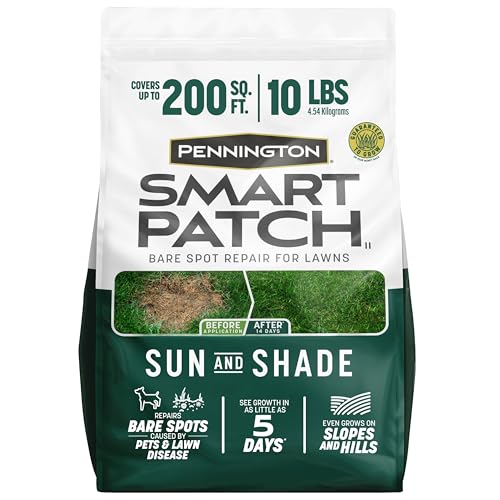
Pennington Smart Patch Sun & Shade Repair Mix (10 lb)

Pennington Clover Grass Seed Mix (7 lb)
More Details On Our Top Picks
A sun-baked south slope is where ordinary seed gives up, and this mix leans into that exact condition. It blends perennial rye, Kentucky bluegrass, and tall fescue for a stand that can handle bright exposure and the dry weeks that follow a long summer. The waxy leaf coating, which the brand compares to the skin of an apple, helps limit how much moisture the blade loses on a hot afternoon. For most sloped yards, that’s the difference between a thinning hill and a knit-together turf by midsummer.
Compared with the dense shade entry that follows, this one is built for direct light. Seed it in late summer or early fall for the cleanest establishment, and keep new seed consistently moist until germination.
Everyday Wins
- Three-species cool-season blend handles full sun and light shade.
- Waxy leaf coating slows evaporation, useful on slopes that dry fast.
- Deep-rooting fescue component helps anchor soil against runoff.
- Small 1 lb bag suits touch-ups on trouble spots without a big buy-in.
Some Limits To Know
- One pound covers only a modest area, so larger hills require several bags.
- Not the right pick for heavy shade, where the dense shade entry performs better.
Feature Snapshot
Who It Suits Best
Homeowners with sun-exposed slopes who want a versatile cool-season blend that holds color through the heat.
Reach For A Different Pick When
The hill sits under dense tree cover, in which case the Jonathan Green Black Beauty Dense Shade Grass Seed handles low-light conditions far better.
Slopes that sit behind a tall hedge or under a stand of maples need a different strategy than the sunny picks on this list. This Jonathan Green blend focuses on shade-tolerant varieties that still push into partial sun along the edges, so a hillside that shifts from bright to dim through the day gets a more uniform stand. Endophytes (beneficial fungal organisms living within the grass) add a layer of natural resilience to stress and common surface pests, which is useful in tucked-away corners that get less attention.
Pair this with the Sunny entry for a yard that has both exposures, since the two mixes complement each other rather than overlap.
Practical Pluses
- Shade-tolerant blend performs where sunlight is limited by trees or structures.
- Endophyte-enhanced varieties handle stress and common surface pests.
- Dark green color fills in bare patches under canopy for a uniform look.
- 14 to 21 day germination window is reasonable for a fall overseeding project.
Points To Keep In Mind
- Not the strongest performer in full, open sun where the Sunny mix is a better match.
- One pound is a small volume for an entire shaded hillside, so plan to buy more than one bag.
Key Specs
Made For
Gardeners with north-facing or tree-canopied slopes that struggle under anything labeled for full sun.
Look Elsewhere When
The slope runs hot and open all day, since the Jonathan Green Black Beauty Heat & Drought Resistant Grass Seed is engineered for that exposure.
When a slope bakes in midsummer and never quite recovers, the problem is usually a seed blend that taps out around the 90°F mark. This Jonathan Green mix pairs tall fescue with Texas bluegrass, a warm-leaning cool-season cross, to push that ceiling higher. Owners in transition-zone climates often see the waxy leaf coating (the same moisture-locking feature carried over from the Sunny entry) help grass hold its color when rainfall skips a week.
For hillsides that face south or west, this is a more targeted upgrade than the generic Ultra bag covered later in the list.
Where It Helps
- Handles temperatures up to around 100°F without shutting down growth.
- Texas bluegrass parentage adds heat tolerance to a fescue base.
- Waxy leaf coating reduces water loss on hot, exposed slopes.
- Three-pound bag covers more ground than the smaller 1 lb Sunny and Shade entries.
Practical Considerations
- Not the right call for heavy shade, where the Dense Shade pick fits the site better.
- Cool-season base means it slows in deep southern heat, even with the heat tolerance built in.
Best Suited To
Transition-zone gardeners whose sloped lawns take the brunt of afternoon heat and dry spells each summer.
Skip It When
You live in the Deep South, where the Jonathan Green Blue Panther Bermudagrass Grass Seed is a more natural fit for warm-season conditions.
Loose seed on a steep grade has a habit of migrating downhill with the first heavy rain. The SeedRoll fixes that problem by building the seed, a starter fertilizer, and a biodegradable mulch layer into a single mat you roll out and stake down. The included grass types are tall fescue, perennial rye, and Kentucky bluegrass, the same family that anchors several other entries on this list. On a steep bank where erosion is the bigger worry than coverage, that physical layer is the deciding factor.
Best applied mid-August through mid-October, or mid-March through mid-May, when soil temperatures are still warm enough to wake seed up quickly.
Points In Its Favor
- Biodegradable mat holds seed, fertilizer, and mulch together on steep ground.
- All-in-one format removes the need to buy starter fertilizer separately.
- Three-species cool-season blend handles sun and light shade.
- Targets both bare spots and hilly areas in a single product.
Worth Bearing In Mind
- 50 square feet is a small footprint for a large slope, so multiple rolls are usually required.
- Mat installation needs stakes or pins, which adds a small extra step versus broadcast seeding.
Feature Rundown
Perfect Match For
Gardeners dealing with a short, steep embankment where loose seed keeps washing away before it can root.
Not Your Match When
You need to cover a long, gentle slope, where bagged seed like the Jonathan Green Black Beauty Ultra Grass Seed spreads more economically.
Bermudagrass is the slope stabilizer of the warm-season world, and this Jonathan Green Blue Panther formulation aims at southern lawns where cool-season blends falter by July. Strong vertical and lateral rooting drives the plant deep and wide, which on a hillside translates to soil that stays put through summer storms. The brand also notes that this blend reduces the need for winter overseeding (a practice of spreading cool-season seed over warm-season grass to maintain winter color) compared to traditional Bermudagrass, an attractive point for anyone tired of the spring transition.
For southern slopes, this fills a role the cool-season Jonathan Green entries above simply can’t.
Standout Benefits
- Aggressive vertical and lateral rooting grips slope soil fast.
- Built for the heat and humidity of southern states.
- Reduces the need for annual winter overseeding compared to common Bermudagrass.
- Four-pound bag covers a meaningful patch of hillside.
Where It Is Less Suited
- Goes dormant and turns brown in winter in cooler zones, so a year-round green look requires overseeding.
- Not the right species for shaded slopes, where cool-season fescue blends perform better.
Feature Snapshot
Whose Shelf It Belongs On
Southern homeowners and landscapers planting warm-season turf on slopes that need serious erosion control through long summers.
A Better Fit Elsewhere
Northern or transition-zone gardeners, who will get more from a cool-season pick like the Jonathan Green Black Beauty Heat & Drought Resistant Grass Seed.
For full-hill projects or a new yard that includes a sloped section, a 25-pound bag of Ultra changes the math. The same dark-green, three-species cool-season foundation runs through this larger format, so the seed you spread across the flat back of the yard matches the seed that takes the slope. That continuity makes the lawn look like one knit-together stand rather than two separate patches that green up at different rates.
This is the bulk counterpart to the smaller 1 lb Sunny and Shade bags, designed for projects rather than spot repairs.
A Strong Showing
- Large 25 lb format suits full-yard seeding that includes a slope.
- Three-species blend matches the smaller Jonathan Green bags for consistent color.
- Quick germination helps a freshly graded slope establish before the first big rain.
- Deep-rooting fescue component supports long-term erosion control.
Trade-Offs To Consider
- 25 pounds is more seed than most small repair jobs need, so it suits whole-yard work.
- Bulk bag should be used within a season or two, since viability drops over time in storage.
Quick Facts
The Right Fit
Homeowners reseeding a full lawn that includes a noticeable slope, where one large bag beats several small ones.
Consider Something Else When
You only need to repair a small patch on a slope, in which case the Jonathan Green Black Beauty SeedRoll Grass Seed Mat keeps seed in place without overbuying.
Annual ryegrass is the sprint seed of the lawn world, germinating fast and covering bare ground in a week where most fescue blends take three. On a slope that needs to stop washing out before the next storm, that speed is a real asset. It works well as a temporary nurse crop, a fast-growing grass sown alongside slower varieties to shield soil and stabilize the surface while the permanent seed establishes. Pair it with a longer-term blend and you get both quick cover and staying power.
For most northern homeowners, this is a supporting player rather than the main seed on a slope.
The Good Stuff
- Germinates in as little as 3 to 7 days for fast slope cover.
- Useful as a winter overseed on southern Bermudagrass slopes.
- Provides temporary support for thin or damaged northern lawns.
- 10-pound bag covers a generous area for the price.
Factors To Consider
- Annual by nature, so it dies off after one season and needs to be reseeded.
- Not a long-term slope solution on its own, since it lacks the deep roots of fescue.
Best Suited To
Homeowners who need immediate slope cover and plan to overseed with a permanent cool-season or warm-season blend afterward.
Swap It Out When
You want a permanent stand, since the Jonathan Green Black Beauty Ultra Grass Seed delivers a long-term cool-season lawn in a single application.
Scotts redesigned this Sunny Mix around a “Root-Building Nutrition” ingredient package, which is meant to push roots deeper in the establishment phase. On a slope, deeper roots mean the plant holds on tighter when rain comes through sideways. The mix targets direct sun with some tolerance for light shade, so it fits the bright side of a yard where the Jonathan Green Heat & Drought entry also performs well.
For households already running other Scotts products, the brand familiarity is a small bonus, but the seed speaks for itself.
Benefits That Matter
- Root-Building Nutrition supports deeper early root development.
- Targets full sun and tolerates light shade for flexible placement.
- Medium to high drought resistance keeps color in dry spells.
- Smaller 2.4 lb bag is easier to handle for first-time spreaders.
A Few Limitations
- Coverage is modest at 2.4 pounds, so larger projects require multiple bags.
- Not specialized for dense shade, where a shade-specific pick is a stronger match.
Who Should Grab It
Gardeners with bright, foot-trafficked slopes who want a mainstream name-brand mix with a built-in establishment boost.
Where Another Pick Suits Better
The slope sits in deep shade, in which case the Jonathan Green Black Beauty Dense Shade Grass Seed handles low light more reliably.
Pennington Smart Patch is built for the spots that have already gone wrong, including dog damage, kid traffic paths, and the bare strips that collect at the top of a slope where mower wheels chew the turf. The mix adds microbials (beneficial microorganisms added to the seed coating) intended to support overall lawn health and disease resistance during the vulnerable establishment phase. A 10-pound bag covers up to 600 square feet, which is plenty for a handful of trouble zones on a hillside lawn.
For slopes that are mostly intact but have a few rough patches, this is more practical than reseeding the entire hill.
A Few Strong Suits
- Microbial blend supports disease resistance during establishment.
- Sun and shade formula fits mixed-light slopes.
- Useful as a dog-spot repair product for high-traffic yards.
- 10 lb bag covers up to 600 square feet for multiple patch projects.
Less-Strong Areas
- Not a full-lawn seeding solution, so it works best alongside a primary seed.
- Repair focus means the variety mix is a compromise rather than a specialist for any one condition.
Built With In Mind
Households with pets or kids who need to fix worn patches on a sloped lawn without redoing the whole hill.
Not Your Match When
The slope is bare from top to bottom, since the Jonathan Green Black Beauty SeedRoll Grass Seed Mat is better suited to full erosion-prone coverage.
Clover changes the math on sloped lawns because it fixes nitrogen, stays green through dry stretches, and forms a dense mat that holds soil in place. The Pennington mix targets northern regions, where white clover thrives from spring through fall. Seven pounds cover up to 1,400 square feet, so a single bag handles a sizable bank. You may find bees visiting the blooms in summer, which is worth knowing for households with kids or anyone allergic to stings.
This is a different kind of lawn than the fescue blends above, and the appeal is more about low input than manicured turf.
The Value In It
- Clover naturally fixes nitrogen, so it needs less fertilizer over time.
- Drought-tolerant once established, useful on dry slopes.
- Dense growth habit helps bind soil against surface runoff.
- 7 lb bag covers up to 1,400 square feet for whole-hill projects.
Some Limits To Know
- Northern-region formulation, so the performance drops in deep southern heat.
- Clover blooms attract bees, which may not suit households with allergy concerns.
Quick Facts
Who Will Love This
Northern homeowners who want a low-input, pollinator-friendly slope that holds soil without heavy feeding.
Consider Something Else When
You want a traditional turf look, in which case the Jonathan Green Black Beauty Ultra Grass Seed is a more conventional cool-season option.
What Matters Most Before Choosing Grass Seeds For Slopes
Match The Seed To The Sun Your Slope Actually Gets
Slopes facing south or west in the Northern Hemisphere get the brunt of afternoon sun, which dries seedbeds fast and stresses cool-season turf. North-facing slopes stay cooler and shadier, and Bermudagrass fails where fescue thrives. Walk the hill at midmorning, midday, and late afternoon to map the light before picking a bag. For most northern yards, a tall fescue base covers both exposures, while southern slopes often call for a warm-season Bermudagrass blend like the Blue Panther entry.
Look For Deep-Rooting Species Over Quick Germination Alone
Fast-germinating ryegrass looks impressive the first week, but it’s the fescue and bluegrass in a blend that hold the hill together a year later. Deep vertical roots anchor soil through heavy rain, and a waxy leaf coating (the moisture-locking feature on several Jonathan Green entries) reduces water loss during dry stretches. When comparing two bags at a similar size, weigh the species list more heavily than the “germinates in X days” claim on the front.
Decide How You Will Hold Seed On A Steep Grade
Anything steeper than a gentle incline fights you during establishment. Loose seed migrates downhill in the first storm, no matter how carefully you spread it. For short, steep embankments, a biodegradable seed mat like the Jonathan Green Black Beauty SeedRoll gives seed a physical anchor until roots take over. For long, gentle slopes, a traditional broadcast seeding with a starter fertilizer and light top-dressing of compost usually does the job.
Time The Seeding To Soil Temperature, Not The Calendar
Late summer through mid-fall is the sweet spot for cool-season seed, since soil stays warm enough for fast germination while air temperatures drop into the grass’s preferred range. Spring seeding works, but it competes with summer stress on young roots. The SeedRoll mat in this list actually lists its preferred windows right on the product: mid-August to mid-October, or mid-March through mid-May. Match that to your local frost dates for the cleanest establishment.
Key Considerations Across These Picks
Wrong Turns To Avoid
The most common mistake on a slope is choosing a shade mix for a sun-baked hill, or a sun mix for a heavily shaded bank, then wondering why half the seed never takes. A second pitfall is seeding right before a forecast downpour, which washes loose seed downhill before it roots. For steep grades, many shoppers skip the mat option and end up reseeding the same patch three times in a season. The third common slip is ignoring the seed-to-soil contact step, which means scattering seed on top of thatch (the layer of dead stems and roots that builds up between grass blades and soil) where it dries out instead of germinating.
What The Higher Tier Buys
Premium mixes earn their price through species selection, seed coatings, and added fertility packages. The waxy leaf coating on several Jonathan Green blends is a real agronomic feature, not marketing fluff, since it cuts evaporation and keeps the plant working through dry spells. The Root-Building Nutrition in the Scotts Sunny Mix is similarly functional, supporting deeper early roots. In the seed mat category, you pay for convenience, since the mat, seed, and fertilizer arrive in one product, and the biodegradable layer replaces the netting or straw that you’d otherwise need to source and apply separately.
Frequently Asked Questions
What Type Of Grass Seed Works Best On A Steep Slope?
Tall fescue is the go-to for most cool-season slopes because of its deep vertical roots. For warm-season zones, Bermudagrass handles steep grades well. Pair the right species with erosion control like a seed mat on grades steeper than about 3:1.
When Is The Best Time To Seed A Slope?
Late summer through mid-fall is ideal for cool-season seed, when soil stays warm and air cools. Mid-spring is a workable second window, though summer stress hits young roots harder.
Do I Need To Cover The Seed After Spreading It On A Slope?
Yes, on any grade steeper than a gentle incline. A light raking, a thin compost top-dressing, or a biodegradable seed mat keeps seed in place through rain and gives it the seed-to-soil contact it needs to germinate.
How Long Does It Take Grass Seed To Establish On A Hill?
Most cool-season blends show green growth within 7 to 21 days, but a slope is considered established only after a full season of root development. Hold off on heavy foot traffic until the second mowing cycle.
Can I Mix Two Seed Blends Together For A Slope?
Yes, pairing a fast-germinating annual ryegrass with a slower fescue blend gives both quick cover and long-term roots. Match the second blend to the sun exposure of the slope to keep the stand consistent.
Bottom Line
The right seed for a slope comes down to sun exposure, slope grade, and how soon you need cover. A sun-baked south-facing hill in the transition zone points toward the Heat & Drought Resistant entry, a steep shaded bank calls for the SeedRoll mat, and a southern Bermudagrass slope runs through Blue Panther. Pick the mix that matches your site, seed at the right soil temperature, and hold seed in place long enough for roots to anchor the hill.
