

Tampa lawns face a tough crowd: sandy soil, summer humidity, sudden downpours, and stretches of dry weeks. Picking the wrong grass seed means watching a new lawn crisp out by August or thin out under a live oak canopy. The picks below focus on blends and warm-season species that actually tolerate Central Florida conditions, from full-sun backyards to shaded side strips. The goal is a thicker stand, fewer re-seeds, and a realistic match for how you actually use your yard.
An Overview Of The Picks

Jonathan Green Black Beauty Dense Shade Grass Seed (1 lb)

Jonathan Green Black Beauty Heat & Drought Resistant Grass Seed (3 lb)

Jonathan Green Blue Panther Bermudagrass Grass Seed (4 lb)

Jonathan Green Black Beauty Tall Fescue Grass Seed Blend (15 lb)

Pennington Annual Ryegrass, Grass Seeds for Lawn, 10 Lb

GreenView Turf Type Tall Fescue Grass Seed, Sun & Shade Blend, 3 lb. Bag

Scotts Turf Builder Grass Seed Sunny Mix, 2.4 lbs.
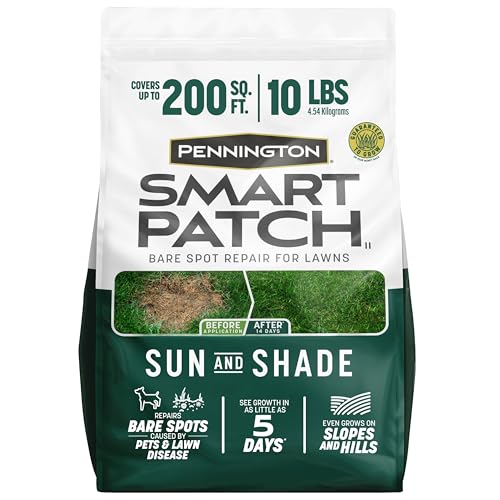
Pennington Smart Patch Grass Seeds for Lawn, Sun and Shade Lawn Grass Repair Mix, 10 LB

Pennington Bermudagrass Grass Seed, Bermuda Grass Seed, 5 lb
The Strengths Of Each Pick
Tampa’s mature neighborhoods are packed with live oaks and laurel oaks, and that’s where most generic seed blends give up. This Jonathan Green mix is built for those tough, low-light pockets where the sun barely reaches the soil. Think the strip between the house and a privacy hedge, or the side yard that stays damp and dim most of the day.
Endophytes, which are naturally occurring fungi that live inside grass blades and help deter insects, give this blend a quiet boost in pest-prone Florida humidity. The 1 lb bag is sized for patching problem areas rather than a full reseed, so it works well as a targeted add-on to a larger Bermuda or St. Augustine program.
Everyday Wins
- Formulated for shaded patches where most seed blends struggle
- Endophyte-enhanced for natural pest resistance in humid weather
- Produces a dark green color that blends well with established turf
- Small bag is easy to handle for first-time patch work
Honest Caveats
- Not designed for full-lawn coverage in Tampa’s heat, so plan to use it alongside a warm-season grass
- Germination typically takes 14 to 21 days, so patience is required in cooler months
Key Attributes
Whose Yard It Belongs On
Homeowners with mature tree cover and small shaded bare patches around sidewalks, fences, or under canopies.
Where Another Pick Suits Better
For full-lawn coverage in direct Tampa sun, the Jonathan Green Blue Panther Bermudagrass handles open areas with much more vigor.
Central Florida summers put regular fescues through a brutal stretch of heat and dry weeks. This blend leans on tall fescue and Texas bluegrass genetics, the kind of cool-season pairings that hold their color longer when the thermometer climbs toward triple digits. Compared to the shade-focused pick above, this is the one for open, sun-baked backyards.
A waxy leaf coating, similar in spirit to the natural waxy skin on an apple, helps each blade hold onto moisture. You may find that watering frequency drops once the lawn is fully established, which matters during Tampa’s water-restriction days. It is still a cool-season blend, so expect some thinning during peak July and August heat.
What Helps Most
- Stays greener through Tampa’s hottest months than standard fescue
- Waxy leaf coating limits moisture loss between waterings
- Performs in full sun and lightly shaded areas
Worth Noting
- Cool-season base means visible stress during peak summer heat
- Best seeded in fall for Tampa, not spring or summer
Right Fit For
Tampa homeowners who want a cool-season fescue look and accept some summer dormancy in exchange for spring and fall color.
A Better Fit Elsewhere
For a true warm-season lawn that stays green through July, Pennington Bermudagrass Grass Seed handles Tampa’s heat more naturally.
When the goal is a genuine Southern lawn rather than a transplanted cool-season one, Bermuda is the workhorse. Blue Panther is a newer Bermudagrass cultivar that spreads aggressively through both stolons (above-ground runners) and rhizomes (below-ground stems), filling in bare patches faster than older common Bermuda varieties.
This blend is tuned for southern climates and aims to cut down on the winter overseeding chore common with traditional Bermuda. If your last few summers ended with threadbare patches, the deeper vertical and lateral rooting here is the kind of change that pays off by August. Compared to the heat-tolerant fescue above, this is a true warm-season option that thrives in Tampa’s growing window from spring through fall.
Where It Delivers
- Aggressive spreader that fills in thin spots without constant reseeding
- Formulated for southern U.S. conditions, including Florida humidity
- Strong vertical and lateral rooting for a more durable surface
- Reduces the need for winter overseeding compared to common Bermuda
Room For Improvement
- Goes dormant and turns brown in Tampa’s cooler months
- Worst shade performance of any pick on this list, so full sun is essential
Quick Facts
Best Suited To
Full-sun Tampa homeowners ready to embrace a warm-season lawn and accept winter dormancy as part of the cycle.
Skip It When
Your yard has heavy tree cover. The Jonathan Green Black Beauty Dense Shade Grass Seed is the better call for shaded lots.

When a Tampa lawn is more moonscape than turf, a 1 lb or 3 lb bag will not cut it. The Black Beauty Ultra 25 lb bag is sized for full-yard renovations, where you are tearing up the old stand and starting over rather than spot-treating. The blend mixes tall fescues, Kentucky bluegrass, and perennial rye for a cool-season carpet that germinates quickly.
For most Tampa lawns, this is a transitional choice, used for fall renovation when you want a thick green look through the cool months before warm-season grass takes over. Owners commonly report that the 25 lb bag covers a generous area, though actual coverage depends on seeding rate and bare-soil prep. Heavier than the 15 lb and 3 lb options, so it is the right call only when you really need volume.
What It Does Well
- Large 25 lb size fits full-yard overseeding and renovation projects
- Quick germination speeds up the establishment window
- Blend of tall fescues, bluegrass, and rye for a denser stand
- Dark green color across the full lawn
Practical Considerations
- Heavy bag is awkward to ship and store in a small garage
- Cool-season base struggles through Tampa’s hottest months
Made For
Tampa homeowners planning a complete fall lawn renovation with several thousand square feet of bare or thin ground to cover.
Not Your Match When
You only need a small patch repaired. Pennington Smart Patch covers up to 600 sq ft without the oversupply.
Tall fescue earns its reputation in transitional zones, and Tampa sits in a tricky middle ground between northern fescue country and southern Bermuda territory. This 15 lb bag is a 100% tall fescue blend aimed at that middle ground, with the headline feature being roots that can grow up to four feet deep.
Those deep roots are what let the lawn reach moisture during Tampa’s dry stretches. The waxy leaf coating, similar to the heat-and-drought pick above, helps hold that moisture in. A 15 lb bag is a sensible middle size for medium Tampa yards, sitting between the spot-fixing 1 lb and the renovation-scale 25 lb.
What Makes Sense
- Roots reach up to four feet deep for stronger drought resilience
- 100% tall fescue gives a uniform leaf texture
- Works in both sunny and partially shaded areas
- Waxy coating helps preserve moisture in hot weather
Trade Offs
- Best planting window is mid-August to mid-October for Tampa, narrow for spring seeders
- Will still thin out during peak summer stress in full-sun yards
Who It Suits Best
Homeowners in Tampa’s transition-zone neighborhoods who want fescue’s look and have irrigation ready for the establishment period.
Look Elsewhere When
You need a true warm-season lawn. Jonathan Green Blue Panther Bermudagrass is better suited to full-sun, year-round Tampa conditions.
Annual ryegrass solves a specific Tampa problem: the months between November and March when warm-season Bermuda goes brown and the lawn looks tired. A 10 lb bag of Pennington annual ryegrass overseeds into that dormant Bermuda and gives you green coverage through the cooler season, then fades out as the Bermuda wakes up in spring.
Germination is fast, with visible green-up in roughly 3 to 7 days under good conditions, so overseeding late in the season is still on the table. The catch is the annual part: this is not a permanent grass. It dies back when temperatures climb, which is the design rather than a failure, but worth understanding before you buy.
Reasons It Performs
- Fast 3 to 7 day germination fills in quickly
- Reliable winter color over dormant warm-season lawns
- Sized for full-yard overseeding in a single bag
Softer Spots
- Annual lifecycle means reseeding every winter
- Needs full sun to perform well, at least 6 to 8 hours
Perfect Match For
Tampa homeowners with established Bermuda or Zoysia lawns who want a green yard through winter without replacing the main turf.
Another Choice May Suit
If you want a permanent year-round lawn, the Pennington Bermudagrass Grass Seed is a longer-term warm-season investment.
GreenView’s Sun & Shade blend sits in a useful middle spot for Tampa yards that swing between full afternoon sun and heavy oak shade across a single lawn. The formula uses turf-type tall fescues selected for fine leaf texture and a deep green color that does not shred under regular mowing.
Owners commonly report germination in the 10 to 14 day window, which is faster than many cool-season blends. That faster establishment helps the young grass outcompete weeds during the critical first few weeks. Compared to the larger 15 lb Jonathan Green fescue blend, this 3 lb bag is a smarter size for smaller lots or targeted repairs.
What Works In Its Favor
- Germinates in roughly 10 to 14 days, faster than many competitors
- Sun and shade versatility in a single bag
- Turf-type fescue selection gives a fine, uniform leaf texture
Honest Caveats
- Still a cool-season grass, so peak summer brings stress
- 3 lb bag is undersized for full-yard coverage in larger Tampa lots
Built With In Mind
Tampa homeowners with smaller, mixed-light yards who want a single seed product that handles both sunny and shaded zones.
Swap It Out When
You are renovating a large property. The Jonathan Green Black Beauty Ultra 25 lb bag covers more ground in fewer trips.
Scotts Turf Builder Sunny Mix is the entry point most first-time seeders reach for, and the redesigned formula leans into root-building nutrition to give young grass a stronger start. For Tampa homeowners with a small sunny patch to fix, the 2.4 lb bag is manageable to spread without a drop spreader.
The mix is built for full sun and light shade, with medium to high drought resistance once established. Compared to the heavy-duty Bermuda options above, this is more of a weekend-project choice for a small front yard or a worn side strip. Storage is easy too, since a 2.4 lb bag fits on a shelf without dominating the garage.
Useful Touches
- Includes root-building nutrition to support early establishment
- Compact 2.4 lb bag is approachable for first-time seeders
- Medium to high drought resistance once established
Less-Strong Areas
- Not the right match for full-sun, high-traffic Tampa yards over a few thousand square feet
- Cool-season base thins during peak summer in Florida
Feature Card
Who Will Love This
First-time lawn restorers with a small sunny Tampa patch and limited storage space for a giant seed bag.
Where Another Pick Suits Better
For a large sunny yard in Tampa, the Pennington Bermudagrass Grass Seed handles heat and traffic more reliably long-term.
Not every Tampa lawn needs a full reseed. Smart Patch is built for the realistic situation most homeowners actually face: a few dead spots from dog runs, foot traffic, or fungal damage. The 10 lb bag covers up to 600 square feet, which is plenty for several patches without oversupply.
What separates this from a plain seed is the included fertilizer and microbial package, which is designed to reduce disease pressure on young seedlings. In Florida humidity, where brown patch fungus can wipe out new grass in a week, that microbial support is a meaningful difference. Compared to the heavier renovation blends, this is more of a maintenance product than a full lawn rebuild.
The Value In It
- Combined seed and fertilizer simplifies patch repair
- Microbials support disease resistance during Florida’s humid months
- Covers up to 600 sq ft across multiple spots
- Works in both sun and moderate shade
Small Limitations
- Not designed for full-yard coverage, so a separate bag is needed for larger renovations
- Best results require careful watering during the first few weeks
Made For
Tampa homeowners dealing with pet spots, traffic wear, or scattered bare patches who want a single product that handles seed and feed in one pass.
Reach For A Different Pick When
You are starting from scratch on a large yard. The Jonathan Green Black Beauty Ultra 25 lb is sized for that scale.
Family yards, dog yards, and yards with kids on the slip-and-slide all ask the same question of a lawn: can it take the punishment? Pennington’s Bermudagrass is bred for exactly that, with aggressive self-spreading growth and improved cold tolerance compared to older common Bermuda varieties.
The deep root system is what lets it bounce back from foot traffic and dry spells. The trade-off, as with any Bermuda, is the winter dormancy period, when the lawn turns brown between roughly December and February. Compared to the Jonathan Green Blue Panther Bermuda earlier in the list, this is a more traditional Bermudagrass at a smaller 5 lb size, useful for patches and medium-sized yards.
Where It Helps
- Aggressive self-spreading fills in traffic-worn areas
- Improved cold tolerance extends the green season slightly
- Deep roots support recovery from wear and dry weather
Practical Considerations
- Goes dormant and turns brown in Tampa’s winter months
- Low-growing blend produces fewer clippings, but spreads into garden beds without edging
Right Fit For
Tampa households with active kids or pets who want a tough, self-repairing lawn and accept the winter brown-down.
Where A Sibling Pick Shines
For a yard with both sunny play areas and shaded edges, the Jonathan Green Black Beauty Tall Fescue handles the mixed-light zones better.
What To Weigh Before Picking Grass Seeds For Tampa
Match The Seed To Your Sunlight Map
Walk the yard at 10 a.m. and 3 p.m. before you buy. Full sun across the day means warm-season Bermuda is a realistic choice. If the yard has dense oak canopy or two-story shadow, even heat-tolerant fescue will struggle, and dense-shade blends become the play. Misreading sun is the most common reason a Tampa reseed fails, since a seed labeled heat-tolerant is not automatically shade-tolerant.
Cool-Season Versus Warm-Season Trade-Off
Tampa sits in a transition zone. Bermuda gives you a tough, year-round-resilient lawn that goes brown in winter, which is fine if you overseed with rye for color. Fescue stays green in winter but thins in the worst of summer. The honest read is that you are choosing between a year-round strong lawn with a winter nap, or a year-round green lawn with summer stress. There is no perfect option, only the trade-off that matches your priorities.
Germination Window And Timing
Annual ryegrass pops in a week, Bermuda takes longer to fill in, and fescues fall somewhere in between. Tampa’s best seeding window for warm-season grass is late spring into early summer, while cool-season blends do better in fall. Seeding at the wrong time is not a death sentence, but it is the kind of choice that means more watering, more weeds, and more reseeding later.
Bag Size And Coverage Reality
A 25 lb bag sounds like a great deal until you read the coverage at recommended seeding rates, which usually fall between 4,000 and 8,000 square feet depending on whether you are seeding new ground or overseeding. Measure your actual area, not your estimate of it, and round up by 10 percent for the inevitable overseeding pass on bare spots.
Key Considerations Across These Picks
Common Buying Mistakes To Dodge
The single most common mistake is buying a “shade-tolerant” cool-season blend and expecting it to survive a Tampa July in full sun. The label is not the yard. Soil prep matters just as much: skipping a starter fertilizer, broadcasting seed on compacted ground, or watering too lightly the first two weeks will wipe out even the best seed. Match the bag to the actual conditions, and budget time for soil prep and watering before you budget money for seed.
Where The Higher-Tier Bag Pays Off
Bigger bags and premium blends earn their keep on two fronts: seed count and cultivar selection. A 25 lb bag of a multi-species blend typically includes newer cultivars bred for deeper roots, better disease resistance, and finer leaf texture, which is why they germinate faster and hold up longer. For a small patch job, that premium is wasted. For a full-lawn renovation, it is the difference between a lawn you mow and a lawn you wrestle with all year.
Frequently Asked Questions
When is the best time to seed a lawn in Tampa?
Late spring through early summer is ideal for warm-season Bermuda, while fall is the better window for cool-season fescue blends. Annual ryegrass goes down in late October or November for winter color over dormant Bermuda.
Can cool-season grass survive a Tampa summer?
Tall fescue holds up better than rye or bluegrass, but expect some thinning and dormancy during July and August. Deep, infrequent watering and mowing at a taller height help cool-season lawns through the worst of summer.
How much seed do I need for a typical Tampa yard?
A 1 lb bag covers roughly 200 to 400 square feet for new seeding and up to 800 square feet for overseeding. Measure your lawn accurately and buy 10 to 15 percent more than you think you need.
Do I need to overseed Bermuda in winter?
Overseeding is optional, but it is the most common way Tampa homeowners keep a green lawn through the cooler months. Annual ryegrass is the typical pick, and it dies back naturally in spring as Bermuda wakes up.
How long until the lawn looks full?
Annual ryegrass gives visible green in about a week, fescues in 10 to 21 days, and Bermuda in 14 to 28 days depending on soil temperature. A lawn that looks thin at three weeks may simply be slower to establish, not a failed seed.
Bottom Line
Tampa lawns reward seed choices that respect the climate, and the right pick depends entirely on how much sun your yard gets, how much wear it takes, and whether you can live with winter dormancy. Match the seed to those realities rather than the prettiest bag, and water consistently through the establishment window. A little planning up front saves a season of frustration.
