

Starting a lawn from scratch, whether you’re patching bare spots or laying down new sod, comes down to a few practical questions: how much ground you’re covering, what kind of spreader you have, and whether your soil is hungry for phosphorus. The picks below cover bags for small repairs, full-size fertilizer options for new seedings, and a roll-out mat for sloped or tricky spots. Each one tackles a slightly different job, so the right match depends less on brand loyalty and more on the size of your project and the spreader sitting in your shed.
The Picks In Brief

Jonathan Green Veri-Green Fertilizer (5,000 Sq Ft)

Jonathan Green Veri-Green Fertilizer (1,500 Sq Ft)

Fertilome New Lawn Starter 9-13-7 (20 lbs)

Fertilome New Lawn Starter 9-13-7 (4 lbs)

The Andersons Premium New Lawn Starter 20-27-5
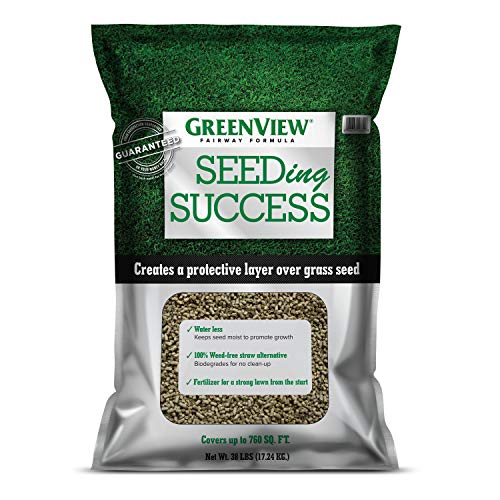
GreenView Fairway Formula Seeding Success

Scotts Liquid Green Max Lawn Food 32 oz.

Scotts Turf Builder Starter Food for New GrassFL

Greenview Starter Fertilizer 8 lb.
Petramax ReadyRoll Kentucky Grass Seed Mat
A Closer Look At Each Pick
For a yard that runs the better part of half an acre, this bag is sized to match the job without leaving you short mid-spread. Jonathan Green’s Veri-Green line is built for the seeding-to-sodding window, meaning you can use it before, during, or right after you put seed or turf down. The 12-18-8 ratio (Nitrogen, Phosphorus, and Potassium, the three numbers on any fertilizer bag) leans heavy on phosphorus, the middle number, because that’s the nutrient young roots crave while they establish.
If you’re seeding a brand-new front yard or overseeding a thin patch that won’t fill in, the coverage math works out cleanly to 5,000 square feet. For most homeowners with a standard push spreader, one pass does the trick. Compared to the smaller Jonathan Green option later in this list, you’re paying a small premium for the bulk, but the per-square-foot cost drops noticeably.
Everyday Wins
- Phosphorus-heavy 12-18-8 blend supports rapid root development in fresh seedlings.
- Covers up to 5,000 square feet, ideal for most suburban lots in a single pass.
- Works across seeding, overseeding, and sod-laying without switching products mid-project.
- Granular format spreads evenly through drop or broadcast spreaders.
Things To Consider
- The bag is heavy to haul from the store, so plan a dolly or curbside pickup.
- You’ll want to water it in within a day of application to avoid granule burn on tender new blades.
Who It Suits Best
Homeowners seeding a full front or back yard who want one bag to cover the whole job and don’t mind a heavier load to lug.
Look Elsewhere When
The Fertilome 9-13-7 20 lb. bag is a smarter grab if you prefer a milder phosphorus level and lower overall cost per application.
Same proven formula as the larger Jonathan Green bag, just scaled down to the size of a typical urban yard. If you’re patching a side strip, overseeding after a rough summer, or laying a small roll of sod along a walkway, 1,500 square feet of coverage is usually plenty. The phosphorus-forward 12-18-8 analysis still does the heavy lifting on root establishment, and you avoid the leftover-bag storage problem at season’s end.
It’s the same trusted product chemistry as the 5,000 sq ft sibling, just sized for tighter projects. You may find the price-per-pound runs higher than its bigger brother, but that’s the trade for buying only what you’ll use this season. Storage is easy in a garage shelf or shed corner, and the bag stays pourable without clumping in low humidity.
The Upside
- Compact 1,500 sq ft coverage avoids waste on smaller projects.
- Same 12-18-8 phosphorus-rich profile as the larger bag.
- Easy to store without taking over a shelf or corner of the garage.
Worth Noting
- Per-pound cost runs higher than the 5,000 sq ft version, so bigger yards will pay more overall.
- Limited availability can vary depending on region and season.
Right Fit For
City and suburban gardeners working on a single patch, side yard, or small new lawn who want the Jonathan Green formula without overspending on unused product.
Skip It When
The Jonathan Green Veri-Green 5,000 sq ft bag is a better pick when you’re covering more ground and want a lower per-square-foot cost.
Fertilome’s 9-13-7 New Lawn Starter is the kind of bag that quietly shows up in a lot of sheds for good reason. The analysis is gentler than the high-phosphorus leaders in this list, with a focus on balanced early growth rather than pushing root development into overdrive. The 20 lb. bag covers up to 5,000 square feet, so it’s right at home on a typical suburban lot and works fine through a standard drop or broadcast spreader.
Where the 12-18-8 Jonathan Green blends front-load phosphorus, this 9-13-7 stays closer to a starter-and-maintenance middle ground. You may find the lower middle number easier on soils where phosphorus has already built up from years of feeding. It’s a practical pick for homeowners who don’t want to fuss with soil tests and just need a sensible starter that won’t oversupply any single nutrient.
Everyday Perks
- 9-13-7 ratio suits soils that already carry some phosphorus from past feedings.
- Covers up to 5,000 sq ft per bag, matching most residential lawns.
- Granular form works through both drop and broadcast spreaders without sticking.
Trade Offs
- Lower phosphorus than competitors means slightly slower root push in depleted soils.
- The 20 lb. bag is awkward to lift, so a hand truck helps on delivery day.
Best Suited To
Homeowners who want a balanced, no-fuss starter for a typical new lawn or overseeding project and prefer gentler nutrient ratios.
Not Your Match When
The Andersons Premium New Lawn Starter 20-27-5 is the stronger call for depleted soils and demanding seedings that need a real phosphorus kick.
For a first-time lawn owner, a four-pound bag of Fertilome starter is far less intimidating than wrestling a 20-pounder out of a trunk. You get the same 9-13-7 analysis as the larger Fertilome bag, just sized for about 1,000 square feet of coverage. That’s the right amount for a small front yard, a side strip, or a few trouble spots where the existing lawn refuses to thicken up.
The lighter bag also makes it easier to spread by hand if you don’t own a push spreader, though a small drop spreader gives the most even coverage. Compared to the Jonathan Green 1,500 sq ft option, this one is the better fit for a single DIY weekend and a low budget. You may find yourself wishing you’d bought two bags if your patch turns out bigger than expected, so measure first.
Good Reasons To Consider
- Lightweight 4 lb. bag is easy to carry, pour, and store.
- Covers up to 1,000 sq ft, perfect for a small yard or spot repair.
- Same trusted 9-13-7 ratio as the larger Fertilome option.
Points To Keep In Mind
- Limited coverage means you’ll need multiple bags for full-yard projects.
- Per-pound cost is higher than the 20 lb. sibling, so bigger projects pay more overall.
Who Should Grab It
First-time lawn owners tackling a small yard or just a handful of bare spots who want a low-commitment starter bag.
Reach For A Different Pick When
The Greenview Starter Fertilizer 8 lb. bag is a smarter step up if you need around 2,500 sq ft of coverage without jumping to a 20-pounder.
The Andersons sits at the serious end of the starter fertilizer category, and the 20-27-5 analysis tells you why. That middle number is phosphorus, and at 27%, you’re getting the kind of root-pushing blend that professionals reach for on golf courses and high-end turf installs. The 18 lb. bag covers up to 5,000 square feet, so the per-application cost stays reasonable even at this strength.
This bag also adds 1% iron for deeper greening, plus a mix of quick-release and slow-release nitrogen so seedlings get an early meal and a follow-up snack. For most home lawns, the strength is overkill, but for thin topsoil, sandy ground, or a brand-new construction site where the builder stripped every ounce of organic matter, that extra phosphorus earns its keep. Owners commonly report visible greening within the first couple of weeks, and the slow-release portion keeps feeding for weeks after.
Why It Works Well
- 20-27-5 analysis delivers the highest phosphorus dose in this list for aggressive root development.
- 1% iron bonus supports deeper green color in the same pass.
- Quick- and slow-release nitrogen gives seedlings an immediate and sustained feed.
- Safe for all turf types, including the more demanding varieties.
Honest Caveats
- Overkill for lawns that already test high in phosphorus.
- Higher per-bag cost than the gentler 9-13-7 options.
- Smaller granules may clog older spreaders if not calibrated properly.
Made For
Homeowners with depleted, sandy, or freshly disturbed soils who want a professional-grade starter and don’t mind paying a bit more for the analysis.
Swap It Out When
The Jonathan Green Veri-Green 5,000 sq ft bag is plenty for typical suburban lawns where you don’t need the 27% phosphorus push.
GreenView takes a different angle: instead of just dropping fertilizer, the 38 lb. Seeding Success bag pairs starter nutrients with a biodegradable seeding mulch. The mulch holds moisture around the seed and includes a tackifier, a sticky binding agent that helps the product stay put on slopes and in wind. For bare spot repair or reseeding a patchy front strip, that combination means one bag replaces the usual three-way routine of seed, fertilizer, and straw.
Coverage is listed at 760 square feet, which sounds modest but reflects the heavy mulch component. You may find the price-per-square-foot higher than a plain fertilizer, but the labor savings add up fast when you skip the straw step. Compared to the Petramax roll-out mat later in this list, the GreenView bag still requires you to broadcast seed separately, so it’s a middle path between a classic fertilizer and a full mat system.
Strengths Worth Knowing
- Combines biodegradable mulch and starter fertilizer in one application.
- Built-in tackifier keeps the mix in place on slopes and in wind.
- Eliminates the need for loose straw over new seed.
- Designed for spot repair with no cleanup required after it breaks down.
Some Limits To Know
- 760 sq ft of coverage is small for the bag size, so it suits patches more than full lawns.
- You still need to supply your own grass seed since the bag covers only mulch and nutrients.
- Heavier 38 lb. bag is harder to maneuver than a standard fertilizer sack.
Perfect Match For
Homeowners repairing bare spots on slopes or windy lots who want to skip the straw step and keep seed in place without extra cleanup.
Consider Something Else When
The Petramax ReadyRoll mat is the better route for anyone who wants seed, mulch, and fertilizer pre-assembled on a roll they can unspool.
Strictly speaking, Scotts Liquid Green Max is a maintenance product rather than a true grass starter, but it earns its spot for the homeowner who’s already seeded and now wants visible results before a backyard event. The liquid formula, applied through a hose-end sprayer, delivers nutrients and iron directly to the leaf surface, so you can see greener blades within days rather than weeks.
That speed comes from foliar feeding, which is when the plant absorbs nutrients through the leaves rather than the roots. It’s a different mechanism than the root-driven granular starters above, so think of this as a complement, not a replacement. Compared to the dry starters in this list, the liquid form trades long-term root building for fast visual payoff, and the 32 oz. bottle attaches to any standard garden hose in seconds.
Benefits That Matter
- Liquid foliar application shows visible greening within a few days.
- Hose-end bottle skips the spreader entirely.
- Works on any grass type without complicated calibration.
Possible Compromises
- Not a true starter formula, so it won’t push the same root growth as a granular product.
- Bottle coverage depends heavily on walking pace and water pressure, which can vary.
- Results fade faster than slow-release granular feeding.
Whose Shelf It Belongs On
Homeowners who already have an established or new lawn in the ground and want a fast visual boost before entertaining or listing the house.
A Better Fit Elsewhere
The Jonathan Green Veri-Green 5,000 sq ft bag is the proper starter if you’re seeding from scratch and need actual root-building nutrition.
The “FL” in this Scotts Turf Builder product name isn’t a typo. It’s a Florida-specific formulation, which matters because sandy, fast-draining Florida soils behave nothing like the clay or loam most other starter fertilizers are designed around. The 3.27 lb. bag is on the small side, but for a regional patch, repair, or a few hundred square feet of new St. Augustine or Bahia, the analysis lines up with the state’s unique nutrient profile.
You can apply it when planting new grass, reseeding an existing lawn, or laying fresh sod, so it covers most establishment scenarios. Compared to a generic national starter, you may find the FL version gives more consistent results in southern coastal yards. For homeowners north of the frost line, the broader Jonathan Green or Greenview options are a better fit.
A Few Strong Suits
- Formulated specifically for Florida’s sandy soils and southern grass types.
- Works across new seeding, overseeding, and fresh sod installations.
- Encourages faster, thicker root development than unfed new lawns.
Things To Weigh
- 3.27 lb. bag only covers a small area, so larger projects need multiple bags.
- Regional fit means it’s the wrong choice for lawns outside the southeastern climate band.
Built With In Mind
Florida homeowners establishing or overseeding St. Augustine, Bahia, or Bermuda lawns in sandy coastal soils.
Another Choice May Suit
The Petramax ReadyRoll mat works well for southern heat-tolerant patches where you want a roll-out solution with built-in seed.
The Greenview 8 lb. Starter Fertilizer lands in the sweet spot between the tiny 4 lb. beginner bag and the hefty 20 lb. workhorses. Coverage is rated at 2,500 square feet, which lines up with a medium-sized yard or a single major overseeding pass. Like most starters, the analysis leans phosphorus-heavy to fuel root development in the critical first few weeks after seeding.
Greenview pairs quick-release and slow-release nitrogen, so seedlings get a green-up lift and a follow-up feed over the next several weeks. The mid-size bag is a comfortable carry for most adults, and the granular format flows cleanly through a standard rotary spreader. For most homeowners, this bag size hits the practical middle ground: enough product to finish a typical project without ending the season with a half-bag taking up shelf space.
Useful Touches
- Mid-size 2,500 sq ft coverage fits a typical yard in a single bag.
- Quick- and slow-release nitrogen supports both early green-up and steady feeding.
- Phosphorus-forward blend suits spring or fall seedings.
- Apply right before or right after seeding for maximum root uptake.
Where It Is Less Suited
- Not a one-stop product for sandy or heavily depleted soils that need extra phosphorus push.
- Requires a separate grass seed purchase since the bag covers only nutrients.
The Right Fit
Homeowners with a medium-sized yard who want a balanced starter that handles either spring or fall seedings without overspending.
Where Another Pick Suits Better
The Andersons Premium 20-27-5 is the upgrade path for depleted soils where a higher phosphorus dose is the priority.
The Petramax ReadyRoll is less a fertilizer and more a delivery system. Each roll comes pre-loaded with seed, biodegradable mulch, and starter fertilizer, so the three things you usually juggle at seeding time are already assembled and evenly spaced. At 108 feet per roll, it covers meaningful repair stretches, and the perennial rye plus tall fescue blend is heat-tolerant enough for southern lawns.
You unroll it, water it, and let the mat break down naturally as the seed germinates underneath. Compared to the GreenView Seeding Success bag, the Petramax roll removes the broadcasting step entirely, which is a real help on windy days or tricky slopes. You may find the per-square-foot cost higher than buying seed and fertilizer separately, but the labor savings and even seed spacing tend to justify the premium for patch repairs.
Reasons It Performs
- Pre-assembled seed, mulch, and fertilizer on a single roll simplify the seeding process.
- 108 ft. length handles a sizable repair strip in one go.
- Heat-tolerant perennial rye and tall fescue blend suits southern lawns.
- Biodegradable mat breaks down naturally as the grass establishes.
Worth Bearing In Mind
- Per-square-foot cost is higher than broadcasting seed and fertilizer separately.
- Roll format limits use to strips and patches rather than full-lawn coverage.
- Needs consistent watering during germination for the mat to break down properly.
Who Will Love This
Homeowners tackling patchy or bare southern lawns who want a roll-out system that handles seed, mulch, and fertilizer in one pass.
Not Your Match When
The Jonathan Green Veri-Green 5,000 sq ft bag is a better value for full-lawn projects where broadcast spreading is practical.
What To Weigh Before Picking A Grass Starter
A starter fertilizer’s job is simple on paper: push phosphorus to new roots while the plant can’t yet feed itself. The execution gets more interesting once you factor in your soil, your spreader, and the size of the project.
Match The Bag To Your Square Footage
Coverage numbers on the bag are the single most useful filter. Buying a 5,000 sq ft bag for a 600 sq ft patch means wasted product and shelf space. Buying a 1,000 sq ft bag for a half-acre means multiple trips and inconsistent application passes. Measure your lawn or the repair area before you order, and round up modestly so you don’t run short mid-spread.
Phosphorus Levels Tell The Real Story
The middle number on any fertilizer bag is phosphorus, and starter blends tend to be heavy on it. A 9-13-7 ratio like Fertilome’s is balanced and gentle. A 12-18-8 like Jonathan Green’s pushes harder on root development. A 20-27-5 like The Andersons is professional-grade and best for depleted, sandy, or construction-torn soils. Soils that have been fed regularly for years often don’t need the higher end of the phosphorus range, so a soil test can save you money and prevent nutrient runoff.
Granular Vs. Liquid Vs. Mat
Granular starters are the workhorse and work through any standard spreader. Liquid products, like Scotts Green Max, deliver fast visible results through foliar feeding but don’t replace true starter nutrition. Roll-out mats handle seed, mulch, and fertilizer together, which trades higher per-square-foot cost for much faster application and even seed spacing. The right pick depends on whether you value low cost, fast results, or low labor.
Watch Your Spreader Calibration
Most application mistakes come from a spreader set too high or too low. A pass that lays down too much fertilizer can burn young seedlings, while a too-light pass wastes the product. Worth running a small test strip on a driveway or sidewalk before turning the spreader loose on bare soil.
Key Considerations Across These Picks
Mistakes Worth Dodging
The single most common misstep is applying starter fertilizer on top of dry seed without watering it in. Granular fertilizer sitting on a dry surface can scorch tender seedlings, and the nutrients won’t reach the root zone until moisture activates them. Another trap is skipping the soil test entirely and going straight for the highest-phosphorus bag, which can over-supply phosphorus where it isn’t needed and even trigger local runoff concerns. Finally, mixing starter fertilizer with regular weed-and-feed products is a bad idea, since the pre-emergent herbicide in those blends can stop new grass from germinating in the first place.
Where The Extra Money Goes
Higher-tier starters like The Andersons 20-27-5 and the Petramax ReadyRoll mat cost more per bag for specific reasons. Premium blends use finer, more uniform granules for even spreader distribution, slow-release nitrogen coatings that feed over weeks instead of days, and added micronutrients like iron for color. The Petramax mat, meanwhile, bakes in the labor of seeding and mulching into the price of the roll. For depleted soils, sloped sites, or homeowners who’d rather pay more once than redo a patch that failed, the upgrade typically pays for itself in saved weekend hours and thicker results.
Frequently Asked Questions
When should starter fertilizer be applied?
Apply it just before seeding or immediately after seeding, and always water it in within 24 hours so the nutrients reach the root zone and don’t burn the new blades.
Can starter fertilizer be used on an established lawn?
Yes, but it’s a waste of the high-phosphorus profile. Established lawns respond better to regular nitrogen-rich fertilizer unless a soil test shows a specific phosphorus deficiency.
Do all grass starters contain phosphorus?
Most do, since phosphorus is the key nutrient for new root growth, but the percentages vary widely. A 9-13-7 blend is much gentler than a 20-27-5, so check the middle number before buying.
How long does it take to see results from starter fertilizer?
Root development starts within the first one to two weeks, but visible top growth usually takes three to four weeks depending on grass type, soil temperature, and watering consistency.
Is a seed mat better than broadcasting seed with starter fertilizer?
Mats cost more per square foot but save labor, hold seed in place on slopes, and remove the guesswork of even seed spacing. For small patches or tricky sites, they often outperform traditional broadcasting.
Bottom Line
The right grass starter depends almost entirely on the size of the project and the condition of the soil. For a typical suburban yard, a balanced 9-13-7 or 12-18-8 granular covers the bases without overspending. Depleted or sandy ground justifies stepping up to a higher-phosphorus professional blend, while sloped patches and southern lawns often benefit from a roll-out mat that holds everything in place. Pick the bag or roll that matches the square footage in front of you, water it in, and give the new grass a few weeks to do its work.
