

Cold nights can undo a season of careful seedling work in a small greenhouse. The right heater keeps tender roots alive through frost, extends your growing window, and turns a structure the size of a garden shed into a year-round space. Below are ten heaters and heat mats that suit compact glasshouses, grow tents, and hobby-sized enclosures, with practical notes on who each one actually serves.
A Snapshot Of The Selections

DR. INFRARED HEATER DR218-3000W Greenhouse Heater (3000W)

DR. INFRARED HEATER DR218-1500W Greenhouse Heater (1500W)
Dura Heat EUH1465 Electric Forced Air Heater (5,120 BTU)

Bestio Seeding Heat Mat 10″ x 20.75″ (2 Pack)

Bio Green PHX 2.8/US Phoenix Greenhouse Heater

Ruyyi Seedling Heat Mat 10″ x 20″

VEVOR Greenhouse Heater 1500W PTC (3-Speed)

GRPWWT Greenhouse Heater with Digital Thermostat
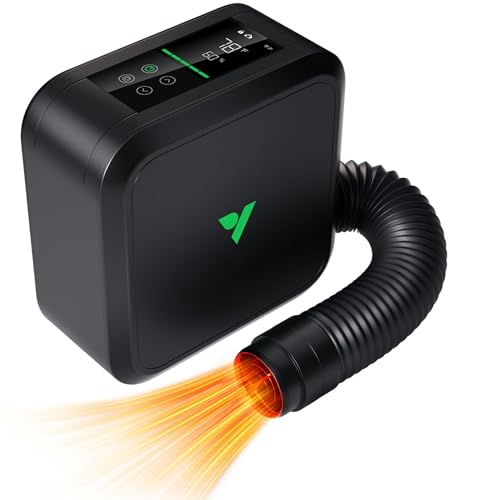
VIVOSUN AeroFlux 700W PTC Grow Tent Heater
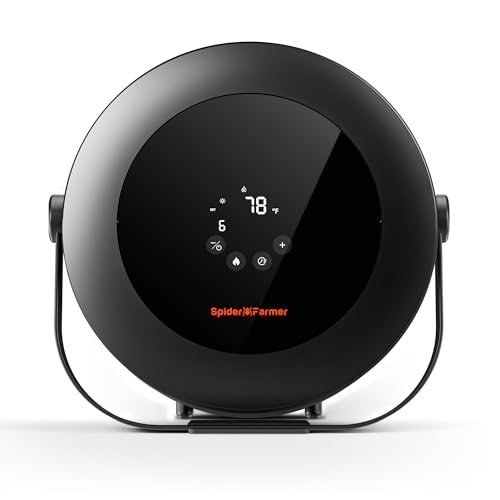
Spider Farmer Heater 530W 10-Level PTC
Taking A Closer Look At The Options
For a small greenhouse in a cold-winter region, the DR218-3000W delivers the kind of thermal headroom most hobby heaters cannot match. The DR218-3000W uses infrared (IR) heating, a technology that warms objects and surfaces directly rather than just the air, which matters when overnight temperatures drop hard. Compared with the 1500W sibling below, this version simply pushes more of that radiant energy into the space, making it well suited to lean-to glasshouses and outbuildings with poor insulation.
You should expect a heavier unit that wants a dedicated outlet and some clearance from bench foliage, and the fan is audibly present at full output. In our view, this one earns its place when the greenhouse is genuinely larger than a small starter kit and you need redundancy against a real cold snap.
The Practical Payoff
- 3000W of radiant heat holds interior temperatures above freezing through hard overnight drops.
- Object-warming IR profile keeps plants warm even when ambient air is still cool.
- Sturdy housing handles the humid, wet environment of an enclosed greenhouse.
- Roughly twice the heat headroom of the 1500W DR218, useful for taller glasshouses.
Things To Consider
- Overkill for a 6×4 poly tunnel where a smaller fan heater will do the same job for less draw on your circuit.
- Heavier to mount and reposition than the more portable forced-air options on this list.
Key Specs
Best Suited To
Cold-region growers running larger hobby greenhouses who want radiant heat with serious thermal margin.
Where Another Pick Suits Better
Step down to the DR. INFRARED HEATER DR218-1500W if your structure is a compact 6×8 or smaller, since that wattage is easier on household circuits.
The 1500W version of the DR218 keeps the same IR-warming profile as its bigger sibling but at a friendlier draw on a standard 15-amp household circuit. For most hobby greenhouses in the 6×8 to 8×12 range, this size is the practical sweet spot, since you can run it on the same outlet that powers a light or two without tripping breakers. The heater still warms the actual bench and pots rather than just pushing hot air around, which is what protects seedlings on a still night.
It is not silent, and it does not have the headroom of the 3000W model for genuinely brutal cold, but as a steady winter workhorse for a small greenhouse it is hard to argue with.
Bright Spots
- Right-sized for a typical hobby greenhouse on a standard household circuit.
- IR heating warms plants directly, useful when outdoor temps dip below 20F.
- Permanently lubricated motor needs less seasonal attention than cheaper fan units.
- Sturdy enough for the humid, drip-prone interior of an enclosed growing space.
Worth Noting
- Single fixed wattage means no fine temperature control without an external thermostat.
- Larger than ceramic space heaters, so it wants a real corner of floor space.
Made For
Hobby growers with a small to mid-size greenhouse who want reliable radiant heat without rewiring the shed.
Consider Something Else When
Pick the Dura Heat EUH1465 instead if you would rather have forced-air circulation and a built-in thermostat in a more compact cabinet.
The EUH1465 takes a different approach from the IR models above. A ceramic heating element paired with a high-velocity fan pushes warm air through the space, and the pivoting base lets you aim the output across a greenhouse bench rather than into a corner. The 5,120 BTU figure is real, and in a tight 6×8 structure it can raise interior air temperature quickly on a cold morning when you only need a few hours of warm-up.
The trade-off is fan noise and dry air, which is a familiar story with forced-air ceramic units. The included thermostat is basic but functional, and the rugged steel body shrugs off the kind of bumps that happen when you are moving pots and trays around.
What Earns Its Place
- 5,120 BTU output warms a 6×8 to 8×10 greenhouse above frost in under an hour.
- Built-in thermostat avoids the need to buy a separate controller for simple setups.
- Pivoting base directs heat toward benches instead of walls.
- Steel body handles the bumps of a working growing space.
Trade Offs
- Audible fan at full speed, so it is less suited to a quiet backyard garden room.
- Forced air dries humidity faster, which means you may need to water more often.
Key Specs
Perfect Match For
Garage-style greenhouses and shed conversions where fast air warming matters more than silent operation.
Not Your Match When
Choose the GRPWWT Greenhouse Heater with Thermostat if you want digital temperature control rather than a manual dial.
Heat mats are not air heaters, but for a small greenhouse in early spring they do some of the most important warming work. A seedling mat sits under a standard 10×20 tray and delivers gentle bottom heat, the exact condition most warm-season crops want for germination. The two-pack format lets you run two trays side by side, which is enough for a serious weekend of seed starting without taking up much floor space.
You will still need an air heater for genuine frost nights, but a mat is what gets seeds out of the ground faster in a chilly greenhouse. For many home growers, pairing a mat with a small fan heater is the practical answer to cold-season propagation.
Everyday Wins
- Two mats cover a multi-tray setup, useful for a small greenhouse propagation bench.
- Standard 10×20 footprint fits common seed trays directly.
- Waterproof surface is easy to wipe down between seed cycles.
- Uses very little electricity compared with any air heater on this list.
Minor Gripes
- Does not warm the surrounding air, so it pairs with, rather than replaces, a true greenhouse heater.
- Two-pack format is more mat than you need if you only start a few trays each season.
Feature Snapshot
Who Will Love This
Seed-starting hobbyists who want bottom heat for germination in a small greenhouse without running a full air heater during the day.
A Better Fit Elsewhere
Pick the single Ruyyi 10″x20″ Seedling Heat Mat if you only need one tray of bottom heat and want a simpler setup.
The Phoenix PHX 2.8 has been a familiar sight in hobby greenhouses for years, partly because it does two jobs at once. Bio Green designed it as a combined heating and air-circulation system, with 9,553 BTU of output and a stainless steel cabinet that shrugs off the kind of corrosion that kills cheaper heaters in a humid greenhouse. The built-in frost detection is the real headline feature: it watches the temperature and brings the unit on automatically when conditions threaten your plants.
The 220-240V supply means you will need to confirm your greenhouse wiring supports it, and in a 6×6 structure the output is generous. For four-season frost protection in a small greenhouse that you cannot check every day, this is one of the more reassuring options on the list.
Real-World Strengths
- 9,553 BTU output is substantial for a small greenhouse in a cold climate.
- Stainless steel body handles greenhouse humidity for years.
- Built-in frost detection turns the unit on automatically on cold nights.
- Doubles as an air-circulation fan in warmer months, useful for reducing fungal issues.
Room For Improvement
- 220-240V supply may need a dedicated circuit or compatible outlet in your shed.
- Larger physical footprint than ceramic space heaters, so plan floor space accordingly.
Built With In Mind
Four-season greenhouse owners who want frost protection that switches on without a separate thermostat.
Look Elsewhere When
The Dura Heat EUH1465 is a simpler 120V option if your greenhouse runs on standard household current.
The Ruyyi mat is a single 10×20 seedling heat mat, which is the format most home growers actually use. Drop it under a standard tray, plug it in, and the mat holds the root zone in the 70F to 85F range that peppers, tomatoes, and many herbs need to germinate quickly. It is one of the simplest ways to get earlier seedlings in a small greenhouse that is not freezing but is still too cool for reliable sprouting.
The waterproof surface is the practical detail worth highlighting, since propagation areas tend to stay wet. This mat is more of a propagation tool than a true greenhouse heater, so pair it with a small air heater for frost nights.
Positive Takeaways
- Holds root zone in the 70F to 85F range, the sweet spot for most warm-season seeds.
- Standard 10×20 size fits a single seed tray with no cutting or resizing.
- Waterproof construction handles daily misting and the occasional spill.
- Draws very little power, so it can run for days on the same outlet.
Soft Spots
- Single mat only, so multi-tray growers will want a second unit or the Bestio 2-pack.
- Does not warm the surrounding greenhouse air, so it does not protect from frost on its own.
Right Fit For
First-time propagators who want a no-fuss bottom heat mat for a single tray of seedlings in a small greenhouse.
Skip It When
Choose the Bestio Seeding Heat Mat 2-pack if you are running two or more trays through the spring start cycle.
The VEVOR 1500W uses PTC (positive temperature coefficient) ceramic heating, a self-regulating element type that tends to run safer and quieter than older coil designs. The 3-speed fan is the useful twist: you can dial down to a slow circulation mode in milder weather and crank it up when the temperature really drops. In a compact grow tent or a small glass greenhouse, that flexibility is more useful than a raw BTU number.
Alloy steel housing and overheat protection are the everyday safety features, and the unit is small enough to reposition as your bench layout changes through the season.
Notable Gains
- PTC ceramic element self-regulates temperature, reducing hot spots and overheat risk.
- Three fan speeds let you tune airflow for mild or genuinely cold nights.
- Alloy steel housing stands up to the moisture of an enclosed growing space.
- Compact cabinet fits on a bench corner or floor without dominating the room.
Points To Keep In Mind
- No built-in thermostat, so you will want a separate controller if you want set-and-forget behavior.
- At full fan speed, owners commonly report it is loud enough to notice in a quiet garden.
Feature Card
Whose Shelf It Belongs On
Compact-grow-tent and small-glasshouse growers who want flexible fan speed and do not mind adding a separate thermostat.
Another Choice May Suit
The GRPWWT Greenhouse Heater with Thermostat is a better match if you want the thermostat included out of the box.
The GRPWWT kit pairs a 1500W fan heater with a digital thermostat in one box, which is genuinely convenient. The thermostat reads the air, compares it to your set point, and switches the heater on and off so the unit is not just blasting heat at full tilt all night. For a small greenhouse in a region with real winter swings, that cycle-and-rest behavior matters for both plant health and electricity use.
The display is clear, the overheat cutoff is present, and the unit is portable enough to move with the season. The honest read is that this is the most complete set-and-forget package on the list for someone who does not want to buy a separate controller.
A Few Strong Suits
- Heater and digital thermostat ship together, no extra accessory purchase required.
- Automatic on-off cycling keeps interior temperature steady overnight.
- Digital display shows current and target temperature at a glance.
- Overheat protection adds a layer of safety for unattended operation.
Softer Spots
- 1500W is the same as the VEVOR, so it is not the right pick for very large structures.
- Thermostat probe placement affects accuracy, so you will want to position it away from the heater’s direct airflow.
Who Should Grab It
Growers who want a complete heater-plus-thermostat kit and prefer digital controls over manual dials.
Reach For A Different Pick When
The VIVOSUN AeroFlux 700W is a smarter alternative for tech-oriented growers who prefer app-based monitoring.
The AeroFlux leans into the indoor-grower use case. At 700W it is the gentlest air heater on this list, but it makes up for that with VPD (vapor pressure deficit) tracking, a five-level heating range, and app control, so you can manage temperature and humidity behavior from a phone. VPD is a measure of how much moisture the air can hold at a given temperature, and the heater uses that signal to keep plant transpiration in a healthy range rather than just chasing a temperature number.
For a tightly sealed small greenhouse or grow tent with lights, fans, and a humidifier, this kind of integrated control is genuinely useful. In a drafty poly tunnel it is more heater than you need.
Everyday Perks
- Smart thermostat with VPD tracking balances heat and humidity rather than temperature alone.
- App control lets you adjust settings from indoors without opening the greenhouse.
- Five heating levels give finer control than a simple low-high switch.
- Tip-over and overheat protection cover the unattended-night use case.
Honest Caveats
- 700W is the lowest air-heater output on this list, so cold-winter regions may need a backup.
- App features are most useful in a sealed tent, less so in a vented hobby greenhouse.
Made For
Indoor and tent growers who already think in terms of VPD and want app-based climate management.
Swap It Out When
The Spider Farmer 530W 10-Level heater is a comparable step up if you want more wattage in a similar smart-controller package.
The Spider Farmer 530W brings ten heating levels to a small grow tent, which is finer control than most heaters in this wattage class. PTC ceramic elements tend to hold a steady output, and the built-in temperature zone regulation is designed to reduce the short-cycling that wears out cheaper thermostats. In a small greenhouse or grow room that you want to keep at a precise temperature overnight, that fine-step behavior is the real story.
At 530W this is the smallest true air heater on the list, so it works best in a tight, well-sealed space. In a drafty glasshouse you would want to pair it with a mat or step up to the Dura Heat or DR Infrared models.
A Few Highlights
- Ten heating levels give precise control over small-space temperatures.
- PTC ceramic element holds steady output without big overshoot.
- Zone regulation reduces short-cycling, which extends component life.
- Compact form factor fits inside a 4×4 or 5×5 grow tent easily.
Where It Is Less Suited
- 530W is the lowest wattage on this list, so it is not built for hard-freeze conditions in a vented greenhouse.
- Most useful in a sealed environment, where the modest output is enough to maintain temperature.
The Right Fit
Tent and small-room growers who want fine temperature control and a sealed growing environment.
Where A Sibling Pick Shines
Step up to the VIVOSUN AeroFlux 700W if you want app control and VPD tracking on top of similar sealed-space heating.
What To Weigh Before Buying A Small Greenhouse Heater
Sizing is the first number that matters. Measure the floor area and ceiling height of your greenhouse, then compare it against the heater’s stated coverage. A 5,000 BTU forced-air unit will feel different in a 6×6 poly tunnel than in a glass-walled 8×12, and IR heaters rated by wattage behave differently from fan models rated by BTU. As a rule of thumb, cold-winter growers should plan for more thermal headroom than mild-climate growers, since a heater that barely copes on an average night will fail you on the coldest one.
Wattage and circuit capacity go hand in hand. Most 1500W heaters draw about 12.5 amps at 120V, which is close to the limit of a standard 15-amp circuit once you add a light or two. If your greenhouse runs on extension cords or shared circuits, stepping down to a 700W or 530W unit, or pairing a lower-wattage heater with a heat mat, is a safer approach. Anything over 1500W, like the 3000W DR218, usually wants a dedicated 240V line and is overkill for a true small greenhouse.
Heating technology is the third decision. Infrared heaters warm objects and surfaces directly, which is helpful in drafty spaces, while forced-air ceramic units move warm air around and recover temperature faster after a vent is opened. PTC ceramic self-regulates slightly, which reduces hot spots, and built-in thermostats or external digital controllers take the on-off cycling off your hands. For a small greenhouse you cannot check every day, a heater with automatic temperature control is more forgiving than a manual on-off unit.
Finally, match the heater to the plant stage. Air heaters protect mature plants from frost, while seedling heat mats drive germination at the root zone where it actually counts. Many hobby growers run both, an air heater for overnight protection and a mat under the propagation tray in early spring, and that combination tends to be more efficient than relying on either alone.
What To Watch Before You Click
Common Buying Mistakes In This Category
The most frequent slip is buying a heater with more output than the circuit can handle, then tripping breakers every cold night. The next is choosing an IR heater with no thermostat and expecting steady temperatures, since these units simply run at full power until you switch them off. Finally, many first-time shoppers forget that a small greenhouse still needs airflow, so a heater that doubles as a circulation fan, like the Bio Green Phoenix, tends to outperform a pure heat source in the long run.
Where The Extra Money Goes
Premium greenhouse heaters earn their keep through better materials, integrated controls, and safety features. Stainless steel cabinets, digital thermostats, frost detection, and overheat protection are the kind of details that show up on the spec sheet and quietly matter over a five-year lifespan. For a small greenhouse that runs unattended on cold nights, that extra build quality translates into fewer trips to the greenhouse in winter and a longer-lasting unit, which is usually worth the step up from the cheapest option on the shelf.
Frequently Asked Questions
What size heater do you need for a small greenhouse?
A 1,500-watt fan heater or a 1,500-watt infrared unit is usually enough for a small greenhouse up to roughly 8 by 10 feet, and a heat mat is the right add-on for seed-starting benches. The Bio Green Phoenix and the Dura Heat EUH1465 both fit that profile well.
Is infrared or fan-forced heat better for a greenhouse?
Infrared heaters warm plants and bench surfaces directly, which helps in drafty or open structures. Fan-forced heaters move warm air around the room and recover temperature faster after venting, so they suit sealed or compact greenhouses where the air itself is what you are trying to warm.
Can a heat mat replace a greenhouse heater?
A heat mat warms the root zone of a seedling tray and helps seeds germinate, but it does not protect the surrounding air from frost. For genuine cold nights, you still want a real air heater like the DR218 or Dura Heat model running alongside any heat mat.
How much electricity does a small greenhouse heater use?
A 1,500-watt heater running eight hours a night will draw about 12 kWh per night, while a 530W unit like the Spider Farmer draws roughly 4 kWh over the same period. Running a heater on a thermostat or with a lower-wattage setting reduces that number meaningfully on milder nights.
Is a stainless steel greenhouse heater worth the extra cost?
Stainless steel cabinets handle the humidity of a closed greenhouse far better than painted steel, which is why models like the Bio Green Phoenix are popular in serious hobby builds. For a small greenhouse that runs through several winters, that corrosion resistance tends to pay for itself.
Closing Thoughts
Pick the heater that matches your greenhouse size, your climate, and how often you can check on your plants, and you will spend far less time worrying about the weather. A small greenhouse in a cold region pairs best with a 1,500W IR or forced-air unit plus a seedling mat, while a sealed grow tent wants a finer 530W to 700W model with smart controls. The right choice is whichever one keeps your plants alive on the night you are not paying attention.
