

A working greenhouse runs on the quiet stuff you forget about until it fails. The thermometer drifts, the watering can turns into a daily chore, a sudden pest colony wipes out seedlings. This list pulls together the supplies that solve those unglamorous problems, from monitoring climate to rooting cuttings, venting summer heat, and keeping plastic film tight through a windy shoulder season. Every pick below is sized for a home greenhouse, whether you tend a small walk-in, a lean-to against the back wall, or a polytunnel full of tomatoes.
A Snapshot Of The Selections

TempPro TempAir Digital Hygrometer 3-Pack

Root Drops Liquid Rooting Hormone for Cuttings

HIRALIY 59FT Drip Irrigation Kit

blessny Waterproofed 5.5″ Solar 2 Fan Kit

MAXGUARD 30 Pack Yellow Sticky Insect Traps

Fiskars Planting Soil Scoop & Brush Set

CraftSaints Garden Planner Planting Wheel
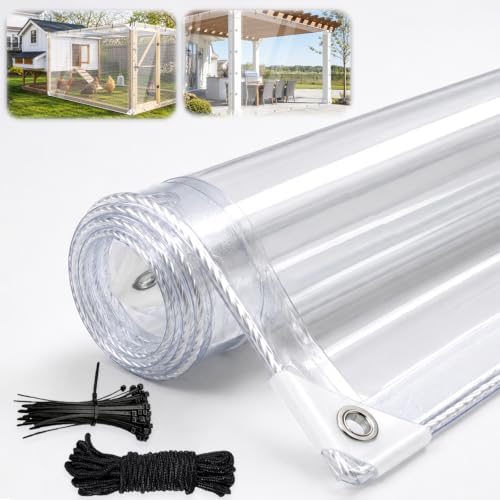
LC&QS Clear PVC Tarpaulin 8′ x 10′

50 PCS Garden Clips Stainless Steel Greenhouse Clamps

JEDEW 2 Pack Digital Hygrometer Thermometer
The Strengths Of Each Pick
Three readouts in one box change how you manage a multi-zone greenhouse. Drop one near the door, one in the back corner, and one in the propagation tent, and you can spot cold pockets before the seedlings feel them. Unlike the JEDEW 2-pack reviewed later, this set lets you track the house cellar, kitchen, and greenhouse from the same batch without buying two separate orders.
You get a comfort indicator on the face that labels current air as dry, comfortable, or wet, which is genuinely useful for growers who don’t want to memorize humidity tables. The readouts refresh quickly and read in Fahrenheit, so no mental math at 6 a.m. before the misting cycle starts.
The Case For It
- Three units in one pack covers a door zone, a corner zone, and a propagation zone for one purchase.
- Comfort indicator translates raw humidity numbers into a simple dry/comfort/wet label.
- Stated accuracy around plus or minus 2 to 3 percent relative humidity and plus or minus 1 degree Fahrenheit, fine for most hobby growers.
- Compact footprint fits on a 2-inch shelf rail or inside a cold frame without crowding trays.
Things To Consider
- Battery cells tend to drain faster in cold frames, so you may swap them every few months in winter.
- Display is not backlit on every unit, which can make dawn checks harder in a dim greenhouse.
Feature Snapshot
Who It Suits Best
Multi-zone growers who want one purchase to cover the greenhouse, the kitchen herb corner, and a cellar or garage start room.
Where Another Pick Suits Better
Shoppers running a single small lean-to will find the JEDEW 2 Pack Hygrometer Thermometer a more right-sized option, since the third TempPro unit would just gather dust.
Most rooting products come as powders you dip a cutting into, then shake off. Root Drops skips that step with a liquid that works in plain water, soil, leca, or moss, so you can match the medium to the plant instead of the other way around. For Pothos, Monstera, and Philodendron cuttings, that flexibility matters because each species roots best in a different setup.
The formula carries a stated 0.025 percent Indole-3-Butyric Acid along with a vitamin blend, which is the active ingredient you want in any cutting hormone. Indole-3-Butyric Acid (IBA) is a plant auxin that tells stem cells to start forming root tissue. Drop-in dosing also means less waste, since you only use what one cutting needs.
What Helps Most
- Liquid form works in water, soil, leca, and moss, so you can match the medium to the species.
- Contains IBA at a propagation-friendly concentration for soft-stem cuttings.
- Drop applicator cuts down on the powder mess that sticks to your fingers and the counter.
Worth Noting
- Liquid bottles can oxidize once opened, so most growers report finishing a small bottle within a single season.
- Works best on softwood and semi-hardwood cuttings, less so on thick hardwood stems.
Made For
Houseplant propagators working with Pothos, Monstera, and Philodendron cuttings who prefer a clean liquid over a powder dip.
Consider Something Else When
Growers focused on outdoor vegetable and flower starts will get more mileage from the CraftSaints Garden Planner Planting Wheel, which times the whole sowing calendar rather than one cutting at a time.
A watering can is fine for two trays. By the time you have a full bench plus hanging baskets, you start looking for something with a timer, or at least a layout you can leave alone for a weekend. The HIRALIY kit is a 59-foot, 1/4-inch tubing system with 15 adjustable misting nozzles, support stakes, a two-way connector, and end plugs, so you can build a small-to-mid-size greenhouse layout in a single afternoon.
Quick-connect fittings mean you can reconfigure the layout between seasons without cutting and re-plumbing tubing. The adjustable nozzles let you dial between a fine mist for seedlings and a slow drip for established pots, which is genuinely useful when the same greenhouse holds both at once. Compare that to the blessny solar fan, which is also a one-afternoon install, and you start to see what “set and forget” infrastructure looks like in this category.
The Value In It
- 59 feet of 1/4-inch tubing covers a typical 6-by-8-foot hobby greenhouse bench layout.
- 15 adjustable nozzles switch from seedling mist to slow drip without swapping parts.
- Two-way connector lets you branch the system to a separate zone, like hanging baskets.
- Quick-connect fittings make seasonal reconfiguration a no-tool job.
Trade Offs
- No built-in timer, so you’ll want a hose-end timer to make it fully automatic.
- 1/4-inch tubing can clog if your source water runs hard, so a simple pre-filter is worth adding.
Right Fit For
Greenhouse owners with a bench of seedling trays and a row of hanging baskets who want weekend-free watering.
Look Elsewhere When
Anyone running a single shelf of four trays will find the Fiskars Planting Soil Scoop & Brush Set a more practical match for that scale, since a full drip kit is overkill.
Summer is when most home greenhouses cook, and a roof vent only goes so far. The blessny kit ships two 5.5-inch fans, each with a 15-foot cord, so you can wire one as intake and one as exhaust without buying a second product. Solar power means no extension cord running out to the greenhouse and no electrician involved.
You get multiple mounting options since the cord length leaves room to position the panel on a south-facing wall and the fans up high. The catch is also the design’s strength: it only runs well in direct sun, so cloudy or shaded setups will see airflow drop sharply. Owners in cloudy coastal regions commonly report adding a small battery bank or a panel relocation, depending on exposure.
Bright Spots
- Two-fan kit pairs intake and exhaust in one purchase, no extra wiring required.
- 15-foot cord per fan lets you mount the solar panel where the sun hits hardest.
- Waterproofed housing handles the humidity swings inside a greenhouse.
- Off-grid operation cuts the cost of running a cord to a remote greenhouse.
Points To Keep In Mind
- No battery backup, so airflow drops on cloudy days and stops at night.
- Output drops sharply in any shade on the solar panel, so mounting placement matters a lot.
Who Should Grab It
Sunny-climate growers who want passive summer cooling without running power to a remote greenhouse.
Swap It Out When
Growers in overcast regions or those needing night-time air exchange should consider a mains-powered fan instead, since solar-only won’t cover those hours.
Fungus gnats, whiteflies, and aphids show up the moment a greenhouse stays warm and humid. A 30-pack of yellow stake traps is a cheap early-warning system: the color lures the adults, the industrial-grade adhesive holds them, and you get a visible count of what’s flying around before the population explodes. The stake design also lifts the trap off the bench, where dust and water splash tend to ruin flat cards.
Thirty traps covers a full season of replacement in a small greenhouse, or you can scatter them across multiple zones. They’re a monitoring tool first and a control tool second, which is the honest read. Once you see what’s there, you decide whether to bring in something stronger.
Advantages To Know
- 30 traps in one pack covers an entire season of bench replacements.
- Yellow color and adhesive specifically target the flying pests that greenhouse growers battle most.
- Stake form lifts traps above soil splash and irrigation mist.
Honest Caveats
- Adhesive weakens fast in a hot, sunny greenhouse, so traps under direct sun need more frequent swapping.
- Won’t solve a soil-larvae gnat problem on its own, since it only catches the flying adults.
Best Suited To
Greenhouse owners who want a passive monitoring layer alongside other Integrated Pest Management steps (a multi-step approach combining prevention, monitoring, and targeted controls).
Not Your Match When
Anyone fighting an active soil-larvae gnat outbreak will need a larvae-targeting soil drench alongside these traps, since sticky traps alone won’t break the cycle.
Potting inside a living room or on a balcony means soil ends up on the floor, no matter how careful you are. Fiskars’ set is a two-piece combo built for that mess: a dual-sided scoop with one narrow end for getting into tight seed-start cells and one wider end for filling pots, plus a brush for sweeping the rim and the bench when you’re done. It’s the kind of small system that quietly changes how tidy the operation feels.
Unlike the HIRALIY drip kit, this is a hand-tool set that lives next to your potting tray, not a piece of installed infrastructure. The honest read is that the set earns its place once you’re doing more than a couple of repots a month, and it’s also a thoughtful gift for a balcony grower who’s tired of sweeping soil off tile.
Useful Strengths
- Dual-sided scoop handles both narrow seed cells and wider pots without swapping tools.
- Included brush sweeps spilled soil off pot rims and bench surfaces in one pass.
- Compact form factor stores in a single drawer in a balcony potting station.
Some Limits To Know
- Not built for digging in a garden bed, so outdoor ground work calls for a separate trowel.
- Brush bristles can flatten over years of heavy use, depending on how often you sweep wet soil.
Perfect Match For
Balcony and indoor growers who do regular small-scale repotting and want a tidy bench setup.
Another Choice May Suit
Growers who mostly start seeds in a greenhouse will get more daily use from the MAXGUARD 30 Pack Yellow Sticky Insect Traps, since pest pressure is a bigger daily concern than soil mess in a covered space.
Most planting calendars assume a single frost date and stay useful for about three weeks. The CraftSaints wheel sidesteps that by letting you dial in your local frost date and then spin through 21 common vegetables to find seed depth, spacing, and timing for each. The “perpetual” framing means you adjust once, then use the same wheel for both spring and fall plantings.
It works for the U.S. and Canada, and the wheel format is faster than flipping through a chart booklet when you have 12 seed packets in front of you and a sowing window to hit. The honest read is that this is a planning tool, not a climate control tool, so it pairs with the TempPro TempAir 3-pack rather than competing with it. One tells you when to sow, the others tell you when conditions inside the greenhouse are right for germination.
Practical Pluses
- Adjustable frost line works across U.S. and Canadian growing zones.
- Covers 21 popular vegetables on a single wheel, so most home growers find what they sow.
- Reusable format works for spring and fall planning, not a one-season calendar.
A Few Limitations
- Limited to 21 vegetables, so unusual crops will need a separate reference.
- Cardboard construction can warp in a humid greenhouse, so most owners store it in a dry shed.
Feature Snapshot
Whose Shelf It Belongs On
Vegetable growers who plan spring and fall sowings and want a quick reference without flipping through a seed catalog.
A Better Fit Elsewhere
Houseplant propagators focused on cuttings will find the Root Drops Liquid Rooting Hormone more directly useful, since the wheel is built for seed sowing rather than cloning.
Sometimes a greenhouse is really just a frame, a sheet of plastic, and patience. The LC&QS tarp is a 14-mil clear PVC sheet at 8 by 10 feet, with grommets and ropes included, so you can span a small cold frame or patch a damaged section of an existing greenhouse without buying a full replacement cover. The transparency lets light through, which is the whole point when you’re covering a growing space rather than a storage shed.
Unlike the RAINFLOW garden clips, which hold plastic in place, this is the plastic itself. The honest read is that a clear tarp is a flexible fix rather than a permanent structure, so most growers use it for season extension, repair, or a quick hoop-house build. The 14-mil thickness is on the heavier side for a tarp, which means it resists tearing better than the typical 6-mil greenhouse film, at the cost of being heavier to handle.
A Few Highlights
- Clear PVC lets light through, so it works for plant cover rather than just weather protection.
- 14-mil thickness resists tearing better than standard greenhouse film.
- Included grommets and ropes support tie-down without buying extra hardware.
Possible Compromises
- Heavier than standard greenhouse film, so it needs a sturdier frame to support it without sag.
- Clear PVC can yellow over years of UV exposure, depending on the local sun intensity.
Built With In Mind
DIY builders assembling a quick cold frame, lean-to, or seasonal hoop house who need a light-transmitting cover they can tie down today.
Reach For A Different Pick When
Anyone repairing an existing greenhouse film will get a better match from the RAINFLOW 50 PCS Garden Clips Stainless Steel Greenhouse Clamps, which hold torn film in place without replacing the whole cover.
A greenhouse cover is only as tight as the clips holding it to the frame. The RAINFLOW pack ships 50 stainless steel clamps, each about 2 inches long and 1.1 inches wide, with spring tension strong enough to bite into greenhouse hoops, poles, and pipes. The pack format means you can lose a handful to windstorms and still have spares in the drawer.
Stainless steel holds up to the humidity cycle that ruins plain steel clips in a season, so this is a buy-once addition. The clips work for netting too, which matters when you start adding shade cloth or insect netting over the same frame. Compare that to the LC&QS clear tarp, which is the cover itself, and you see how the two pieces of the system fit together: cover plus clamps.
Benefits That Matter
- 50 clamps per pack covers a full small greenhouse with spares left over.
- Stainless steel construction handles the humidity cycle without rusting through.
- Spring tension grips hoops, poles, and pipes across common greenhouse frame sizes.
Where It Is Less Suited
- Clip size is fixed, so confirm your frame diameter before ordering, since larger hoops may not fit the 1.1-inch width.
- Spring tension loosens slightly after multiple seasons of UV exposure, depending on sun intensity.
Feature Snapshot
Who Will Love This
Frame builders and repair-oriented growers who want a single bulk pack of rust-resistant clips for cover, netting, and shade cloth attachment.
Skip It When
Anyone still choosing a cover material should start with the LC&QS Clear PVC Tarpaulin 8′ x 10′, since the clips only matter once you have something to hold down.
Two small readouts in a single order, with a sensor that refreshes every 10 seconds through 24 small vents on the back. The JEDEW pair is a sensible size for a single small greenhouse or a paired setup: one inside the growing space, one in a curing jar or terrarium. You get Celsius and Fahrenheit on the same display, which is the kind of small detail that matters when a friend or family member checks the greenhouse and reads in the other unit.
Where the TempPro TempAir 3-pack handles three zones at once, this set is for growers who really only need one or two monitoring points. It’s also a reasonable choice for anyone keeping reptile tanks, humidor cabinets, or greenhouse jars, since the sensor works in those enclosed spaces as well. Owners commonly report using one unit for the greenhouse and one for a humidor or a seed storage jar.
Notable Upsides
- Two-pack format suits a single-zone greenhouse plus a secondary space like a humidor or jar.
- Sensor refreshes every 10 seconds for near-real-time climate tracking.
- Switchable Fahrenheit and Celsius display covers different reading preferences.
Small Caveats
- Two units may leave a multi-zone greenhouse under-monitored compared to the TempPro 3-pack.
- Small display can be hard to read from across a wide bench without walking over.
Feature Snapshot
The Right Fit
Single-zone growers and anyone who wants a paired reader for a secondary enclosed space like a humidor or terrarium.
Where A Sibling Pick Shines
Multi-zone greenhouse owners who want whole-house coverage will find the TempPro TempAir Digital Hygrometer 3-Pack a stronger match, since three readouts cover more ground than two.
What Matters Most Before Choosing Greenhouse Supplies
The supplies that pay you back are the ones tied to the failure modes your greenhouse actually has. A sunny southern exposure that cooks in July needs ventilation before it needs a bigger heater. A shaded lean-to in a damp climate needs air movement and pest monitoring before it needs more bench space. Spend a week tracking temperature and humidity in the space first, then match the gear to the readings, not the other way around.
Sizing matters more than feature lists. A drip kit built for 30 nozzles is overkill on a four-tray shelf, and a 1.1-inch clip is useless on a 2-inch hoop. Match the physical dimensions of the supply to the dimensions of the frame, bench, or zone you’re outfitting, and you’ll avoid the most common regret.
Material choice drives long-term cost. Stainless steel clips, 14-mil clear PVC, and stainless hardware all cost more upfront than their plastic or thin-film equivalents, but they hold up to the humidity cycle that punishes anything absorbent. Treat the greenhouse like a small wet environment, and pick materials the way you’d pick them for a bathroom.
The honest read is that no single supply makes a greenhouse. The TempPro hygrometer tells you the climate, the HIRALIY drip kit acts on it, the blessny solar fan moves air through it, and the MAXGUARD traps tell you what’s visiting. Buy the layer that solves your most pressing problem first, then add the next layer once the first one is in place and watched for a season.
Common Pitfalls And Upgrade Tradeoffs
Where Shoppers Go Wrong
The most common slip is buying a full drip irrigation system for a four-tray seed-starting shelf, or a 30-pack of sticky traps for a single windowsill herb pot. Scale the supply to the space, and the right-sized tool always wins. Another trap is choosing a solar fan for a shaded or cloudy greenhouse, where the airflow drops on the exact overcast days you need it most.
A subtler mistake is mixing unit systems, picking a thermometer that only reads Fahrenheit when your notes are in Celsius, or a clip size that doesn’t match your frame. Confirm physical dimensions, unit preferences, and frame compatibility before ordering, since returns eat more time than the savings on a wrong-sized supply.
When Paying More Pays Off
The premium tier in greenhouse supplies usually buys three things: better materials, more accurate sensors, and longer useful life. Stainless steel clips outlast plastic ones across multiple seasons, 14-mil clear PVC resists tearing better than 6-mil film, and a stated accuracy of plus or minus 1 degree Fahrenheit matters more in a propagation tent than in a general-use bench. Spending up is worth it when the failure cost is high, like a vent motor that dies in July heat, a clip that lets a cover rip loose in a storm, or a sensor that misreads humidity by enough to ruin a germination cycle. Spending less is fine for consumables and high-quantity items where individual performance matters less than coverage, like sticky traps or garden clips where you have spares to absorb a loss.
Frequently Asked Questions
What Greenhouse Supplies Do Beginners Need First?
Start with a digital hygrometer and thermometer, since you can’t make good climate decisions without seeing the current numbers. A basic clip pack, a sticky trap set, and a small hand-tool set cover the rest of the first season for most home setups. Add a watering system, vent fan, or cover replacement once you’ve watched the space through one full seasonal cycle.
How Often Should Greenhouse Supplies Be Replaced?
Climate monitors tend to last several seasons on a single set of batteries. Drip tubing and nozzles typically need replacement every few seasons, depending on water hardness and UV exposure. Sticky traps are consumables and get swapped out every few weeks during peak pest pressure. Clips and stainless hardware often outlast the covers they hold, so they tend to be a one-time purchase.
Are Solar-Powered Greenhouse Fans Reliable?
Solar fans work well in direct-sun locations with consistent daily exposure. They drop in output on cloudy days and stop at night, so they’re not a complete replacement for a mains-powered vent in regions with frequent overcast weather or where nighttime air exchange matters. For sunny climates with summer-only ventilation needs, a solar fan is a sensible off-grid choice.
How Accurate Do Greenhouse Hygrometers Need To Be?
For most home growers, an accuracy range of plus or minus 2 to 3 percent relative humidity and plus or minus 1 degree Fahrenheit is plenty. That’s tight enough to spot frost-watch conditions and humidity swings, without paying for laboratory-grade sensors. Higher accuracy matters more in propagation tents and seed storage, where small climate shifts can change germination rates.
Can One Set of Supplies Cover Multiple Growing Zones?
Multi-zone growers can stretch a single hygrometer 3-pack across a door zone, a back corner, and a propagation tent, or pair a 2-pack with a separate reader for a secondary space. Drip kits with two-way connectors also branch into separate zones from one source, which helps when you want to run hanging baskets and bench trays on different schedules. The honest read is that the more zones you have, the more readouts you tend to need to keep them all watched.
Wrap Up
The supplies above cover the daily jobs a home greenhouse asks of you: watching the climate, watering on a schedule, venting summer heat, catching pests early, planning the sowing calendar, holding the cover in place, and keeping the bench tidy. Match each purchase to the failure mode you actually have, scale it to the size of the space, and treat stainless and 14-mil materials as long-term investments. Your greenhouse will repay the attention across many seasons.
