

Keeping a small greenhouse productive through a cold snap comes down to picking the right heat source for the size of the space. The right unit holds a steady overnight temperature without drying the air to dust or running up the electric bill. The wrong one cycles constantly, struggles to keep frost off tender starts, or burns through a 15-amp outlet in the first hour.
This list covers eight practical electric heaters designed for compact greenhouses and grow rooms. Each one handles humidity, limited airflow, and the long winter idle that kills plants overnight. The picks below lean on attribute differences like wattage, control precision, airflow style, and placement so the right match depends on the structure you own and what you grow.
The Choices Worth Comparing

DR. INFRARED HEATER DR218-3000W Infrared Greenhouse Heater (3000W)

DR. INFRARED HEATER DR218-1500W Infrared Greenhouse Heater (1500W)
Dura Heat EUH1465 Electric Forced Air Heater with Pivoting Base

AC Infinity THERMOFORGE T3 Environmental Grow Tent Heater

VEVOR Greenhouse Heater 1500W PTC with Overheat Protection

QRQ Chicken Coop Heater with UVA UVB Dimmable Light
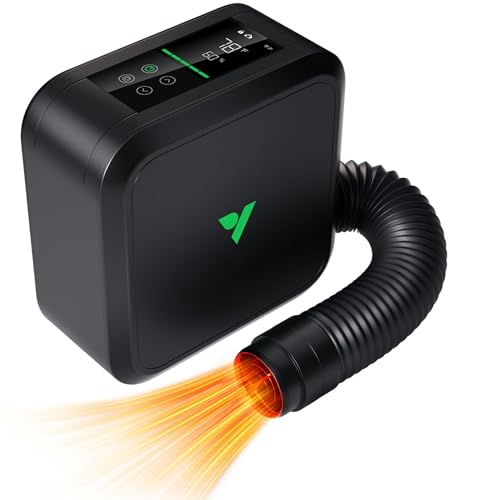
VIVOSUN AeroFlux 700W PTC Grow Tent Heater with APP and VPD

Greenhouse Heater with Thermostat and Digital Display
More On The Choices That Made The List
High-output infrared heat suits a freestanding hobby greenhouse that drops well below freezing overnight. The DR218-3000W uses a sealed, fan-driven radiant design that warms surrounding surfaces rather than just pushing warm air around, so plant canopies and pots absorb the energy directly. That style of transfer matters in a drafty poly tunnel where conventional fan heaters lose heat to air leaks.
Operation runs off a dedicated 240V circuit, which limits placement to greenhouses with a heavier outlet already installed. Owners commonly run it on low overnight and high during the coldest dawn hours to keep tender starts alive. The permanently lubricated motor and enclosed heating element hold up well in damp greenhouse air over a long winter.
A Favorable Mix
- 3000W output handles large hobby greenhouses during deep cold snaps.
- Infrared radiant transfer warms plants and pots directly, not just the air.
- Totally enclosed heating element shrugs off humidity and moisture.
- Sealed motor stays lubricated for life, reducing long-term upkeep.
- Steel cabinet construction handles greenhouse moisture year after year.
Points To Keep In Mind
- Requires a 240V outlet, which most small greenhouses do not have without rewiring.
- Pulls enough amperage to demand a dedicated circuit, not a shared run with other gear.
Built With In Mind
You operate a mid-to-large hobby greenhouse in a region with regular sub-freezing nights and already have a 240V circuit available.
Reach For A Different Pick When
The DR. INFRARED HEATER DR218-1500W fits a standard 120V outlet and a smaller hobby house without rewiring.
The 1500W version of the DR218 trades some raw output for the convenience of a standard 120V plug. That detail matters for most backyard greenhouses, where running a new circuit means trenching, an electrician, and inspection. This unit drops into the same infrared radiant platform, so the heat lands on leaves and soil before it dissipates into drafty air.
Compared to the larger 3000W sibling reviewed above, the 1500W model targets a tighter footprint. It works well in a 6×8 or 8×10 hobby structure where overnight lows hover around freezing rather than dropping into the teens. The enclosed element and permanently lubricated motor carry over, so the long-term reliability story stays intact.
What Stands Out
- Standard 120V plug works with the outlet most greenhouses already have.
- Radiant infrared delivery warms plant tissue without over-drying the air.
- Sealed motor and element construction resist humidity in covered growing spaces.
- Rugged steel cabinet stands up to damp, cold greenhouse environments.
Worth Bearing In Mind
- 1500W output struggles in larger structures when outdoor temperatures drop below about 20°F.
- No internal thermostat, so an external controller is required for set-and-forget operation.
Key Specs
Whose Shelf It Belongs On
Small-greenhouse owners with a 120V outlet and a need for steady radiant heat through a normal winter night.
Swap It Out When
The Dura Heat EUH1465 makes more sense in a taller, draftier structure that needs moving forced air rather than a sealed radiant glow.
Forced-air heating behaves differently from the radiant approach used by the DR218 models. The EUH1465 pulls cool air through a ceramic PTC (positive temperature coefficient) element, then pushes it out through a high-velocity fan. PTC elements self-regulate their temperature, which limits hot spots and reduces the risk of scorching nearby foliage in a tight space.
The pivoting base points the airflow where it is needed, so a tall poly tunnel or lean-to greenhouse benefits from aiming the warm stream downward across the plant canopy. Rated coverage lands around 250 square feet, which covers most hobby greenhouses in a single zone. The steel body takes the bumps of a working shed better than plastic shells.
Where It Helps
- Pivoting base aims warm air directly at the canopy, fighting cold stratification.
- Ceramic PTC element self-regulates, lowering scorch risk near plants.
- Built-in thermostat simplifies setpoint control without a separate accessory.
- Steel cabinet shrugs off the moisture and bumps of a working greenhouse.
Honest Caveats
- Fan noise carries in a quiet residential backyard, depending on placement.
- Forced-air delivery loses efficiency in a drafty structure with significant air leaks.
- Safety shut-off helps, but the housing still runs hot to the touch during use.
Made For
Hobby growers using a converted garage, shed, or tall poly tunnel that need directed warm airflow rather than steady ambient heat.
A Better Fit Elsewhere
The VEVOR Greenhouse Heater is a quieter option in a tightly enclosed grow tent where fan noise matters more than throw distance.
The THERMOFORGE T3 sits at the smarter end of the category, built around an onboard controller and a corded sensor probe. It manages VPD (vapor pressure deficit, a measure that combines temperature and humidity to predict plant transpiration) and temperature triggers, so heating ties into the broader climate story rather than firing on a single thermostat reading. That matters for growers who track leaf transpiration and humidity swings through the day.
PTC plate technology with PWM (pulse-width modulation) control divides the heat output into ten distinct levels, which lets the heater hold tighter to a target than an on/off cycle. The flexible hose and 4-foot attachment direct warm air to a specific zone, useful for a corner rack of orchids or a propagation table. It fills a very different niche than the radiant DR218 reviewed earlier.
Where It Excels
- VPD and temperature triggers tie heating into the full grow-room climate picture.
- Ten heat levels through PWM control hold tighter setpoints than simple on/off cycling.
- Corded probe reads the air right at the canopy for accurate control.
- Flexible hose directs warm air to a single bench or zone in a multi-use space.
Soft Spots
- Built for tents and rooms, so coverage in a large open greenhouse falls short.
- Setup takes more wiring and configuration than a basic plug-in thermostat unit.
Right Fit For
Tech-forward growers running a sealed tent or climate-controlled room who already track VPD and want heating to follow that data.
Where Another Pick Suits Better
The VIVOSUN AeroFlux 700W takes a similar smart approach but adds app control, which fits growers who prefer phone-driven climate management.
The 1500W VEVOR lands at a practical price point for a hobby greenhouse, and the three-speed fan gives more control than a simple two-setting unit. PTC ceramic heating reaches working temperature in seconds, which shortens the morning warm-up window after a cold night. The compact footprint suits a grow tent or a narrow lean-to where a larger cabinet would crowd the path.
An alloy-steel shell and overheat cutoff handle the basics of safe greenhouse operation. The IP20 rating means it is built for indoor-style enclosures rather than fully exposed outdoor use, so a covered greenhouse or tent is the right home. Compared to the Dura Heat EUH1465 reviewed earlier, this unit runs quieter on its lower fan speeds, which matters in a backyard near a bedroom window.
Noteworthy Benefits
- Three fan speeds let you tune airflow to the size of the space and the outside temperature.
- 1500W PTC ceramic reaches operating temperature in seconds, shortening cold-soak periods.
- Alloy-steel shell adds durability at a compact, tent-friendly footprint.
- Overheat cutoff adds a layer of protection in unattended operation.
Trade-Offs
- IP20 rating limits it to covered, indoor-style greenhouse setups, not exposed frames.
- No integrated thermostat, so a separate controller is needed for accurate setpoint hold.
Feature Snapshot
Who It Suits Best
Beginner-to-intermediate growers running a small grow tent or compact covered greenhouse on a budget.
Skip It When
The AC Infinity THERMOFORGE T3 fits a tent setup that needs precise VPD tracking rather than a basic three-speed heat source.
The QRQ takes a different angle: a radiant heat lamp with selectable wattage, a UV component, and a built-in timer. Three wattage settings (200W, 350W, 500W) let you match heat output to overnight lows, which is useful during shoulder seasons when a full-power run would overheat the space. The UVA and UVB output serves animal health, but for a plant-only greenhouse it is a side benefit at best.
Independent switches separate the heating element and the light, so day length control becomes possible for growers managing photoperiod-sensitive plants. The dimmable timer (3, 6, 9, or 12 hours) lets the unit run on a schedule without an external controller. Compared to the larger 1500W fan units on this list, this is closer to a localized radiant plate than a whole-room heat source.
Everyday Wins
- Three wattage settings match output to nightly temperature swings.
- Built-in timer runs without external wiring or smart plugs.
- UVA and UVB output serves animal enclosures alongside plant use.
- Independent switches separate heating from the light function.
Things To Weigh Up
- Lower total wattage than the 1500W fan heaters, so coverage stays small.
- UV light is incidental to plant growth, so the extra cost pays back only in mixed-use spaces.
Perfect Match For
Small greenhouse owners who also keep chickens, rabbits, or reptiles in a coop or shed that doubles as a propagation space.
Consider Something Else When
The DR. INFRARED HEATER DR218-1500W delivers stronger whole-room coverage in a plant-only greenhouse without the UV feature.
The AeroFlux leans hard into connected climate management, with app control, VPD tracking, and a smart thermostat built into a 700W PTC package. Five heat levels and a high-precision sensor adjust output in real time, holding tighter to the target temperature than a basic on/off cycle. For indoor growers already running a phone-driven setup, that level of integration removes one more wall-mounted controller.
The 700W rating sits below the 1500W fan heaters reviewed above, which means coverage fits a tent or a sealed grow room rather than an open greenhouse frame. V0-rated plastic, tip-over, and overheat protections cover the usual safety checklist. Compared to the AC Infinity THERMOFORGE T3, this unit trades some configuration flexibility for a cleaner app experience.
What Works In Its Favor
- App-driven climate control fits a phone-first indoor growing setup.
- VPD tracking ties heating into the full transpiration story.
- Five heat levels deliver fine-grained temperature control in a sealed space.
- Tip-over and overheat protections cover unattended use.
Possible Compromises
- 700W output limits use to tents and sealed rooms, not open greenhouse frames.
- App dependency adds setup friction for growers who prefer a simple dial.
Who Should Grab It
Indoor growers who already use phone-driven environmental controls and want heating to fit the same ecosystem.
Not Your Match When
The DR. INFRARED HEATER DR218-1500W serves an open backyard greenhouse that needs raw radiant output without an app layer.
The kit approach here bundles a 1500W heater with a separate digital thermostat, so the whole package arrives ready to install and forget. The independent thermostat monitors the air and cycles the heater on and off to hold the chosen setpoint, which beats the manual on/off switching that the bare DR218-1500W reviewed earlier requires. A digital readout removes the guesswork from overnight swings.
Fast-heating PTC technology brings the working temperature up quickly after a cold snap, which matters during the dawn hours when most heat loss happens. Overheat protection rounds out the safety story. Coverage targets grow tents, flower rooms, patios, and small greenhouses, so this sits in a versatile middle ground between raw radiant and tent-only smart control.
Positive Takeaways
- Included digital thermostat delivers set-and-forget temperature control out of the box.
- 1500W PTC ceramic handles overnight cold snaps in a small greenhouse or flower room.
- Fast-heating design shortens the morning warm-up window.
- Overheat protection adds safety for unattended winter runs.
- Bundle pricing often undercuts buying heater and thermostat separately.
A Few Limitations
- Fan-driven delivery is less efficient than the radiant DR218 in drafty poly tunnels.
- Bundle costs more up front than the bare heater, though the included thermostat adds clear value.
Quick Technical Notes
Best Suited To
Set-and-forget greenhouse owners who want the heater and thermostat to arrive in a single package, no extra wiring required.
Look Elsewhere When
The Dura Heat EUH1465 delivers the pivoting forced-air direction you want in a taller structure that needs warm airflow aimed at the canopy.
Picking The Right Heater For A Small Greenhouse
Small greenhouse heating breaks down into three decision points: heat style, control method, and the wattage that matches your footprint. Radiant infrared heaters warm surfaces and plant tissue directly, which pays off in drafty poly tunnels where air temperature lags. Fan-forced PTC (positive temperature coefficient) units move warm air through the space, which works better in sealed rooms and tents where airflow mixes evenly.
Wattage determines whether the unit keeps up on the coldest nights. A 1500W heater covers roughly 100 to 150 square feet in a well-sealed greenhouse, while a 3000W unit stretches to 250 to 300 square feet. Uninsulated structures need a bigger margin, since heat loss through the glazing climbs fast on windy nights.
Control method matters more than most shoppers expect. A bare heater with no thermostat cycles only when you flip the switch, which wastes power and overshoots temperatures. A separate digital thermostat, or an integrated smart controller, holds the setpoint through the night without constant attention. Match that control layer to how often you visit the greenhouse in winter.
Match Heat Style To Your Structure
Radiant infrared fits uninsulated poly tunnels and cold frames because the energy reaches the plants before it leaks away. Forced-air PTC fits sealed grow rooms, tents, and well-insulated hobby greenhouses where the air holds the warmth. A hybrid setup, like a radiant plate plus a small circulation fan, works in mixed-use spaces.
Sizing Wattage To Square Footage
Plan on roughly 10 watts per square foot for an uninsulated greenhouse in a mild climate, and closer to 15 watts per square foot in regions that drop below 20°F overnight. A 1500W unit covers a small structure in zone 7 or 8, while the 3000W DR218 makes sense in zone 5 or 6.
Choosing The Right Control Layer
A digital thermostat kit covers the basics at a modest cost. A VPD-aware smart controller like the THERMOFORGE T3 or the VIVOSUN AeroFlux pays off when the plants inside are sensitive enough that humidity swings already factor into the daily routine.
Smart Choices Before You Buy
Common Shopping Slip Ups
Undersizing is the most common mistake. Buyers often pick a heater that handles a mild autumn night, only to discover it cannot keep up once winter sets in and the structure drops into the teens. Oversizing burns through electricity and scorches leaves, but undersizing kills plants faster. Match wattage to your lowest expected overnight temperature, not your average.
Another slip is skipping insulation. A bare polycarbonate shell loses heat fast, and no portable electric heater can fully cover that loss on the coldest nights. Bubble wrap on the north wall, sealing gaps around the door, and a thermal curtain at sunset stretch any heater’s reach.
What The Higher Tier Buys
Premium greenhouse heaters add layered controls rather than raw heat. Smart thermostats, VPD integration, and app-driven setpoints pay off when the plants inside are valuable enough that precise climate control matters. The higher tier also brings better safety layers, like tip-over switches and tighter overheat protection, which matters for unattended winter operation.
The upgrade is worth it once your greenhouse carries tender crops, propagation tables, or high-value plants through a real winter. For a casual cold frame over winter greens, a basic 1500W kit handles the job at a smaller cost.
Frequently Asked Questions
What size heater do I need for a small greenhouse?
Plan on roughly 10 watts per square foot for an uninsulated structure in a mild climate, and closer to 15 watts per square foot where winter nights drop below 20°F. A 1500W unit covers a small hobby greenhouse in zones 7 or 8, while a 3000W unit stretches to a larger or colder structure.
Are electric heaters safe in a damp greenhouse?
Electric heaters rated for greenhouse or workshop use include sealed elements, overheat protection, and grounded cords that handle humid air safely. Keep the unit off the floor on a stable surface and avoid pointing warm airflow directly at standing water to reduce risk during long unattended runs.
What is VPD and why does it matter for greenhouse heating?
VPD stands for vapor pressure deficit, a measure that combines air temperature and humidity to predict how much moisture a plant loses through its leaves. Heaters with VPD tracking adjust output based on that combined reading, which prevents the dry-air spikes that stress seedlings and clones in a sealed tent.
Can I leave a greenhouse heater running overnight?
Most heaters reviewed here include overheat protection and built-in thermostats that cycle on and off to hold a setpoint. That makes overnight unattended use reasonable, though an outlet with GFCI (ground-fault circuit interrupter) protection adds a meaningful safety layer in a damp greenhouse environment.
Where should I place a heater inside a greenhouse?
Place the heater at one end of the structure, low to the ground, with airflow aimed across the canopy rather than directly at plants. Keep it clear of plastic sheeting, irrigation lines, and any combustible materials, and give the warm air room to circulate before it reaches the far wall.
Closing Remarks
The right heater depends on the structure you own and the plants you keep. A radiant DR218 unit covers a drafty backyard greenhouse, while a fan-forced PTC unit fits a sealed tent or grow room. Smart VPD-aware models suit growers who already track humidity and temperature as part of the daily routine. Match the wattage to your lowest expected overnight temperature, and pair the heater with simple insulation to get the most out of any unit on this list.
