

There’s a particular satisfaction that comes from stepping back after a trimming session and seeing a hedge that’s actually level, not ragged, not frayed at the tips. The difference usually traces back to the tool in your hands. A good pair of hedge shears turns a weekend chore into something close to satisfying, while a mediocre pair turns a quick tidy-up into a wrist-and-shoulder workout that ends in resignation.
The picks below cover a range of needs: telescoping reach for tall privet, compact clippers for shaping boxwood, full combo sets for someone building out a shed from scratch. Every option here uses steel blades with real edge retention, handles sized for repeated use, and grip materials that don’t turn slick the moment your palms sweat.
How The Shortlist Stacks Up

Kimura Pro Heavy Duty Hedge Shears 22″

Kimura Pro Telescopic Garden Shears 25-34″

GARTOL 23″ Heavy Duty Hedge Shears Wavy Blade

YRTSH Loppers, Hedge Shears & Pruners Combo Set
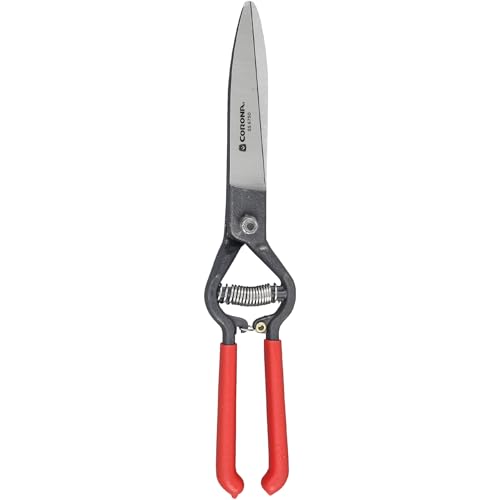
Corona GS 6750D ClassicCUT Grass Shear

GARDEN GURU Hedge Shears 15″ High Carbon
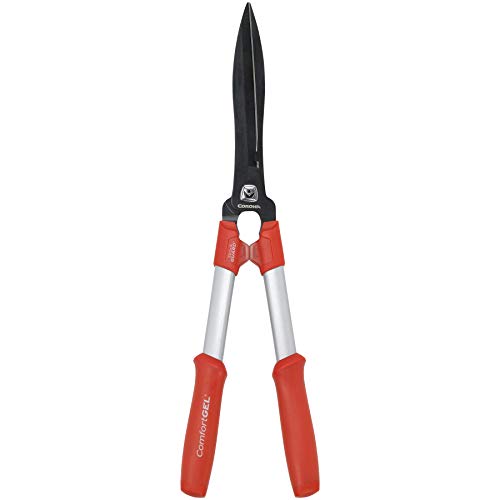
Corona HS3244 Comfortgel Hedge Shear

Fiskars 23″ Power-Lever Hedge Shears
What Each Pick Brings To The Table
If you tend a row of mid-height privet or boxwood and want something that disappears in the hand rather than drags at the wrist, these Kimura shears make a strong first impression. The aluminium handles weigh noticeably less than wood or steel-handled competitors, and the gearing does some of the grunt work for you on each squeeze.
That combination makes the 22-inch model approachable for gardeners who find traditional hedge shears punishing after twenty minutes. The SK5 steel blades (a high-carbon Japanese tool steel commonly used for cutting edges) hold their bite through repeated sessions on leafy growth, and the soft TPR grips (a thermoplastic rubber, similar to the cushion on premium screwdrivers) stay grippy even when the morning dew hasn’t dried.
Good Reasons To Consider
- Lightweight aluminium handles reduce arm fatigue over extended trimming sessions.
- Patented gearing multiplies hand force, so older stems feel easier to cut.
- SK5 steel blades retain a sharp edge through repeated contact with woody growth.
- Balanced weight distribution helps gardeners with smaller hands manage the tool confidently.
Points To Note
- The 22-inch fixed length can feel short on hedges taller than chest height, since there’s no telescoping option.
- Lightweight construction trades some rigidity, so the heaviest springy privet may push back during hard cuts.
- Blade cleaning after a sticky sap run is worth doing promptly, or residue builds up near the pivot.
Made For
Home gardeners with waist-to-shoulder-height hedges who want a lighter daily trimmer that won’t wear out their forearms.
Look Elsewhere When
Anyone pruning above head height should consider the Kimura Pro Telescopic Garden Shears, which extend to 34 inches and reach tall growth without a ladder.
Reach matters more than most gardeners expect until they’re standing on tiptoes trying to flatten the top of a yew. The Kimura Pro Telescopic solves that by extending from 25 to 34 inches, which puts a six-foot gardener comfortably eye-level with most residential hedges without dragging out the stepladder.
Compared with the fixed 22-inch Kimura covered above, this telescoping version adds adjustability that pays off on uneven hedges and tapered cuts. The gearing claims roughly three times the cutting force per stroke, which keeps the extended length from translating into extra effort. For taller homeowners or anyone managing a long boundary hedge, that adjustability is the difference between a tidy finish and a frustrating afternoon.
Points In Its Favor
- Extends from 25 to 34 inches, covering most residential hedge heights without a ladder.
- Same SK5 blade steel as the fixed model, so edge retention stays consistent across the Kimura line.
- Gearing keeps extended cuts from becoming a hand-and-shoulder workout.
- Aluminium handles keep the extended tool from feeling tip-heavy.
Trade Offs
- Telescoping locks can loosen over seasons of use, so a quick collar check before each session is wise.
- At full extension, the longer leverage makes precise detail cuts on boxwood harder to control than with the compact 15-inch Garden Guru model.
- Best suited to leafy and semi-woody growth rather than thick branches, where loppers would do better.
Who It Suits Best
Homeowners with tall boundary hedges, six-foot-plus gardeners, and anyone tired of balancing on a step stool for a level cut.
Consider Something Else When
Detail shaping on low boxwood or topiary is easier with the shorter GARTOL 23″ Heavy Duty Hedge Shears, which offer more blade control in tight curves.
There’s a particular annoyance that every hedge trimmer has met: a half-cut twig that slides out from between the blades just before the cut finishes. GARTOL’s wavy blade pattern is built specifically to grip rather than release, which means each stroke commits cleanly even on stems that would normally push sideways.
That makes the 23-inch GARTOL a smart pick for hedges that mix tender new growth with older, slightly woody stems. Boxwood, privet, and decorative shrubs all benefit from the trap-and-cut geometry. The forged high-carbon steel blade is also built to resist rust, which matters for gardeners who leave tools in a damp shed between weekends.
What It Does Well
- Wavy blade traps twigs and prevents sideways slippage mid-cut.
- Forged high-carbon steel holds an edge and resists surface rust in humid sheds.
- 23-inch length sits in the comfortable middle ground for most hedge heights.
- Cuts promote clean healing on boxwood and privet, which finish neatly rather than fraying.
Honest Caveats
- Wavy blades take slightly longer to sharpen than straight blades when the time comes.
- Heavier than aluminium-handled competitors, so longer sessions may tire forearms more quickly.
Quick Facts
Right Fit For
Gardeners with mixed hedges where some stems are older and tougher, especially boxwood and decorative shrubs.
Skip It When
Anyone prioritizing weight reduction over grip security will find the lighter Kimura Pro Heavy Duty Hedge Shears easier on extended sessions.
New homeowners often discover, somewhere between the second trip to the garden center and the third, that a single tool never quite covers everything. The YRTSH combo set sidesteps that problem by bundling a 26-inch compound-action lopper, a 23-inch hedge shear, and an 8-inch pruning shear into one package.
The pruning shear covers detail work on rose canes and small fruit-tree branches. The hedge shear handles the routine shaping covered by other picks on this list. The lopper steps in for branches too thick for the shears, so a gardener doesn’t need to climb onto a stool with a hand saw every time growth gets out of hand.
Well-Handled Touches
- Three coordinated tools cover everything from detail pruning to thick branch removal.
- Low-friction coated alloy steel blades reduce sticking during repeated cuts.
- Compound-action lopper multiplies hand force, easing cuts on branches that resist hand pruners.
- Bundled cost usually beats buying each tool separately from a garden center.
Things To Consider
- Each individual tool is competent rather than specialized, so power users may outgrow the hedge shear and want a dedicated premium model.
- Storage space for three full-size tools needs planning, particularly the 26-inch lopper.
Feature Snapshot
Best Suited To
New gardeners outfitting a shed from scratch, first-time homeowners, and anyone who wants one package that covers routine pruning and trimming.
Another Choice May Suit
Gardeners with extensive hedges who only need shaping tools should consider the Fiskars 23″ Power-Lever Hedge Shears, which focus engineering on cutting power rather than bundling.
Sometimes the job isn’t a hedge at all, but a strip of grass along a sidewalk or a tidy edge around a flower bed that the mower can’t quite reach. The Corona ClassicCUT is built exactly for that scale of work, with 4½-inch precision blades designed for grass rather than woody stems.
It’s not the right tool for shaping privet or any substantial shrub, so it earns its place on this list as a complement rather than a competitor to the longer-bladed picks above. For homeowners who want their lawn edges looking sharp without dragging out the string trimmer for a five-minute tidy-up, this little shear pays for itself the first weekend it gets used.
Positive Takeaways
- Compact 4½-inch blades allow precise cuts along tight lawn edges.
- Sharp steel blades deliver clean cuts that grass recovers from quickly.
- Lightweight frame reduces wrist fatigue during detail edging sessions.
- Natural handle finish gives a comfortable, low-slip grip for most hand sizes.
Points To Keep In Mind
- Designed for grass only, so it’s not a substitute for full-size hedge shears.
- Smaller blade area means longer jobs on big lawn edges take more time than a powered trimmer.
Perfect Match For
Homeowners with neat lawn edges, sidewalk borders, and small grass-detail areas that bigger hedge shears would butcher.
Reach For A Different Pick When
Anyone trimming boxwood or privet needs the longer reach of the GARTOL 23″ Heavy Duty Hedge Shears rather than this grass specialist.
There’s a sweet spot in hedge trimming where a long blade becomes a liability rather than an asset. On tightly clipped boxwood, low parterres, and decorative shrubs where curves matter more than reach, a shorter blade gives finer control. The Garden Guru’s 15-inch frame fills that role.
The compact size also makes this a good fit for gardeners with smaller hands or anyone who has found full-size hedge shears awkward in tight garden corners. The high-carbon steel blades sharpen back easily when the time comes, and the comfort grip handles stay manageable through a focused shaping session on boxwood knots.
Useful Strengths
- Compact 15-inch length offers precise control for shaping curves and topiary.
- High-carbon steel blades sharpen cleanly when routine maintenance rolls around.
- Non-slip comfort grips suit both small and large hands during detail work.
- Lighter than longer models, so fatigue stays low during focused shaping sessions.
Possible Compromises
- Too short for general hedge maintenance on a long boundary run.
- Smaller blade area means each pass covers less ground, slowing larger jobs.
Who Will Love This
Gardeners with formal hedges, boxwood borders, and topiary where detail and curve control matter more than reach.
A Better Fit Elsewhere
Long boundary hedges need the reach and cutting length of the Kimura Pro Heavy Duty Hedge Shears, which handle waist-height privet with ease.
Anyone who has finished an afternoon of trimming with the soft pad of their thumb throbbing knows that grip comfort isn’t a luxury. The Corona ComfortGEL earns its name by putting a gel-cushioned handle between your hand and the squeeze, which noticeably softens the impact on the heel of the palm during long sessions.
The 9-inch blade is a working length that sits comfortably between detail shears and full boundary trimmers. For gardeners with a routine schedule of weekly or bi-weekly trimming, that ergonomic attention makes a real difference over a season of use.
Strengths Worth Knowing
- Gel-cushioned grip reduces palm pressure during extended trimming sessions.
- 9-inch blades balance reach and control for routine shaping.
- Steel construction keeps cutting performance consistent over time.
- ComfortGEL handle design suits gardeners with arthritis or grip sensitivity.
Less-Strong Areas
- Gel grips can degrade with years of UV exposure if stored in direct sun.
- Shorter blade than full 22- or 23-inch competitors, so each pass covers less ground on long hedges.
Who Should Grab It
Gardeners who trim frequently, anyone with grip or joint sensitivity, and homeowners maintaining mid-size hedges on a regular schedule.
Swap It Out When
Taller boundary hedges that demand reach call for the Fiskars 23″ Power-Lever Hedge Shears, which cover more ground per stroke.
Compound lever technology is a design where a set of internal linkages multiplies the force your hand produces, similar in spirit to geared pliers. Fiskars has built that mechanism into a hedge shear, and the result is a tool that punches above its weight class on woody growth that would normally demand loppers.
One blade carries a serrated edge that grips the stem while the other shears through, which keeps stems from sliding out mid-cut. The self-sharpening design means the cutting edge stays in working condition longer between maintenance sessions. For overgrown hedges that have been neglected a season too long, the extra leverage makes the difference between finishing the job and abandoning it halfway.
The Value In It
- Compound lever multiplies cutting force, easing work on woody stems.
- Serrated grip blade prevents stem slippage mid-cut.
- Self-sharpening blade design extends the working life of the edge.
- 23-inch length covers most residential hedges in fewer strokes.
Things To Weigh
- Mechanism adds weight, so extended overhead work becomes tiring faster than with lighter picks.
- Best suited to woody growth, slightly overkill for tender leafy hedges.
Feature Card
Built With In Mind
Gardeners tackling overgrown hedges, thicker woody growth, and any situation where extra cutting force shortens the job.
Not Your Match When
Lightweight shaping on boxwood or topiary calls for the shorter Garden Guru 15-inch model, which offers finer control in tight curves.
What Separates A Great Hedge Shear From A Frustrating One
Blade steel and length do most of the talking once a hedge shear is in your hand, but a few other attributes quietly shape how it feels over a season of use.
High-carbon steel and tool steels like SK5 hold an edge longer than generic stainless, which means less time at the sharpening stone and more time cutting. Wavy or serrated blade patterns grip stems so cuts finish cleanly, while straight blades suit precise flat-top work. Handle length determines reach, with telescoping models covering tall growth and short 15-inch handles excelling at detail shaping. Cushioned grips, whether gel or TPR, reduce palm pressure during long sessions. Finally, blade coatings, like the low-friction layer on the YRTSH combo set, help sap slide off instead of gumming up the pivot.
Cutting Through The Hedge Shear Market
Where Shoppers Go Wrong
The most common mistake is choosing blade length by what looks impressive on a product page rather than by what the hedge actually needs. Long blades cover ground fast but fight you on tight curves. Short blades give control but turn a long privet run into a marathon. Match the length to the hedge, not the other way around.
Another misstep is ignoring handle material. Wood looks traditional but weighs more and can crack with weather exposure. Aluminium keeps weight down, while fiberglass adds durability for gardeners who are tough on tools.
Where The Extra Money Goes
Premium hedge shears earn their higher cost through better gearing, longer-lasting blade steel, and ergonomic grips that survive years of use. The Kimura and Fiskars picks above show where that investment lands: lighter handles, compound leverage, and SK5 steel rather than generic carbon. The upgrade is worth it for anyone trimming weekly or tackling mature growth, while occasional tidy-uppers can comfortably stick with the GARTOL or Garden Guru options.
Frequently Asked Questions
How often should hedge shears be sharpened?
Most home gardeners get a season of use between sharpenings, with a quick touch-up before spring growth kicks in. Heavy weekly use may need a midseason pass. A few strokes on a fine diamond file usually restore the edge on SK5 and high-carbon blades.
Can hedge shears cut thicker branches?
Manual hedge shears handle stems up to roughly a third of an inch, depending on the model. Anything thicker moves into lopper territory, which is why combo sets like the YRTSH bundle include a lopper for those jobs.
What is the difference between hedge shears and pruning shears?
Hedge shears have long blades designed for shaping many stems at once across a face. Pruning shears cut one stem at a time with a scissor or bypass action, which gives cleaner cuts on individual branches.
Are wavy blades better than straight blades?
Wavy blades grip stems so they don’t slip mid-cut, which helps on woody or springy growth. Straight blades glide more easily through tender leafy growth and suit precise flat-top work. Neither is universally better; it depends on the hedge.
How do you store hedge shears to prevent rust?
Wipe blades dry after each session, store indoors in a dry shed or garage, and a light coat of oil on the cutting edge goes a long way during winter months.
The Takeaway
The right hedge shear comes down to what grows in your yard and how often you trim it. Tall boundary hedges reach for telescoping or full-length designs, boxwood and topiary favor compact control, and neglected woody growth calls for the leverage that compound gearing provides. Pick the tool that matches the work, keep the blades clean and lightly oiled, and the hedges will show it.
