

Wild blackberries turn a peaceful fence line into a thorny obstacle course by midsummer, and once those roots settle in, pulling rarely keeps up with the spread. Choosing the right herbicide turns a months-long struggle into a manageable weekend project. This roundup walks through eight concentrates worth your attention, each suited to a different kind of infestation, from light sucker regrowth to mature thickets that have taken over a back corner of the property.
The Shortlist At A Glance
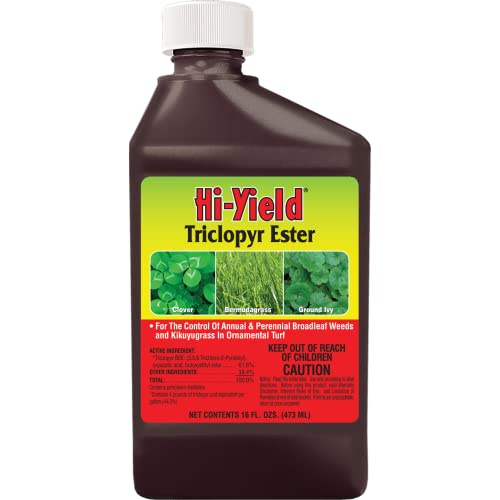
Hi-Yield 35262 Triclopyr Ester, 16 oz
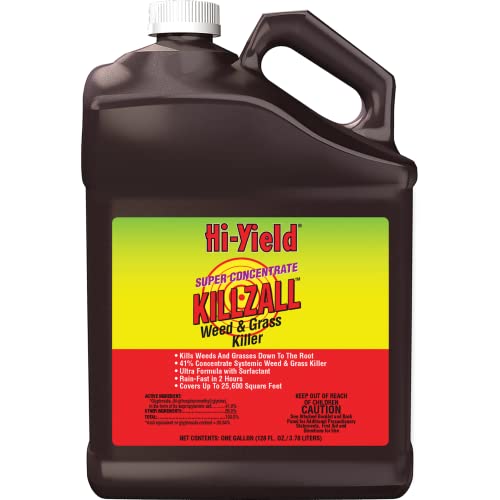
Hi-Yield 33693 Killzall Super Concentrate, 1 gal
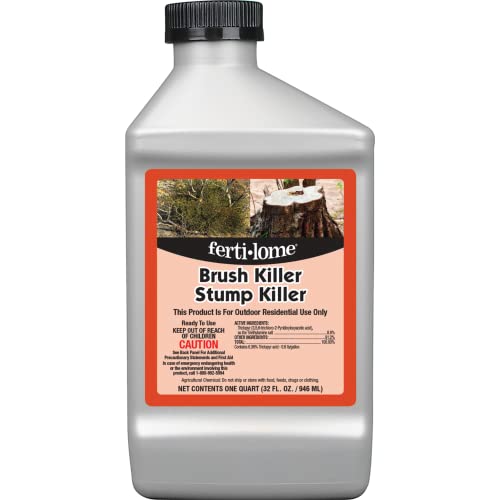
Fertilome 11485 Brush & Stump Killer, 32 oz

Southern AG 01113 Brush Weed Killer, 1 Quart

Roundup Poison Ivy Plus Tough Brush Killer2, 32 fl. oz.

Airmax Shoreline Defense Weed Control, 1 Gallon

Control Solutions 82004318 Eraser & Grass Killer, 1 Quart

Bonide Poison Ivy & Brush Killer BK-32, 16 oz
A Closer Look At Each Pick
Triclopyr is the active ingredient most extension services recommend for woody invaders like wild blackberry, and Hi-Yield’s ester formulation handles the job while sparing the surrounding turf when used correctly. The concentrate mixes with water and gets sprayed onto foliage during active growth, when leaves are fully expanded and the plant is moving sugars back to the roots.
The 16-ounce bottle suits a suburban lot with a few isolated thickets creeping in from the neighbor’s edge. You may find the small bottle limiting on anything beyond a quarter acre of heavy infestation, which is where the larger Killzall option later in this list earns its place.
What Makes Sense
- Targets broadleaf woody invaders like wild blackberry while leaving perennial bluegrass, ryegrass, and tall fescue intact.
- Liquid concentrate mixes easily into a standard pump sprayer for even foliar coverage.
- Doubles as a bluegrass suppressor for homeowners reshaping a patchy lawn.
- Small bottle keeps cost low for first-time users testing the approach on a single patch.
Points To Note
- Off-limits for warm-season turfs (Bahiagrass, Centipedegrass, St. Augustine, Zoysiagrass), so southern lawns need a different solution.
- 16 ounces runs out quickly on anything more than a small backyard, depending on cane density.
- Sprayer cleanup matters, as ester formulations can linger in tanks and damage desirable plants in later uses.
Right Fit For
Homeowners with cool-season grass lawns who face scattered blackberry shoots pushing in from a fence line or wooded edge.
Swap It Out When
Bonide Poison Ivy and Brush Killer BK-32 makes more sense for warm-season lawns where triclopyr ester can damage the turf itself.
Where the triclopyr option above plays defense around desirable grass, Killzall goes on offense against everything green in its path. The double-surfactant blend clings to waxy blackberry leaves and starts moving into the plant quickly, which matters when rainfall tends to show up unexpectedly during spring spraying windows.
A single gallon treats an enormous footprint, which is why rural property owners working through abandoned fence rows and pasture edges lean on this size. The trade-off is bare ground wherever you spray, so this is a “renovation” tool rather than a spot treatment around prized plantings.
Real-World Strengths
- One gallon covers a substantial area, making it efficient for properties with multiple blackberry patches.
- The dual-surfactant formula is engineered to stick to waxy, hard-to-wet foliage like mature blackberry leaves.
- Handles grasses, broadleaf weeds, and woody brush in a single pass for total vegetation reset.
Honest Caveats
- Non-selective chemistry means overspray kills lawn grass and ornamentals without careful shielding.
- Container size demands a cool, dark storage spot away from pets and children.
- Re-treatments are commonly needed for deep blackberry root crowns that resprout after the first pass.
Made For
Owners of larger rural or semi-rural lots clearing neglected corners, old fence rows, and overgrown pasture edges.
Look Elsewhere When
Suburban lawns need Hi-Yield 35262 Triclopyr Ester instead, since Killzall will strip the turf along with the brambles.
Some blackberry infestations start with a single cane you cut down years ago and never followed up on. Fertilome’s hybrid brush and stump formula is built for that exact scenario, letting you brush undiluted concentrate onto a freshly cut stump within a tight application window after cutting.
For foliar work on standing canes, the same bottle dilutes down into a sprayable mix. That versatility is the real draw: one container handles both the standing thicket and the stubborn stump patches left after the brush is hauled away.
A Strong Showing
- Works as both a foliar spray for active canes and a stump treatment for cut crowns.
- Targets woody plants and vines that resprout from root systems left in the ground.
- 32-ounce size balances coverage with manageable storage for suburban sheds.
Some Limits To Know
- Stump application requires painting the cut surface within a narrow post-cut window, which is easy to miss.
- A separate brush applicator is needed for stump work and is not included with the bottle.
- Multiple seasons of treatment may be needed for very large, well-established root crowns.
Best Suited To
Homeowners tackling both standing blackberry canes and the leftover root crowns after mechanical cutting.
A Better Fit Elsewhere
Southern AG 01113 Brush Weed Killer suits larger pasture and rangeland jobs where stump brushing becomes impractical.
Southern AG built this concentrate around an 8.8% triclopyr formulation, the same active ingredient profile that agricultural users associate with the well-known Garlon brand. That chemistry translates directly into reliable control on tough brush species including wild blackberry, woody vines, and aggressive trees encroaching on pasture edges.
The quart size and straightforward mixing ratios make sense for spot applications across fence rows and rangeland transitions. The honest read is that this is a working-lands product, and the label assumes the operator is comfortable reading application rates.
What It Does Well
- High triclopyr concentration handles dense brush and woody vines without dilution gymnastics.
- Designed for non-crop areas like pastures, fence rows, and rights-of-way where brush pressure is heavy.
- Simple mixing ratios that translate easily from label to pump sprayer.
Practical Considerations
- Quart container can run short on multi-acre infestations, depending on tank mixing.
- Not labeled for residential lawn use, so suburban applications need a different option.
Who It Suits Best
Ranchers and acreage owners clearing brush along pasture perimeters, fence lines, and rural rights-of-way.
Reach For A Different Pick When
Bonide Poison Ivy and Brush Killer BK-32 fits better for homeowners working around lawn grass that needs to survive.
Wild blackberry rarely shows up alone. It tangles with poison ivy, kudzu, and the rest of the “tough brush” category, which is exactly the marketing territory this Roundup concentrate was built for. The mix targets the full root system rather than just burning top growth, which matters when you’re tired of seeing the same shoots return each spring.
You may find the rainfast window useful during unpredictable spring weather, since treatment plans often collapse when a surprise shower hits a few hours after spraying. For homeowners who want one bottle that handles several brush species at once, this is the versatile middle ground.
The Helpful Details
- Engineered for wild blackberry along with poison ivy, poison oak, kudzu, and similar woody invaders.
- Targets roots to reduce regrowth from established crowns.
- 32-ounce bottle suits a typical suburban lot with multiple brush patches.
Factors To Consider
- Non-selective chemistry will damage desirable plants that get hit by drift or overspray.
- Replanting intervals require checking the label carefully before reseeding the area.
Who Should Grab It
Homeowners wrestling with mixed brush infestations where blackberry grows together with other woody vines.
Not Your Match When
Working around a lawn you want to keep calls for Hi-Yield 35262 Triclopyr Ester, which leaves cool-season grass intact.
Blackberry thickets along a pond edge or lake shore create a different problem than a backyard patch, because most broad-spectrum herbicides are not labeled for use over or near open water. Airmax designed this gallon specifically for shoreline and emergent weed situations, including cattails, phragmites, and yes, wild blackberry pushing into the waterline.
For waterfront properties, this is the path that stays on the right side of aquatic regulations. If your blackberry infestation is purely on dry land far from any water feature, the other concentrates in this roundup handle it more economically.
Real Benefits
- Labeled for use in and around fresh and brackish water, where most herbicides are restricted.
- Targets roots of persistent emergent weeds along shorelines and dock areas.
- One-gallon container treats substantial waterfront footage per application cycle.
Details To Watch
- Specialty aquatic labeling means a higher cost per ounce than the dry-land options.
- State-specific water-use rules may still apply, so local regulations deserve a quick check.
Whose Shelf It Belongs On
Waterfront property owners clearing blackberry and brush from pond edges, lake shorelines, and dock approaches.
Consider Something Else When
Dry-land infestations are handled more affordably by Hi-Yield 33693 Killzall Super Concentrate.
Control Solutions built Eraser around a 41% glyphosate concentration, which puts it squarely in the broad-spectrum post-emergence category. For bare-ground renovation projects where everything green needs to go, this concentrate offers a familiar active ingredient in a manageable quart size.
You may find the surfactant loading lower than some competitors, which translates to needing careful coverage on waxy blackberry foliage. That detail matters during a hot summer spray window when cuticle thickness peaks.
What Earns Its Place
- Broad-spectrum glyphosate handles annuals, perennials, vines, and shrubs in a single active ingredient.
- Labeled for non-crop, industrial, turf, and ornamental sites, covering most renovation scenarios.
- Quart container is easy to store and measure for spot treatments.
Things To Weigh
- Glyphosate alone can struggle on woody brush without a tank-mixed triclopyr partner.
- Sprayer tank residue means dedicating equipment or running thorough rinse cycles between uses.
Built With In Mind
Property owners resetting bare ground, fence lines, and industrial edges where total vegetation control is the goal.
Where Another Pick Suits Better
Roundup Poison Ivy Plus Tough Brush Killer2 is the smarter pick when mixed woody vines need targeted root kill.
Bonide’s BK-32 sits in a useful niche: it knocks down tough woody invaders including wild blackberry, poison ivy, and kudzu while leaving the surrounding lawn grass alone. That selective behavior makes it approachable for first-time users who worry about collateral damage to their turf.
The 16-ounce bottle targets a backyard-scale patch rather than a multi-acre spread, and the concentrate also doubles as a stump treatment for cut canes. Storage is easy since the bottle fits on a standard garage shelf without dominating the space.
Reasons It Performs
- Targets wild blackberry along with poison ivy, kudzu, and over 200 listed brush species.
- Designed to spare lawn grass, lowering the stakes for homeowners new to brush control.
- Doubles as a stump treatment for cut blackberry crowns.
- Compact bottle suits small-scale backyard applications.
Worth Bearing In Mind
- Small bottle runs short on anything beyond a couple of isolated thickets.
Perfect Match For
First-time herbicide users with small backyard blackberry patches who want lawn grass to survive the treatment.
Skip It When
Larger acreages call for Southern AG 01113 Brush Weed Killer, which offers more volume and higher triclopyr concentration.
What Matters Most Before Choosing Herbicides For Blackberries
Matching the herbicide to your specific infestation is the difference between one good season and three frustrating ones. The first decision point is whether you need to preserve the surrounding grass, because selective formulas like the Hi-Yield Triclopyr Ester and Bonide BK-32 keep cool-season turf intact, while non-selective options like Killzall and Eraser wipe out everything green in their path.
Application timing matters as much as product choice. Blackberry foliage needs to be fully expanded and actively growing for foliar sprays to translocate the active ingredient down to the root crown, which generally means late spring through early fall depending on your climate zone.
Coverage scale drives container size. A 16-ounce bottle handles a backyard patch, but anything approaching half an acre of dense thicket burns through concentrate fast and pushes you toward the one-gallon containers. Finally, proximity to water changes the legal picture entirely, since only aquatic-labeled products like Airmax Shoreline Defense are appropriate near ponds, lakes, or drainage ditches.
Key Considerations Across These Picks
Traps First Timers Fall Into
Spraying too early in the season is the most common mistake. Blackberry leaves need full expansion to move herbicide down to the roots, so early-spring applications burn the visible growth but leave the crown alive to resprout. Skipping the cut-and-treat sequence on mature canes is another trap, since brush that’s already woody and tall responds better when cut first and then treated as fresh regrowth.
When Paying More Pays Off
Specialty formulations earn their higher per-ounce cost by solving problems the basic concentrates cannot. Aquatic labeling, lawn-safe selectivity, and stump-treatment versatility each come with formulation work that justifies a step up in price. For a one-off backyard patch, a budget concentrate gets the job done, but recurring infestations or shoreline situations pay back the premium quickly in fewer re-treatments and avoided collateral damage.
Frequently Asked Questions
When is the best time to spray blackberry herbicide?
Late spring through early fall, after leaves are fully expanded and the plant is actively growing. Foliar sprays translocate best during this window, moving the active ingredient from leaves down to the root crown.
Will blackberry herbicide kill my lawn grass?
It depends on the formula. Selective products like Bonide BK-32 and Hi-Yield Triclopyr Ester spare cool-season grasses when used as directed, while non-selective concentrates like Killzall and Eraser kill any green plant they touch, including lawn turf.
How long does it take to see results?
Visible wilting and browning typically show up within a couple of weeks, but full root kill can take longer depending on the plant size and the active ingredient. Repeat treatments the following season are commonly needed for mature, well-established crowns.
Can I use blackberry herbicide near water features?
Only products specifically labeled for aquatic use, such as Airmax Shoreline Defense, are appropriate near ponds, lakes, or drainage ditches. Standard brush killers can harm aquatic life and may violate local regulations when used over or near open water.
Do I need to cut the canes before spraying?
Cutting first helps on tall, woody infestations because fresh regrowth absorbs herbicide more efficiently than mature canes. The cut stumps can also be treated directly with products designed for stump application, like Fertilome Brush and Stump Killer.
Wrap Up
The right herbicide for your situation depends on three honest variables: how much grass you need to preserve, how much area the infestation covers, and how close the thicket sits to open water. Matching the formula to those answers, then timing the spray for active growth, gives you the best shot at clearing wild blackberry without endless repeat treatments.
