

Japanese stiltgrass is one of those weeds that laughs at a quick pull and keeps seeding back year after year. If your shaded yard edges, woodland paths, or neglected lawn corners are turning into a stiltgrass colony, the right herbicide changes the math. The picks below cover pre-emergent prevention, selective post-emergent control, and total vegetation clearing, so you can match chemistry to your specific invasion.
An Overview Of The Picks
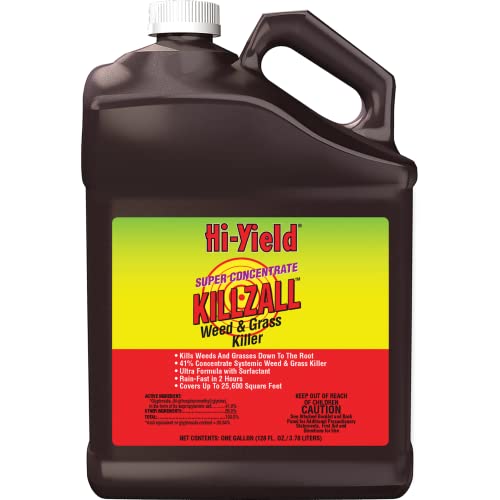
Hi-Yield (33693) Super Concentrate Killzall Weed & Grass Killer
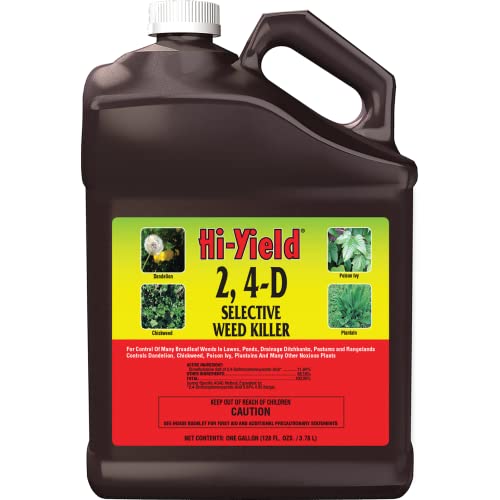
Hi-Yield (21416) 2,4-D Selective Weed Killer
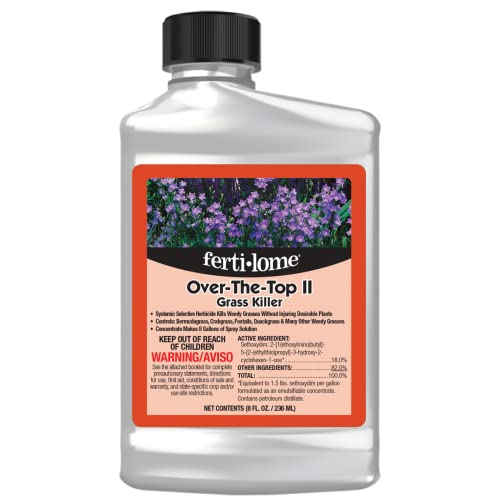
Fertilome 8 Oz Over The Top Grass Killer

Target 6 Plus (MSMA 48.2%) Turf Herbicide

Prodiamine 65 WDG Pre-Emergent Herbicide (5 lbs)
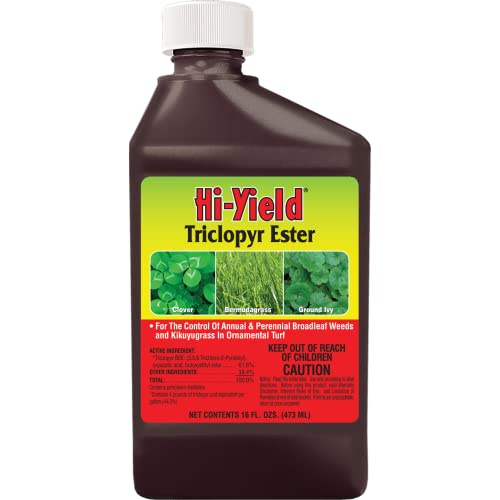
Hi-Yield (35262) Triclopyr Ester

Airmax Shoreline Defense Emergent Weed Control

Roundup Dual Action Weed & Grass Killer Plus 4 Month Preventer
A Breakdown Of The Leading Choices
For total vegetation wipe-down on driveways, fence lines, or a half-acre food plot you’re clearing before fall, Killzall delivers gallon-scale coverage without breaking stride. The double-surfactant formula helps the spray coat waxy stiltgrass leaves evenly, so the active ingredient penetrates rather than beading off.
One gallon covers up to 25,600 square feet at general broadcast rates, which translates to roughly a half-acre per jug. Treat it as a non-selective option: anything green it touches dies back, including desirable turf. Most homeowners reserve this for spot work around property edges where Japanese stiltgrass has marched in from a neighboring woods.
Practical Advantages
- Large-area coverage per gallon keeps refill trips to a minimum on big lots
- Surfactant blend improves sticking on waxy stiltgrass foliage for cleaner uptake
- Liquid concentrate format mixes quickly into pump sprayers with no prolonged stirring
- Fast contact action means visible results on emerged weeds within days under warm conditions
Things To Consider
- Non-selective chemistry will injure or kill any turf or ornamental it contacts
- Glyphosate-based products require careful storage away from children and pets in concentrate form
Feature Snapshot
Who It Suits Best
Property owners clearing large bare patches, gravel drives, or unplanted edges where total vegetation control beats selective precision.
Look Elsewhere When
You need to protect a cool-season lawn from damage; the Hi-Yield (21416) 2,4-D Selective Weed Killer fits that job instead.
When stiltgrass creeps into a fescue or bluegrass lawn, you need something that knocks back the invader without torching the turf underneath. 2,4-D is a classic broadleaf herbicide that handles dandelion, arrowhead, and many other dicots while leaving established grass largely alone.
The label lists a wide range of acceptable sites, including lawns, pastures, drainage ditches, and rangelands, which makes the jug versatile beyond just a backyard. Pairing it with a spreader-sticker surfactant tends to improve how evenly the spray clings to thin stiltgrass blades.
A Favorable Mix
- Selective mode preserves cool- and warm-season turf when applied at labeled rates
- Multi-site label covers lawns, ponds, ditches, and pasture edges from one jug
- Pairs cleanly with Hi-Yield Spreader Sticker for improved leaf coverage
Worth Noting
- Targets broadleaf weeds more reliably than grassy invaders like stiltgrass, so expectations should stay measured on pure grass pressure
- Mixing and sprayer cleanup add an extra step compared to ready-to-use formats
Right Fit For
Homeowners maintaining established turfgrass who face a mixed broadleaf and grassy weed problem rather than a pure stiltgrass takeover.
Consider Something Else When
Your lawn is overrun by stiltgrass specifically and you want a stronger grassy-weed hammer; Quali-Pro Prodiamine 65 WDG is the better preventive play.
Vegetable beds and ornamental borders are where most herbicides cause regret, because the plant you love sits six inches from the one you hate. Fertilome’s Over The Top formula is designed for that exact problem: it tackles annual and perennial grass weeds while leaving most broadleaf crops, shrubs, and trees alone.
The 8-ounce bottle concentrates down into roughly 8 gallons of finished spray, enough for a season of targeted edging around a home garden. Grass growth typically halts within about two days of application, which is a quick turnaround when stiltgrass is racing toward your tomato trellis.
Reasons It Performs
- Labeled for use around vegetables, ornamentals, trees, and shrubs without manual shielding
- Compact 8 oz bottle concentrates into a full 8 gallons of spray solution
- Stops grass weed growth within about two days of application in warm weather
- Small footprint makes it easy to store on a shelf between seasons
Small Caveats
- Application rate varies by target species and area, so consulting the label prevents under- or over-treatment
- Not a preventive; you’ll re-treat as new stiltgrass seeds germinate through the season
Quick Facts
Best Suited To
Garden keepers who want grass-weed control around food crops and ornamentals without hand-shielding every prized plant.
Skip It When
You’re spraying open lawn; the Hi-Yield (35262) Triclopyr Ester serves cool-season turfgrass scenarios better.
MSMA has a long track record as a selective post-emergent on warm-season turf, sod farms, and golf courses, and Target 6 Plus concentrates that active ingredient at 48.2% for serious knockdown. Crabgrass, dallisgrass, and johnsongrass are its headline targets, with stiltgrass falling into a similar grassy-weed category under the right conditions.
Mixing is straightforward at roughly 2 ounces per gallon of water for general applications, though the label should drive any specific rate decision. The 2.5-gallon jug format speaks to commercial volumes rather than weekend sprayer refills.
Noteworthy Benefits
- High-concentration MSMA delivers efficient grassy-weed control at low mix rates
- Labeled for cotton, golf courses, sod farms, and highway rights-of-way
- Liquid format goes into solution quickly for boom sprayers
- Useful where multiple tough grasses coexist in the same stand
Honest Caveats
- Restricted-use chemistry in many states and dangerous if mishandled, so PPE and label discipline are non-negotiable
- 2.5-gallon size is overkill for a typical homeowner with a backpack sprayer
- Not appropriate near sensitive aquatic sites; runoff planning matters on sloped turf
Who Should Grab It
Licensed applicators, sod farm managers, and turf professionals managing large grassy-weed infestations on warm-season stands.
Another Choice May Suit
Homeowners treating a backyard invasion; the Roundup Dual Action concentrate handles that scope with less regulatory overhead.
Pre-emergent herbicides work by forming a chemical barrier in the top inch of soil, catching weed seeds as they germinate. Prodiamine 65 WDG, the active ingredient behind the well-known Barricade brand, does exactly that for crabgrass and many other annual grassy invaders, and Japanese stiltgrass responds to a similar spring timing strategy.
The water-dispersible granule format dissolves into a sprayer without constant agitation, and a single 5-pound container covers substantial residential or light-commercial acreage. Spring and fall applications both fit the label, which gives you two prevention windows per year.
What Makes Sense
- Pre-emergent action stops stiltgrass before it becomes visible, cutting season-long labor
- Labeled for both spring and fall application windows across cool- and warm-season turf
- Water-dispersible granule mixes into spray solution faster than older wettable powders
- Season-long crabgrass control reduces repeat herbicide passes during peak summer
Points To Note
- Won’t control already-emerged stiltgrass, so timing before germination is critical
- Granules need accurate measuring because over-application can stress desired turf
Feature Rundown
Made For
Homeowners and lawn-care pros building a preventive program before stiltgrass seedlings ever break the soil surface.
Not Your Match When
Stiltgrass is already up and growing; pairing this with the Hi-Yield (33693) Super Concentrate Killzall covers emerged and emerging plants.
Triclopyr is a synthetic auxin herbicide, meaning it mimics plant growth hormones and overwhelms sensitive species. The Hi-Yield ester formulation targets actively growing broadleaf weeds such as oxalis and wild violet, and it doubles as a bluegrass suppressor on labeled turf types.
The 16-ounce bottle is sized for occasional residential use rather than acreage spraying. It’s approved for perennial bluegrass, perennial ryegrass, and tall fescue ornamental turf, which covers a lot of northern lawns, but the label excludes Bahiagrass, Bentgrass, bermudagrass, Centipedegrass, St. Augustine, and Zoysiagrass, so southern turf owners should look elsewhere.
Useful Highlights
- Targets tough broadleaf weeds like oxalis and wild violet in active growth
- Functions as a bluegrass suppressor in mixed cool-season stands
- Compact 16 oz bottle stores easily on a garage shelf
Trade Offs
- Restricted from common warm-season turf types including bermuda and St. Augustine
- Ester formulation can volatilize under heat, so application timing on cool mornings matters
Whose Shelf It Belongs On
Northern lawn keepers managing broadleaf weeds and stray bluegrass patches within fescue or ryegrass stands.
Reach For A Different Pick When
You maintain a warm-season lawn; the Roundup Dual Action concentrate covers broader use sites without the grass-type restrictions.
Lakefront and pondside properties face a different herbicide puzzle because the label has to clear aquatic safety reviews. Shoreline Defense is formulated for fresh and brackish water, targeting emergent weeds above the waterline such as cattails, phragmites, brush, and certain grasses that include stiltgrass at the water’s edge.
The gallon jug is sized for shoreline runs of meaningful length, and the product is meant to kill roots of persistent emergent growth rather than just browning the tops. For dock owners and pond managers, that root-kill angle is the difference between one season of relief and several.
The Case For It
- Labeled for fresh and brackish water, opening up shoreline projects other herbicides can’t touch
- Targets roots of persistent emergent weeds for longer-lasting shoreline cleanup
- Broad-spectrum coverage handles mixed weed and brush infestations in one pass
Softer Spots
- Specialized use case; overkill for a typical inland lawn
- Aquatic labeling adds state-level permitting considerations for some users
Technical Highlights
Perfect Match For
Pond and lake property owners reclaiming dock areas and beaches from emergent weed encroachment along the waterline.
Where A Sibling Pick Shines
You don’t have standing water on site; the Hi-Yield (33693) Super Concentrate Killzall is the right call for terrestrial heavy clearing.
Two-stage products combine a post-emergent knockdown with a residual barrier, and this Roundup concentrate leans into that convenience for hardscape owners. Existing weeds and grasses die down to the root, while an invisible soil barrier blocks new weed seedlings for up to four months.
The intended sites are cracks in driveways, walkways, patios, and along fence lines, anywhere you want a clean edge and don’t intend to plant. Stiltgrass seed blown onto a treated driveway or path stops germinating under the residual layer, which closes the reinfestation loop that bare hardscape often falls into.
Everyday Wins
- Kills existing growth down to the root and prevents new weeds for up to four months in one product
- Designed for cracks, driveways, paths, and other hardscape use sites
- Reduces how often you need to revisit the same weeds across a single season
Points To Keep In Mind
- Residual barrier prevents desirable plants from establishing too, so keep it off garden beds and lawn renovation areas
- Concentrate format requires mixing and a dedicated sprayer for accurate application
Built With In Mind
Homeowners maintaining driveways, walkways, and patio edges where stiltgrass keeps pushing through cracks each year.
Swap It Out When
You need a lawn-safe treatment; the Hi-Yield (21416) 2,4-D Selective Weed Killer stays selective on labeled turf types.
What To Weigh Before Choosing A Stiltgrass Herbicide
Choosing the right herbicide starts with reading your own yard, because stiltgrass shows up in very different places and each situation calls for different chemistry. Pre-emergent products work before seeds germinate, while post-emergent options handle plants already growing. Selective formulas spare your lawn, non-selective options spare nothing they touch.
For lawn-adjacent invasions on cool-season turf, selective broadleaf herbicides like 2,4-D or triclopyr preserve your fescue and ryegrass. When stiltgrass crowds vegetable beds or ornamental borders, a grass-selective over-the-top product kills the invader without harming broadleaf crops. For total clearing on gravel, fence lines, or bare ground, a non-selective concentrate saves time and money per square foot.
Think about coverage scale before buying jug size. A gallon concentrate suits a quarter-acre or larger property, while an 8-ounce bottle handles a few garden beds. Application timing matters too: pre-emergents need to go down before soil temperatures trigger germination, and post-emergents perform best on actively growing plants under mild weather.
Key Considerations Across These Picks
Mistakes Worth Dodging
Skipping the label is the most common error with any herbicide, since rates, site restrictions, and re-entry intervals vary widely. Pre-emergents applied after stiltgrass has already emerged deliver almost no benefit, so timing around local germination windows matters more than brand choice. Mixing selective and non-selective products without cleaning the sprayer between uses also damages desirable turf or ornamentals.
Where The Extra Money Goes
Higher-tier concentrates often mean a stronger active ingredient percentage, more flexible site labeling, or larger container formats that lower cost per treated square foot. Spending up pays off when you’re managing a multi-acre property or need an aquatic-approved formula for shoreline work. For a single garden bed or one driveway, a compact concentrate usually covers the job without the premium tier.
Frequently Asked Questions
When is the best time to apply herbicide for Japanese stiltgrass?
Pre-emergent herbicides should go down before soil temperatures trigger stiltgrass germination, typically in early spring as soils warm. Post-emergent treatments work best on actively growing plants during warm, mild weather when foliage is healthy and uptake is reliable.
Can I spray herbicide on stiltgrass without killing my lawn?
Selective herbicides like 2,4-D and triclopyr spare labeled cool-season turf types while targeting broadleaf weeds and certain grasses. Read the label carefully, since some selective products exclude specific turf species such as bermudagrass or St. Augustine.
How long does it take for stiltgrass to die after spraying?
Contact and systemic post-emergents typically show visible browning within one to two weeks under warm conditions. Faster-acting over-the-top grass killers may halt growth within two days, but full kill and root depletion take longer.
Is Japanese stiltgrass hard to control with herbicide alone?
Stiltgrass produces abundant seed and resprouts from roots in mild climates, so herbicide alone rarely solves a heavy infestation in one season. Combining pre-emergent barriers with follow-up post-emergent sprays and manual removal of seed heads delivers more durable control.
Are these herbicides safe around pets and children?
Most herbicide labels include specific re-entry intervals and drying-time guidance before allowing people or pets back onto treated areas. Always read and follow the product label for the exact waiting period, and store concentrates out of reach between uses.
Closing Remarks
The smartest stiltgrass plan usually pairs a pre-emergent barrier in spring with a targeted post-emergent pass once seedlings establish. Match the chemistry to your site, respect the label, and expect follow-up seasons before the seed bank fully depletes. Start with one of the picks above, and your stiltgrass problem becomes a manageable rotation instead of a yearly emergency.
