

Kudzu earns its nickname as “the vine that ate the South” by sprawling over fence rows, climbing trees, and smothering pasture grass. Once it takes hold, hand-pulling barely slows it, so the right herbicide becomes the practical path back to usable land. The picks below lean on brush-control chemistry suited to woody vines, with options for spot spraying, broadcast treatment, and aquatic edges where kudzu drifts toward ponds.
A Closer Look At The Lineup
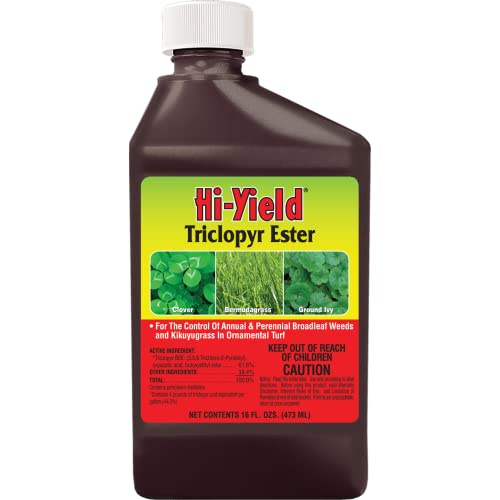
Hi-Yield (35262) Triclopyr Ester, 16 oz

Roundup Dual Action 365 Weed & Grass Killer

Southern AG 01113 Brush Weed Killer, 1 Quart

Roundup Poison Ivy Plus Tough Brush Killer2

Roundup Weed & Grass Killer4 Concentrate, 1 gal.

Roundup Dual Action 4 Month Preventer Concentrate
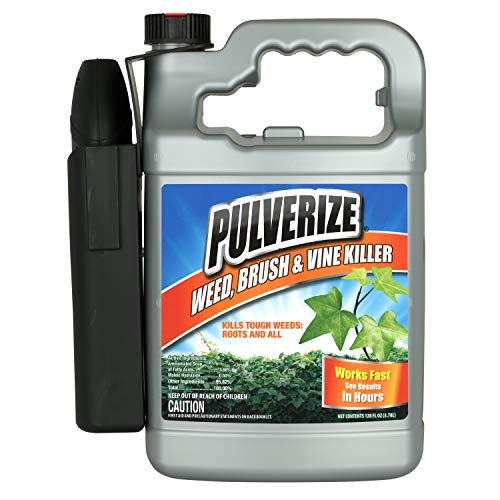
Pulverize Brush & Vine Ready to Use Weed Killer

Tsunami DQ Aquatic Herbicide, Gallon
Why These Options Stand Out
Triclopyr ester is the active ingredient behind many of the brush-control formulas on this list, and Hi-Yield bottles it as a concentrated liquid you mix yourself. A 16-ounce bottle measures out into a backpack or pump sprayer, making it a natural fit for fence rows where kudzu weaves through wire.
For homeowners who only treat patches along a backyard border or a rural fence line, a single bottle stretches surprisingly far once diluted. It’s labeled for use on cool-season turfgrasses like perennial bluegrass, perennial ryegrass, and tall fescue, so overspray drift onto those lawns stays within the product’s stated use cases.
Everyday Perks
- Triclopyr ester concentrate targets woody vines and brush, the category kudzu belongs to.
- Compact 16-ounce bottle stores easily on a garage shelf between treatments.
- Liquid concentrate lets you adjust mix ratios for spot spraying versus broader coverage.
- Compatible with perennial bluegrass, perennial ryegrass, and tall fescue ornamental turf.
Things To Consider
- Not labeled for warm-season grasses like Bermuda, St. Augustine, Centipede, or Zoysia.
- Owners commonly report needing repeat applications across a full growing season for dense infestations.
Who It Suits Best
Suburban property owners with cool-season lawns and a brushy back fence where kudzu keeps creeping in from the neighbor’s lot.
Consider Something Else When
If your kudzu runs into warm-season Bermuda or St. Augustine turf, the Roundup Poison Ivy Plus Tough Brush Killer2 is a friendlier fit for those grass types.
Roundup Dual Action 365 takes a different angle from the triclopyr picks: it pairs a kill-down herbicide with a 12-month pre-emergent barrier, so the same jug handles both the existing growth and the next wave. The 1.33-gallon format pairs with a Pump ‘N Go sprayer for reaching down fence rows without lugging a separate tank.
It fits hardscape scenarios best, places where you want a clean slate and don’t intend to replant for a season. Think gravel driveways, walkways, or the bare strip beside a fence where kudzu crowns keep re-sprouting. For most homeowners, that’s a smarter buy than spot-treating the same patch every month.
What Helps Most
- Combines a kill-down herbicide with a pre-emergent barrier in one jug.
- Built-in Pump ‘N Go 2 sprayer cuts out the need for a separate pump tank.
- Targets a broad list of tough weeds and grasses, including crabgrass and poison ivy.
Trade Offs
- The 12-month preventer means you won’t be able to replant treated soil for a full year.
- Bare-ground use only; not the right pick for areas you want to keep in grass.
Made For
Homeowners reclaiming a gravel drive, a cracked patio edge, or a hardscape border where kudzu and crabgrass keep trading places.
Look Elsewhere When
If you need to treat kudzu in pasture or rangeland without sterilizing the soil, the Southern AG 01113 Brush Weed Killer is the better agronomic choice.
Southern AG 01113 is the rural-landowner entry in this lineup, formulated for non-crop acreage like road right-of-ways, rangeland, pastures, and fence rows. The active ingredient matches the chemistry in Garlon, a well-known forestry brush herbicide, which is why it shows up on so many land-clearing job sheets.
It also handles cut-stump treatments, which matters because kudzu often resprouts from crown and root fragments left behind after mowing. Treating freshly cut stems with this product interrupts that regrowth cycle in ways a foliar-only spray cannot.
A Favorable Mix
- Active ingredient mirrors Garlon, a recognized forestry brush standard.
- Labeled for non-crop acreage, pasture, and rangeland use.
- Works as both a foliar spray and a cut-stump treatment for resprout control.
Worth Noting
- Concentrate format requires mixing and a dedicated pump or backpack sprayer.
- Not designed for residential lawn settings, so it’s overkill for small yards.
The Right Fit
Ranchers, homesteaders, and rural property owners managing multi-acre fence rows or pasture margins where kudzu has crossed over from a neighboring field.
A Better Fit Elsewhere
Suburban homeowners with a small backyard patch of vine will find the Pulverize Brush & Vine Ready to Use Weed Killer easier to deploy without mixing.
This is the one Roundup product that lists kudzu on its label, alongside poison ivy, poison oak, poison sumac, and wild blackberry. The 32-fluid-ounce concentrate mixes into a pump sprayer for foliar applications along fence rows and tree lines.
What sets it apart from the dual-action Roundup options on this list is its narrower focus. You’re not laying down a season-long pre-emergent barrier, you’re targeting specific woody vines. After treatment, the label allows replanting in 1 to 30 days, depending on the crop, which is a much faster turnaround than the year-long preventer.
Practical Pluses
- Kudzu appears directly on the product label, so you know it’s a stated target.
- Replant window of 1 to 30 days is much shorter than long-barrier preventers.
- Covers a wide vine-and-brush spectrum with one bottle.
Minor Gripes
- Concentrate requires measuring and mixing before each application.
- The package may ship as a 1-gallon pack of 2 in some listings, which is more volume than many homeowners need.
Best Suited To
Backyard gardeners and acreage owners who want a targeted, labeled kudzu treatment without committing to a year-long soil barrier.
Swap It Out When
For a one-step treatment that kills existing growth and prevents regrowth, the Roundup Dual Action 365 Weed & Grass Killer delivers both in a single jug.
Roundup Weed & Grass Killer4 is the straightforward kill-down concentrate in the Roundup family, the option you reach for when you want to clear a large area of mixed weeds and grasses without a pre-emergent commitment. The one-gallon volume suits property owners who mix their own spray batches and refill smaller handhelds.
It’s a flexible tool across the property. Use it for spot spraying kudzu shoots emerging along a hedgerow, or broadcast it across a weedy patch you plan to replant within a month. Compared to the dual-action formulas earlier in this list, you trade the season-long barrier for faster replant flexibility.
A Few Highlights
- One-gallon concentrate dilutes into multiple sprayer refills.
- Targets tough species including dandelion, crabgrass, and poison ivy.
- Lets you replant treated ground in 1 to 30 days.
Points To Keep In Mind
- Doesn’t include a pre-emergent, so regrowth pressure returns after the kill.
- Requires a separate pump or backpack sprayer, which adds to the setup.
Who Should Grab It
Property owners managing a multi-acre weedy patch who already own a pump sprayer and want refill capacity in a single purchase.
Reach For A Different Pick When
If you’re working in a pasture or right-of-way setting rather than a residential yard, Southern AG 01113 is purpose-built for non-crop acreage.
The Dual Action 4-Month Preventer concentrate splits the difference between a pure kill-down and a full year of soil barrier. It knocks down existing weeds and grasses to the root and then sets up an invisible barrier in the soil that holds for up to four months.
That middle window makes sense for cracked pavement, mulched beds along a foundation, or the gravel collar around a shed where you want a season of clean ground without locking the soil for a full year. The trade-off shows up when you want to replant that bed with ornamentals in the fall.
What Pays Off
- Kills existing growth and lays down a pre-emergent barrier in one product.
- Suits cracks, hardscape edges, and mulched border strips.
- Faster replant flexibility than a 12-month preventer.
Honest Caveats
- Pre-emergent barrier means no replanting in treated soil for several months.
- Overkill for spot spraying a single vine.
Perfect Match For
Homeowners who want a season of clean ground around patios, fence bases, or driveway edges without committing to a year-long lockout.
Skip It When
If you’d rather skip the soil barrier altogether and just kill what’s growing, the Roundup Weed & Grass Killer4 Concentrate keeps the chemistry simpler.
Pulverize Brush & Vine arrives already mixed, which removes the measuring and dilution step that turns a lot of first-time users off concentrate products. The chemistry combines ammoniated salts of fatty acids, which burn down foliage on contact, with maleic hydrazide, which suppresses regrowth from the root zone.
For a homeowner dealing with a small patch of kudzu climbing a mailbox post or weaving through a fence, that ready-to-use format can matter more than raw potency. You point, you spray, you walk away.
The Good Stuff
- No mixing required, just point and spray from the trigger bottle.
- Non-staining formula suits painted fences and outdoor furniture.
- Targets brush including poison ivy, poison oak, broom, and kudzu.
Softer Spots
- Smaller bottle volume means frequent refills for anything beyond a small patch.
- Fatty-acid burn-down chemistry works more slowly than glyphosate on tough brush.
Whose Shelf It Belongs On
First-time herbicide users tackling a small backyard kudzu patch who don’t want to invest in a pump sprayer or learn mixing ratios.
Not Your Match When
For multi-acre fence rows or pasture infestations, the Southern AG 01113 concentrate covers far more ground per bottle.
Tsunami DQ is the outlier on this list because it’s an aquatic herbicide, not a land-based brush killer. It uses diquat dibromide at 37.3 percent concentration to control submerged, floating, and emerged weeds in ponds and lakes, which matters when kudzu drifts toward a pond bank or shoreline.
It’s a specialty tool, and the label restrictions tell you so: this product is not for sale in several states, so availability depends on where you live. For lakefront and pond-edge properties in the states where it ships, though, it’s the right chemistry for water-side weed control that won’t harm fish when applied as directed.
Positive Points
- Diquat-based formula targets submerged, floating, and emerged aquatic weeds.
- Designed for pond, lake, and shoreline applications where kudzu meets water.
- Compatible with fish and aquatic wildlife when used as directed.
Points To Note
- Not available for sale in AZ, CA, CT, ME, MN, NH, NJ, NY, OR, VT, and WA.
- Specialty aquatic use only; not appropriate for dry-land kudzu infestations.
Built With In Mind
Pond and lakefront property owners where kudzu runs toward the shoreline and conventional land herbicides are off-limits.
Where Another Pick Suits Better
For dry-land kudzu infestations far from any water feature, the Roundup Poison Ivy Plus Tough Brush Killer2 handles the job without the state-restriction headaches.
What Matters Most Before Choosing Herbicides For Kudzu
Match The Chemistry To The Setting
Kudzu is a perennial woody vine, so herbicides need active ingredients that move through the plant to the root system rather than just burning top growth. Triclopyr, the active in the Hi-Yield and Southern AG formulas, is one of the most widely used options for vine and brush control, particularly in pasture and right-of-way work.
If the kudzu is creeping into a residential lawn, turf compatibility matters more than raw potency. Cool-season grasses like fescue and ryegrass tolerate triclopyr well, while warm-season grasses like Bermuda and St. Augustine can be damaged. Reading the grass-tolerance list on the label saves a yellowed lawn later.
Think About Replant Plans
Pre-emergent herbicides that double as soil barriers, like the Roundup Dual Action options, buy you a season of clean ground but lock out replanting for months. If you want to seed or transplant in treated soil within the same growing season, skip the preventer and reach for a kill-down concentrate instead.
Consider The Spray Equipment
Concentrates like Southern AG 01113 and Roundup Weed & Grass Killer4 require a pump or backpack sprayer, plus accurate measuring. Ready-to-use products like Pulverize skip that step entirely but cost more per ounce and run out faster on bigger jobs.
Account For Proximity To Water
For properties with ponds, creeks, or drainage ditches, herbicide choice gets restricted. Aquatic-labeled products like Tsunami DQ are formulated for water-side use where conventional brush killers would be inappropriate or illegal.
Slip-Ups And Spending Logic
Common Shopping Slip Ups
The most frequent misstep is reaching for a general weed-and-feed lawn product and expecting it to handle woody vines. Kudzu has a deep crown and woody stems, so it needs brush-control chemistry rather than a broadleaf lawn weed killer. A second pitfall is ignoring the grass-tolerance list; warm-season lawns get damaged by triclopyr-based products, so read the label before spraying.
What The Higher Tier Buys
Stepping up to a concentrate jug rather than a ready-to-use spray bottle pays off in cost per treated acre once you cross a few thousand square feet of infestation. The trade-off is the upfront investment in a pump sprayer and a few minutes of mixing time. For most homeowners, a single one-gallon concentrate handles a full season of spot treatments and then some.
