

Buckthorn is one of those invasive shrubs that quietly takes over a fence line or woodlot before you notice the damage. Once it’s established, manual cutting alone often encourages regrowth from the root crown, which is why a targeted herbicide routine makes sense for serious infestations. The eight products below cover a range of scenarios, from small backyard outbreaks to large pasture and rangeland restoration projects. You’ll find selective triclopyr formulas that spare grasses, aquatic-safe blends for wet ditches, and brush killers designed for woody stems and stumps.
How The Shortlist Stacks Up
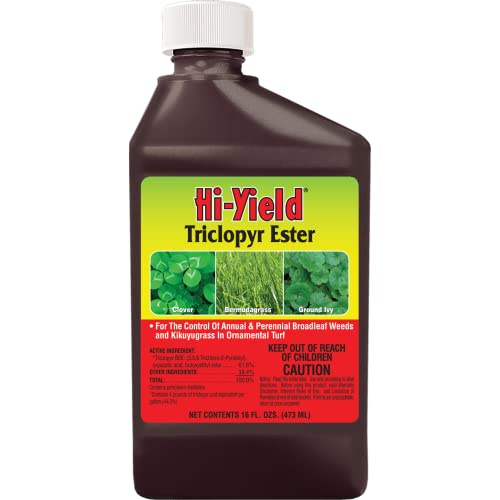
Hi-Yield Triclopyr Ester (16 oz)

Hi-Yield Killzall Aquatic Herbicide (32 oz)
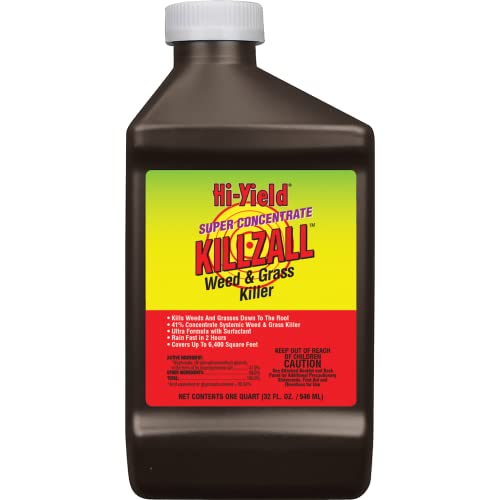
Hi-Yield Super Concentrate Killzall (32 oz)
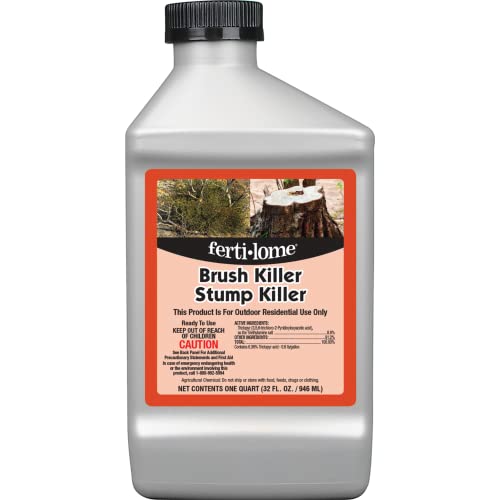
Fertilome Brush & Stump Killer (32 oz)

Southern AG 01113 Brush Weed Killer (32 oz)

Roundup Poison Ivy Plus Tough Brush Killer (32 oz)
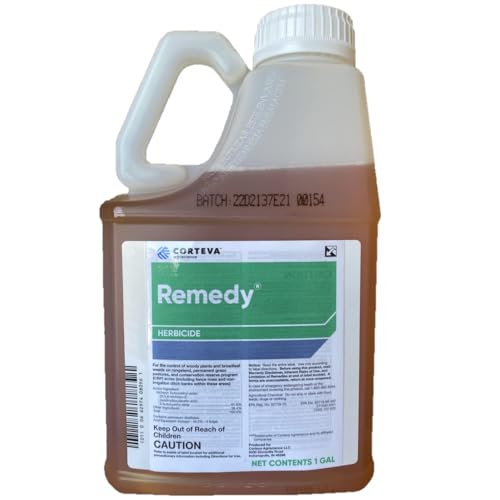
Remedy Specialty Herbicide Triclopyr (1 Gallon)
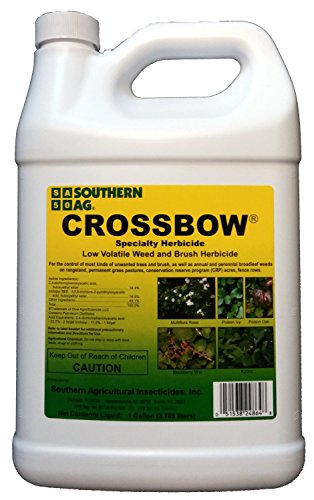
Southern Ag Crossbow Specialty Herbicide (1 Gallon)
The Strengths Of Each Pick
Buckthorn seedlings often sprout in the middle of an otherwise healthy lawn, which rules out the non-selective (kills nearly any green plant it touches) products later in this list. Hi-Yield’s triclopyr ester concentrate is built around that exact problem, giving you a selective herbicide (one that targets specific plant groups while leaving others unharmed) that aims at actively growing broadleaf weeds such as oxalis and wild violet without wiping out cool-season turf. For homeowners with perennial bluegrass, perennial ryegrass, or tall fescue, that selectivity is the headline feature.
The 16 oz bottle doubles as a bluegrass suppressor in some programs, so you can use leftover mix for adjacent lawn work. It also keeps the entry cost low if you’re tackling a young buckthorn patch before it sets seed. The concentrated form means you’ll mix your own spray, so a pump sprayer is a worthwhile companion purchase.
Benefits That Matter
- Selective formulation protects cool-season lawn grasses
- Targets broadleaf weeds common in buckthorn infestations
- Compact bottle suits small, frequent treatments
- Concentrate format stretches across multiple application rounds
Things To Consider
- Not approved for Bahiagrass, Bentgrass, Bermudagrass, Centipedegrass, St. Augustine, or Zoysiagrass
- Smaller bottle size means refilling sooner on larger lots
Who It Suits Best
Homeowners dealing with scattered young buckthorn shoots inside a cool-season lawn who want grass-safe broadleaf control without a full renovation.
Where Another Pick Suits Better
Pasture managers reclaiming acres of rangeland should reach for the Remedy Specialty Herbicide Triclopyr (1 Gallon) instead, which scales to multi-acre brush projects.
Buckthorn loves wet ditches, pond margins, and low-lying wildlife areas, which means many off-the-shelf brush killers are technically illegal to spray over standing water. This aquatic-labeled Killzall variant opens those sites up, covering up to one acre from a single 32 oz bottle when mixed per label. For property owners restoring wildlife habitat or reclaiming a soggy fence line, that labeling matters as much as the active ingredient.
It targets broadleaf offenders like Canadian thistle, chickweed, pigweed, and ragweed, alongside most woody seedlings that try to recolonize disturbed ground. Compared to the lawn-safe Hi-Yield Triclopyr Ester that opened this list, this one is non-selective, so anything green in the spray zone will brown out. That trade-off is the point: it’s a site-restoration tool, not a lawn product.
What Makes Sense
- Approved for aquatic and wildlife habitat sites
- Up to one acre of coverage per bottle at label rates
- Liquid concentrate mixes easily into standard pump sprayers
- Broad broadleaf spectrum catches regrowth alongside buckthorn
Trade Offs
- Non-selective action damages desirable vegetation in the spray path
- Requires strict adherence to label buffer and rate rules near water
Made For
Landowners managing buckthorn encroachment into drainage ditches, pond edges, or designated wildlife restoration zones where conventional brush killers are restricted.
Swap It Out When
Suburban yards with no surface water will be better served by the Roundup Poison Ivy Plus Tough Brush Killer, which is easier to source through local garden centers for routine homeowner use.
Sometimes you don’t want selectivity at all. When a thicket has to come down and you plan to replant the area anyway, a non-selective weed and grass killer that covers up to 6,400 square feet per 32 oz bottle is the practical choice. This super-concentrate Killzall is exactly that kind of brute-force tool, formulated with a double-surfactant (a wetting agent that helps spray stick to leaves) blend that dries on plant surfaces fast.
The fast-drying action matters for two reasons: rainfastness (resistance to being washed off by rain) and quicker uptake into actively growing tissue. That helps when buckthorn is mixed in with other brush and tall weeds on a future garden bed or gravel pad. Compared to the aquatic-labeled Killzall above, this version is intended for non-lawn, non-crop land where total vegetation control is the goal.
Where It Excels
- Treats up to 6,400 square feet per bottle
- Double-surfactant formula speeds drying on the leaf
- Handles grasses, broadleaf weeds, and woody brush in one pass
- Sets the stage for replanting once residues dissipate
Softer Spots
- Cannot be used on any lawn or turf you want to keep
- Mixing with off-label additives may cut performance
Who Will Love This
Owners prepping a fence line, gravel drive, or future planting bed for total vegetation reset where buckthorn has spread into mixed brush.
Reach For A Different Pick When
Cool-season lawn owners should skip ahead to the Hi-Yield Triclopyr Ester, which is selective enough to leave grass unharmed.
Cutting buckthorn at the base without treating the stump almost guarantees a flush of root sprouts the following spring. Fertilome’s woody plant control is built for the opposite workflow: cut, then paint or spray the fresh stump within 45 minutes to push the chemistry into the root system. That timing window is the defining feature, and it’s why the product earns its spot in a buckthorn toolkit.
For standing brush, the same bottle doubles as a foliar (leaf-sprayed) treatment at a mix ratio of 8 oz per gallon of water. Homeowners commonly work it in alongside manual pulling, treating smaller stems directly and reserving cut-stump work for the mature, multi-stemmed plants where root reserves matter most. Storage is straightforward: a cool, dry shed corner keeps the concentrate stable between treatment rounds.
Real-World Strengths
- Dual-purpose as foliar spray and cut-stump treatment
- Targets vines, brush, and woody weed regrowth
- Standard 8 oz per gallon foliar mix keeps math simple
- Concentrate stores well in a typical garden shed
Honest Caveats
- Stump application requires work within 45 minutes of cutting
- Brush application demands a separate sprayer you don’t reuse on lawns
Right Fit For
Homeowners running a cut-and-treat buckthorn removal plan who want a single bottle to handle both standing brush and freshly cut stumps.
A Better Fit Elsewhere
Pasture operators covering acres at a time should turn to the Southern Ag Crossbow Specialty Herbicide (1 Gallon), which dilutes further per bottle.
For rangeland, pastures, and fence rows, you want a brush killer that’s specifically labeled for non-crop agricultural sites rather than a generic homeowner concentrate. Southern AG’s 8.8% triclopyr formula is built for exactly those acres, with simple mix directions and a foliar spray rate of 4–8 ounces per gallon of water. Buckthorn, tree saplings, and vines fall within the labeled control list.
It also doubles as a sprout suppressor on cut stumps, which keeps regrowth from coming back through the pasture understory. The active ingredient mirrors a well-known commercial brush control name, so the chemistry is familiar to land managers who already follow triclopyr-based programs. A quart bottle typically covers several acres at the standard foliar rate, depending on how dense the brush actually is.
What Pays Off
- 8.8% triclopyr concentration for woody plant control
- Labeled for rangeland, pasture, and fence rows
- Doubles as a stump sprout suppressant
- Standard 4–8 oz per gallon foliar mix
Points To Note
- Restricted to non-crop sites; not for ornamental lawns
- Coverage varies widely with brush density and spray calibration
Built With In Mind
Small-scale pasture managers and acreage owners reclaiming fence lines or grazing land from encroaching brush and buckthorn thickets.
Skip It When
Homeowners on quarter-acre lots will find the Southern AG 01113 Brush Weed Killer overkill, and the Roundup Poison Ivy Plus Tough Brush Killer easier to source locally.
The retail Roundup line is built for homeowners who’d rather not mix farm-style concentrates. This tough brush killer concentrate targets the usual suspects: poison ivy, poison oak, poison sumac, wild blackberry, and kudzu, alongside other woody invaders that share buckthorn’s stubborn root systems. Visible results often show within hours of application, and the formula is rainproof in roughly 30 minutes under normal conditions.
Replanting intervals vary, so checking the booklet before reseeding lawn or ornamentals is worth the few minutes it takes. Compared to the triclopyr-only products earlier in this list, the Roundup formula blends two active ingredients, which broadens the spectrum of brush it controls. You may find it the most convenient option if your local hardware store stocks it consistently.
Good Reasons To Consider
- Fast visible results reduce repeat-spray guesswork
- Rainproof in roughly 30 minutes under typical conditions
- Multi-ingredient formula broadens brush spectrum
- Widely stocked through mainstream retail channels
A Few Limitations
- Replant intervals vary by site and require a label check
- Less suited to very large acreage due to bottle size
Whose Shelf It Belongs On
Suburban homeowners dealing with a backyard brush outbreak who want a recognizable, fast-acting formula without sourcing specialty agricultural chemicals.
Not Your Match When
Ranchers reclaiming multiple acres of rangeland will get more mileage out of the Remedy Specialty Herbicide Triclopyr (1 Gallon), which is sold in larger containers.
Remedy is the workhorse of many pasture restoration programs. The one-gallon container targets brush and mid-size trees on rangeland, fence lines, and pasture ground, working through the entire plant: top growth and root system. It uses triclopyr as the active ingredient, the same chemistry found in many brush control programs, so managers already familiar with triclopyr rotations can slot it in without recalibrating their approach.
The low-odor profile makes it more pleasant to handle than older ester formulations, especially during summer application windows. It also tank-mixes (combines in the spray tank) with compatible herbicides like GrazonNext or ForeFront HL for broader weed spectrums. For large properties, the gallon size is the practical entry point, and the same concentrate can be dialed down for spot spraying individual buckthorn clumps along a fence row.
Practical Pluses
- One-gallon format supports multi-acre treatment plans
- Low-odor chemistry eases summer handling
- Works through both top growth and root system
- Tank-mix compatible with several common rangeland herbicides
- Selective enough to preserve desirable pasture grasses
Where It May Fall Short
- One-gallon size is overkill for small backyard projects
- Tank-mix partners add complexity for first-time users
- Restricted to non-crop agricultural and rangeland sites
Best Suited To
Ranchers and acreage owners restoring pastures and fence lines who want a concentrated triclopyr with a low-odor profile and room to scale.
Where A Sibling Pick Shines
Homeowners who only need to spot-treat a few buckthorn clumps will find the Southern AG 01113 Brush Weed Killer a more manageable bottle size.
Feature Snapshot
Crossbow pairs two familiar brush control ingredients, Garlon (triclopyr) and 2,4-D, into a single low-volatile concentrate. The combination broadens the spectrum of brush, trees, and broadleaf weeds it controls, which is why it shows up on so many fence-line reclamation projects. The one-gallon container dilutes into roughly 96 gallons of spray solution at standard foliar rates, enough to cover extensive property edges in a single working session.
The low-volatile ester formulation reduces vapor drift (the tendency of spray to move as vapor and damage nearby plants) compared to older ester products, which helps when you’re spraying near sensitive broadleaf crops or ornamental trees. For multi-acre brush projects, the math favors the gallon: fewer refill stops, more continuous spray time, and a single product labeling across multiple target species. That said, Crossbow’s broader chemistry means a longer restricted-entry interval (REI, the time you must stay out of the treated area after application) and stricter personal protective equipment (PPE) requirements on the label.
Reasons It Performs
- Two-ingredient formula broadens brush and weed spectrum
- Makes up to 96 gallons of spray solution per gallon
- Low-volatile ester cuts vapor drift near sensitive crops
- Covers annual and perennial broadleaf weeds plus woody brush
Some Limits To Know
- Restricted to non-crop sites; not appropriate near lawns
- Longer restricted-entry interval than triclopyr-only products
Perfect Match For
Land managers tackling multi-acre fence line or woodlot restoration projects who need one product to span brush, saplings, and broadleaf weeds.
Look Elsewhere When
Homeowners spraying around ornamental beds should pick the Hi-Yield Triclopyr Ester, which keeps the active ingredient narrow and the buffer requirements shorter.
Quick Facts
What To Match Up Before Choosing A Buckthorn Herbicide
The first decision is selectivity. Cool-season lawns with scattered buckthorn seedlings need a selective triclopyr product, while bare-soil restoration projects benefit from a non-selective glyphosate or triclopyr blend. Site labeling comes next: aquatic and wildlife habitat sites restrict which formulas are legal, while rangeland and pasture projects open up stronger brush killers that would damage residential ornamentals.
Application window matters just as much as chemistry. Cut-stump treatments require fresh-cut timing, usually within 45 minutes, while foliar sprays work best on actively growing foliage in late summer or early fall. Buckthorn’s waxy leaf cuticle (the plant’s natural waxy outer coating that repels water) means esters often outperform amines for foliar work in cooler conditions, though esters carry stricter buffer requirements. Coverage math also deserves attention: a quart bottle may be plenty for a backyard, but multi-acre projects will run out fast, which is where one-gallon concentrates pay off.
Factors Worth Weighing Before You Buy
Pitfalls Shoppers Hit
Buckthorn control fails most often from underestimating the root reserve. Treating only the visible top growth without a follow-up plan lets the plant push new shoots from the root crown, and the cycle restarts. Reading the label for replant intervals, restricted-entry intervals, and required personal protective equipment before opening the bottle saves real headaches.
Mixing herbicides with off-label additives is another common misstep. Some adjuvants and fertilizers reduce uptake or cause unpredictable reactions. Sticking to water-only mixes or label-approved surfactants keeps results consistent.
Where The Extra Money Goes
Higher concentration and dual-active-ingredient formulas cost more because they cover more ground per bottle and broaden the spectrum of plants they control. A two-ingredient brush killer like Crossbow can replace a single-purpose triclopyr for projects where multiple species show up at once. Gallon sizes also lower the per-acre cost on large properties, even though the upfront ticket is steeper. For homeowners on small lots, that same premium pays for convenience features like rainproof formulations and faster visible results, which often justify the upgrade.
Frequently Asked Questions
When is the best season to spray buckthorn?
Late summer through early fall, after active leaf growth but before leaf drop, is generally the most effective window. The plant is moving sugars to its roots, which pulls systemic herbicides (products that travel inside the plant from leaves to roots) down with them.
Do I need to cut the buckthorn before spraying?
Foliar sprays work on standing brush without cutting, while cut-stump treatments require fresh cuts treated within roughly 45 minutes. Combining both approaches is common for mature thickets where root reserves are large.
Will these herbicides harm nearby trees?
Non-selective products will damage any green tissue they contact, including desirable trees. Selective triclopyr blends spare most grasses but can still affect sensitive broadleaf ornamentals. Drift-reducing nozzles and label buffer distances help reduce unintended contact.
How long does it take to see results on buckthorn?
Foliar sprays often show yellowing and wilting within one to three weeks, with full root kill taking longer. Cut-stump treatments move more slowly through the root system, sometimes requiring a full growing season for complete dieback.
Can I replant grass or ornamentals after treatment?
Replant intervals vary by product and rate. Some homeowner-friendly formulas allow replanting within a few weeks, while stronger pasture concentrates may require longer waits. Always check the specific product label before reseeding.
Final Verdict
Buckthorn rarely surrenders to a single spray, so matching the herbicide to your site and your follow-up plan matters more than chasing one “best” product. Small backyard patches in cool-season lawns do well with selective triclopyr, while multi-acre fence lines and pasture ground respond to dual-ingredient brush killers in gallon containers. Cut-stump treatments fill the gap where mature root systems would otherwise send up sprouts. Whichever pick you choose, treating at the right season and rechecking the site the following spring is what turns a spray day into a real long-term reduction.
