

Tired of weeds staging a hostile takeover of your driveway, fence line, or backyard gravel paths? The right herbicide turns a weekend of back-breaking pulling into a quick spray-and-walk-away job. This lineup covers the heavy-duty non-selective killers for total vegetation control alongside the selective formulas that spare your lawn while wiping out dandelions and wild violets.
The Lineup, Simplified
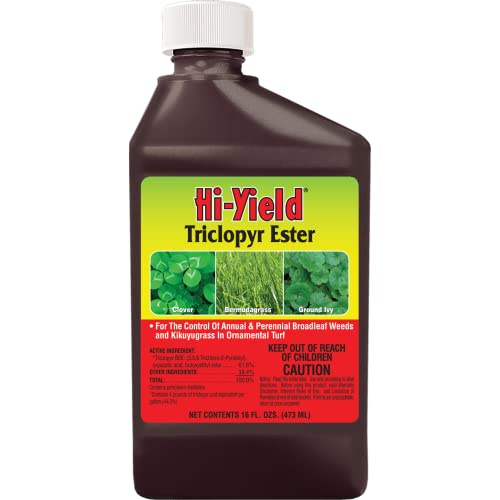
Hi-Yield (35262) Triclopyr Ester 16 oz

Hi-Yield (33701) Super Concentrate Killzall II 2.5 gal
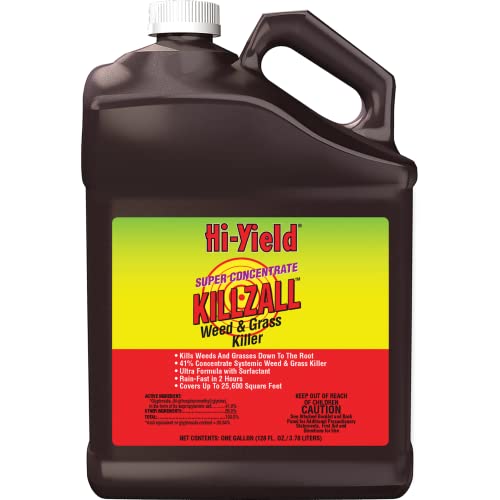
Hi-Yield (33693) Super Concentrate Killzall 1 gal
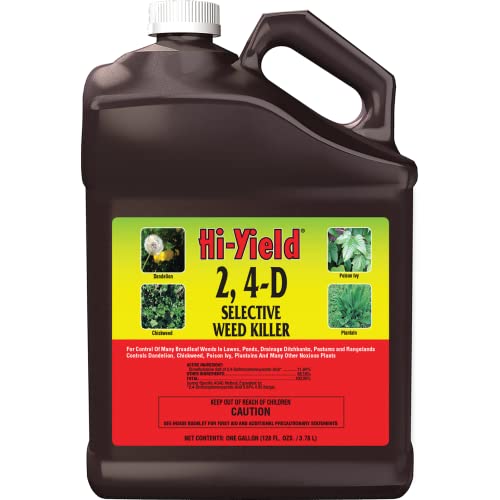
Hi-Yield (21416) 2,4-D Selective Weed Killer 1 gal
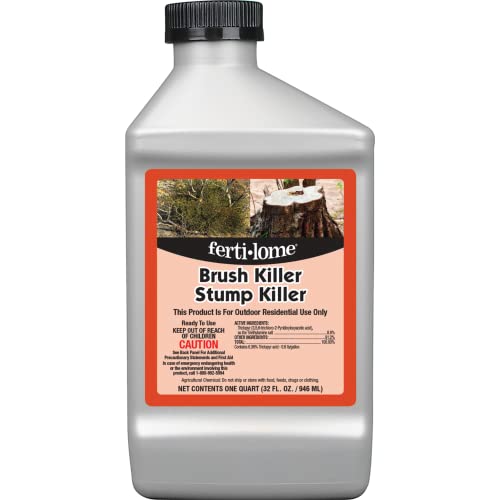
Fertilome (11485) Brush & Stump Killer 32 oz

Roundup Dual Action 365 Weed & Grass Killer 1.33 gal

Roundup Poison Ivy Plus Tough Brush Killer 32 oz

Roundup Weed & Grass Killer4 Concentrate 1 gal
Taking A Closer Look At The Options
Triclopyr is an ester-based selective herbicide that has earned a quiet reputation among homeowners wrestling with stubborn broadleaf invaders like oxalis and wild violet. Unlike the non-selective workhorses we’ll cover later, this 16 oz concentrate is designed to leave your cool-season turfgrass alone while still wiping out the weeds that choke it. If your lawn is perennial bluegrass, perennial ryegrass, or tall fescue, this formula slots right in.
You measure, dilute, and spray, and the small bottle goes a long way on a typical suburban yard. It’s a thoughtful middle-ground pick for people who want targeted control without resorting to a scorched-earth approach.
Advantages To Know
- Designed for actively growing broadleaf weeds, hitting them when they’re most vulnerable
- Safe for perennial bluegrass, ryegrass, and tall fescue ornamental turf when applied as directed
- Functions as a bluegrass suppressor in some programs, giving flexible seasonal use
- Concentrate format keeps the bottle compact and shelf-stable
Things To Consider
- Not suited for Bahiagrass, Bentgrass, Bermudagrass, Centipedegrass, St. Augustine, or Zoysiagrass
- Smaller bottle means refilling mid-season if you have a large property
Feature Snapshot
Who It Suits Best
Cool-season lawn owners battling stubborn violets, clover, and oxalis without sacrificing their turfgrass.
Where Another Pick Suits Better
Reach for Hi-Yield (33701) Super Concentrate Killzall II instead when the goal is total vegetation removal on driveways or fence lines, not selective lawn care.
When you need to wipe out everything green across a sizeable property, the 2.5 gallon jug of Killzall II is the kind of buy that justifies itself fast. This non-selective formula hits annual and perennial grasses, broadleaf weeds, and woody brush species, all the way down to the root. You’ll see results within hours, with deeper root action in roughly one to two.
The big jug makes sense for acreage, orchards, or rural lots. It pairs naturally with the brush-clearing role of Fertilome (11485) Brush Killer covered later, but on a much larger scale.
What It Does Well
- Full-spectrum non-selective control across grass, broadleaf weeds, and woody brush
- Reaches roots within 1 to 2 hours for thorough kill
- Compatible with approved crop use sites for agricultural properties
- Bulk packaging reduces per-acre cost for big jobs
Points To Keep In Mind
- Cannot be used on lawns you want to keep
- Large jug requires proper storage away from kids and pets
- Mixing ratios vary by use site, demanding careful label review
Made For
Property owners managing large non-lawn areas like driveways, fence rows, and rural lots who want root-down control.
Not Your Match When
Pick Hi-Yield (33693) Super Concentrate Killzall Weed & Grass Killer instead for a smaller one-gallon jug that handles suburban patios without the storage commitment.
The one-gallon Killzall lands in the sweet spot for suburban homeowners. It carries the same non-selective punch as the 2.5 gallon version above, just in a container you can actually lift without staging a workout. Coverage scales up to roughly 25,600 square feet per gallon when mixed and applied properly.
A double-surfactant formulation helps the spray stick and absorb quickly, drying fast on plant surfaces so it starts working in earnest. If your battleground is a cracked driveway, a gravel walkway, or the edge of a patio, this bottle is the right size for one thorough pass.
A Few Highlights
- Handles grasses, broadleaf weeds, and woody brush species in one formula
- Treats up to 25,600 sq ft from a single gallon when diluted correctly
- Double-surfactant blend speeds absorption and rainfastness
- Compact 1 gal jug is easy to store in a garage or shed
Honest Caveats
- Not labeled for use on lawns you want to preserve
- Concentrate requires accurate mixing to avoid under- or over-application
Quick Facts
Best Suited To
Homeowners tackling patios, walkways, and fence perimeters who want serious non-selective control in a manageable jug.
Consider Something Else When
Choose Roundup Dual Action 365 if you also want a built-in pre-emergent barrier that keeps weeds from returning for months.
2,4-D (a synthetic auxin herbicide) is one of the oldest and most widely used broadleaf weed killers, and this gallon concentrate leans into that legacy for serious turf and pasture work. It targets plants susceptible to 2,4-D, including dandelion, arrowhead, buckhorn, aster, and goatsbeard, while leaving most turfgrasses alone.
Versatility is the headline here. You can treat lawns, but you can also reach for it on ponds, drainage ditches, pastures, and rangelands where blanket broadleaf control matters more than ornamental perfection.
Where It Excels
- Effective on stubborn broadleaf weeds like dandelion, arrowhead, and aster
- Labeled for lawns, ponds, ditches, pastures, and rangelands
- Pairs with a surfactant product for improved leaf adhesion when needed
- One-gallon jug offers solid coverage for large grassy areas
Worth Noting
- Requires careful rate calibration to avoid turf injury on sensitive grasses
- Pond and ditch use demands strict adherence to label setback guidance
- Mixing accuracy affects both effectiveness and crop safety
Key Product Details
Whose Shelf It Belongs On
Rural homeowners and small-acreage managers who want one product that handles both lawn dandelions and pasture broadleaf weeds.
Look Elsewhere When
Grab Hi-Yield (35262) Triclopyr Ester for lawns dominated by wild violet and oxalis where 2,4-D alone often falls short.
Brush and stump killers live in their own category, and this Fertilome concentrate does the two jobs the name promises. Vines, woody weeds, and freshly cut stumps are the targets, and timing matters. Apply within 45 minutes of cutting a stump, brush the undiluted product directly onto the cut surface, and the formula moves through the vascular system to kill the roots.
For brush control on standing plants, you mix 8 oz of concentrate per gallon of water and spray foliage. Compared to the lawn-safe picks earlier in this list, this is the heavy brush-clearing choice.
The Value In It
- Doubles as a stump killer and a brush killer in one bottle
- Straight-from-bottle application for fresh stumps, no mixing required
- Simple 8 oz per gallon dilution for standing brush spraying
- Targets woody plants and tough vines that roundup alone may not finish off
Where It Is Less Suited
- The 45-minute window on freshly cut stumps is tight to manage on large jobs
- Brush not included, so you need a separate applicator for stump work
- Not intended for general lawn weed control
Who Should Grab It
Landowners clearing fence lines, reclaiming overgrown corners, or stopping vines from swallowing shrubs.
A Better Fit Elsewhere
Choose Roundup Poison Ivy Plus Tough Brush Killer2 for poison ivy, oak, and sumac where you need a ready-to-mix concentrate with broader brush coverage.
Most weed killers stop working the moment the visible plant dies, which is why Dual Action 365 takes a different approach. It kills existing weeds and grasses and then leaves behind a residual barrier that keeps new ones from coming back. The “365” in the name references up to 12 months of prevention in ideal conditions.
It hits the usual suspects: clover, dandelion, large and smooth crabgrass, poison ivy, and other broadleaf and grassy weeds. The included Pump ‘N Go 2 sprayer also means you can leave your old handheld sprayer in the shed. This is the option for people who want one application to last a full season.
Everyday Perks
- Kills existing weeds while preventing regrowth for up to 12 months
- Rainproof in as fast as 30 minutes for quick weather resilience
- Targets tough species including crabgrass and poison ivy
- Pump ‘N Go 2 sprayer included for higher-volume spraying without extra gear
Trade-Offs
- Residual barrier means you cannot replant the treated area during the prevention window
- Not appropriate for use on lawn areas you want to keep
Right Fit For
Homeowners with gravel drives, fence perimeters, or bare-soil beds who want to spray once and not worry about it again this season.
Swap It Out When
Switch to Roundup Weed & Grass Killer4 Concentrate if you plan to replant soon and don’t need months-long residual control.
Poison ivy, poison oak, and poison sumac deserve their own approach, and this concentrate delivers it. The formula pushes through to the root, so regrowth is less of an issue than with surface-only treatments. It also covers wild blackberry and kudzu, two vines that take over fence lines given half a chance.
It’s rainfast in around 30 minutes and typically shows visible results within hours. You can replant the area one to thirty days after application depending on conditions, which gives you flexibility for seasonal landscaping.
The Upside
- Targets poison ivy, oak, and sumac specifically, plus tough vines like kudzu
- Root-killing action reduces stubborn regrowth
- Rainproof in roughly 30 minutes for quick turnaround after application
- Replant window of 1 to 30 days offers flexible seasonal timing
Some Limits To Know
- Concentrate requires careful dilution and label review
- Not for use on lawn areas you intend to preserve
Who Will Love This
Property owners dealing with toxic vines along woodland edges, fence lines, or rural trails where caution matters as much as coverage.
Reach For A Different Pick When
Pick Fertilome (11485) Brush & Stump Killer for fresh-cut stumps where you need a brush-on, undiluted application.
The all-purpose option closes out the list. This one-gallon concentrate is built for general yard cleanup. Dandelion, large crabgrass, poison ivy, red and white clover, spotted spurge, and other broadleaf weeds all fall to the same mix.
Rainfast in around 30 minutes, with visible results in hours, it’s a workhorse for people who want one jug to handle whatever pops up in a typical season. Unlike the Dual Action 365 pick above, this formula does not leave a long-lasting residual, so you can replant sooner.
Well-Handled Touches
- Covers a wide spectrum of common weeds and grasses in one mix
- Root-down kill reduces regrowth compared to surface-only products
- Rainproof in roughly 30 minutes, helpful in unpredictable weather
- Shorter replant window than residual-preventer formulas
Possible Compromises
- Does not prevent new weeds from germinating after application
- Not labeled for use on lawn areas you want to keep
Technical Highlights
The Right Fit
Homeowners who want a flexible, all-purpose concentrate that handles whatever weeds and grasses show up this season without a residual lock.
Where A Sibling Pick Shines
Switch to Roundup Dual Action 365 if you want months of prevention built into the same kind of spray job.
Matching Your Herbicide To The Job At Hand
Start by separating selective from non-selective formulas. Selective herbicides target specific plant types, like broadleaf weeds in a lawn, while non-selective herbicides kill virtually any green plant they touch. Mixing up these two is the most common and most expensive mistake in this category.
Next, consider where you actually plan to spray. Driveways, fence lines, gravel paths, and patio cracks call for non-selective control, while dandelions in a bluegrass lawn need a selective product that spares your turf. Always confirm the grass type on the label before buying. Cool-season and warm-season turfgrasses tolerate different chemistries, and a wrong match can scorch an entire lawn.
Finally, think about duration. Some formulas work and disappear, leaving the soil ready for replanting within days. Others leave a residual barrier that blocks new growth for months. Replant windows on the label dictate when you can put new plants in the ground, and they vary widely. Match the product’s persistence to your seasonal plans.
What Most Shoppers Get Wrong And How To Spend Smarter
Misreading Total Vegetation Claims
Buyers often grab the most aggressive non-selective formula for a small sidewalk crack and then wonder why their prized flower bed three feet away is now brown. Match the formula to the scope. For cracks in paved areas, a small ready-to-spray jug beats hauling out a concentrate, and overspray matters more than total kill.
Where The Extra Money Goes
Spending up typically buys you convenience and coverage rather than stronger chemistry. Bulk jugs like the 2.5 gallon Killzall II lower your cost per acre but only make sense for large properties. Built-in sprayers and longer residual windows, like the 12-month prevention in Dual Action 365, are the other ways premium pricing shows up. For small urban lots, a one-gallon concentrate is usually the sweet spot. For acreage, brush, or replanting flexibility, the upgrade is worth the step up.
Frequently Asked Questions
How long does it take for non-selective herbicides to work?
Most non-selective formulas show visible wilting within hours, with full root kill in one to two weeks depending on plant size and species.
Can I spray herbicide before rain arrives?
Many modern formulas are rainfast in roughly 30 minutes, but a heavy downpour right after application can reduce effectiveness, so timing matters.
Will one application keep weeds away all season?
Only residual herbicides like Dual Action 365 prevent regrowth for months. Standard kill-only formulas require reapplication as new weeds germinate.
Is it safe to use herbicides around pets and kids?
Always follow label guidance for drying time and re-entry intervals. Keep children and pets away during application and until the treated area is fully dry.
What’s the difference between concentrate and ready-to-spray?
Concentrates require mixing and a separate sprayer, giving you coverage flexibility. Ready-to-spray bottles cost more per ounce but skip the measuring step for small jobs.
Final Verdict
The right herbicide comes down to where you’re spraying and what you want left standing. Selective formulas like Hi-Yield Triclopyr Ester and Hi-Yield 2,4-D belong on lawns that matter, while non-selective picks like Killzall II and the Roundup concentrate family handle everything else. Match the chemistry to your grass, respect replant windows, and the rest is just timing and weather.
