

A good hose bib is the quiet workhorse of any outdoor water setup, the small brass fixture that decides whether watering the garden or rinsing off the deck feels easy or annoying. Picking the wrong one brings leaks, stiff handles, or worse, a split pipe when the first hard frost hits. The right valve keeps flow steady, seals tight, and survives seasons without complaint. This guide walks through eight solid options across plain spigots, frost-free hydrants, and heavy-duty splitters, so you can match the hardware to your climate, plumbing, and how you actually use water outside.
Your Options, Compared

Quarter Turn Hose Bibb, Brass Ball Valve Spigot 3/4″

2 Way Hose Splitter Heavy Duty Metal Y with Shutoff Valves

Aquor House Hydrant V2+ Frost Free Outdoor Faucet

Aquor House Hydrant V1+ Frost Free Outdoor Faucet

Mueller Industries 103-053HN 1/2-Inch Hose Bibb
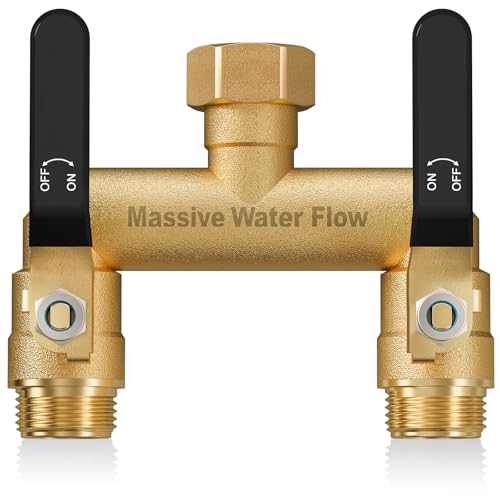
Hose Splitter 2 Way Heavy Duty Brass with Long Metal Handles
Brass Ball Hose Bibb 1/2″ Male NPT Inlet 3/4″ Outlet
HYDRO MASTER Brass Garden Valve 1/2″ FNPT x 3/4″ MNH
A Breakdown Of The Leading Choices
This full-port brass ball valve bibb brings commercial-grade plumbing hardware to a residential hose tap, the kind of valve you’d usually spot on a workshop line. The 3/4-inch Male NPT inlet threads directly onto a standard supply nipple, while the 3/4-inch Male Hose Thread (MHT) outlet accepts any ordinary garden hose without adapters. For anyone replacing a tired multi-turn spigot, the quarter-turn action feels like a small upgrade that pays off every time you water the lawn.
You notice the weight the moment it lands in your hand. Solid brass doesn’t bend or strip under a wrench, so over-tightening during installation is less of a worry. It suits homeowners tired of the drip-drip-drip that comes with worn compression-style hose bibs, especially on older homes where the original fixture has finally given up.
What Helps Most
- Quarter-turn ball mechanism shuts off flow completely with a short twist, useful when you spot a leak mid-watering.
- Full brass body resists corrosion in humid coastal air where cheaper plated valves tend to pit.
- Standard 3/4-inch MIP x MHT connections skip the hunt for odd adapters in the plumbing aisle.
- Compact 1 x 3 x 2-inch footprint fits tight exterior wall cavities where bulkier hydrants won’t reach.
Things To Consider
- This is a wall-mounted spigot, not a frost-free hydrant, so cold-climate installs still call for an indoor shutoff and winter drain-down routine.
- The chrome ball finish can tarnish over years of UV exposure, which is cosmetic rather than functional but worth noting if appearance matters.
Who It Suits Best
Homeowners with a standard exterior tap who want a sturdy replacement valve and live somewhere without deep winter freezes.
Skip It When
Anyone in a freezing climate should look at the Aquor V2+ Frost Free Outdoor Faucet instead, since self-draining hydrants handle winter without a foam cover.
This Y-shaped splitter turns a single hose bib into two independently controlled outlets, a handy trick when one side of the yard needs drip irrigation while the other wants a sprinkler. Built with a metal body and brass working parts, it threads onto any standard 3/4-inch GHT (Garden Hose Thread) spigot. Compared to the simple ball valve in Item 1, this piece adds the plumbing of an extra faucet without calling in a contractor.
Each branch has its own shutoff lever, so you can run one zone at full pressure or both at once for lighter tasks. Gardeners juggling a hose timer, soaker line, and a handheld nozzle will appreciate not having to swap fittings every few minutes. For families with kids who want a sprinkler going while the dog gets a bath, that’s the kind of small convenience that adds up over a summer.
Good Reasons To Consider
- Independent valves let you isolate one line for repairs without shutting down the whole yard.
- Heavy metal construction resists the cross-threading that plagues plastic splitters after a season of use.
- Standard 3/4-inch GHT threads fit the same hoses and timers you already own.
Honest Caveats
- Two outlets share one incoming supply, so running both at once reduces pressure on each branch.
- Leaving it attached year-round in freezing zones invites trapped water inside the body, so a winter removal habit pays off.
- The Y geometry sits a bit further from the wall than a straight splitter, which can snag on a passing wheelbarrow.
Made For
Gardeners running multiple watering zones from a single spigot, especially anyone juggling drip lines and sprinklers at the same time.
Look Elsewhere When
Someone needing a full-flow splitter with longer metal handles will be happier with the LNEZCDB 2 Way Brass Splitter further down the list.
The Aquor V2+ trades the traditional threaded spout for a push-and-twist quick-connect fitting, which is the kind of detail that changes how a hose bib feels every day. Where ordinary taps have you cranking a metal spigot, this one clicks a connector into place and auto-seals when you remove it. The body uses 316L stainless steel (a marine-grade alloy that shrugs off road salt and coastal spray) along with ASA polymer and acetal resin internals.
For cold climates, the real story is the frost-proof design. The valve sits inside the heated wall cavity and self-drains when nothing’s connected, so you skip the foam cover routine and avoid the burst-pipe panic that ruins an ordinary brass spigot. Backflow prevention carries ASSE 1019A certification, which matters where code requires a listed anti-siphon valve.
Reasons It Performs
- Quick-connect design delivers drip-free seal every time the hose comes off, no washer to replace next season.
- Frost-proof construction protects the supply line down to roughly -30°F in properly insulated walls.
- 316L stainless steel faceplate resists corrosion far longer than plated brass, especially near salt air or pool chemicals.
- Anti-siphon valve meets ASSE 1019A backflow requirements for irrigation hookups.
Worth Noting
- Quick-connect fittings require Aquor-compatible connectors, so existing hoses need an add-on or adapter.
Feature Snapshot
Whose Shelf It Belongs On
Homeowners in northern climates who want a permanent frost-free install and prefer push-to-connect convenience over threaded hose fittings.
Consider Something Else When
Shoppers watching their budget should consider the Mueller Industries 103-053HN, which handles warm-climate hose taps at a much lower price point.
The V1+ sits a step below the V2+ but keeps the same quick-connect philosophy that makes Aquor hydrants feel different from a normal threaded spigot. Press a connector in, twist to lock, and water flows. Pull the connector out and the valve seals itself, no dripping spout, no shutoff handle to wrestle. It’s a meaningful change for anyone who’s replaced a worn packing nut one too many times.
Inside an insulated wall, the hydrant self-drains on disconnection and uses roughly seven times the freeze protection of a standard brass spigot, so the seasonal foam-cover dance goes away. The 6-inch stem suits typical 2×4 or 2×6 exterior walls, with a slightly different install depth than the V2+ to accommodate older framing.
Noteworthy Benefits
- Self-draining design removes the need for a foam faucet cover in winter.
- Quick-connect ports make swapping between hoses, timers, and sprinklers a one-hand job.
- Anti-siphon valve prevents irrigation water from siphoning back into the supply.
A Few Limitations
- Same Aquor-only connector requirement applies, so standard hose threads need a separate adapter.
- The slate gray finish shows hard-water spotting more visibly than a brushed stainless face.
Best Suited To
Homeowners retrofitting an existing exterior tap who want frost protection without rebuilding the wall framing.
Another Choice May Suit
For a quick-connect frost-free hydrant with a slightly shallower cavity fit, the Aquor V2+ offers a tighter install depth in newer construction.
The Mueller 103-053HN is the kind of small, plain valve that quietly does its job for years. It’s a 1/2-inch chrome-plated brass ball valve with a T-handle, sized for tight utility installations rather than full-size yard spigots. Boiler drains, washing machine supply boxes, and small workshop lines are its natural habitat. Compared to the Aquor hydrants above, this is the no-frills cousin that fits where a full garden tap would be overkill.
The quarter-turn handle takes the guesswork out of “is it all the way off,” and the chrome finish wipes clean with a dry cloth. For maintenance closets and indoor utility lines, that combination hits a sweet spot.
Real-World Strengths
- Quarter-turn action shuts flow off completely with a short handle rotation.
- Compact 1/2-inch NPT body slips into cramped mechanical rooms and behind laundry equipment.
- Chrome-plated brass surface wipes clean without specialty cleaners.
Points To Keep In Mind
- Maximum 125 PSI working pressure rules it out for high-pressure pneumatic or compressor setups.
- The 1/2-inch port restricts flow compared to a 3/4-inch full-port valve like Item 1, so a long garden hose run may feel sluggish.
Quick Facts
Who Should Grab It
DIYers who need a compact shutoff for a utility line, boiler drain, or small workshop tap where a full garden hose bib would be too large.
Reach For A Different Pick When
For a full-size 3/4-inch garden hose tap that handles sprinklers comfortably, the Quarter Turn Hose Bibb in slot one offers a heavier-duty brass body.
Where the Craft911 Y-splitter keeps things compact, this T-shaped brass splitter goes after flow. The 0.59-inch ball valve inside each branch gives a wider opening than typical splitters, which helps preserve pressure when both hoses run simultaneously. Long metal handles give gloved hands something to grip in cold weather, a small touch that matters when the tap sits out by the garden shed.
The brass body holds up against rust and the kind of freeze-thaw cycles that turn plastic splitters brittle. It’s a strong fit for anyone running drip irrigation on one side and a hose-end sprinkler on the other, without giving up half their pressure to the splitter itself.
Strong Points
- Large ball valves maintain better flow than restrictive plastic splitters when both outlets run together.
- Long metal handles stay operable with work gloves or wet hands.
- Brass body handles rust and seasonal freeze-thaw cycles without cracking.
- Standard 3/4-inch GHT threads fit common hoses, timers, and quick-connects.
Trade Offs
- The longer handle profile adds about an inch of reach beyond the wall, so tight exterior corners may feel crowded.
Feature Rundown
Perfect Match For
Gardeners running dual-zone irrigation who want better pressure than typical plastic splitters deliver.
A Better Fit Elsewhere
Anyone after a more compact splitter with a Y geometry should check the Craft911 2 Way Splitter earlier in the roundup.
This brass ball valve bibb borrows the dimensional profile of a long-running Arrowhead model, the kind of fitting plumbers have been installing on patios and boiler drains for years. The 1/2-inch Male NPT (MIP) inlet threads onto a smaller supply line than the 3/4-inch Item 1, making it a useful fit where the existing pipe is already 1/2-inch. The outlet still accepts a standard garden hose, so downsizing the supply side doesn’t change your hose setup.
A butterfly-style handle gives smooth quarter-turn control, and the all-brass body handles seasonal outdoor exposure without complaint. For patios and side yards where a full 3/4-inch line isn’t available, this fills a real gap.
Useful Strengths
- Quarter-turn ball valve cuts flow fast when a hose gets snagged or a nozzle fails.
- 1/2-inch MIP inlet fits smaller residential supply lines without re-plumbing.
- 3/4-inch hose outlet keeps garden hose compatibility intact.
- Brass construction tolerates weather exposure longer than plated zinc alternatives.
Small Caveats
- Standard wall-mount design lacks frost protection, so winter climates still call for indoor shutoff and drain-down.
- The 1/2-inch inlet restricts total flow compared to a 3/4-inch supply, which can show up on long hose runs.
The Right Fit
Homeowners with a 1/2-inch supply stub who want a brass hose bib without reworking the supply plumbing.
Swap It Out When
Anyone in a freeze-prone region should pick the Aquor V2+ Frost Free Outdoor Faucet instead, since self-draining hydrants handle winter without extra insulation.
The HYDRO MASTER rounds out the list as a no-surprises brass garden valve with a 1/2-inch Female NPT (FNPT) inlet and a 3/4-inch Male NH (MNH) outlet. That size mismatch is intentional, it adapts a smaller supply thread up to a standard garden hose without extra fittings. The all-brass body holds up to weather and irrigation chemicals, and the notched mounting flange keeps the valve stable against a wall or post.
For a straightforward hose bib that fits a 1/2-inch supply and doesn’t need a wrench every time you turn it on, this lands in a comfortable middle ground. It suits weekend gardeners who’d rather install once and not think about the tap again.
The Good Stuff
- Solid brass body resists corrosion across multi-season outdoor use.
- Notched flange gives a stable mounting surface against wood or masonry.
- 1/2-inch FNPT inlet fits standard residential supply fittings out of the box.
- 3/4-inch MNH outlet accepts standard American garden hose ends.
Where It May Fall Short
- Standard valve design without frost protection, so cold-winter installs still need an indoor shutoff and drain routine.
- Smaller supply-side diameter limits flow on long hose runs compared to a 3/4-inch line bibb.
Key Product Details
Built With In Mind
Homeowners replacing an old or worn garden valve on a 1/2-inch supply who want a brass body without extra fittings.
Where A Sibling Pick Shines
For a 3/4-inch supply line and a heavier-duty brass body, the Quarter Turn Hose Bibb from the top of this list is the closer match.
What To Weigh Before Choosing A Hose Bib
Climate And Freeze Risk
The single biggest factor is your winter climate. Frost-free hydrants like the Aquor V2+ and V1+ shut off water inside the heated wall cavity, so the supply line never holds standing water where it can freeze. In regions that drop below freezing for weeks at a time, that design pays for itself the first season you avoid a burst pipe. Warmer climates can use a standard wall-mount valve without extra insulation.
Thread And Pipe Size
Hose bibs come in 1/2-inch and 3/4-inch body sizes, and matching the supply side prevents a stack of adapters behind the wall. The Mueller 103-053HN and HYDRO MASTER valve work on 1/2-inch lines, while Item 1 and Item 7 fit 3/4-inch supplies. The outlet is almost always 3/4-inch GHT (Garden Hose Thread), so your standard hoses and timers still fit regardless of the inlet.
Material And Corrosion
Brass bodies handle outdoor weather better than plated zinc, especially near salt air, pool chemicals, or hard-water spray. Stainless steel faceplates on premium hydrants like the Aquor line take corrosion resistance a step further. For most suburban yards, a quality brass valve is the practical sweet spot.
Valve Type And Flow Control
Quarter-turn ball valves shut off faster and more reliably than multi-turn compression styles, which matters when a hose bursts or a sprinkler head breaks loose. Splitters with full-port ball valves (the LNEZCDB 2 Way) preserve more pressure than restrictive plastic bodies, which shows up on long hose runs and drip irrigation.
Key Considerations Across These Picks
Pitfalls Shoppers Hit
The most common slip is buying a standard wall-mount bibb for a cold climate and skipping the indoor shutoff valve. Without a way to drain the line, a freeze can split the pipe behind the wall and you won’t notice until water shows up on the floor. Another trap is mixing 1/2-inch and 3/4-inch threads without checking, which leads to stacks of adapters that leak under pressure. Finally, splitters mounted year-round in freezing zones trap water inside the body, so removing and storing them indoors before the first hard frost avoids cracked housings.
Where The Extra Money Goes
The jump from a basic brass valve to a frost-free stainless hydrant pays for materials and engineering. 316L stainless steel costs more than cast brass but resists pitting in coastal or pool-side installs. Self-draining valve geometry requires tighter machining tolerances, which is why quick-connect hydrants command a premium. ASSE 1019A anti-siphon certification adds lab testing and documentation that simpler valves skip. You pay for peace of mind across decades of freeze cycles, not for daily convenience that a basic valve already provides.
Frequently Asked Questions
What Is A Hose Bib?
A hose bib is the outdoor faucet where you attach a garden hose, typically mounted to an exterior wall and connected to your home’s water supply.
Do I Need A Frost-Free Hose Bib?
Frost-free hydrants are worth it anywhere temperatures stay below freezing for extended periods, since they self-drain when the hose is removed and protect pipes from bursting.
What Is The Difference Between NPT And GHT Threads?
NPT (National Pipe Thread) is the tapered thread used on supply pipes, while GHT (Garden Hose Thread) is the straight thread used to attach standard garden hoses.
Can A Hose Splitter Reduce Water Pressure?
Yes, splitting one supply between two outlets divides the available flow, so pressure drops on each branch when both run simultaneously.
How Long Do Brass Hose Bibs Last?
A quality brass hose bib typically lasts 10 to 20 years in mild climates, with shorter lifespans in coastal or high-mineral water conditions.
Wrap Up
The right hose bib depends less on marketing and more on your climate, supply line size, and how often you actually use outdoor water. Cold-region homes get the most from a frost-free hydrant, while mild-climate yards do fine with a sturdy brass valve at a sensible price. Splitters earn their place wherever two watering zones need to run at once. Pick the design that matches your wall, your pipes, and the weather, and the rest of the season takes care of itself.
