

A single outdoor spigot rarely covers a whole property. Run a sprinkler in front, a drip line out back, and a hose for the car, and the same faucet does double, sometimes triple, duty. The right hose splitter turns one tap into a working manifold without drips, pressure loss, or a cranky valve that seizes up by August. This list walks through eight solid options worth your attention, covering the 2-way basics, larger 4-way manifolds, and the material choices that actually matter when the splitter lives outside year-round.
The Choices Worth Comparing

Dalmbox Brass Hose Splitter 2 Way Heavy Duty Y Connector

Craft911 2 Way Heavy Duty Metal Y Garden Hose Splitter

Hourleey Brass 4 Way Heavy Duty Garden Hose Splitter
VIVOSUN Garden Hose Splitter 4 Way Heavy Duty

Brass Garden Hose Splitter 2 Way Heavy Duty Y-Valve

304 Stainless Steel Garden Hose Splitter 2 Way Heavy Duty

Hourleey 2 Pack Brass Garden Hose Splitter 2 Way
LNEZCDB Hose Splitter 2 Way Heavy Duty Full Flow Brass
The Details Behind The Selections
The Dalmbox splitter is the everyday workhorse of the roundup, a 2-way Y-shaped brass body that takes one outdoor tap and gives you two controllable outlets. The 3/4-inch GHT (Garden Hose Thread, the standard size for North American outdoor faucets) inlet matches every residential spigot you’ll meet, so installation is hand-tight and done.
Where it earns its place is in yards that need one hose for watering and a second for washing the car or running a sprinkler, without swapping attachments mid-task. Each side runs independently, so you can leave the front yard drip line on while hand-watering the tomatoes out back.
What Pays Off
- Solid brass body that resists corrosion through multiple seasons outdoors.
- Two independent shutoff valves let you run one line at a time or both together.
- Standard 3/4-inch GHT threading fits any garden hose without adapters.
- Comes with replacement washers and Teflon tape, so a small drip doesn’t end the splitter’s life.
- Y-shape footprint sits close to the faucet, keeping the assembly tidy against the wall.
Things To Consider
- Brass can develop a patina in humid coastal air; owners commonly wipe it down seasonally.
- Only two outlets means more complex setups need a different pick.
Feature Snapshot
Right Fit For
Homeowners with a modest yard who want two controlled zones from a single spigot and prefer a no-fuss brass body.
Look Elsewhere When
You need four outlets running simultaneously for a drip irrigation system; the Hourleey Brass 4 Way Heavy Duty Garden Hose Splitter handles that workload better.
The Craft911 takes the basic 2-way brass recipe from Item 1 and adds a noticeably chunkier body. The Y-fitting is cast as a single metal piece with reinforced arms, which spreads stress across a wider footprint when two hoses are pulling hard at once.
That extra metal pays off on properties where the splitter sits through freezing winters or gets tugged by a heavy hose reel. It still uses the universal 3/4-inch GHT connection, and the green finish gives it a visible identity in a tangle of hoses. For gardeners who worry about plastic cracking or thin brass denting, the heavier casting is a small insurance policy.
A Few Strong Suits
- Thicker brass and metal casting handle rough daily use better than slimline splitters.
- Each outlet has its own shutoff so you can isolate one line during repairs.
- Green coating helps the splitter stand out in a crowded hose area.
Honest Caveats
- The larger body adds weight at the spigot; a loose hose can torque the faucet over time if unsupported.
- Two outlets still limits you; this isn’t the right tool for a multi-zone drip layout.
Who Will Love This
Property owners who run hoses year-round and want a sturdier build than the entry-level 2-way brass options.
Reach For A Different Pick When
Your priority is lighter weight and a tighter wall clearance; the Dalmbox Brass Hose Splitter 2 Way Heavy Duty Y Connector is easier to tuck into tight spaces.
The Hourleey 4-way is the splitter to reach for when two outlets simply aren’t enough. Four individually valved outlets run from a single brass manifold, each with its own rubber washer, so you can water the front lawn, run a drip line, fill a kiddie pool, and feed a small greenhouse, all from the same tap.
The top inlet connection is coated in a softer rubber material, which makes hand-tightening less punishing for stiff fingers or anyone with arthritis in the knuckles. Compared with the slimmer 2-way picks above, the Hourleey trades compactness for routing flexibility, and for gardeners managing four distinct zones, that tradeoff is usually worth it.
Where It Helps
- Four independent valves let you run separate irrigation zones at once.
- Soft rubber coating at the top inlet is gentler on stiff or arthritic hands.
- Brass body construction outlasts plastic manifolds in direct sun.
- Includes four spare rubber washers, so a worn seal doesn’t end the splitter’s useful life.
- Standard 3/4-inch GHT threads fit any standard outdoor faucet or timer.
Things To Weigh Up
- Four open valves can drop overall pressure noticeably when all are running at once.
- The wider body sticks out further from the wall than a Y-splitter, so plan clearance.
- More valves mean more potential leak points over years of use; periodic washer swaps become routine.
Made For
Gardeners juggling multiple irrigation zones, drip systems, and outdoor water needs from one spigot.
Consider Something Else When
You only need two zones and want a smaller footprint; the Dalmbox Brass Hose Splitter 2 Way Heavy Duty Y Connector is a simpler match.
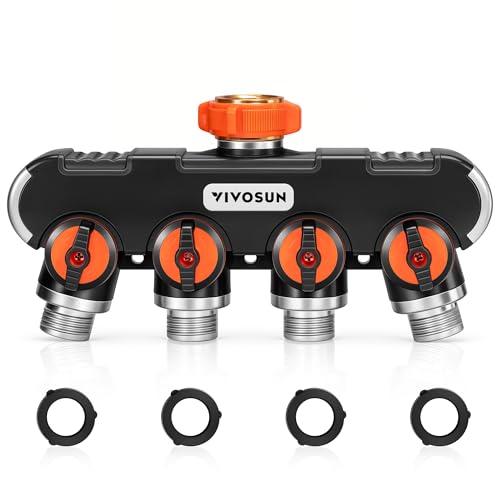
VIVOSUN’s 4-way splits one tap into four individually valved outputs, similar in shape to the Hourleey above, but uses a zinc alloy body instead of solid brass. The trade is a lighter unit that still handles heavy residential duty.
The standout detail is the rubberized grip on each valve handle. Drip irrigation work usually involves wet hands and awkward angles, so a soft, slip-resistant lever is more useful than it sounds. The unit pairs naturally with VIVOSUN’s drip kits, but the standard 3/4-inch GHT thread means it works with any hose or timer you already own.
Well-Handled Touches
- Four separate valves support simultaneous drip and lawn watering.
- Rubberized handles stay grippy with wet or muddy hands.
- Zinc alloy body keeps weight manageable on a wall faucet.
Minor Gripes
- Zinc alloy can pit over time in salty coastal air; freshwater climates are friendlier to it.
- Like other 4-way manifolds, running all outlets at once may reduce individual outlet pressure.
Who Should Grab It
Drip irrigation users running multiple lines to raised beds, containers, or garden rows from one faucet.
A Better Fit Elsewhere
You’re on a windy, salty coastline and need maximum material toughness; the SNUTUYA 304 Stainless Steel Garden Hose Splitter 2 Way Heavy Duty resists corrosion far better.
The BACASIN 2-way delivers the same two-valve, brass-bodied, Y-shape formula as the Dalmbox, with a metal handle instead of a plastic knob. That metal handle is the small detail that makes daily use feel more deliberate, especially when your hands are cold or wet.
For shoppers who want solid brass construction but want to stretch the budget, this is the pick to compare closely. It uses the universal 3/4-inch GHT connection, runs each side independently, and ships without a lot of marketing fluff around it. The honest read is that it’s a focused tool that does two-zone splitting without trying to be anything more.
What Stands Out
- Solid brass body resists wear and corrosion in outdoor conditions.
- Metal handles provide a sturdy grip for daily valve operation.
- Each outlet has a separate valve for independent control.
Points To Note
- Only two outlets limits complex yard layouts.
- Brass will patina over time in humid climates; cosmetic, not functional.
Best Suited To
Budget-conscious shoppers who still want brass construction and a metal handle for everyday two-zone watering.
Swap It Out When
You have four or more zones to manage; the Hourleey Brass 4 Way Heavy Duty Garden Hose Splitter provides that extra routing.
The SNUTUYA is the splitter to consider when material longevity matters more than price. Where most options on this list use brass or zinc, this one uses 304 stainless steel, an alloy known for resisting corrosion in chloride-rich environments, which is the chemistry term for salt. The body is also lead-free, a plus for households drawing from a spigot that might feed a vegetable garden or a pet’s water bowl.
Beyond the material, the design favors flow. A full-channel ball valve keeps the water path wide rather than bottlenecking inside the splitter, so pressure at each outlet stays close to the source pressure. The long handle is comfortable to grip with gloves on, and the 3/4-inch GHT inlet threads onto any standard spigot.
Positive Takeaways
- 304 stainless steel resists rust and corrosion far better than brass or zinc.
- Full-bore ball valve preserves flow at both outlets.
- Lead-free construction is friendlier for gardens and pet water sources.
- Long handle is easy to operate with gloved or wet hands.
Worth Bearing In Mind
- Stainless construction typically costs more than basic brass options.
- Two outlets still, so it isn’t a fit for large multi-zone drip layouts.
Whose Shelf It Belongs On
Coastal homeowners, anyone near salted winter roads, or gardeners who want the most corrosion-resistant splitter they can buy.
Where Another Pick Suits Better
You’re working with a tighter budget and a mild climate; the BACASIN Brass Garden Hose Splitter 2 Way Heavy Duty Y-Valve gives you brass for less.
The Hourleey 2-pack is the same brass 2-way Y-splitter as the single-purchase options above, sold as a twin pack. The package also includes four extra rubber washers, which is a small but meaningful detail: a worn washer is the most common reason a hose splitter starts dripping a year or two in, and having spares on hand means you fix it the same day instead of waiting for parts.
For shoppers with two outdoor faucets, one in front and one in back, a 2-pack covers both without needing a second purchase. The ball valve construction, brass body, and standard 3/4-inch GHT threads match the rest of this list, so the design language is familiar.
Noteworthy Benefits
- Two splitters in one pack covers multiple faucets without a second order.
- Four spare O-rings mean quick washer swaps the moment a drip appears.
- Brass construction handles outdoor weather without cracking.
Less Ideal Details
- You may only need one splitter right now; the second becomes a spare.
- Two outlets per splitter, not four, so multi-zone needs still require a different tool.
Who It Suits Best
Homeowners with more than one outdoor faucet, or anyone who wants a backup splitter on hand for quick swaps.
Not Your Match When
You only have a single spigot and want maximum outlets; the Hourleey Brass 4 Way Heavy Duty Garden Hose Splitter delivers more routing per faucet.
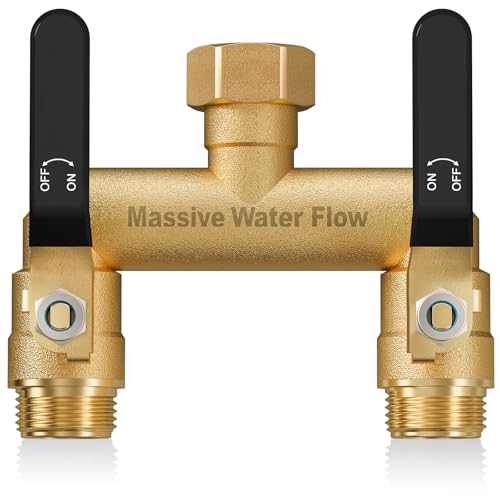
The LNEZCDB closes the list with a 2-way brass splitter built around full-flow design. The body uses an 0.1-inch wall thickness with an inner passage wide enough to minimize pressure loss, so both hoses see pressure close to what the faucet delivers. Two long metal handles, rather than short plastic knobs, make valve operation smooth even with gloves on.
The brass is rated for rust and freeze resistance, which is meaningful in cold-winter climates where leftover water inside a splitter can crack lesser fittings when temperatures drop. The black finish gives it a slightly more residential look than the green Craft911 or raw brass options earlier in the list.
What Earns Its Place
- Full-flow internal channel preserves pressure at both outlets.
- Long metal handles are easier to turn than compact plastic knobs.
- Brass body rated for freeze resistance helps in cold-winter regions.
- T-adapter connector with 3/4-inch GHT threads fits standard faucets.
Trade-Offs To Consider
- Two outlets only, so larger irrigation systems need a 4-way alternative.
- Long handles add slight clearance needs behind the splitter.
Built With In Mind
Cold-climate gardeners who leave their splitter installed through winter and want maximum flow at both outlets.
Where A Sibling Pick Shines
You’re routing four or more zones; the Hourleey Brass 4 Way Heavy Duty Garden Hose Splitter provides the additional outlets.
What Matters Most Before Choosing Hose Splitters
Outlets And Layout
Count the zones you’ll actually run at once before picking a 2-way or 4-way splitter. A 2-way covers most front-and-back yard setups, while a 4-way is more relevant for drip irrigation networks and multi-bed gardens. Running every outlet at once divides your available pressure, so shoppers with low municipal pressure benefit from fewer open lines.
Body Material
Brass is the everyday standard for outdoor hose splitters because it handles weather and resists corrosion in most climates. Zinc alloy is lighter and often cheaper, though it can pit in salty or humid air. Stainless steel, like the SNUTUYA option above, costs more but lasts longest in coastal or chlorinated conditions.
Thread Size And Compatibility
Nearly every residential outdoor faucet in North America uses 3/4-inch GHT, the standard garden hose thread. Confirming this before purchase avoids the surprise of an incompatible fitting. If you use European hoses or specialty fittings, you may need an adapter to bridge the thread standards.
Valve Handles And Ergonomics
A splitter is a tool you’ll operate dozens of times a season, so handle design matters. Short plastic knobs are fine for occasional use. Longer metal handles, like those on the LNEZCDB and BACASIN options above, give better leverage with wet or gloved hands.
Key Considerations Across These Picks
Common Shopping Slip Ups
A frequent mistake is buying a 4-way splitter when two outlets would cover the actual yard layout, leaving pressure disappointingly thin across all four lines. Another is assuming any splitter will fit any spigot; confirming 3/4-inch GHT compatibility before purchase saves a return. Skipping washer replacement when a drip appears is also common, yet a fresh rubber washer usually solves it in seconds.
What The Higher Tier Buys
Moving from a basic plastic splitter to a brass or stainless unit typically buys longer service life, better corrosion resistance, and valves that don’t seize after a winter. Premium models add features like full-bore flow paths and longer handles that make daily use easier. The upgrade pays off most when the splitter stays mounted year-round or faces harsh weather.
Frequently Asked Questions
How Many Outlets Do Most Yards Actually Need?
Most residential yards run comfortably on a 2-way splitter, covering one watering zone plus a car wash, pool, or backup hose. A 4-way splitter earns its keep on properties with multiple drip irrigation zones, raised beds, or greenhouses that all need independent lines.
Can Hose Splitters Stay Outside Through Winter?
Brass and stainless steel splitters generally handle winter exposure, though draining the splitter before a hard freeze extends its life. Plastic-bodied splitters are more prone to cracking if water sits inside them when temperatures drop.
Will A Splitter Reduce Water Pressure?
Each splitter outlet reduces pressure slightly compared to a direct hose connection, and running multiple outlets at once divides the available flow further. Full-flow designs, like the SNUTUYA and LNEZCDB options above, minimize this loss with wider internal passages.
Do I Need Teflon Tape On The Threads?
Most hose splitters seal at the rubber washer rather than at the threads themselves, so Teflon tape is optional for most installations. A wrap of tape helps when threads feel gritty or when sealing metal-to-metal connections that lack a washer.
How Long Does A Brass Splitter Typically Last?
A solid brass splitter in a temperate climate commonly lasts several seasons before washer replacement becomes routine. In coastal or heavily chlorinated water areas, expect shorter cosmetic life but similar functional durability, and consider stainless for the longest run.
The Takeaway
The right hose splitter comes down to how many zones you actually run and what your climate throws at the fitting. Two-way brass handles most yards well, four-way manifolds open up serious irrigation work, and stainless steel earns its keep in harsh environments. Pick the tool that matches your layout today, and you’ll stop juggling hoses at the spigot every weekend.
