

Hydroponic growing turns plant care into a balancing act between water, light, and chemistry. Choosing the right nutrient mix shapes everything from leaf color to fruit yield, and a wrong pick can leave roots scorched or harvests thin. This guide walks through eight options that cover a range of setups, from small AeroGarden counters to multi-plant reservoirs. Whether you’re running a deep water culture tub, a vertical tower, or a single countertop garden, the right bottle makes feeding less of a guessing game.
The Essentials At A Glance

VIVOSUN Liquid Nutrients Base A & B Bundle, 8oz

VIVOSUN Liquid Nutrients Base A & B Bundle, 32oz

Tigvio 800ml Hydroponic Nutrients A&B

Tigvio 1000ml Hydroponic Nutrients A&B

HiThrive Aeroponics & Hydroponic Fertilizer 4-3-6, 32oz
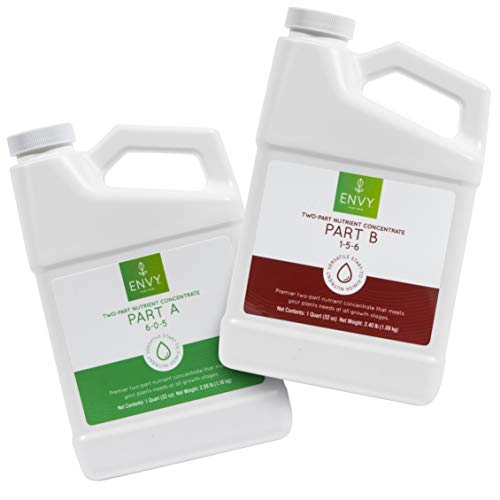
ENVY Hydroponic Plant Food A & B Quart Set
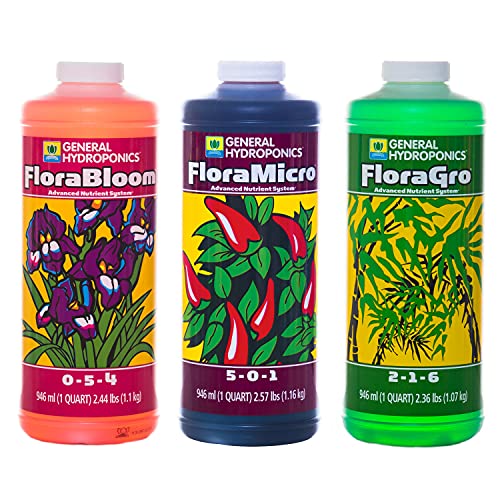
General Hydroponics FloraSeries Trial Pack, 1 qt

General Hydroponics Flora Kleen, 1-Gallon
More Details On Our Top Picks
The 8oz VIVOSUN bundle is the kind of nutrient set you reach for when you’re still figuring out how often lettuce actually needs to be fed. Two-part formulas (separate A and B bottles that you mix in equal measure) keep the chemistry balanced, and this small-format pair won’t overflow your storage shelf. For hobbyists running a single AeroGarden or a small DWC (deep water culture, where roots dangle in oxygenated reservoir water) tote, the volumes feel right without waste.
The blend covers the major building blocks, including nitrogen for leafy growth, phosphorus for roots and blooms, and potassium for overall vigor, plus a calcium and magnesium secondary layer that helps prevent the yellowing leaves that often show up in indoor gardens. If your tap water already runs hard, you may want to track pH closely, since calcium-heavy water can nudge readings upward over time.
A Few Strong Suits
- Compact 8oz bottles fit on small shelves and don’t go stale before you finish them.
- Two-part format simplifies mixing and reduces the risk of nutrient lockout (a condition where minerals become unavailable to plants due to pH imbalance or over-concentration).
- Broad macro and micronutrient profile supports plants from seedling through flowering.
- Compatible with most recirculating hydroponic systems and container gardens.
Things To Consider
- Smaller bottle means frequent refills for multi-plant reservoirs.
- Mixing accuracy matters; over-concentrated doses can scorch tender roots.
Who It Suits Best
First-time growers running a single countertop garden or a small DWC tote benefit most from the approachable size and forgiving two-part system.
Consider Something Else When
Multi-plant growers with larger reservoirs will get better mileage from the VIVOSUN 32oz version further down this list.
Step up to the 32oz VIVOSUN and the same formula gains range. This is the bottle pair that suits a four-bucket DWC room or a vertical tower where the reservoir drains weekly. Concentrated liquids mean a little goes a long way, and four times the volume of the 8oz set translates into months of feeding before a restock becomes a concern.
The elemental profile mirrors the smaller sibling: nitrogen, phosphorus, potassium at the front, with calcium, magnesium, and chelated micronutrients (minerals bound to organic molecules so plants can absorb them more easily) rounding out the mix. For growers tracking electrical conductivity (EC, a measure of how much dissolved salt is in your nutrient solution) week to week, this format reduces the interruption of constantly measuring and adjusting from short bottles.
The Helpful Details
- Larger 32oz format supports multi-plant systems without frequent bottle swaps.
- Same balanced two-part profile as the 8oz set, just in heavier supply.
- Cost per ounce drops noticeably compared to the smaller bundle.
- Versatile across vegetative and flowering growth stages.
Worth Noting
- Bottles require stable, cool storage to prevent precipitation over months.
- You’ll need a reliable measuring setup since small dosing errors compound with concentrated stock.
Quick Facts
Made For
Growers managing multiple DWC buckets, vertical towers, or any setup that demands steady weekly feeding will find the volume matches their pace.
Not Your Match When
Countertop AeroGarden owners may prefer the Tigvio 800ml bundle, which is sized for smaller reservoirs and includes convenience accessories.
Tigvio’s 800ml A&B set was designed with the AeroGarden crowd in mind, and the packaging shows it. Two bottles, six refill packs, and enough volume to keep a six-pod countertop garden fed through several grow cycles. For anyone whose kitchen counter has become a small herb farm, the convenience factor matters as much as the nutrient content.
Like the VIVOSUN pair above, this is a balanced two-part formula covering major and minor elements. Tigvio markets it as a seamless fit for AeroGarden systems and any indoor hydroponic setup, which in practice means it plays well with most recirculating pump configurations. If you’ve been using pre-mixed nutrient tablets and want a step up in control, this is a gentle entry point.
Well-Handled Touches
- Includes six refill packs alongside the main bottles, reducing measuring on refill days.
- Compact 800ml format suits small countertop reservoirs without waste.
- Compatible with AeroGarden hardware and similar small hydroponic systems.
- Two-part mixing keeps minerals stable until the moment of use.
Trade Offs
- 800ml may run out quickly in active gardens with frequent water changes.
Right Fit For
Countertop gardeners running AeroGarden or similar small-pod systems who want a tidy, all-in-one nutrient package.
Look Elsewhere When
Larger indoor gardens with multiple reservoirs may stretch this format too thin, making the Tigvio 1000ml bundle or HiThrive 32oz a better fit.
The 1000ml Tigvio is the bigger sibling of the 800ml set, and the bump in volume pairs nicely with two included measuring cups. If you’ve been through a few grow cycles and know roughly how much nutrient you burn through each month, the larger format cuts down on reorder frequency without crowding a small shelf.
The formula stays consistent with Tigvio’s smaller offering: a balanced two-part blend aimed at indoor hydroponic and AeroGarden-style systems. The added volume makes sense for growers running multiple small gardens or one larger AeroGarden Harvest family unit, where the reservoir gets topped off more often than a casual user might expect.
Positive Points
- 1000ml bottles stretch further than 800ml, reducing monthly restocks.
- Two measuring cups included for consistent dosing across water changes.
- Suitable for AeroGarden units and other indoor hydroponic systems.
- Same two-part balance as the 800ml version, just in larger supply.
- Compact enough to store in a kitchen cabinet or under-sink bin.
Minor Gripes
- Refill packs aren’t included like with the 800ml set, so measuring falls to you.
- Still better suited to small or mid-size gardens than full room-scale grows.
Feature Snapshot
Best Suited To
Regular AeroGarden users who refill water weekly and prefer a steady, larger supply over frequent small-bottle restocks.
A Better Fit Elsewhere
Single-bottle simplicity seekers may find the HiThrive 4-3-6 formula easier to handle, since there’s only one container to dose.
The HiThrive 4-3-6 skips the two-part mixing routine entirely. A single bottle with a 4-3-6 NPK ratio (nitrogen-phosphorus-potassium, the three numbers that tell you a fertilizer’s basic nutrient balance) means no A-and-B math, no separate containers crowding the shelf. For growers who want to add nutrients and move on, that simplicity is the whole pitch.
Beyond the NPK core, the formula carries essential micronutrients to support both aeroponic (roots suspended in air and misted with nutrient solution) and hydroponic setups. The 32oz bottle is sized for roughly 96 feedings according to the brand, though actual mileage depends on reservoir size and plant count. It’s a practical choice for anyone tired of the two-bottle shuffle.
Practical Advantages
- Single-bottle format eliminates two-part mixing math.
- 4-3-6 NPK supports balanced growth for greens, herbs, and fruiting plants.
- Includes micronutrients alongside the primary NPK profile.
- Works in both aeroponic mist systems and standard hydroponic reservoirs.
- 32oz volume suits multi-plant gardens with moderate weekly use.
Room For Improvement
- Single-formula approach offers less stage-specific tuning than multi-part systems.
- Growers wanting more control over vegetative versus bloom feeding may find it limited.
Who Should Grab It
Growers who prefer one-bottle convenience and run a mixed garden of greens and fruiting plants will appreciate the straightforward dosing.
Swap It Out When
Stage-specific feeders wanting to push heavy bloom cycles should look at the General Hydroponics FloraSeries trial pack, which lets you adjust each growth phase.
ENVY’s quart set stands out for the simple reason that it doesn’t care what you’re growing in. The two-part formula is rated for soil, coco coir, hydroponics, and DWC, which makes it a smart pick if your garden spans mediums. Quart bottles land in a middle ground: roomy enough for multi-plant setups, compact enough to tuck on a shelf.
Inside the bottles is a complete nutrient system designed to carry plants from early vegetative growth through heavy blooming. The brand positions it as a one-stop option, with no need for separate grow and bloom bottles. For growers who’d rather not juggle multiple products, that streamlining has real appeal.
What Makes Sense
- Works across soil, coco, hydro, and DWC without swapping formulas.
- Two-part balance covers vegetative through bloom stages.
- Quart bottles support multi-plant gardens without rapid depletion.
- Suits vegetables, herbs, fruits, flowers, and specialty crops.
- Simplified feeding schedule reduces the number of products to track.
Points To Note
- Two-part dosing still requires careful measurement to avoid root burn.
- Versatility means less precision than dedicated single-medium nutrient lines.
- Quart format may run short in heavy-feeding gardens over a full season.
Key Product Details
Perfect Match For
Growers running mixed-medium gardens or those transitioning between soil and hydro will find the cross-compatibility genuinely useful.
Another Choice May Suit
Pure hydroponic growers chasing maximum control over bloom-phase nutrients may prefer the General Hydroponics FloraSeries for its stage-specific tuning.
The FloraSeries is a three-bottle system: FloraMicro, FloraGro, and FloraBloom. Each handles a different piece of the nutrient puzzle, which means you’re in charge of the ratios. For growers who want fine control over how their plants feed at every stage, that flexibility is the draw. The trial pack is a smart way to test the system without committing to full-size bottles.
FloraMicro carries the nitrogen, calcium, and chelated micronutrients, acting as the foundation. FloraGro handles the leafy vegetative push, and FloraBloom takes over for flowering and fruiting. Mixing all three gives you a tailored feed chart (a schedule that maps nutrient ratios to each week of plant growth) that can shift with each growth phase. It’s more involved than two-part systems, but the trade-off is precision.
The Good Stuff
- Three-part system allows stage-specific nutrient tailoring.
- Trial pack format lets you test before committing to larger sizes.
- Includes chelated micronutrients for better absorption.
- Trusted brand in the hydroponic community with a long track record.
Softer Spots
- More complex than two-part or single-bottle systems; not for casual growers.
- Requires accurate measuring and a feed chart to use effectively.
- Trial pack bottles are smaller; heavy users will need to size up quickly.
Whose Shelf It Belongs On
Detail-oriented growers who enjoy dialing in nutrient ratios and tracking plant response will get the most from this three-part approach.
Reach For A Different Pick When
Beginners seeking a simpler routine may find the ENVY quart set easier to manage, since it skips the multi-bottle balancing act.
Flora Kleen isn’t a nutrient, it’s a maintenance product, and that distinction matters. Over time, salts and mineral residues build up in hydroponic systems, growing media, and potting soils. Flora Kleen flushes those accumulations, which keeps your feeding program from drifting off-target. Think of it as a monthly reset for your reservoir.
It’s also useful as a final flush before harvest, helping plants use up stored nutrients in their tissue. The 1-gallon jug is sized for growers with multiple systems or larger reservoirs. Pairing it with any of the nutrients on this list rounds out a complete feeding routine.
Advantages To Know
- Removes fertilizer salt buildup that accumulates over multiple feed cycles.
- Works in hydroponic systems, growing media, and potted plants.
- Useful as both a monthly maintenance flush and a pre-harvest rinse.
- 1-gallon size supports multiple systems or repeated monthly use.
A Few Limitations
- Not a nutrient itself; works alongside a primary feeding program.
- Larger jug requires dedicated storage space.
Who Will Love This
Growers running long-term systems who want to prevent salt buildup and extend the life of their growing media benefit most from regular flushing.
Where A Sibling Pick Shines
For a complete nutrient system to pair with this flush, the General Hydroponics FloraSeries trial pack offers the same brand ecosystem.
What Matters Most Before Choosing Hydroponic Nutrients
Matching Format to Your System
Two-part formulas like the VIVOSUN and ENVY sets simplify dosing while keeping minerals stable in the bottle. Three-part systems like FloraSeries give finer control but require more attention. Single-bottle options like the HiThrive 4-3-6 trade precision for convenience. Pick the format that matches how much tweaking you actually enjoy doing on a Sunday morning with a pipette in hand.
Understanding NPK Ratios
The three numbers on a nutrient label (N-P-K) tell you the percentage of nitrogen, phosphorus, and potassium. Leafy greens and herbs lean toward higher nitrogen, while fruiting plants like tomatoes and peppers benefit from stronger phosphorus and potassium during bloom. If you grow a mix, a balanced ratio like 4-3-6 covers most needs without constant adjustment.
Volume and Coverage
Small countertop gardens burn through nutrients slowly, so 8oz or 800ml bottles stay fresh. Larger DWC rooms and multi-bucket setups go through stock faster, where 32oz or quart formats prevent mid-cycle shortages. Rough rule: a single tomato plant in a 5-gallon bucket can use a full quart of nutrients across a growing season.
The Role of Maintenance Products
Nutrients feed plants, but flushes like Flora Kleen keep the system clean. Salt buildup chokes roots and skews EC readings over time. A monthly flush routine extends equipment life and keeps feeding programs consistent, especially in recirculating systems where the same water cycles through repeatedly.
Key Considerations Across These Picks
Pitfalls Shoppers Hit
First-time buyers often grab the cheapest bottle without checking the format. A single-bottle fertilizer won’t replace a two-part system mid-cycle, and switching brands mid-grow can shock plants. Other common missteps include ignoring reservoir size (a quart jug disappears fast in a 20-gallon tote) and skipping pH management entirely. Nutrient lockout from pH drift is one of the most reported causes of yellowing leaves in new gardens.
The Case For Spending Up
Higher-tier nutrient systems cost more up front but include chelated micronutrients, which are easier for plants to absorb, and tighter quality control between batches. Three-part systems like FloraSeries let you tailor feeds to each growth stage, which can translate to healthier harvests in demanding crops. For casual herb gardens, the upgrade is less critical, but for fruiting plants and longer grow cycles, the extra control often justifies the higher cost.
Frequently Asked Questions
How often should I change my hydroponic reservoir?
Most growers refresh the reservoir every 7 to 14 days, depending on plant size and feeding intensity. Larger plants in warm rooms drink faster and may need weekly changes. Topping off with plain water between changes helps maintain levels, but a full refresh prevents salt buildup from skewing your nutrient balance.
Can I use the same nutrients for lettuce and tomatoes?
Yes, but expect to adjust ratios as plants mature. Lettuce and herbs thrive on nitrogen-rich feeds during vegetative growth, while fruiting plants like tomatoes shift toward phosphorus and potassium during bloom. A balanced formula like 4-3-6 works across both, though dedicated bloom boosters can push fruiting yields further.
Do I need a pH meter to use these nutrients?
A pH meter isn’t strictly required, but it helps significantly. Most hydroponic nutrients absorb best in a pH range of 5.5 to 6.5. Outside that window, certain minerals become unavailable to roots, leading to deficiency symptoms even when nutrients are present. A basic digital pH pen pays for itself quickly in troubleshooting time.
What’s the difference between a flush and a nutrient?
Nutrients feed plants with minerals they need to grow. Flushes, like Flora Kleen, remove accumulated salts and residues from systems and root zones. Think of nutrients as the meal and flushes as the cleanup. Both belong in a complete feeding routine, but they serve very different purposes.
Is a two-part or three-part system better for beginners?
Two-part systems are easier for beginners because there’s less measuring and fewer chances to get ratios wrong. Three-part systems offer more control but require a feed chart and more attention. Start with a two-part set, and move to three-part once you’re comfortable tracking EC and pH regularly.
Final Verdict
The right hydroponic nutrients depend on the size of your system, the crops you grow, and how much tweaking you enjoy. Countertop gardeners will feel at home with the Tigvio 800ml or 1000ml bundles, while multi-plant setups benefit from the VIVOSUN 32oz or ENVY quart format. Detail-oriented growers ready to dial in stage-specific feeds can graduate to the FloraSeries. Pair any of these with Flora Kleen for system maintenance, and you’ve got a complete feeding routine that covers both nutrition and upkeep.
