

Growing crisp lettuce, peppery basil, and sweet tomatoes without a backyard has shifted from novelty to practical kitchen routine for a lot of households. Indoor hydroponic setups let you skip the soil mess and keep fresh produce within arm’s reach, even in a studio apartment. The eight systems below cover a range of pod counts, light strengths, and price points so you can match the right rig to your space and your appetite for fresh greens.
The Choices Worth Comparing

Ahopegarden Hydroponics Kit: 12 Pods LCD Panel
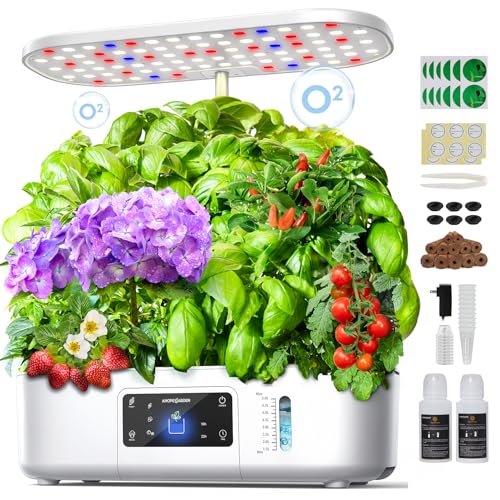
Ahopegarden Hydroponics System: 12 Pods Touch Panel

URUQ 8-Pod Hydroponics System Black

URUQ 8-Pod Hydroponics System White

Ahopegarden 12-Pod Kit with Temp & Humidity Monitor

Ahopegarden 12-Pod System with Smart Env. Detection

inbloom 12-Pod Fruit Seed Pod Kit

Growell 16-Pod Hydroponics Kit, 28W LED
A Breakdown Of The Leading Choices
The Ahopegarden 12-pod kit leans hard into visual appeal. A slim ABS body holds an LCD touchscreen and a full-spectrum LED panel that mimics natural light cycles, which is the lighting range plants use most for photosynthesis (the process leaves use to turn light into growth energy). For a first-time grower who wants a countertop piece that looks intentional rather than improvised, this rig clears the bar.
It also keeps the learning curve low. A one-touch control panel handles light timing without a phone app, and the slim 17-inch profile slides neatly next to a coffee maker. Compared to the slightly cheaper URUQ 8-pod units that follow, you trade two pods and a smaller reservoir for a more refined control scheme.
Strong Points
- LCD touchscreen replaces guesswork with preset modes for common herbs and greens.
- Full-spectrum LED panel adapts to growth stages, so seedlings and leafy adults share one fixture.
- ABS construction feels sturdy enough for daily kitchen use, with a finish that resists fingerprints better than glossy plastic.
- Slim 17-inch footprint fits narrow counters, windowsills, or a bookshelf corner without dominating the room.
- Twelve pods support a rotating salad harvest rather than a one-off planting.
Things To Consider
- Without an app, scheduling changes happen directly on the panel, which means walking over to the unit every adjustment.
- Owners commonly report the reservoir wants refilling more often under the bright LED output.
Quick Facts
Who It Suits Best
Design-minded beginners and gift shoppers who want a hydroponic kit that doubles as a small countertop focal point.
Where Another Pick Suits Better
Growers who want a higher pod count and a larger water reservoir should look at the Growell 16-Pod Hydroponics Kit, 28W LED.
This second Ahopegarden 12-pod build trades the LCD readout for a cleaner touch-control surface and keeps the same slim ABS housing. For anyone intimidated by gadgets, the simplified interface reduces the mental load. You press a button, the light comes on, and the timer runs itself.
Where the first Ahopegarden in this list leans modern and decorative, this version feels more utilitarian. Side by side, the touch panel trims a few controls but retains the core 12-pod capacity and full-spectrum lighting. If you want fewer buttons and a slightly stripped-back routine, the difference is meaningful.
Benefits That Matter
- Streamlined touch controls trim the routine to a single tap for most users.
- Full-spectrum LED lighting supports both herb and leafy vegetable cycles.
- ABS housing wipes clean with a damp cloth, which helps in a steamy kitchen.
- Twelve pods let you stagger basil, parsley, and lettuce so something is always ready to harvest.
Worth Noting
- The touch interface can be less forgiving than a physical dial when your fingers are wet from watering.
- Setup instructions are minimal, so first-timers may lean on community videos to dial in nutrients.
- No climate sensor means you track humidity and temperature by feel rather than data.
Made For
First-time indoor growers who want a simple touch interface without a deep dive into grow parameters.
Skip It When
Growers wanting built-in climate feedback should step up to the Ahopegarden 12-Pod Kit with Temp & Humidity Monitor.
The URUQ 8-pod in matte black is built for tight quarters. Its 24W LED panel adjusts up to 180 degrees and stretches to a 21-inch maximum height, which lets trailing basil or compact lettuce reach without crowding the light source. For renters with a small kitchen counter, this footprint fits where 12-pod units refuse to go.
What you give up is capacity. Eight pods produce less variety than the Ahopegarden kits above, so you choose between basil and parsley more often. Still, for a single household running one herb rotation, eight sites cover the basics comfortably.
What Stands Out
- Articulating LED panel rotates 180 degrees and climbs to 21 inches, accommodating taller greens as they mature.
- Lower pod count keeps water and nutrient consumption modest, which trims your ongoing supply costs.
- Black housing hides minor scuffs and water spots that show on lighter finishes.
Points To Note
- Eight pods limit how many species you can grow at once, so plan rotations carefully.
- Nutrient mix recommendations vary by plant type, and the included guidance is brief.
Feature Snapshot
Right Fit For
Small-space growers and renters who want a compact unit on a narrow countertop or shelf.
A Better Fit Elsewhere
Households feeding several salads a week should consider the Growell 16-Pod Hydroponics Kit, 28W LED for its larger reservoir.
The white version of the URUQ 8-pod kit shares every mechanical feature with its black sibling above, including the 24W LED, 180-degree panel rotation, and 21-inch maximum clearance. The visible difference is the housing finish, which makes it a smarter pick for bright kitchens where a black block would dominate.
The honest read is that you are paying for the same growing performance at a budget-friendly entry point. Cost-conscious shoppers get full-spectrum lighting and a tilting panel without stepping up to 12-pod units. For households growing one or two herbs at a time, eight pods covers the workload.
A Strong Showing
- Entry-level price keeps hydroponics accessible for first-time shoppers.
- White housing blends into bright kitchens and reflects LED output more evenly across the canopy.
- Tilting panel and tall post mirror the engineering of the black version at the same price tier.
Small Caveats
- White plastic shows water spots and mineral residue, so plan on a weekly wipe-down.
- Eight pods may feel tight during peak harvest season if you cook with fresh herbs daily.
Best Suited To
Budget-minded beginners and small households that want a bright, easy-to-clean hydroponic starter on a sunny counter.
Look Elsewhere When
Anyone chasing higher pod counts and stronger wattage should consider the Growell 16-Pod Hydroponics Kit, 28W LED.
This Ahopegarden variant adds the single feature data-driven gardeners crave: a built-in temperature and humidity monitor. Indoor hydroponics benefit from stable conditions because fluctuations stress seedlings and slow nutrient uptake. Having a sensor on the unit itself removes the guesswork about whether your living room is too dry in winter.
The 16-hour-on, 8-hour-off LED cycle simulates a long summer day, which keeps leafy greens in active growth. Twelve pods still give you enough variety to keep multiple herbs and lettuces running. Compared to the touch-panel version earlier, the trade is more readings and a slightly busier interface.
Everyday Advantages
- Integrated temperature and humidity sensors take the place of a separate hygrometer on your counter.
- Sixteen-hour daylight cycle encourages steady leafy growth without manual timer resets.
- Twelve pods sustain a varied herb and lettuce rotation for a small household.
Areas To Watch
- Sensor readings are most useful in a stable indoor environment, so a drafty kitchen can throw them off.
- More electronics mean a slightly higher replacement risk if a component fails outside any included coverage.
Spec Overview
Who Will Love This
Data-curious hobbyists and indoor gardeners who like reading real numbers rather than guessing about room conditions.
Consider Something Else When
Growers wanting a higher pod count and brighter wattage should turn to the Growell 16-Pod Hydroponics Kit, 28W LED.
This Ahopegarden kit layers smart environment detection on top of the basic 12-pod platform, giving the unit a sense of its own conditions rather than relying on a separate thermometer. For households already running smart speakers or connected kitchens, the addition feels native rather than tacked on.
The 16-hour light schedule and soilless pod format remain consistent with the rest of the Ahopegarden family. The notable upgrade is the detection circuitry, which lets the system alert you when humidity drifts outside a comfortable range. Compared to the earlier touch-panel Ahopegarden, this is the more connected sibling.
A Favorable Mix
- Smart environment detection reads your room in real time without an external device.
- Sixteen-hour daylight schedule drives consistent leafy growth.
- Twelve pods support a rotating herb and lettuce lineup for one or two cooks.
Honest Caveats
- The detection system requires occasional recalibration to stay accurate.
- Like most sensor-equipped units, it relies on stable indoor placement, so moving it around the kitchen changes the readings.
Perfect Match For
Connected-home households and hobbyists who want their hydroponic kit to participate in their smart-kitchen setup.
Another Choice May Suit
Anyone preferring simpler analog controls should look back at the Ahopegarden Hydroponics System: 12 Pods Touch Panel.
The inbloom kit is not a hydroponic unit itself but a 12-pod refill pack loaded with fruit and vegetable seeds. It targets fruiting crops that most kitchen growers skip: strawberry, cucumber, green pepper, golden tomato, radish, dwarf pea, and ruby queen beet. More than 400 seeds ship with grow sponges, domes, baskets, foil covers, and A&B plant food.
Compatibility is the appeal. The pods drop into AeroGarden, iDOO, and Ahopegarden trays, so existing owners can branch beyond herbs. Treat this pick as a supplement rather than a stand-alone system, and it becomes a smart way to push the rest of your setup toward fruiting crops.
Positive Takeaways
- Seven fruiting and vegetable varieties expand your harvest beyond standard kitchen herbs.
- Cross-brand compatibility covers AeroGarden, iDOO, and Ahopegarden 12-pod trays.
- Includes grow domes, baskets, sponges, foil stickers, and A&B nutrients in one box.
Less Ideal Details
- Fruiting crops take longer to mature than leafy greens, so patience is required.
- Some seeds germinate unevenly depending on room temperature, which is normal for fruiting varieties.
Who Should Grab It
Existing hydroponic owners who already run a 12-pod system and want to grow strawberries, peppers, or tomatoes at home.
Swap It Out When
First-time shoppers without an existing tray should pick a full hydroponic system like the Growell 16-Pod Hydroponics Kit, 28W LED instead.
The Growell 16-pod kit is the most substantial unit on this list. Its 28W full-spectrum LED combines red, blue, white, and far-red diodes, which is a fuller range than the 24W panels in the URUQ units earlier. The 8-liter reservoir also runs longer between refills, a real plus for busy households that forget to top off water daily.
Three smart light modes and an automatic timer cover seedlings, leafy greens, and fruiting crops without manual adjustment. Sixteen pods is a meaningful jump from the eight- and twelve-pod units reviewed above, and it lets you run a real kitchen garden rather than a single tray.
Where It Helps
- Sixteen pods support a multi-species garden that supplies several meals a week.
- Twenty-eight-watt full-spectrum LED, combining red, blue, white, and far-red diodes, drives vigorous growth across stages.
- Eight-liter reservoir stretches the time between refills, easing daily maintenance.
- Three smart light modes tailor output to seedlings, leafy greens, or fruiting crops.
Things To Weigh
- Larger footprint demands counter or floor space that smaller kitchens may not have.
- Sixteen active pods use more nutrient solution, so ongoing supply costs run higher than compact units.
Core Details
Whose Shelf It Belongs On
High-volume home gardeners and households cooking with fresh produce several nights a week who can spare the counter real estate.
Reach For A Different Pick When
Apartment dwellers with limited counter space should consider the URUQ 8-Pod Hydroponics System White for its smaller footprint.
What To Look For In A Hydroponic System For Vegetables
Picking a hydroponic kit for vegetables comes down to matching your kitchen, your cooking habits, and the crops you actually want to eat. Start with pod count, because that decides whether you grow a steady herb rotation or a real multi-species garden. A household that cooks with basil and lettuce daily wants more pods; a household that sprinkles parsley once a week does fine with eight.
Lighting strength matters just as much. LED wattage and spectrum, meaning the mix of light colors the panel emits, drive how fast leafy greens push out new growth and whether fruiting crops like tomatoes can ripen indoors. A 24W panel handles herbs and lettuce comfortably, while a 28W full-spectrum panel with red, blue, white, and far-red diodes covers fruiting crops more reliably. Reservoir size is the third pillar, since a larger tank means fewer refills, which is a real benefit when life gets busy.
Reservoir and tank capacity also dictate how often you refill. An 8-liter reservoir can stretch for a week between top-offs in a small kitchen, while compact units demand more frequent attention. Finally, look at controls. Touch panels and LCD screens simplify the routine, while smart environment detection adds real-time feedback on temperature and humidity that data-driven growers appreciate.
Quick Considerations Before You Buy
Common Buying Slip Ups
The easiest mistake is choosing a pod count based on catalog photos rather than your actual cooking routine. Eight pods sound like plenty until you want basil, cilantro, and lettuce running simultaneously. A second common slip is underestimating reservoir size, since small tanks refill often enough to feel like a chore rather than a hobby.
Why Top Tier Systems Cost More
Higher-tier hydroponic kits add stronger full-spectrum LEDs, larger reservoirs, and climate sensors that read your room’s humidity and temperature. Those upgrades matter most when you grow fruiting crops or run a multi-species garden. For a single-herb household, a budget-friendly 8-pod system delivers the same harvest without the extra electronics.
Frequently Asked Questions
How many pods do I really need for a small kitchen?
For one or two herbs at a time, eight pods covers the basics. A small household cooking multiple meals a week benefits from twelve to sixteen pods so multiple species run side by side.
Do hydroponic vegetables taste different from soil-grown ones?
Hydroponic vegetables often taste milder and more consistent because the nutrient mix is controlled. Leafy herbs and lettuces tend to be especially tender, while fruiting crops benefit from a stronger full-spectrum light to develop full flavor.
How often do hydroponic reservoirs need refilling?
Refill frequency depends on reservoir size and plant load. Compact 2- to 3-liter tanks need water every few days under bright LEDs, while 8-liter reservoirs can run close to a week between top-offs.
Can I grow tomatoes or peppers in a countertop hydroponic kit?
Yes, but fruiting crops demand stronger full-spectrum lighting with red and far-red diodes and a longer grow cycle than herbs. A 28W panel with smart light modes gives fruiting crops a fairer shot than a basic 24W unit.
Are hydroponic seed pod kits reusable after harvest?
Most pods are designed for single use. Grow sponges, baskets, and domes can sometimes be rinsed and reused for herbs, but fruiting crops generally need fresh pods to avoid residue and disease carryover.
Final Verdict
The right hydroponic system depends on the space you have and the harvest you actually want to bring to the table. Small counters favor compact 8-pod units from URUQ, while serious kitchen gardens benefit from the 16-pod Growell rig and its stronger LED. For first-timers who care as much about looks as yield, the Ahopegarden kits with LCD or smart detection panels strike a thoughtful balance between form and function. Pick the unit that matches your cooking rhythm, and you’ll find fresh greens a lot closer than the produce aisle.
