

Apartment dwellers, basement hobbyists, and anyone who wants fresh greens in winter all run into the same wall: a windowsill just doesn’t cut it. Hydroponics sidesteps soil entirely, feeding roots directly through nutrient-enriched water so plants grow faster in a fraction of the space. The eight kits below cover the spread, from slim 8-pod countertop units to serious 8-bucket deep water culture setups built for tomatoes and peppers.
A Side-By-Side Look

Ahopegarden Hydroponics Kit: 12 Pods LCD
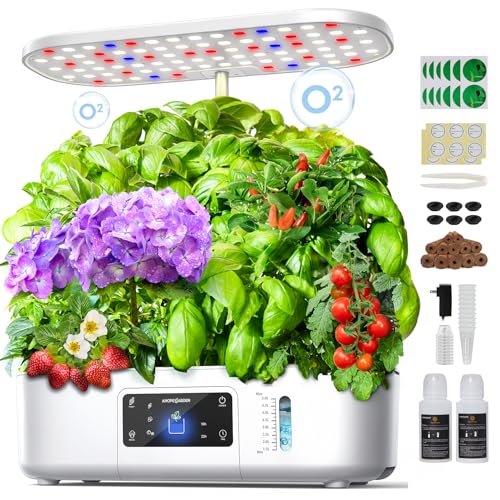
Ahopegarden Hydroponics System: 12 Pods Touch

VIVOSUN DWC Hydroponics Grow System 8 Buckets

VIVOSUN DWC Hydroponics Grow System 2 Buckets

URUQ 8 Pods Hydroponics System LED (Black)

URUQ 8 Pods Hydroponics System LED (White)

Ahopegarden Hydroponics Kit: 12 Pods Temp Monitor

Ahopegarden Hydroponics System: 12 Pods Smart Env.
The Picks, Examined More Closely
The Ahopegarden 12-Pod LCD kit stands roughly the height of a standard kitchen roll, which is to say it fits where most people already keep their coffee maker. Its ABS body resists the splash-zone reality of countertop growing, and the LCD touchscreen replaces the dial-and-button guesswork found on cheaper units. Inside, a full-spectrum LED panel (full-spectrum means it covers the wavelengths plants use at every growth stage) sits above twelve planting pods.
Compared with the sibling model reviewed below, this one prioritizes a more polished interface over added sensors. You tap through light schedules and pump intervals rather than reading a tiny monochrome display. For someone setting up a first kitchen herb wall and wanting the process to feel like modern tech rather than a science fair project, the presentation goes a long way.
What Earns Its Place
- 12 pod slots handle a realistic mix of basil, lettuce, and parsley at once without crowding roots.
- Full-spectrum LED panel reduces the need to rotate trays toward a window during winter months.
- ABS shell wipes clean with a damp cloth, sparing you the rust worries of metal frames near water reservoirs.
- Touchscreen reduces setup friction, so a first-timer can have herbs growing within an afternoon.
Things To Consider
- Owners commonly report the water reservoir needs a refill every 7 to 10 days depending on plant load and room temperature.
- Without a built-in humidity sensor, you may need to monitor room moisture separately during dry winter heating seasons.
Key Specs
Who It Suits Best
Countertop gardeners who want a refined, low-fuss first system and care about how the kit looks in an open kitchen.
Where Another Pick Suits Better
Anyone serious about data tracking should step up to the Ahopegarden 12-Pods Temp & Humidity Monitor instead.
The sibling to the first pick keeps the 12-pod layout but pares back the interface to a clean touch panel rather than a full color LCD. The trade-off lands well for people who find extra menus more confusing than helpful: you set the light cycle, choose the pump interval, and the system runs on its own. That minimalist philosophy is the whole pitch.
Where the previous Ahopegarden tries to feel like a gadget, this one leans into furniture-grade simplicity. Its ABS body shares the same splash-tolerance, and the integrated full-spectrum panel covers the same growth stages. For renters and college students who want herbs without committing to a complex app ecosystem, the simpler path often wins.
What It Does Well
- Streamlined touch controls remove the menu-fatigue that turns new growers off within a week.
- Same 12-pod versatility as pricier Ahopegarden models, so capacity stays generous.
- ABS construction holds up well to the condensation that builds up around indoor reservoirs.
Points To Keep In Mind
- You give up the richer LCD readout found on the Editor’s Choice pick, so adjustments feel slightly less informative.
- Reservoir refills follow the same 7 to 10 day rhythm, which can surprise first-time growers expecting longer intervals.
- No built-in environmental sensors, so humidity and temperature tracking fall on you.
Right Fit For
Brand-new growers who want a clean, approachable setup and care more about the result than the interface.
Consider Something Else When
Tech-focused shoppers should consider the Ahopegarden 12-Pod LCD kit for its richer display.
Step out of the kitchen and into the garage, because this VIVOSUN kit plays in a different league. It uses Deep Water Culture (DWC), meaning plant roots dangle directly in oxygenated nutrient solution rather than wicking moisture from a tray. Eight individual buckets give you room to grow a serious vegetable run: tomatoes, peppers, even dwarf fruit trees if you’re ambitious.
The included top drip kit circulates fresh solution from above while the air pump pushes 60 L/min through air stones (porous stones that diffuse air into tiny bubbles) at the bucket bottom. That dual delivery is the difference between hydroponics that limp along and systems where plants actually thrive. Compared with the countertop units reviewed above, this one trades aesthetics for raw productive capacity.
Points In Its Favor
- Eight buckets support a meaningful backyard or basement harvest, not just garnish-sized sprigs.
- Top drip plus bottom aeration keeps nutrient solution oxygen-rich, which prevents root rot in fruiting plants.
- Air pump rated at 60 L/min delivers enough dissolved oxygen for heavy-feeding crops during summer growth spurts.
- Modular bucket layout lets you add or remove individual units as your planting plan shifts.
Practical Considerations
- The 35W air pump runs continuously, so you’ll hear a low hum in quiet basements.
- Setup takes longer than a countertop kit, and you’ll need space for buckets plus a shared reservoir.
- No built-in smart controller on this model, so nutrient timing and pH checks stay manual.
Key Specs
Made For
Garage, basement, or backyard growers aiming for real harvests of tomatoes, peppers, cucumbers, and similar fruiting crops.
Skip It When
Casual herb gardeners will find the VIVOSUN 2-Bucket DWC system more proportional to their needs.
The 2-bucket sibling strips the 8-bucket system down to a manageable starter footprint. You still get the top drip irrigation design and bottom aeration that makes DWC work, just compressed into a setup that fits on a small patio table or a basement shelf. The air pump runs at 8W with adjustable output, dropping the energy draw and noise floor noticeably.
For someone curious about DWC but unwilling to commit to eight buckets of plumbing, this version is a friendly on-ramp. You learn the rhythm of checking pH, topping off reservoirs, and pruning roots without wrestling a sprawling system. When (or if) appetite grows, the modular design means swapping in more buckets later is a realistic path.
Strong Points
- Compact two-bucket layout fits spaces where the 8-bucket version simply wouldn’t go.
- Adjustable 4×4 L/min air output lets you dial oxygen levels to plant stage and season.
- Low 8W power draw keeps the electricity cost minimal for a 24/7 system.
Honest Caveats
- Only two growing sites means your crop variety stays narrow, so plan around two strong performers rather than a sampler.
- Without a smart controller, timing irrigation cycles requires manual attention to pump intervals.
- Smaller reservoir volume may need more frequent top-offs in warm rooms, depending on your conditions.
At A Glance
Best Suited To
Curious beginners who want a real DWC experience without investing in a full eight-bucket layout.
Look Elsewhere When
Anyone planning a serious vegetable rotation should consider the VIVOSUN 8-Bucket DWC system instead.
The URUQ 8-pod in black is the kind of kit that earns its spot through practical engineering rather than flashy tech. Its 24-watt LED panel rotates 180 degrees and rises to 21 inches, which sounds modest but translates to real flexibility: tall basil plants no longer press against the light, and you can angle the panel toward a corner rather than centering it on a shelf.
Where the Ahopegarden kits chase polished interfaces, URUQ leans into mechanical adjustability. The black housing fits darker kitchen aesthetics or tucked-away utility corners. For most countertop herb gardens, eight pods hits the sweet spot between capacity and footprint, and the adjustable geometry is the kind of detail you appreciate once seedlings get leggy.
Benefits That Matter
- 21-inch maximum height extension prevents the light panel from stunting taller herbs mid-season.
- 180-degree panel rotation lets you aim light off-center, useful on narrow counters or windowsills.
- 8-pod layout strikes a practical balance for households that cook with herbs weekly but not daily.
Points To Note
- Without a touchscreen or LCD, you set the light cycle through a simpler control panel, which may feel dated next to Ahopegarden’s interface.
- Owners commonly report that the reservoir needs more frequent monitoring in dry indoor heating environments.
Feature Snapshot
Who Will Love This
Budget-focused herb growers who care about mechanical adjustability more than a polished interface.
Not Your Match When
Shoppers wanting app-style smart controls should consider the Ahopegarden Temp & Humidity Monitor kit instead.
Functionally identical to the black URUQ above, this white variant exists for kitchens that prefer a clean, gallery-wall aesthetic. The 24-watt LED panel, 180-degree rotation, and 21-inch height extension all carry over. The only real decision is whether your countertop favors matte black appliances or a brighter, Scandinavian-leaning palette.
That said, white housings show mineral buildup from nutrient solution more readily, so wiping the body down once a week becomes part of the routine. In our view, that’s a small price for the visual lift, especially in rental kitchens where the unit sits in plain sight rather than tucked into a pantry corner.
What Makes Sense
- White finish blends into modern kitchens and small apartments without visual clutter.
- Same flexible 21-inch height extension as the black version, so plant growth isn’t capped by fixture reach.
- 8 pods hit the practical capacity sweet spot for most home cooks.
Room For Improvement
- White surfaces show water spots and nutrient residue more visibly than darker housings.
- No advanced interface, so gardeners seeking smart features should look at Ahopegarden’s lineup.
The Right Fit
Style-conscious renters and apartment dwellers who want a hydroponic kit that looks intentional on an open counter.
Reach For A Different Pick When
Anyone prioritizing low-maintenance cleaning should consider the URUQ 8 Pods Black version instead.
This Ahopegarden model takes the familiar 12-pod chassis and bolts on a temperature and humidity monitor, turning the kit into a small data station. The LED grow light runs a 16-hour-on, 8-hour-off cycle tuned for vegetative growth (the leafy stage before flowering), which removes one more decision from your daily routine.
The biggest difference from the LCD version reviewed first is the focus on environmental feedback. You can read room conditions at a glance and adjust the light schedule accordingly. Data-driven hobbyists love this kind of visibility, and depending on your home’s seasonal swings, it can mean the difference between thriving herbs and stressed ones during a dry winter.
Key Advantages
- Built-in temp and humidity readings remove the guesswork that ruins first indoor gardens.
- 12 pod slots handle a generous mix of herbs, greens, and small veggies in one footprint.
- Preset 16/8 light cycle takes the scheduling burden off new growers entirely.
Trade Offs
- Adding sensors pushes the price tier above simpler Ahopegarden kits, so casual herb gardeners may not recoup the value.
- The display can feel busy if you prefer the minimalist touch panel of the second pick on this list.
Whose Shelf It Belongs On
Tinkerers and data-driven plant parents who want sensor feedback without adding third-party gadgets.
A Better Fit Elsewhere
Beginners seeking the simplest path should consider the Ahopegarden 12-Pod Touch model instead.
The closing Ahopegarden rounds out the smart side of the lineup with Smart Environmental Detection, a step beyond the temp and humidity monitor reviewed above. The kit shares the same 16-hour-on, 8-hour-off LED cycle and 12-pod layout, but the environmental awareness extends to a wider range of growing conditions, automatically adjusting light and pump rhythms to match what the sensors report.
For gardeners who travel frequently or simply forget to tweak settings manually, that automation pays off. The unit reads the room and adapts, which means fewer wilted lettuces after a hot week and less stretch from leggy seedlings during a dim stretch. It is the most hands-off Ahopegarden in this roundup, and for most kitchens that is exactly the right finish line.
Strengths Worth Knowing
- Smart environmental detection adapts light and pump cycles to real-time room conditions.
- 12 pod slots leave room for a full herb rotation plus a few experimental greens.
- Hands-off automation suits frequent travelers and busy households who can’t baby the garden daily.
Some Limits To Know
- Sensor-driven adjustments mean owners commonly report a short learning curve to trust the system’s choices over manual overrides.
- The ABS housing still shows water marks over time, depending on humidity and refill frequency.
Built With In Mind
Busy home cooks and frequent travelers who want a hydroponic kit that runs itself between harvests.
Swap It Out When
Budget-focused shoppers should consider the URUQ 8-Pod Black kit for a simpler, lower-tier route.
Matching Hydroponics To Your Growing Style
The first fork in the road is countertop versus garage. Countertop kits (Ahopegarden’s 12-pod family and URUQ’s 8-pod models) work for herbs, leafy greens, and small lettuces in a kitchen corner. DWC bucket systems from VIVOSUN target fruiting crops like tomatoes and peppers that demand more root volume and oxygen.
Pod count matters more than people expect. Eight pods suits a couple cooking two or three nights a week, while twelve pods make sense for families or households that preserve herbs. Light adjustability is the second pillar: a fixed-height panel works for lettuce, but basil, dill, and similar tall herbs benefit from the 21-inch extension URUQ offers.
Power draw tells the long-term story. A 35W air pump running 24/7 adds up faster than a 24W LED on a 16-hour cycle, so factor electricity into the choice between DWC and countertop kits. Finally, smart features are a real upgrade only if you intend to use the data. A hands-on gardener may prefer VIVOSUN’s mechanical simplicity over Ahopegarden’s environmental sensors.
Key Considerations Across These Picks
Pitfalls Shoppers Hit
Buying more capacity than you’ll actually plant is the most common misstep. A 12-pod kit sounds appealing until half the slots sit empty because you only cook with basil and parsley. Measure your real weekly herb use before sizing up.
Ignoring reservoir refill frequency catches first-timers off guard. Countertop units generally need water every 7 to 10 days, while DWC buckets with continuous aeration may need attention more often in warm rooms. Plan a refill routine before the kit arrives, not after the plants wilt.
The Case For Spending Up
Higher-tier kits in this roundup earn their price through sensor feedback and larger pod counts. The Ahopegarden Temp Monitor and Smart Env. Detection models pay off when you travel or forget to adjust schedules, because the system compensates automatically. For a casual herb grower, the simpler URUQ 8-pod offers a more proportional spend.
Frequently Asked Questions
How fast do hydroponic plants actually grow?
Most hydroponic herbs and leafy greens grow noticeably faster than their soil-grown counterparts, often reaching harvest size in three to four weeks under proper lighting and nutrient balance.
Do I need special nutrients, or does regular fertilizer work?
Hydroponic systems require nutrients formulated for soilless growing, since regular fertilizer assumes soil bacteria to break it down. Liquid hydroponic nutrient mixes are widely available and easy to dose into the reservoir.
How often do I need to clean the system?
A monthly rinse with fresh water and a quarterly deep clean prevents algae and mineral buildup. Wiping the exterior weekly keeps water spots from setting into the housing.
Can I grow fruiting plants like tomatoes in a countertop kit?
Small fruiting plants can start in a countertop kit, but they generally outgrow the height limits. A DWC bucket system gives fruiting crops the root space and oxygenation they need to produce a meaningful harvest.
Is the air pump noise a real issue for DWC kits?
The 8W VIVOSUN pump runs quietly enough for most living spaces, while higher-output pumps may produce a low hum that bothers light sleepers in nearby rooms.
