Running a grow tent without a reliable humidity reading is like driving at night without headlights. You might keep moving, but you have no real sense of what’s ahead. Vapor pressure deficit (VPD) and relative humidity (RH) drive transpiration, nutrient uptake, and the mold risk every grower tries to avoid.
A good tent hygrometer tells you when to swap from veg to flower humidity targets, when a humidifier is overdoing it, and whether a late-night duct fan is drying the canopy too fast. The eight picks below cover simple stick-on sensors, multi-packs for big tents, probe-style wired units, and Bluetooth models that log data straight to your phone. Each one suits a slightly different grower profile, so the notes below should help you match the right tool to your setup.
Your Options, Compared
PickWhy We Picked ItBest ForAction

Multi-Pack Value
TeqyAqs Humidity Meter Indoor Thermometer 6-Pack Mini Digital Hygrometer
Six sensors for one tent
Multi-Zone Tent Monitoring
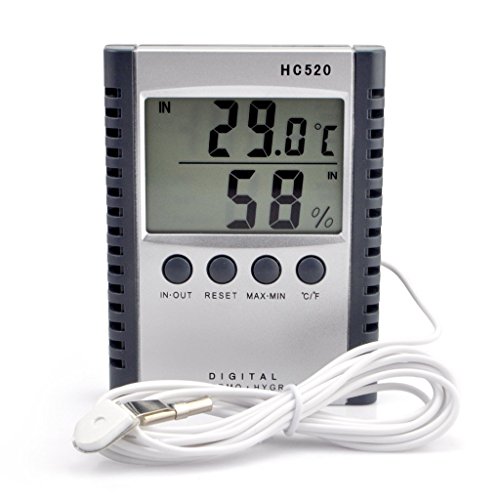
Dual-Zone Probe
iKKEGOL Digital Indoor Outdoor Wall Mount Thermo-Hygrometer with Probe
Wired probe for inside, sensor for outside
Split Intake Vs Tent Reading

Low-Fuss Pick
Antonki 2 Pack Room Thermometer Indoor Hygrometer with Kickstand
Kickstand display with Max/Min memory
Beginner Home Growers

Solid All-Rounder
TempPro TempAir Digital Hygrometer Indoor Thermometer 3-Pack
Comfort indicators and quick refresh
Multi-Room Household Tracking |

Smart Upgrade
TempPro TempAir Bluetooth Hygrometer with App and Data Logging
Wireless logging with phone alerts
Data-Driven Growers |

Compact Choice
wwhako 4-Pack Mini Round Hygrometer Thermometer
Stick-on discs for tight spaces
Small Tents And Jars |

Beginner Friendly
Veanic 2-Pack Mini Round Hygrometer Thermometer
Simple round readout, 10s refresh
First-Time Growers |

Pro Pick
VIVOSUN Digital Hygrometer Thermometer with Probe and App
Probe-based dual channel readings
Serious Hobbyist Tents |
Taking A Closer Look At The Options
Six mini sensors in a single box give a grower enough coverage to map a full tent, with extras to keep in propagation domes or curing jars. Each unit reads both temperature and humidity on a compact LCD, so canopy height doesn’t block your view from the tent door.
The internal probe design means you mount these directly inside the tent, which works fine for short, even canopies. Larger tents benefit from placing one at canopy height near the intake and another near the exhaust, since humidity often stratifies from one end to the other.
Advantages To Know
- ✓Six units cover intake, mid-tent, exhaust, and propagation areas at once.
- ✓Compact LCD stays readable from the tent door without a flashlight.
- ✓Wide measuring range handles both propagation (high RH) and late flower (lower RH) targets.
- ✓Built-in probe simplifies mounting in tents without drilling for external sensors.
Small Caveats
- •No external probe means you can’t isolate the sensor from radiant heat at the canopy.
- •Synchronizing six screens by eye is a chore, so logging and trend tracking stay manual.
Feature Snapshot
| | Feature | Specification | Why It Matters |
|---|
| Quantity | 6 units | Multi-point tent mapping without buying singles |
| Temperature Range | -58°F to 158°F | Covers cold seedlings and warm flowering rooms |
| Humidity Range | 10% to 99% RH | Reaches the lows of winter tents and the highs of cloner domes |
| Refresh Rate | Every 10 seconds | Catches fast swings after a humidifier cycle |
Who Will Love This
Multi-tent hobbyists and growers running a 4×4 or larger who want a sensor at every zone without a big spend.
Skip It When
If you want phone alerts and trend graphs, the TempPro TempAir Bluetooth Hygrometer is a more direct fit.
The wired external probe is the headline feature here. You keep the display outside the tent where it’s easy to read, while the cable reaches inside to the canopy. That separation matters once your LED panel starts radiating heat onto the sensor.
The IN/OUT button toggles between the wired probe and the unit’s built-in sensor, which is handy for comparing tent and room readings during dark cycles. A DRY/COMFORT/WET indicator gives you a quick visual cue without staring at numbers, which can help when you’re walking past the tent between chores.
Useful Touches
- ✓Probe cable keeps the LCD accessible without unzipping the tent.
- ✓Toggle between probe and ambient readings to compare tent vs. room climate.
- ✓Min/Max memory tracks overnight humidity swings after lights-off.
- ✓Tabletop stand or wall mount fits both closet grows and open tent setups.
Points To Keep In Mind
- •Probe length limits how far inside the canopy the sensor can sit, so deep tents may fall short.
- •Runs on a single AAA battery that you’ll need to replace periodically.
The Right Fit
Growers who want to monitor the canopy without cracking the tent door each time they check VPD.
A Better Fit Elsewhere
For wireless remote monitoring without cables, the TempPro TempAir Bluetooth Hygrometer is a smarter fit.
A folding kickstand sets this hygrometer apart from flat puck-style sensors. You can prop it on a shelf next to the tent or stand it directly on the floor inside, which keeps it out of the irrigation splash zone.
The 24-hour Max/Min record answers the question most growers actually ask: how dry did it get at lights-on. Two units in the box let you keep one in propagation and one in the main tent, which is a common setup for the first few weeks of a run.
Reasons It Performs
- ✓Kickstand keeps the screen at eye level on a shelf or tent floor.
- ✓24-hour Max/Min record helps you spot drying trends across lights-on/off cycles.
- ✓Battery is included, so the unit is working the moment you open the box.
Practical Considerations
- •Fast refresh sounds good on paper, but tent temperature near a light can still skew readings.
- •Only two units, so multi-zone mapping in larger tents needs a different option.
Built With In Mind
First-time growers running a small 2×4 or 3×3 tent who just want a clear readout at the door.
Look Elsewhere When
The TeqyAqs 6-Pack is a stronger fit if your tent has multiple zones that all need a sensor.
TempPro’s 3-Pack leans into clean usability. A wellness icon translates the raw humidity reading into a DRY/COMFORT/WET label, which saves you from pulling out a chart every time you walk by. Compared to the TeqyAqs 6-Pack above, you get fewer units but a friendlier readout.
For growers who track a single tent plus a propagation area and a drying closet, three sensors cover the basics without a lot of clutter. Owners commonly rely on the comfort icon to judge whether to crack a vent or run a humidifier, especially during the awkward transitional weeks of late veg.
What Earns Its Place
- ✓Comfort indicator icon removes the need to memorize RH ranges.
- ✓Three-unit count fits the typical 3-zone home grow.
- ✓Higher stated accuracy than basic pucks, which helps when running tight VPD targets.
Things To Weigh
- •No external probe means the sensor still sits in the heat path of your light.
- •No Bluetooth, so logging trends means manual note-taking.
Who Should Grab It
Mid-stage growers who already know their RH targets and want quick at-a-glance confirmation.
Swap It Out When
Reach for the VIVOSUN Digital Hygrometer if you want a probe that sits at canopy height away from the display.
This is the pick for growers who’d rather look at a phone than unzip a tent. Bluetooth pairs with the TempPro app, which graphs trends, exports up to two years of data, and lets you check the tent from across the room. The 260-foot rated range is generous for most homes, although walls cut into that quickly.
An NTC humidity sensor (a thermistor-based component that changes resistance with temperature) drives the readings. For growers who obsess over the night-cycle humidity bump, exported logs make it easier to see if your dehumidifier is actually catching up after lights-out.
A Favorable Mix
- ✓App-based graphs make it easy to spot humidity drift between feedings.
- ✓Two-year data export supports long-term crop comparisons and side-by-side runs.
- ✓NTC sensor aims for tighter accuracy than budget pucks.
- ✓Remote check means fewer tent openings, which helps keep your environment stable.
Honest Caveats
- •Bluetooth range drops off fast through walls, so detached sheds may lose signal.
- •Batteries are included, but Bluetooth use drains them faster than passive displays.
Perfect Match For
Data-driven growers who want to dial in VPD across multiple cycles and tweak environment recipes.
Reach For A Different Pick When
If you only need one simple readout and no app, the Antonki 2 Pack keeps things simpler.
Stick-on round discs are the classic small-tent solution, and the wwhako 4-Pack delivers four of them at a price that makes replacing a lost or steamed-up unit painless. The face is small but the digits stay readable from a foot or two away.
Mounting is either a recessed hole or double-sided tape, which gives you flexibility for odd tent pole locations. Owners often place one at canopy height, one at floor level, and one near the intake duct to catch stratification issues before they become bud rot risks.
Noteworthy Benefits
- ✓Four-pack covers intake, canopy, and exhaust zones in one order.
- ✓Celsius/Fahrenheit switch accommodates growers who reference international grow guides.
- ✓Tape or recessed mounting adapts to unusual tent pole layouts.
Less Ideal Details
- •Direct exposure to light heat can skew readings on the top of the canopy.
- •Small face is harder to read from across the room than the Antonki kickstand style.
Right Fit For
Closet growers and short tents where the puck-style footprint is all you need to spot-check RH.
Where Another Pick Suits Better
Step up to the TempPro TempAir 3-Pack if you want a comfort icon instead of raw numbers.
Two round sensors in the box keep the entry price low, and the 10-second refresh rate is fast enough to catch the swing from a humidifier kicking on. For a first tent, that’s usually plenty.
The Veanic pair works well as a starter set: one for the main canopy, one for a cloner dome or a small drying closet. Owners commonly leave them taped to the tent wall at mid-height, which keeps them away from irrigation splashes and out of the light’s direct heat path.
Positive Takeaways
- ✓Low entry price makes it easy to add a second sensor later.
- ✓10-second refresh keeps the display feeling live during humidifier cycles.
- ✓Compact round body fits jar lids and small propagation containers.
Possible Compromises
- •No kickstand or external probe, so placement options are limited.
- •Only two units, which may feel thin once you scale beyond one tent.
Made For
New growers starting their first tent who want a no-frills readout without committing to a smart system.
Where A Sibling Pick Shines
The wwhako 4-Pack covers more zones for a similar spend if you already plan to expand.
VIVOSUN’s take pairs a Swiss sensor with an external probe option, so you can read canopy and ambient humidity from one display. The built-in VPD readout is the standout for serious growers who want one fewer calculation per check.
Dual channels mean you can drop the probe at the canopy while the internal sensor tracks ambient room humidity. For growers running a tent inside a closet, that comparison tells you whether the AC is pulling moisture out before air even reaches the plants.
Practical Pluses
- ✓External probe lets you isolate the sensor from light heat at the canopy.
- ✓VPD display removes manual leaf-temperature math for tighter environment control.
- ✓Min/Max memory plus app support covers both casual and data-driven workflows.
Details To Watch
- •Probe accuracy specs are tight, so the unit deserves occasional recalibration against a known reference.
- •App features vary by firmware, so some users report a learning curve with the companion software.
Best Suited To
Hobbyists running a mid-size tent who want VPD on the display and a probe to keep sensors out of the light’s heat path.
Consider Something Else When
Casual growers may find the Antonki 2 Pack’s simpler display easier to live with day to day.
What Matters Most Before Choosing Hygrometers For Grow Tent
Accuracy and sensor placement matter more than display size. A budget sensor placed at canopy height will outperform a premium unit taped to the tent door. Aim for readings that stay within roughly 3% RH of a known reference, since tighter VPD targets depend on that consistency.
Sensor type is the next big call. Built-in NTC or polymer sensors work fine for ambient checks, while an external probe lets you read at canopy height without exposing the sensor to radiant heat. Bluetooth and app logging add trend visibility but cost more and drain batteries faster.
Refresh rate and refresh interval shape how a sensor behaves during fast swings. A 10-second refresh catches humidifier cycles well; slower units lag and can mislead you about peak RH. Match the sensor count to your tent size, since one puck in a 4×4 rarely tells the whole story.
Multi-packs help with stratification, which is the tendency for humidity to layer from floor to canopy. Place one near the intake, one at the canopy, and one near the exhaust to see how air actually moves. Battery type and claimed battery life matter less than people think, but coin cells in sealed puck units can be a hassle to swap.
Key Considerations Across These Picks
Mistakes Worth Dodging
Mounting the sensor directly under the light skews readings fast, since radiant heat inflates the temperature and drops the reported humidity. Hang the sensor at canopy height but slightly off to the side, away from the lamp’s direct path. Many growers also forget that a sealed tent with no air exchange can read 10% RH higher at the canopy than at the floor, so one sensor is rarely enough.
The Upgrade Payoff
Spending up buys two real advantages: tighter stated accuracy (often around 2% RH instead of 5%) and app or probe support that turns raw numbers into trends you can act on. For a single small tent, a budget 2-pack is plenty. Once you start dialing in VPD across multiple cycles or running larger rooms, the upgrade pays for itself in fewer environment mistakes.
Frequently Asked Questions
QWhere should a hygrometer sit in a grow tent?
Place it at canopy height, slightly off to the side of the light, so radiant heat doesn’t skew the reading. Add a second sensor near the exhaust if your tent runs longer than four feet.
QHow often do grow tent hygrometers need calibration?
Most budget units drift within the first year, especially in humid tents. Owners commonly compare against a reference sensor every few months and replace drifters rather than recalibrate.
QIs Bluetooth or a wired probe better for grow tents?
Wired probes keep the display accessible without opening the tent, while Bluetooth adds trend logging and phone alerts. Bluetooth range drops fast through walls, so detached spaces often do better with a probe.
QCan one hygrometer cover a full grow tent?
Not reliably. Humidity stratifies from intake to exhaust and from floor to canopy, so two or three sensors give a much clearer picture of what’s happening at the canopy.
QDo hygrometers need batteries, and how long do they last?
Yes, most run on AAA or coin cells. Passive units can last a year or more, while Bluetooth models drain faster, often in a few months depending on how often the app syncs.
The Takeaway
Pick the sensor count that matches your tent size, then choose between a simple puck for spot checks and a probe or Bluetooth model for trend tracking. The TeqyAqs 6-Pack and TempPro 3-Pack cover most home setups, while the VIVOSUN probe and TempPro Bluetooth earn their place when you want data you can actually act on. Match the tool to your goals, and the environment becomes far easier to manage.


