

A patchy lawn in midsummer tells you everything about your watering setup. Impact sprinklers deliver the long, far-reaching arc that established turf actually needs, and the eight models below cover the typical headaches: dirty water, large odd-shaped yards, brittle plastic heads, and weak bases. The picks lean toward metal construction where it counts and adjustable coverage that doesn’t fight you on a windy afternoon.
A Closer Look At The Lineup

Hourleey 2 Pack Impact Lawn Sprinklers with Aluminum Alloy Spike Base

Orbit 55201 Pulse XL Pop-Up Impact Sprinkler

WEMADE Heavy Duty Metal Pulsating Sprinkler for Yard

Biswing 2 Pack Impact Sprinkler Head on Metal Step Spike

Biswing 2 Pack Impact Sprinkler on Step Spike (Green)
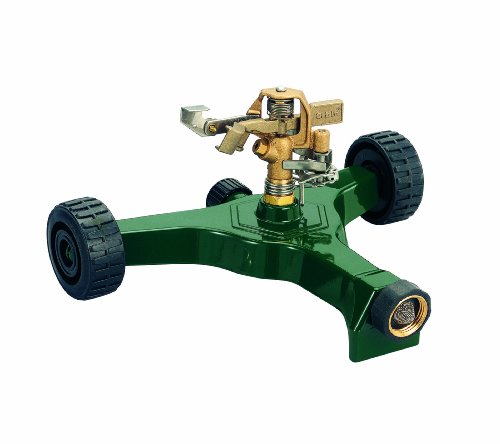
Orbit 56186N 1/2-Inch Brass Impact Sprinkler with Metal Wheel Base
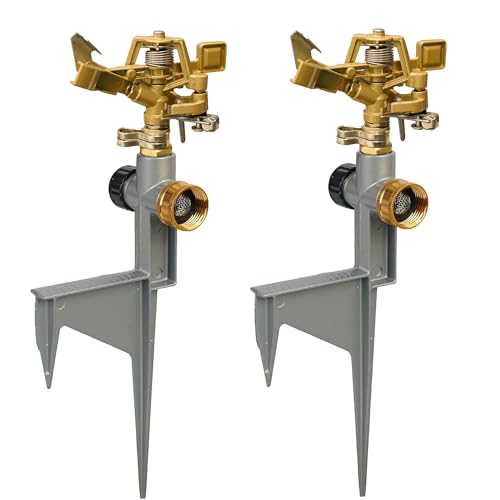
LIULO TOOL 2 Pack Zinc Alloy Impact Sprinklers on Spike Base

Hourleey 1/2 Inch Brass Impact Sprinkler 4 Pack
The Picks, Examined More Closely
Two heads and two aluminum spike bases arrive in the same box, which suits you well if your yard has a stubborn dry corner that one sprinkler can’t reach alone. The zinc alloy sprinkler head pairs with a separate aluminum alloy spike, so the wobbly all-plastic problem that plagues cheaper impact units isn’t really an issue here.
For most residential lots, running two heads in series covers more ground than a single cannon-style sprinkler ever could. The trade-off is that you’ll need a hose splitter or two outdoor spigots, and you’ll have to step the spike into soft soil by hand. If your ground bakes hard in July, watering the spot first saves a bent spike.
Well-Handled Touches
- Two-pack lets you run front and back yard simultaneously without buying a second unit later.
- Aluminum spike base resists the rust that turns cheap stamped bases into orange dust after one winter.
- Adjustable pulsating pattern gives you partial-arc coverage for narrow side strips.
- Total assembled height around 11.5 inches keeps the head above tall fescue without choking the stream.
Things To Consider
- The hose threading on the spike base is a known weak point for owners who drag units across concrete rather than lifting them.
- Coverage radius shrinks noticeably if your home water pressure runs below 40 psi.
Best Suited To
Homeowners with two distinct lawn zones who want a matched pair rather than mismatched single-unit buys over time.
Look Elsewhere When
You’re designing a fixed underground layout, where the Orbit 55201 Pulse XL pop-up option will sit cleaner and stay out of the mower’s path.
The Pulse XL hides underground until the water pressure rises, then lifts a weighted impact head above the grass line and starts its long, knocking rotation. For a homeowner tired of tripping over hose-end sprinklers, a pop-up design like this is the practical reset.
It’s built specifically for the dirty, mineral-heavy, and reclaimed water that clogs lesser impact heads, and the double-weighted arm keeps the rotation honest even when pressure dips mid-cycle. You may find the installation depth fussy if your soil has heavy clay, since the canister needs a clean vertical pocket to retract reliably.
What Works In Its Favor
- Engineered for hard, mineral-laden, or reclaimed water that gums up standard rotors.
- Adjustable arc from 20 to 360 degrees lets one head serve both a corner and an open stretch.
- Throws up to 45 feet between heads, which trims how many sprinklers a medium lawn actually needs.
- Disappears underground when off, so it doesn’t fight your mower or your edging tools.
Worth Noting
- Requires a trench, supply line, and proper canister depth rather than a hose and a spike.
- Without adequate household pressure, the pop-up travel becomes sluggish and the arc can stutter.
Feature Snapshot
Right Fit For
Homeowners in hard-water regions who are ready to commit to a fixed irrigation loop rather than dragging hose sprinklers around the yard.
Consider Something Else When
You rent, or you’re not ready to trench, in which case the Hourleey 2 Pack spike base gives you serious coverage without permanent install work.
WEMADE goes all-metal on both the head and the sled-style base, which is the kind of move that earns trust on the first cold morning you forget to drag it in. The advertised coverage stretches out to an 85-foot diameter, so this is the unit to reach for when the backyard is more pasture than patio.
The trade-off shows up in transport and storage: it tips over easily on soft ground if you run it at partial arc, since the heavy base sits low. For most folks with flat, open turf, that won’t matter at all.
The Good Stuff
- All-zinc-alloy construction shrugs off the rust streaks you see on stamped steel units after one season.
- Adjustable spray arc from 20 to 360 degrees handles everything from a narrow side yard to a wide lawn.
- Up to 85 ft diameter reach covers a generous backyard with a single head.
- Simple two-screw adjustment is intuitive enough for first-time impact sprinkler users.
Trade Offs
- Lower profile than spike-base units makes it easier to nudge over with a hose or a curious dog.
- Single-head design means larger lawns need two or three units for full coverage.
Feature Rundown
Who Should Grab It
Suburban homeowners with wide, open lawn areas who want one head to do the job of two smaller sprinklers.
Skip It When
You need to water narrow side strips or raised beds, where the LIULO TOOL spike model’s narrower footprint and adjustable height give better aim.
The step-spike design is the small detail that makes a real difference when you’re planting a sprinkler into ground that hasn’t seen rain in a week. You press the flat step with your boot, the head stays clean, and the spike goes in straight without bending.
Compared to the Hourleey two-pack covered earlier, this one trades the aluminum base finish for a heavier zinc spike and an adjustable coverage nozzle that lets you dial the spray pattern without leaving the yard. You’ll want to lift rather than drag these when relocating, since the threading wears if you treat them roughly.
Strengths Worth Knowing
- Step-on spike saves your shoes and keeps the head upright during install.
- Adjustable arc from 20 to 360 degrees covers both strips and full circles.
- Zinc alloy head holds up to the kind of accidental drops that crack plastic alternatives.
- Two-pack matches well with hose-and-splitter setups across larger lawns.
Points To Note
- Step spike creates a narrower puncture point than the Hourleey’s wider base, so soft or sandy soil may not anchor as firmly.
- Spray distance depends heavily on household pressure; on weak lines it can fall short of competitive units.
Spec Overview
Perfect Match For
Gardeners running seasonal layouts who reposition sprinklers often and need a base that installs fast without tools.
Not Your Match When
You’re building a permanent installation, where the Orbit 56186N brass model on a wheeled sled is the longer-lasting choice.
Functionally identical to the gold Biswing model above, this version trades the metallic finish for a green coating that blends into lawn and shrub borders. If you’ve ever spotted a bright brass sprinkler from across the yard and wished it wasn’t the visual focus, this is the small relief you didn’t know you wanted.
The performance profile matches the gold unit: same zinc head, same step spike, same 20-to-360 arc adjustment. The honest read is that the green paint is a cosmetic upgrade rather than a functional one, and if your sprinklers spend most of their lives behind shrubbery you wouldn’t notice the difference.
Where It Excels
- Green finish sits quietly in lawn and border settings.
- Same zinc head durability as the gold sibling without paying a premium.
- Step-on spike still installs fast in normal garden soil.
- Two-pack suits split yard layouts with one head up front and one in back.
Points To Keep In Mind
- Painted finish can nick if you slide the unit across concrete rather than lifting it.
- Color choice alone shouldn’t drive the purchase over the gold version if your yard is mostly open turf.
Made For
Gardeners who care about the visual blend as much as the spray pattern and want a sprinkler that disappears into the border.
A Better Fit Elsewhere
Owners focused purely on durability at the lowest spend should look at the Hourleey 2 Pack with its aluminum spike base.
Brass is the material that separates seasonal sprinklers from long-term lawn tools, and the Orbit 56186N leans into that with a 1/2-inch threaded brass head mounted on a wheeled metal base. The wheels matter more than people expect, since you can drag the unit across a yard without lifting the hose connection.
Compared to the spike-base options earlier in this list, this one trades easy ground anchoring for portability and longevity. It’s the kind of purchase you make once and forget about, assuming your water pressure and yard layout stay reasonably stable.
Positive Points
- Brass head outlasts zinc in salty-air and hard-water conditions over multiple seasons.
- Wheeled sled repositioning avoids the strain of spike-base lifting.
- 1/2-inch threaded connection matches standard garden supply fittings.
- Full-circle spray pattern with a coverage diameter suitable for medium lawns.
Honest Caveats
- Single-unit buy; outfitting a multi-zone yard requires buying multiples.
- Heavier than spike-base units, which can be a factor for gardeners who store it on a high shelf.
- Premium brass build costs more upfront than the zinc-and-aluminum options above.
Feature Facts
Who It Suits Best
Long-term homeowners setting up a permanent lawn watering setup who want a brass head that lasts years without replacement.
Another Choice May Suit
Shoppers covering a wide radius on a tighter budget will get more raw reach from the WEMADE all-metal pulsating sprinkler.
The interesting move on this LIULO TOOL unit is the integrated spike design that lets you adjust how deep the sprinkler sits in the soil, with a total length around 13.8 inches and roughly 7.3 inches of stake depth. That kind of adjustment helps when your lawn isn’t perfectly flat.
The trade-off shows up in the connection point: an integrated stake means you can’t swap bases if one wears out, and the long profile is more visible above tall grass than the chunkier Hourleey spike. For most sloped or uneven yards, though, that adjustability is the feature that wins the day.
The Case For It
- Adjustable insertion depth handles uneven or sloped lawn surfaces.
- Stainless steel and zinc alloy build resists rust across seasons of outdoor storage.
- Two-pack supports front-yard and back-yard setups without buying singles.
- Compatible with standard garden hose threading for quick swap-in.
Soft Spots
- Integrated spike design means a damaged base ends the unit, rather than allowing a replacement base swap.
- Taller profile stands out in shorter ornamental grass where a low-profile unit would hide better.
Quick Technical Notes
Best Suited To
Gardeners dealing with sloped, lumpy, or uneven terrain who need to tune how deep the sprinkler sits to keep the head upright.
Reach For A Different Pick When
You have a flat, manicured lawn where a lower-profile unit like the Biswing step spike would blend in and stay out of the way.
Brass heads in a four-pack give you a flexible head count without sourcing four separate units, and the 1/2-inch threading pairs with both standard hose fittings and tripods. If your yard has been waiting on a proper four-zone rotation, this pack keeps the layout consistent.
You may find the spray distance somewhat sensitive to your home’s static pressure; the head performs best above 40 psi. Below that, the arc can shorten noticeably compared to the larger Orbit brass unit reviewed earlier.
Bright Spots
- Four brass heads keep replacement stock on hand if one takes a knock.
- 0 to 360 degree coverage adjustment handles any zone geometry.
- 1/2-inch threading works with tripods, hose timers, and manifold splitters.
- Compact head body fits standard impact sprinkler risers without modification.
Points To Weigh
- Brass head only; you’ll need to supply your own spike, tripod, or riser base.
- Performance drops on low-pressure systems compared to dedicated spike units.
Whose Shelf It Belongs On
DIYers building a multi-zone lawn layout who already own or plan to buy their own bases and want a matched set of brass heads.
Where A Sibling Pick Shines
Shoppers who want a complete out-of-box setup should consider the Hourleey 2 Pack with included aluminum spike base instead.
What Matters Most Before Choosing Impact Sprinklers
Match Coverage To Yard Shape First
An impact sprinkler throws a long, narrow arc that suits rectangular lawns, side yards, and open back fields. A rotary or gear-driven sprinkler better serves curved beds or small patches. Before buying, sketch your lot and mark the dry zones. A single 85-foot-diameter head covers far more ground than four scattered short-radius models, but it also wastes water on sidewalks and driveways if the arc isn’t dialed in.
Decide Spike, Sled, Or Pop-Up
Spike bases install in seconds and reposition easily; they suit renters and seasonal layouts. Sled or wheeled bases are heavier, more stable, and last longer on permanent installations. Pop-up canisters hide underground and avoid mower collisions, but they require trenching and supply-line work. The choice between them usually comes down to whether you’re willing to dig.
Pressure And Water Quality Drive Reliability
Impact sprinklers (rotating heads that pulse water through a weighted arm mechanism) depend on steady household pressure. Most need at least 30 to 40 psi to maintain their advertised throw, and dirty or reclaimed water clogs the nozzle quickly without a weighted arm design. In hard-water regions, brass heads and pop-up models with clog-resistant arms earn their keep over cheaper zinc alternatives.
Material Choice Affects Lifespan
Plastic heads survive one or two seasons before UV cracks the arm. Zinc alloy offers better durability for the price. Brass remains the long-term winner for salty-air climates and hard water, especially on permanent installs. Pick the material that matches how long you plan to leave the sprinkler in place.
Key Considerations Across These Picks
Mistakes Worth Dodging
Underestimating household pressure is the most common slip. A sprinkler rated for a 40-foot throw on paper may stall at 25 feet if your static pressure runs low, and the difference shows up as dry patches at the edge of coverage. Test your pressure with a simple gauge before committing to a heavy-duty model.
Choosing a spike base for compacted or rocky soil is another frequent mistake. The spike won’t seat fully, the head leans, and the arc drifts off-target. For tough ground, a sled base or a wheeled unit like the Orbit 56186N performs more reliably without a wrestling match.
What Separates Premium From Basic
Higher-tier brass impact heads cost more upfront because the brass casting tolerates mineral-laden water and salt exposure that eats zinc within a few seasons. Pop-up designs like the Orbit Pulse XL add clog-resistant arms and underground mounting that solve a different problem entirely: tripping hazards and mower damage.
The upgrade pays off when you keep a sprinkler in place year after year, or when your water supply is hard enough that cheap heads need annual replacement. For seasonal layouts in soft water, mid-tier zinc models handle the job well without the premium spend.
Frequently Asked Questions
How Far Do Impact Sprinklers Typically Throw?
Most residential impact sprinklers throw between 20 and 45 feet, with wide-coverage metal models reaching up to 85 feet in diameter under ideal pressure. Actual distance depends on your home’s static pressure, nozzle size, and wind conditions on the day you run them.
Can Impact Sprinklers Handle Hard Or Dirty Water?
Models with weighted impact arms and brass or heavy zinc construction handle mineral-laden water better than plastic alternatives. The Orbit Pulse XL pop-up is specifically designed for reclaimed and high-mineral water without clogging the rotation mechanism.
Spike Or Sled Base: Which Works Better?
Spike bases install quickly and suit seasonal or portable setups; sled or wheeled bases offer more stability on permanent installs and handle tougher soil. Choose spike for flexibility, sled for long-term placement.
How Do I Adjust The Coverage Arc?
Most impact sprinklers use a pair of small screws or collars near the head to set the rotation stop points. Adjusting them while the water runs lets you see the arc change in real time and dial in the exact start and end positions for your yard shape.
Do Impact Sprinklers Need A Lot Of Pressure?
They perform best above 30 to 40 psi, which most urban and suburban homes provide. If your pressure runs lower, look for a low-pressure model or expect reduced throw distance and weaker rotation.
Closing Thoughts
The right impact sprinkler is the one that matches your yard shape, your pressure, and how permanent you want the install to be. Spike-based pairs like the Hourleey or Biswing two-packs handle most residential setups without a major commitment, while the Orbit Pulse XL and Orbit 56186N step in for hard-water regions and longer-term layouts. Measure the dry spots, check your pressure, and the rest of the decision tends to make itself.
