

Cucumber beetles chew through leaves, scar fruit, and spread bacterial wilt before you notice the damage. Home growers dealing with striped or spotted beetles need a mix of contact sprays, soil-dwelling controls, and preventative options that fit an organic or conventional routine. This roundup covers eight solid choices, from spinosad concentrates to diatomaceous earth, so you can match the right tool to your garden’s size, your tolerance for chemicals, and how much time you want to spend spraying.
The Essentials At A Glance

Fertilome Spinosad Insecticide Spray Concentrate 32 oz

Dr. Earth Final Stop Vegetable Garden Insect Killer 32 oz

Southern Ag Thuricide HPC Caterpillar Control 8 oz

Bonide Captain Jack’s Bug & Slug Granules 1.5 lb

Bonide Systemic Insect Control Concentrate 16 oz

Bonide Eight Insect Control Garden & Home 128 oz
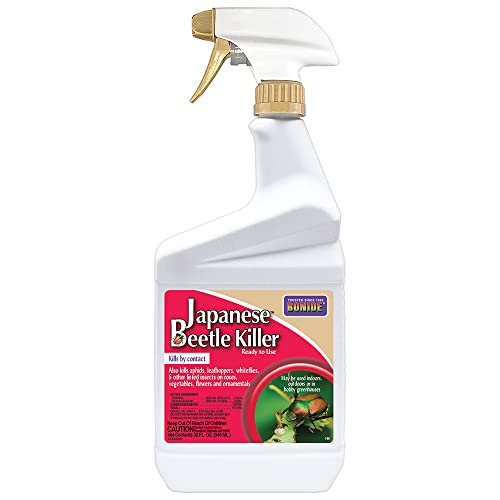
Bonide Japanese Beetle Killer RTU Spray 32 oz

RobiGuard Diatomaceous Earth & Peppermint Powder 1 lb
More Details On Our Top Picks
Spinosad (a fermented bacterial byproduct) has earned a reputation among home growers as one of the few organic-leaning sprays that actually knocks down beetles in a single pass. Fertilome’s 32 oz concentrate goes into a standard pump or hose-end sprayer and covers a decent backyard plot before needing a refill. It targets leaf-chewing insects including Colorado potato beetles, thrips, caterpillars, and borers, so the same bottle handles multiple pests that show up alongside cucumber beetles in mid-summer.
For most mixed vegetable gardens with cukes, squash, and tomatoes sharing a bed, this concentrate gives flexible coverage without committing to a full synthetic-chemical routine. The trade-off shows up in mixing accuracy: a kitchen measuring spoon and a clean pump sprayer are basically required gear, since uneven dilutions can scorch tender foliage on a hot day.
Real-World Strengths
- Covers leafminers, thrips, caterpillars, borers, Colorado potato beetles, and other chewing pests in one bottle.
- Approved for vegetables, fruits, citrus, trees, shrubs, and ornamentals, so one product handles mixed beds.
- 32 oz concentrate scales from a small raised bed up to a medium backyard plot with a single purchase.
- Concentrate format costs less per treated square foot than ready-to-use trigger bottles.
Things To Consider
- Mixing ratios must be measured carefully; sloppy dilution can burn leaves during peak afternoon heat.
- Reapplication intervals may be needed after rain or overhead watering, adding to seasonal upkeep.
Feature Snapshot
Who It Suits Best
Growers managing a mid-sized mixed vegetable plot who want broad-spectrum organic-leaning control without buying a separate bottle for every pest.
Look Elsewhere When
Vegetable gardeners wanting a true two-in-one feed-and-protect formula should consider the Dr. Earth Final Stop Vegetable Garden Insect Killer 32 oz, which doubles as a fertilizer.
Dr. Earth built this ready-to-spray bottle for gardeners who prefer to skip the measuring cup entirely. The 32 oz format covers roughly 1,200 square feet, which lines up well with a typical backyard vegetable plot or a few raised beds. Because it carries a 4-6-2 nutrient ratio, it functions as both a pest treatment and a light feed, reducing the number of bottles crowding the shed.
Organic-leaning gardeners treating small infestations get the most mileage here. The honest read is that the fertilizer side is a bonus rather than a primary reason to buy; heavy-feeding crops like tomatoes may still want a dedicated feed schedule through the season.
Practical Pluses
- Covers up to 1,200 square feet per bottle, a generous reach for the price point.
- Ready-to-use liquid cuts out measuring and mixing mistakes for new gardeners.
- Built-in 4-6-2 nutrient profile doubles as a light feed during treatment cycles.
- Suitable for indoor and outdoor vegetable and herb applications.
Worth Noting
- Nutrient release is short-term compared with dedicated slow-release fertilizers.
- Coverage assumes light pest pressure; heavy beetle outbreaks may need repeat applications.
Made For
Home growers running an organic vegetable patch who want a single bottle that handles pests and gives plants a small nutrient boost at the same time.
Consider Something Else When
Growers focused strictly on ornamental beds or roses should consider the Bonide Systemic Insect Control Concentrate 16 oz, which is labeled for flower beds and shrubs.
Bacillus thuringiensis, often shortened to Bt, is a naturally occurring soil bacterium that targets caterpillars and worm-stage pests without harming most beneficial insects. Southern Ag’s Thuricide HPC concentrate uses that active ingredient in liquid form, mixed at 2 to 4 teaspoons per gallon depending on the target pest. The 8 oz bottle stays compact in a garden shelf and lasts through multiple small-batch treatments.
Growers dealing with caterpillar pressure alongside beetle activity get a useful secondary tool, though Bt itself does not directly target adult cucumber beetles. For most backyard plots, the best play is pairing this with a separate beetle-specific spray rather than relying on it solo.
Strengths Worth Knowing
- Active ingredient is Bacillus thuringiensis, a naturally occurring bacterium with low toxicity to humans and animals.
- Labeled for vegetables, citrus, nuts, shrubs, trees, ornamentals, and flowering plants.
- Compact 8 oz bottle stores easily in a garden shed or garage shelf.
- Liquid form mixes quickly into a standard pump sprayer with no special equipment.
Trade Offs
- Targets caterpillars and worms rather than adult cucumber beetles directly.
- Small bottle size may run out fast across multiple growing beds.
Best Suited To
Gardeners managing caterpillar-heavy plots who want a low-toxicity biological option that fits alongside other targeted sprays.
A Better Fit Elsewhere
Growers who need broad beetle coverage in a single bottle should consider the Fertilome Spinosad Insecticide Spray Concentrate 32 oz, which targets beetles and caterpillars at once.
Granular baits solve a different problem than foliar sprays, going after pests that hide in mulch, soil, or low foliage. Captain Jack’s pelletized formula lures slugs, snails, cutworms, earwigs, pill bugs, sow bugs, and crickets out of hiding. One application holds for roughly a month, which is convenient for gardeners who don’t want to re-treat beds every week.
For most mixed vegetable gardens, this works as a complementary tool rather than a stand-alone beetle solution, since cucumber beetles spend more time on leaves than on soil. The honest read is that growers with heavy slug or cutworm pressure get the best return, while beetle-only infestations may need a separate spray.
Positive Points
- Targets soil-level pests including slugs, snails, cutworms, earwigs, pill bugs, and crickets.
- One application provides roughly a month of protection under typical conditions.
- Pelletized form scatters easily around vegetable, fruit, and berry gardens.
- Works alongside foliar sprays without complicated tank mixing.
Points To Keep In Mind
- Targets ground-dwelling pests more than foliage-feeding adult cucumber beetles.
- Granules need dry conditions to remain effective; heavy rain can shorten the protection window.
Perfect Match For
Growers fighting slug and cutworm pressure in damp mulched beds who want a low-spray option that complements foliar treatments.
Swap It Out When
Gardeners focused on adult beetle knockdown on foliage should consider the Bonide Eight Insect Control Garden & Home 128 oz with its pump sprayer for quick coverage.
Systemic insecticides work from the inside out, getting absorbed by the plant so pests die when they feed on treated foliage. Bonide’s 16 oz concentrate makes 16 gallons of finished spray, which stretches across multiple treatments on roses, shrubs, and ornamental beds. The active ingredient targets thrips, mealybugs, scale, two-spotted spider mites, and whiteflies, a useful lineup for landscape gardeners dealing with mixed pest pressure.
Critical caveat for vegetable growers: the label is for ornamental use only, so this is not the bottle for edible cucumber beds. For most rose beds and foundation shrubs, though, the systemic action means less frequent spraying once established, a real time-saver during peak summer.
Real Benefits
- One 16 oz bottle makes 16 gallons of finished spray, enough for multiple treatments.
- Kills on contact and systemically through ingestion for layered protection.
- Labeled for over 100 plant varieties including roses, flowers, trees, and shrubs.
- Compatible with certain fungicides and fertilizers for combination spray applications.
Honest Caveats
- Not labeled for vegetable or fruit plants, so it does not fit edible cucumber beds.
- Outdoor residential use only, limiting flexibility for indoor or greenhouse applications.
Who Will Love This
Ornamental gardeners maintaining rose beds, foundation shrubs, and landscape flowers who want long-lasting systemic protection across many plant types.
Reach For A Different Pick When
Vegetable gardeners should consider the Bonide Japanese Beetle Killer Ready-to-Use Spray 32 oz, which is labeled for use on listed vegetables and ornamentals alike.
For large yards and serious infestations, a ready-to-spray 128 oz jug with an attached power sprayer saves the time and hassle of mixing small batches. Bonide’s Eight Insect Control targets over 130 listed insects including ants, beetles, mites, fleas, ticks, and moths, so the same bottle handles cucumber beetles and adjacent pests in one pass. The water-based mix is light on odor and won’t stain most home siding.
For most gardeners with a half-acre lot or a sizable vegetable plot, this jug handles a full season without frequent refills. Keep in mind this is an outdoor product only, so indoor or greenhouse use calls for a different option.
Points In Its Favor
- Targets over 130 listed insect pests including ants, beetles, mites, fleas, and ticks.
- Suitable for vegetables, roses, lawns, flowers, shrubs, trees, and other outdoor plants.
- Water-based formula minimizes odor and won’t stain most siding materials.
- Kills on contact with no measuring or mixing required.
Small Caveats
- Not labeled for indoor use, limiting flexibility for greenhouse or houseplant applications.
- The 128 oz jug adds weight to carry around a large yard during application.
Quick Facts
Built With In Mind
Growers with sizable vegetable plots or landscape beds who want a refill-once-per-season jug with a built-in sprayer for fast knockdown.
Where Another Pick Suits Better
Growers maintaining a small raised bed who want minimal waste should consider the Fertilome Spinosad Insecticide Spray Concentrate 32 oz, which mixes on demand.
When a beetle infestation is small and contained, dragging out a pump sprayer feels like overkill. Bonide’s 32 oz ready-to-use trigger bottle solves that problem by arriving pre-mixed and ready to point and spray. It targets Japanese beetles, aphids, flea beetles, leafhoppers, caterpillars, stink bugs, Colorado potato beetles, and other listed pests, covering the usual suspects that invade a cucumber patch in July.
For most gardeners doing weekly scouting, this format fits naturally into the routine without commitment to mixing or cleanup. The bottle is intended for residential indoor, outdoor, and greenhouse use, which adds versatility that larger concentrate jugs lack.
The Practical Payoff
- Ready-to-use trigger bottle needs no measuring, mixing, or cleanup.
- Targets Japanese beetles, aphids, flea beetles, Colorado potato beetles, and other listed pests.
- Suitable for vegetables, flowers, ornamentals, trees, and shrubs.
- Approved for indoor, outdoor, and greenhouse residential applications.
Less Ideal Details
- Trigger sprayer is slower to cover large plots compared with pump or hose-end sprayers.
- Bottle format costs more per ounce than concentrate refills over a full season.
The Right Fit
Backyard gardeners handling small infestations who want a grab-and-spray bottle for spot treatments without committing to a concentrate routine.
Not Your Match When
Growers with a large vegetable plot needing frequent whole-bed treatments should consider the Bonide Eight Insect Control Garden & Home 128 oz for faster coverage.
Diatomaceous earth (a fine powder made from fossilized algae) works mechanically rather than chemically, damaging the outer coating of crawling insects as they move across treated surfaces. RobiGuard’s food-grade formula adds peppermint oil for a scent-based deterrent layer. The 1 lb pouch targets ants, roaches, fleas, silverfish, and bedbugs, which makes it more of a household and perimeter tool than a foliar cucumber beetle treatment.
For most gardeners, this earns a spot in the shed as a foundation-and-pathway defense rather than a primary beetle spray. Keep in mind the powder needs dry conditions to remain effective, so reapplication after rain or irrigation is part of the routine.
Everyday Advantages
- Food-grade diatomaceous earth mixed with peppermint oil for mechanical and scent-based action.
- Targets a wide range of crawling insects including ants, roaches, fleas, silverfish, and bedbugs.
- Useful around garden perimeters, shed foundations, and greenhouse entry points.
Potential Compromises
- Targets crawling insects more than foliage-feeding adult cucumber beetles.
- Loses effectiveness when wet, so reapplication after rain or watering is necessary.
Whose Shelf It Belongs On
Growers wanting a low-chemical, food-safe powder for perimeter defense around garden beds, sheds, and household entry points.
Where A Sibling Pick Shines
Growers needing direct beetle knockdown on cucumber foliage should consider the Bonide Japanese Beetle Killer Ready-to-Use Spray 32 oz for targeted foliar treatment.
What To Weigh Before Choosing A Cucumber Beetle Treatment
Match The Format To Your Plot Size
Ready-to-use trigger bottles like the Bonide Japanese Beetle Killer work well for small raised beds and quick spot treatments, while concentrates such as the Fertilome Spinosad give better cost-per-ounce on larger plots. Heavy-duty 128 oz jugs with pump sprayers cover half-acre yards but add storage weight. Picking the wrong format usually means either wasted concentrate or a constant refill cycle, so match the bottle to your actual square footage.
Decide Between Organic And Conventional Chemistry
Spinosad and Bt-based products like Southern Ag Thuricide HPC offer organic-leaning options with shorter pre-harvest intervals, which matters once cucumbers start producing. Synthetic pyrethroid mixes such as Bonide Eight Insect Control work faster but require stricter re-entry intervals and careful timing around harvest. Vegetable gardeners eating what they grow often lean toward the organic side, while landscape gardeners prioritizing fast knockdown may prefer the synthetic route.
Check The Label For Edible Crops
Several systemic and ornamental insecticides on this list, including Bonide Systemic Insect Control, are not labeled for vegetable use. Reading the label before buying saves the frustration of returning a bottle that does not cover the crop you actually grow. For mixed edible-and-ornamental beds, broad-spectrum products like Bonide Eight Insect Control or Bonide Japanese Beetle Killer cover both sides legally.
Plan For Repeat Applications
Single-spray solutions are rare in beetle control. Most products require a second pass seven to ten days later, plus another after heavy rain. Gardeners with limited time should pick longer-interval options like Bonide Captain Jack’s granules (roughly a month of coverage) or accept that a spray routine is part of the season.
Key Considerations Across These Picks
Pitfalls Shoppers Hit
A common trap is reaching for the strongest synthetic spray first, then realizing it carries a long pre-harvest interval that delays picking cucumbers by days. Another slip-up is buying a systemic ornamental product like Bonide Systemic Insect Control for an edible bed, then discovering it is not labeled for food crops. Reading the crop list on the label before purchase prevents both frustrations.
Where The Extra Money Goes
Larger jugs like the 128 oz Bonide Eight Insect Control cost more up front but cut down on per-ounce cost across a full season. Ready-to-use bottles trade money for convenience, since you skip mixing and cleanup. Powders like the RobiGuard Diatomaceous Earth cost less but lose effectiveness when wet, so the value depends on how disciplined you are about reapplying after rain.
Frequently Asked Questions
When should I start spraying for cucumber beetles?
Begin scouting as soon as cucurbit seedlings emerge in late spring, since early-season beetles do the most damage by transmitting bacterial wilt. A first preventative spray at the seedling stage typically outperforms a reactive spray once populations explode in mid-summer.
Can I mix two of these products together?
Tank-mixing depends on the specific labels, and not all combinations are tested for compatibility. Bonide Systemic Insect Control notes it can be mixed with certain fungicides or fertilizers, but most gardeners find it safer to alternate products on different days rather than risk plant injury from untested mixes.
Are these products safe around pollinators?
Spinosad and pyrethroid sprays can harm bees if applied directly to blooming plants during foraging hours. Spraying early morning or late evening, and avoiding open flowers, reduces pollinator exposure across all picks in this roundup.
How long do cucumber beetle treatments last after application?
Foliar sprays generally hold for seven to ten days under dry conditions, while granular baits like Captain Jack’s last closer to a month. Heavy rain, overhead watering, and rapid plant growth all shorten the protection window and push the next treatment forward.
Will one application end a beetle problem permanently?
A single spray rarely clears an infestation, since eggs, larvae in soil, and new adult arrivals keep the cycle going. Most home gardeners plan on at least two to three applications per season, paired with crop rotation and row covers for a fuller defense.
Final Verdict
Matching the right insecticide to your garden’s size, crop list, and tolerance for chemicals makes the difference between a one-shot fix and a full-season routine. For most mixed vegetable growers, a concentrate like Fertilome Spinosad gives the broadest coverage, while gardeners prioritizing organic inputs gravitate toward Dr. Earth Final Stop. Start with a clear read of your plot size and crop type, then layer tools as the season builds, since no single bottle handles every situation.
