

Composting turns kitchen scraps and yard clippings into rich soil amendment, and the right bin makes the habit stick. Backyard gardeners, renters with a patio corner, and anyone trying to shrink their trash output all benefit from a setup that fits the space and the volume of organic material you generate. The eight picks below cover tumbling dual-chamber bins, large stationary composters, and lightweight reusable bags, so you can match capacity and turning style to your routine.
An Overview Of The Picks

F2C 80Gal Compost Bin with Gloves (Black)

Hourleey 43 Gallon Dual Chamber Tumbling Composter

VIVOSUN 300 Gallon Expandable Outdoor Compost Bin

VEVOR 80 Gallon Outdoor Composting Bin
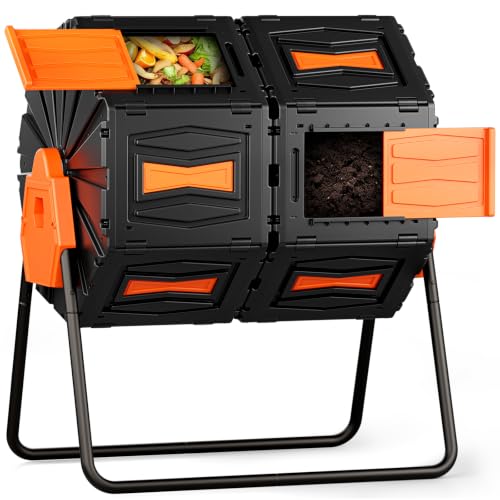
Marcytop 45 Gallon Dual Chamber Compost Tumbler

MyLifeUNIT 34 Gallon Reusable Yard Waste Bags (2 Pack)

VEVOR 43-Gal Dual Chamber Composting Tumbler

THE Growing 43 Gal Outdoor Compost Bin Tumbler (Orange)
Meet The Standout Selections
Big backyards produce big volumes of organic waste, and the F2C 80Gal composter handles that load without demanding constant attention. Its thick BPA-free plastic body absorbs solar warmth, which helps the microbial activity that drives decomposition along even when nighttime temperatures drop. In practice, that means shorter waits between batches for gardeners in regions with mild summers and cool shoulder seasons.
Around 80 air vents line the sides along with deep fins, so oxygen moves through the pile steadily and you skip the backbreaking turning chore that defines older stationary bins. A flip-top lid locks critters out and stays put in gusty weather, and a pull-up door at the base lets you shovel finished compost from the bottom without disturbing the active layer above.
Useful Touches
- Eighty total air vents with deep fins keep the pile oxygenated without manual turning.
- Black BPA-free plastic walls retain heat and tolerate cold winters in most climates.
- Locking flip lid keeps rodents and rain out, and opens with one hand when your arms are full.
- Bottom exit door scoops finished compost without unbalancing the rest of the pile.
- Included gloves save a separate trip for basic yard work alongside the bin.
Things To Consider
- Stationary design means decomposition depends on airflow and moisture rather than tumbling.
- Full 80-gallon footprint requires a flat patch of yard with room to maneuver a shovel.
Who It Suits Best
Households generating steady kitchen scraps plus yard waste who want a hands-off bin that handles both summer heat and winter cold without cracking.
A Better Fit Elsewhere
Skip this one and grab the Hourleey 43 Gallon Dual Chamber Tumbling Composter if you prefer spinning the pile to speed up decomposition and want a smaller footprint.
The Hourleey tumbler uses two separate chambers so you can fill one while the other finishes curing, a pattern that keeps your garden supplied with compost without long gaps. Each side holds about half the total capacity, and the rotating barrel mixes greens and browns whenever you give it a few spins. You skip the pitchfork workout that comes with stationary bins like the F2C we covered first.
Aeration holes and internal fins work alongside the tumbling action, which keeps oxygen flowing into the center where material tends to clump. The sliding doors on each chamber are simple to operate, and the overall 27.6 by 25.8 by 36-inch frame fits comfortably along a fence line or patio edge in a typical suburban yard.
The Case For It
- Dual chambers let you run continuous batches without downtime.
- Spinning barrel mixes contents quickly, so you may see finished compost in just a few weeks under the right conditions.
- Compact footprint suits smaller backyards where an 80-gallon stationary bin would dominate the space.
Honest Caveats
- Lighter plastic construction can feel tippy when fully loaded, so placement on level ground matters.
- Smaller chamber size means more frequent emptying compared to large stationary options.
Right Fit For
Suburban gardeners who want a manageable tumbler that delivers steady compost without dedicating a corner of the lawn to a large box.
Look Elsewhere When
Pick the VIVOSUN 300 Gallon Outdoor Compost Bin instead if you run a serious homestead or produce enough yard waste to fill multiple batches at once.
Big properties produce piles of leaves, grass clippings, and prunings faster than a standard bin can absorb. The VIVOSUN 300-gallon composter arrives as a flat-pack mesh and HDPE panel system that expands upward and outward as your pile grows. That modular build means you start small and scale the container to match the actual volume of yard waste your lot generates across a season.
The HDPE panels resist corrosion and weathering, which is important when a bin sits exposed to rain and UV for years. Because it is a stationary open-style design, you build the pile by layering materials and turning with a fork or aerator. Setup is light on tools, and the included gloves keep splinters off your hands during assembly.
Strong Points
- Expandable layout grows with your yard, so you are not stuck with a fixed shape.
- Weather-resistant HDPE panels hold up under prolonged sun and rain exposure.
- Open-top access makes loading bulk materials like leaves and branches simple.
- Massive 300-gallon ceiling suits properties with multiple trees or large lawn areas.
Worth Noting
- Open-top style means no lid, so curious animals or strong winds can disturb the pile.
- Larger footprint demands a flat, sunny patch of yard to perform well.
Best Suited To
Homeowners with half an acre or more who generate enough organic waste that smaller bins fill in days rather than weeks.
Skip It When
Choose the MyLifeUNIT 34 Gallon Reusable Yard Waste Bags instead if you live in an apartment or want a compact option that folds away between uses.
The VEVOR 80-gallon bin borrows the stationary playbook from the F2C we covered earlier but trims the price tag and the weight, which is welcome news for first-timers. Four-sided ventilation lets air enter from every direction rather than only through vents drilled into two panels, and that even airflow speeds decomposition across the whole pile. You load it from the top and pull finished material from the bottom door when the time comes.
The BPA-free plastic keeps the price approachable without sacrificing food-safe material, and the lightweight construction makes it easier to relocate around the yard than heavier competitors. Assembly stays straightforward, so the bin suits shoppers who want a useful composter on the lawn without spending a full afternoon with the instructions.
A Few Highlights
- Four-sided airflow pattern avoids the dead spots common in two-vent designs.
- Lightweight build makes repositioning possible as seasons or garden layouts change.
- Simple top-fill and bottom-harvest workflow keeps daily use intuitive.
Room For Improvement
- Lighter plastic may not feel as rigid as thicker competitors during long-term outdoor exposure.
- Stationary format still calls for occasional manual turning to keep the pile active.
Who Should Grab It
New composters who want genuine 80-gallon capacity at a lower price than premium bins and do not mind occasional manual turning.
Not Your Match When
Pick the Marcytop 45 Gallon Dual Chamber Compost Tumbler if you prefer a tumbling design that mixes material for you.
The Marcytop tumbler splits capacity into two 22.5-gallon chambers so one side can finish while you fill the other, and the bright orange door makes it easy to spot against a green lawn. Rotating the barrel five or six times every few days mixes browns and greens faster than turning a static pile with a fork. For gardeners with back or knee issues, that tumbling motion is the single biggest quality-of-life upgrade.
The brand describes extra-thick construction in its marketing, and the frame feels sturdy enough for regular rotation. Because the unit spins on a horizontal axis, you do not need to lift material in and out of a deep bin, which keeps daily maintenance quick. The compact 45-gallon capacity suits small-to-medium households that do not produce wheelbarrow-loads of clippings every week.
What Earns Its Place
- Two independent chambers allow continuous composting without idle periods.
- Tumbling action reduces the manual mixing that tires out stationary-bin owners.
- Orange door improves visibility in low light or against dense foliage.
Points To Note
- Smaller per-chamber volume requires more frequent emptying than a single 80-gallon bin.
- Rotating drum can feel heavy when fully loaded, so a level base prevents drift.
Perfect Match For
Active gardeners who compost kitchen scraps daily and want a low-effort setup that fits a smaller yard without sacrificing throughput.
Reach For A Different Pick When
Choose the VEVOR 80 Gallon Outdoor Composting Bin instead if you have the space and prefer a stationary bin that does not need to be rotated.
Not every composting setup needs rigid plastic, and the MyLifeUNIT reusable bags prove it. Each 34-gallon polyester sack folds flat when you are done, so you can store them in a closet or bin until the next round of yard work. Two bags in the pack let you run a simple active and curing system without buying extra containers.
The fabric handles fruit peels, weeds, leaves, and spent plants, and the lightweight material moves easily from the garden to a curb pickup or a static pile. Because the bags collapse, renters and small-space dwellers get a real composting option without dedicating permanent square footage to a bulky bin. Owners commonly report that the polyester holds up across multiple seasons when emptied and rinsed between uses.
Reasons It Performs
- Collapsible design disappears into a closet when not in use.
- Two-pack format supports a basic active and finished-batch rotation.
- Lightweight fabric moves easily from garden to compost site or curb.
Trade Offs
- Open fabric does not block odors as well as a sealed rigid bin, so placement matters.
- No aeration structure means slower decomposition compared to vented plastic bins.
Made For
Apartment dwellers, renters, and anyone with limited outdoor storage who still wants a flexible way to collect organic waste.
Consider Something Else When
Pick the Hourleey 43 Gallon Dual Chamber Tumbling Composter if you want a more structured bin with built-in aeration rather than a flexible bag.
The VEVOR 43-gallon tumbler borrows the dual-chamber concept from the Hourleey we covered second but adds a steel frame to the structure. That metal skeleton keeps the drum stable during repeated rotation and supports the PP body panels across temperature swings. For gardeners who tumble their bin several times a week, the reinforced frame is a meaningful upgrade over lighter all-plastic designs.
Two sliding doors give you independent access to each chamber, so you can add scraps to the active side while harvesting finished compost from the cured side. The 360-degree tumbling motion mixes materials thoroughly and helps oxygen reach the center of the pile. Because the bin is BPA-free, you can add food scraps directly without worrying about chemical leaching.
The Practical Payoff
- Steel frame adds rigidity that lighter tumblers often lack.
- Dual sliding doors make filling and harvesting clean and simple.
- BPA-free PP construction supports direct contact with food scraps.
Potential Drawbacks
- Steel frame adds weight, which makes initial positioning more of a two-person job.
- Price typically sits higher than all-plastic 43-gallon tumblers.
Who Will Love This
Frequent composters who tumble daily and want a frame that holds up to years of regular rotation without warping.
A Better Fit Elsewhere
Skip this one and grab the F2C 80Gal Compost Bin with Gloves if you need higher capacity and prefer a stationary format.
Assembling a composter alone is rarely fun, and THE Growing tackles that friction head-on with pre-embedded metal nuts molded into the weatherproof resin panels. You align the panels and drive screws straight into the iron support frame without chasing loose washers around the lawn. For anyone setting up a bin solo on a Saturday morning, that streamlined build is a real relief.
The dual-chamber layout supports year-round cycling, so you keep one side active while the other finishes. Orange accents brighten the look against typical green-and-brown yard palettes, and the 43-gallon total suits average suburban waste output. Weatherproof resin panels hold up to sun and rain, which matters for a bin that lives outdoors through every season.
Features That Help
- Pre-embedded nuts make solo assembly practical and fast.
- Dual chambers support a continuous composting cycle.
- Weatherproof resin panels handle long-term outdoor exposure.
Things To Weigh
- Resin panels may not feel as rigid as the steel-framed VEVOR tumbler covered above.
- Smaller 43-gallon total suits modest waste streams rather than heavy yard output.
Whose Shelf It Belongs On
First-time composters and anyone who assembles projects solo and wants a clean, frustration-free setup.
Swap It Out When
Choose the VEVOR 43-Gal Dual Chamber Composting Tumbler instead if you prioritize a steel frame over simplified assembly.
Choosing The Right Outdoor Compost Bin For Your Yard
A good compost bin matches your waste output, available space, and tolerance for hands-on maintenance. Stationary bins like the F2C and VEVOR 80-gallon models handle bulk yard waste with minimal intervention, while tumbling dual-chamber designs such as the Hourleey, Marcytop, VEVOR 43-gallon, and THE Growing accelerate decomposition by mixing the pile for you. Flexible bags like the MyLifeUNIT pair well with curbside pickup or a remote static pile.
Capacity And Footprint
Capacity ranges in this list run from 34-gallon reusable bags up to the 300-gallon expandable VIVOSUN. Smaller bins work for apartments and small patios; mid-size 43-to-45-gallon tumblers balance throughput with footprint. For half-acre-plus properties with mature trees, larger stationary bins hold leaves and prunings without overflowing after a single weekend cleanup.
Aeration And Turning Style
Vents, fins, and tumbling motion all bring oxygen into the pile, which aerobic bacteria need to break material down efficiently. Tumblers let you mix without a fork, though the drum adds weight and demands level ground. Stationary bins rely on passive airflow and benefit from occasional manual turning with a shovel or aerator tool.
Material And Weather Resistance
HDPE and PP plastics resist UV and rain through multiple seasons, and BPA-free construction matters for bins that touch kitchen scraps. Steel frames add rigidity to tumblers but also weight. Polyester bags suit temporary or portable setups but break down faster under continuous sun exposure.
Key Considerations Across These Picks
Pitfalls Shoppers Hit
Many shoppers underestimate how much yard waste a single season produces and end up with a bin that fills within a week. Others choose a tumbler without confirming they have a level patch of ground wide enough to rotate the drum without hitting a fence. It is also common to skip thinking about animal access, which matters for bins without locking lids in areas with raccoons or rats.
What The Higher Tier Buys
Stepping up to a steel-framed tumbler or an 80-gallon BPA-free stationary bin typically buys thicker materials, more venting, and a longer service life under harsh weather. Dual chambers add a continuous-composting workflow that single-bin designs cannot match, though the larger footprint and higher cost trade off against the convenience. For most backyard gardeners, the upgrade pays off when composting becomes a regular habit rather than a one-off project.
Frequently Asked Questions
How long does it take a compost bin to produce usable compost?
Under warm, moist conditions with regular turning, a tumbling dual-chamber bin can produce finished compost in roughly four to six weeks, while a stationary bin typically runs two to six months depending on climate and material balance.
Can I keep a compost bin on a wooden deck or patio?
Tumblers and smaller bins can sit on a solid patio surface, but heavier stationary bins are best placed directly on soil where beneficial organisms can enter the pile from below.
Do outdoor compost bins smell bad?
A balanced pile with enough brown material and airflow produces an earthy scent rather than foul odors. Strong smells usually indicate too much moisture or not enough carbon-rich material like dry leaves or cardboard.
Is a tumbler better than a stationary bin?
Tumblers speed decomposition through regular mixing and are easier for people who cannot turn a pile with a fork, but stationary bins cost less and hold more volume for bulk yard waste.
What should I avoid putting in a compost bin?
Meat, dairy, oils, pet waste, and diseased plants can attract pests, slow decomposition, or introduce pathogens, so they belong in the trash rather than the compost pile.
The Takeaway
The best outdoor compost bin is the one you will actually use week after week, and that depends on how much waste you produce and how much space you have. Tumblers reward hands-on gardeners who want fast turnover, stationary bins suit larger lots with bulk yard waste, and collapsible bags fill the gap for tight spaces. Pick the format that matches your routine, and the rich soil will follow.
