

Composting turns the mountain of fruit peels, coffee grounds, and yard clippings into rich soil amendment for flower beds, vegetable plots, and lawn top-dressing. You want a bin that matches the size of your household, your climate, and how often you tend the pile. This list walks through stationary bins and tumblers across a wide size range, so backyard gardeners and small-space growers can both find a sensible starting point.
Your Options, Compared

F2C 80Gal Compost Bin with Gloves (Black)
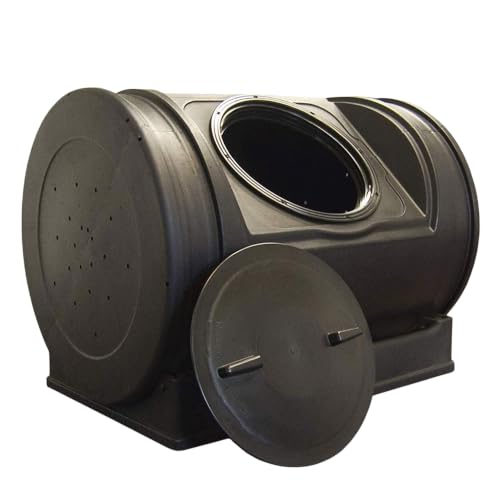
Good Ideas Compost Wizard Jr. Tumbler
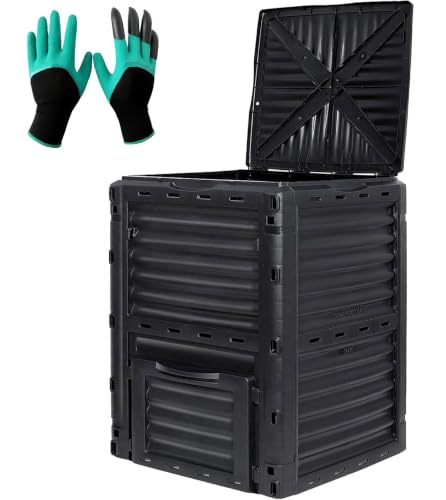
Simply Bio 80 Gallon BPA-Free Compost Bin (Black)

Hourleey 43 Gallon Dual Chamber Tumbling Composter

VIVOSUN 300 Gallon Expandable Outdoor Compost Bin

VEVOR 80 Gallon BPA-Free Composter (Black)
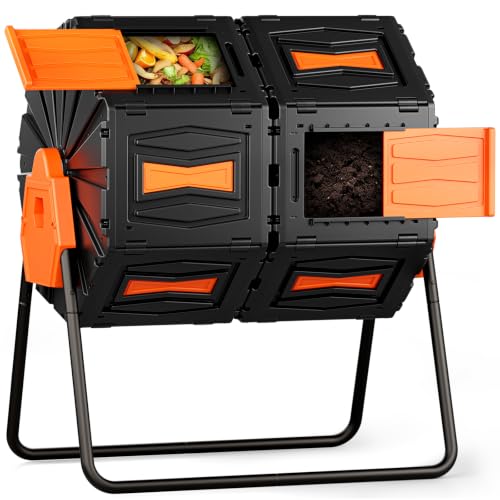
Marcytop 45 Gallon Dual Chamber Tumbler (Orange Door)

VEVOR 43-Gal Dual Chamber Tumbling Composter
Why These Options Stand Out
A family of four emptying coffee grounds, apple cores, and grass clippings every week needs somewhere to put it all. The F2C 80-gallon stationary bin holds roughly 300 liters of organic material, which in real terms means several weeks of scraps before the lid starts to feel crowded.
Compared with smaller tumblers in this list, this bin leans on passive decomposition rather than rotation. You build the pile once and let heat, moisture, and airflow do the heavy lifting. The included gloves are a small but practical bonus for turning or harvesting finished compost without scraping your knuckles on the side panels.
Points In Its Favor
- 80-gallon capacity handles heavy yard waste plus routine kitchen scraps without constant emptying.
- Black PP plastic absorbs solar heat and helps regulate moisture for steady decomposition.
- Flip top lid with one-hand operation keeps wind out and discourages curious critters.
- Bottom exit door lets you scoop finished compost from the bottom while fresh material stays on top.
- Deep side fins and roughly 80 air vents circulate oxygen through the pile, reducing the need for hand mixing.
Things To Consider
- Stationary design means slower turnaround than a tumbling composter for gardeners wanting quick results.
- Large footprint requires a dedicated patch of level ground in the yard.
- Plastic panels may become brittle after several winters of freeze-thaw cycles, depending on regional climate.
Key Specs
Best Suited To
Suburban families producing steady kitchen scraps plus a yard large enough for a stationary, high-capacity bin.
A Better Fit Elsewhere
Urban gardeners with a small patio may prefer the Good Ideas Compost Wizard Jr. Tumbler, since its 50-gallon tumbling design fits tighter footprints.
Anyone new to composting quickly learns that aerating the pile by hand is the chore that derails the habit. The Compost Wizard Jr. solves that with a single 50-gallon tumbling chamber that you rotate end-over-end to mix contents, no pitchfork required.
At 7 cubic feet of usable space, the unit fits comfortably on a patio or beside a small garden shed. The molded handholds double as agitator fins inside, so every rotation pulls material off the chamber walls. This is a much smaller commitment than the 80-gallon F2C bin covered above, and the trade-off in volume buys back genuine convenience.
Practical Pluses
- Single tumbling chamber mixes contents every few days without manual turning.
- 7 cubic foot capacity suits a couple or small household producing modest scraps.
- Compact footprint works in tight side yards and apartment-adjacent patios.
- Molded handholds make transport and rotation easier for shorter users.
Points To Note
- Single chamber means you cannot start a fresh batch while the previous one finishes.
- Smaller volume fills up quickly during peak summer yard work.
- Plastic drum can feel top-heavy when half-full if the base is not on perfectly level ground.
Who It Suits Best
First-time composters with limited outdoor space who want an approachable tumbler without wrestling with hand tools.
Consider Something Else When
Households running continuous kitchen scrap output will get more value from the Hourleey dual-chamber tumbler, since one side can finish while the other side starts.
The Simply Bio 80-gallon bin lands in nearly the same size class as the F2C, but it shifts the emphasis toward easier assembly and lighter panel construction. Owners assembling the unit alone will appreciate the simpler panel snap-together layout.
The black PP shell works the same thermal trick as similar bins, absorbing solar warmth to keep the pile active in shoulder seasons. Four adjustable air vents add a small customization lever: open them wide in wet weather and crack them down during dry spells to balance moisture. For a suburban yard that already has space cleared, this is a low-fuss upgrade path.
A Strong Showing
- 80-gallon volume competes directly with higher-priced stationary bins.
- Adjustable vents allow season-by-season airflow tuning.
- Lightweight panels make initial setup easier for a single person.
- BPA-free construction suits vegetable gardeners and herb growers.
Trade Offs
- Lighter panels may show UV wear sooner in regions with intense summer sun.
- Fewer total vents than the F2C design, so active aeration depends more on the user turning the pile.
Feature Snapshot
Made For
Suburban households that want generous capacity without committing to a tumbling routine.
Where Another Pick Suits Better
Vegetable gardeners needing faster turnaround will appreciate the VIVOSUN 300-gallon expandable bin, which scales up dramatically for seasonal yard waste dumps.
The Hourleey tumbler addresses the biggest complaint about single-chamber bins: the moment you start a fresh load, you have nowhere to put the rest of the week’s scraps. Two separate 43-gallon chambers let you fill one side, let it cook, and use the second as your active bin.
Aeration holes plus deep fins pull oxygen through the load each time you rotate the drum. Sliding access doors on both ends give you clean separation between the nearly-finished compost and the brand-new scraps. For a household generating coffee grounds daily, the alternating-batch approach keeps the workflow honest.
What Earns Its Place
- Dual chambers allow continuous compost rotation without downtime.
- Sliding doors simplify harvest and loading without disassembly.
- Internal fins mix material during rotation, reducing manual stirring.
- 43-gallon total capacity suits most mid-size suburban households.
Honest Caveats
- Smaller per-chamber volume than 80-gallon stationary bins, so heavy yard cleanup days still overflow.
- Tumbler base requires level ground to rotate smoothly.
Feature Card
Perfect Match For
Active home cooks producing daily scraps who want one chamber always ready for new material.
Skip It When
Homeowners clearing large fall leaf piles will benefit more from the VIVOSUN 300-gallon expandable bin, which absorbs seasonal surges that would overwhelm a tumbler.
Rural lots and multi-acre yards rarely struggle with too little organic matter. The VIVOSUN 300-gallon bin scales up to roughly four times the capacity of a standard 80-gallon bin, swallowing entire bag loads of autumn leaves without complaint.
The expandable panel design lets you start small and add height as the pile grows, or build it out fully on day one. HDPE construction resists corrosion from acidic fruit waste and weathers freeze-thaw cycles better than thinner PP panels. The included gloves are a small upgrade worth noting, especially when handling rougher yard debris.
The Practical Payoff
- 300-gallon capacity absorbs seasonal yard waste spikes without overflow.
- Expandable panels let you tailor height to actual household output.
- HDPE material holds up to weather exposure and acidic scraps.
- Open-frame design makes aeration passive and natural.
Room For Improvement
- Very large footprint requires significant yard space, often impractical in urban areas.
- No tumbling mechanism, so decomposition relies on manual turning or passive airflow.
Whose Shelf It Belongs On
Rural homeowners and estate gardeners managing serious leaf and branch debris each season.
Look Elsewhere When
Small-lot gardeners will find the 80-gallon F2C bin or the Simply Bio bin easier to fit without dominating the yard.
Where the F2C and Simply Bio bins rely on fins and a high vent count, the VEVOR 80-gallon bin places ventilation across all four side panels. That broader airflow path matters when the pile sits against a fence or shed wall with limited cross-ventilation.
The top lid and bottom door follow the same access pattern as comparable 80-gallon bins, so the workflow feels familiar. Easy assembly is the headline promise, and the lightweight panel design keeps the build approachable for one person. The honest read is that this bin offers a slightly different airflow philosophy within an otherwise familiar format.
Useful Strengths
- Four-sided ventilation improves airflow when the bin sits in sheltered spots.
- Top lid and bottom door support standard load-from-top, harvest-from-bottom workflow.
- 80-gallon capacity suits most suburban households and small gardens.
- Lightweight construction simplifies solo assembly.
Small Caveats
- Side vents can let in heavy rain during storms if the lid is left ajar.
- Lighter panels may require anchoring in high-wind regions.
Right Fit For
Gardeners placing their bin near walls or fences where airflow on multiple sides matters more than raw vent count.
Reach For A Different Pick When
Those wanting a tumbling workflow will find the VEVOR 43-gallon dual chamber tumbler covered below more practical for daily rotation.
Marcytop’s 45-gallon tumbler splits capacity into two 22.5-gallon chambers, letting one side cure while the other collects new scraps. The orange door is a small visual upgrade over plain black panels, which actually helps locate the bin from across the yard.
Compared with the Hourleey 43-gallon tumbler covered earlier, the geometry is similar but the door placement and assembly steps differ slightly. Easy assembly is a recurring theme among mid-size tumblers, and this one holds to that promise with a manageable parts count. Gardeners who rotate the drum every two or three days will see finished compost in roughly four to six weeks.
Positive Points
- Dual 22.5-gallon chambers support alternating batch composting.
- Orange door improves visibility in tall grass and crowded garden corners.
- Simple assembly process suits first-time tumbler owners.
- Twist-open access doors speed up harvest on busy weekends.
Things To Watch
- Per-chamber volume fills quickly during peak summer yard work.
- Plastic drum hardware may loosen after a season of regular rotation.
Who Should Grab It
Casual backyard growers who want a friendly tumbler with visual flair and a manageable assembly job.
Swap It Out When
Households needing a stronger frame for daily rotation may prefer the VEVOR 43-gallon tumbler covered next, since its steel frame is built for tougher cycles.
The closing pick is another 43-gallon dual chamber tumbler, but with a steel frame that gives the rotation a sturdier backbone than the Marcytop or Hourleey models. For gardeners who spin the drum daily, that frame stiffness reduces wobble on uneven patios.
The 360-degree tumbling design re-aerates the load with each rotation, so oxygen reaches the center of the pile without manual mixing. BPA-free PP construction keeps the bin safe for vegetable garden use. Two sliding doors make harvest straightforward once a batch finishes curing.
Where It Excels
- Steel frame stabilizes rotation on imperfect surfaces.
- Dual chambers let you rotate batches without downtime.
- PP construction keeps the bin BPA-free for edible garden use.
- Sliding doors simplify harvest and reload on busy weekends.
Practical Considerations
- Steel frame adds weight during initial positioning.
- Smaller per-chamber volume means heavy seasonal cleanups still overflow.
Feature Card
Built With In Mind
Mid-size family gardens where the composter gets rotated often and frame stability matters more than absolute volume.
Not Your Match When
Rural gardeners managing big seasonal yard waste will find the VIVOSUN 300-gallon expandable bin more capable of absorbing autumn cleanup volume.
Matching Your Yard To The Right Bin
Capacity is the first decision, and it should track your household’s weekly output rather than the bin’s maximum spec. A couple producing coffee grounds and vegetable trimmings can comfortably run a 43-gallon tumbler. A family of four with a lawn and garden will likely outgrow that volume by midsummer, which is where 80-gallon stationary bins earn their keep.
Material and climate come next. BPA-free PP plastic suits most home gardens and tolerates cold winters, though panels in extreme northern climates may show UV wear faster. HDPE panels in the VIVOSUN bin offer extra corrosion resistance if you compost citrus-heavy kitchen waste or acidic yard clippings.
Tumbling versus stationary shapes your daily routine. Tumblers reward gardeners willing to spin the drum every few days, and they cut down on manual mixing. Stationary bins suit set-and-forget households that prefer adding scraps whenever the lid is open. The Honest read is that the best composter is the one you actually tend, not the one with the largest spec sheet.
Key Considerations Across These Picks
Mistakes Worth Dodging
Oversizing is the most common slip. Buying a 300-gallon bin for a small household leaves material sitting anaerobic and slimy because there isn’t enough fresh nitrogen to feed the pile. Match bin size to actual weekly scraps and yard debris, not to future ambitions. Forgetting about placement is the second pitfall: bins tucked into deep shade decompose slowly, while bins on exposed patios may dry out in summer heat.
Where The Extra Money Goes
Higher-tier models typically buy you heavier-gauge plastic, more or better-placed ventilation, and steel reinforcement on tumbler frames. For most suburban gardeners, the jump from a basic 43-gallon tumbler to a steel-framed version only matters if you rotate the drum daily. The upgrade pays off in longevity, not in faster compost.
Frequently Asked Questions
How long does a backyard composter take to produce finished compost? Most outdoor bins reach finished compost in roughly 4 to 6 weeks during warm months, though cold winters slow the process considerably. Tumblers that get rotated every few days tend to finish on the faster end of that range.
Can compost bins handle cooked food or meat scraps? Outdoor bins work best with fruit and vegetable scraps, coffee grounds, eggshells, and yard waste. Adding cooked food, meat, or dairy often attracts pests and creates odor problems in backyard setups.
Where should an outdoor composter be placed? Choose level ground with partial sun to help the pile warm up, and avoid low spots where rainwater pools. Keeping the bin a few feet from a wooden fence also helps airflow and reduces staining.
Do tumbling composters really work faster than stationary bins? Tumblers speed decomposition because rotation introduces oxygen and breaks up clumps without manual turning. Stationary bins work fine but rely on passive airflow and occasional manual turning to hit similar timelines.
How do you keep pests out of an outdoor compost bin? A secured lid, a bottom harvest door, and burying fresh scraps under a layer of brown material all discourage rats and raccoons. Avoid adding meat, dairy, or oily foods, which attract animals more than plant scraps.
Closing Remarks
The right outdoor composter comes down to the size of your scraps stream, the space you can dedicate to the bin, and whether you prefer daily rotation or a set-and-forget approach. Tumblers win on speed and convenience, stationary bins win on raw volume and lower effort. Pick the design that fits the way you actually garden, and the pile will reward you season after season.
