

Winter doesn’t have to end your growing season. A well-chosen outdoor greenhouse keeps tender seedlings, herbs, and overwintering plants alive through frost, wind, and short daylight hours. The right match depends on your space, what you’re growing, and how much hands-off coverage you want.
The Lineup, Simplified

Ohuhu Portable Mini Greenhouse 71″x36″x36″ with Dual Zipper Doors

Garden Hoops Grow Tunnel 6 Sets 7FT Row Cover Hoops

Grezone Walk-in Greenhouse 10x7x7 FT with Dual Zippered Screen Doors
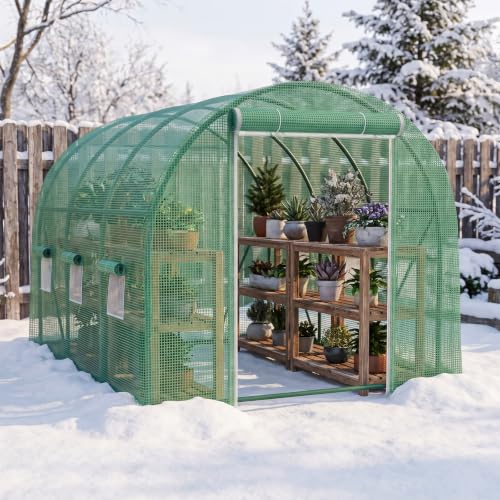
gaildon 10x7x7 FT Heavy Duty Walk-in Greenhouse with Mesh Windows

Outsunny 10′ x 6′ Polycarbonate Walk-in Greenhouse with Roof Vent

GARDMAX 6×10 FT Polycarbonate Aluminum Walk-in Greenhouse

KING BIRD Premium Walk-in Greenhouse 56x56x78 in

Outsunny 20′ x 10′ x 7′ Walk-in Tunnel Greenhouse
The Strengths Of Each Pick
Tight patios and small backyards rarely need a full walk-in structure, and this low-profile mini greenhouse from Ohuhu fits where larger tunnel houses can’t. The house-shaped cover stands 71 inches tall, giving you enough headroom for trays and short bedding plants without dominating a balcony corner.
Two zippered doors run along the front, so you can reach plants from either side without crawling inside. Ground stakes come in the box for anchoring against winter gusts. You may find the cover feels thin during heavy snow, so clearing accumulated weight off the roof after storms is a worthwhile habit.
Where It Helps
- Tool-free assembly gets you growing within an hour of unboxing
- Dual zipper access beats single-door designs for quick reach-ins
- UV-protected cover shields seedlings from harsh winter sun scorch
- Stakes included for basic wind anchoring on patio surfaces
Worth Noting
- Plastic cover is lighter gauge than walk-in tunnel alternatives
- Limited interior height rules out tall tomato or pepper plants
Quick Facts
Best Suited To
Apartment dwellers and small-space gardeners growing herbs, lettuce starts, and low bedding plants through the cold months.
Look Elsewhere When
You need full standing-room height for tall crops, in which case the Grezone Walk-in Greenhouse is the smarter upgrade.
If you already garden in raised beds and want winter protection without buying a full greenhouse kit, hoop sets let you build your own low tunnel. These fiberglass rods from Xuwzenkl bend into 7-foot arches that span most standard raised beds, then you drape your own row cover fabric or plastic over the top.
The 30-piece count covers six complete hoop runs, which suits a multi-bed vegetable plot. Because fiberglass never rusts, you can leave them outdoors across seasons without paint touch-ups. The trade-off is real assembly work: you supply the cover, the clamps, and the anchoring, so this is a hands-on project rather than a quick install.
Good Reasons To Consider
- Fiberglass construction resists rust and oxidation through wet winters
- Flexible bends let you match hoop height to bed depth
- Six sets cover a meaningful row garden footprint
- Soil-safe materials won’t leach into edible beds
- Works indoors and outdoors with your choice of cover fabric
Trade-Offs
- Cover fabric and clamps sold separately, adding to your project budget
- Requires measuring and spacing work to install cleanly over raised beds
Made For
Vegetable gardeners with established raised beds who want winter crop protection without committing to a full greenhouse structure.
Not Your Match When
You want a fully enclosed ready-to-use house; the Grezone Walk-in Greenhouse comes pre-built with doors and windows.
The first time you step inside a full-size walk-in greenhouse instead of reaching through a zipper, the upgrade feels obvious. Grezone’s 10x7x7-foot tunnel gives you genuine standing room, with 7 feet of peak height that fits most gardeners comfortably.
A galvanized steel frame carries crossbars and four reinforced diagonal braces for storm stability. The dual-ziper system pairs a mesh screen door for ventilation with a separate PE cover door for cold nights, so you manage airflow without sacrificing warmth. Owners commonly report that assembly takes a few hours with two people, and the PE cover benefits from periodic re-tensioning as temperatures shift.
Notable Upsides
- Stand-up interior beats lean-to and mini designs for working comfort
- Six screen windows let you tune humidity on sunny winter days
- Diagonal bracing adds wind resistance during nor’easters and gusts
- Independent zippers for mesh and PE doors give flexible venting control
A Few Limitations
- PE cover is heavier than mesh but still thinner than polycarbonate panels
- Requires a level patch of yard large enough for a 10×7 footprint
Who Should Grab It
Backyard gardeners with room to spare who want standing-room access and serious cold-season coverage for a variety of plants.
A Better Fit Elsewhere
You prefer rigid walls over flexible covers; the Outsunny 10′ x 6′ Polycarbonate Greenhouse swaps the PE film for solid panels.
At the same 10x7x7 footprint as the Grezone above, gaildon leans harder into the “heavy duty” framing claim. The galvanized steel skeleton pairs crossbars with four diagonal braces, and the PE cover is a 140g/m² grid plastic meant to take more punishment than budget covers.
Six mesh windows and a roll-up door give you summer-style airflow options, even though the main purpose is keeping plants cozy in winter. If your yard sees strong wind, the reinforced bracing here may matter more than extra shelf space. The honest read is that the cover still won’t match polycarbonate for heat retention, so gardeners in very cold zones will want to add a small interior heater for deep-freeze nights.
The Case For It
- 140g/m² PE grid cover is thicker than many budget walk-ins
- Roll-up door simplifies full-width access on mild days
- Reinforced diagonals help the frame shrug off gusty winter weather
- Generous interior fits multiple raised bed rows side by side
Things To Consider
- Heavier cover can sag if not re-tensioned after temperature swings
- No built-in shelving, so you’ll likely add your own storage solution
Right Fit For
Year-round growers in windier climates who want a beefier frame than standard tunnel greenhouses provide.
Consider Something Else When
You want built-in shelving for seed trays; the KING BIRD Premium Walk-in Greenhouse comes with four tiers already installed.
Polycarbonate panels change the greenhouse equation entirely. Unlike fabric or PE film covers, the rigid twin-wall panels on this Outsunny model insulate far better, block UV damage more effectively, and shrug off snow loads that would pancake a soft cover.
The 10×6 footprint includes an adjustable roof vent and integrated rain gutters, so you can manage summer heat and collect runoff for watering. Compared to the gaildon tunnel above, this is a different category: heavier, more permanent, and noticeably better at holding warmth. For most gardeners, the assembly is the steepest part, and a helper makes the panel installation much smoother.
Real-World Strengths
- Polycarbonate walls trap heat far better than PE film covers
- Roof vent lets excess heat escape on sunny winter afternoons
- Rain gutters offer a free water source for thirsty beds
- Rigid panels resist wind, snow, and curious animals better than fabric
Honest Caveats
- Heavier and slower to assemble than soft-cover walk-ins
- Higher upfront investment than tunnel greenhouse alternatives
Whose Shelf It Belongs On
Hobby gardeners ready to invest in a four-season structure that handles snow, wind, and summer heat without constant re-tensioning.
Reach For A Different Pick When
You want something lighter and easier to relocate; the Grezone Walk-in Greenhouse packs down smaller between seasons.
Where the Outsunny above uses a steel frame, this GARDMAX entry swaps in aluminum for a cleaner, rust-free profile that suits modern patios. The 6×10 layout is slightly narrower than the 10×7 walk-ins but runs longer, which works well along fence lines or against a house wall.
Polycarbonate panels and an adjustable roof vent handle the same insulation and airflow tasks, while the rain gutter channels water into a barrel for reuse. The slide-in panel system is designed to cut install time, though you still want a level base. For maximum stability, the corner posts can be sunk into soil or concrete, which is more commitment than surface-mounted tunnels.
Positive Points
- Aluminum frame won’t rust or chip through wet winters
- Slide-in panels reduce assembly headaches compared to clip-on designs
- Rain gutter doubles as a water-harvesting attachment point
- Adjustable roof vent manages temperature spikes on sunny days
Where It May Fall Short
- Aluminum frame is lighter than steel, so anchoring matters in exposed yards
- 6-foot width limits cross-bed layout versus wider tunnel options
Feature Snapshot
Built With In Mind
Style-conscious gardeners who want a clean aluminum frame and rigid panels along a fence, wall, or narrow yard strip.
Skip It When
You need the widest possible interior for multiple bed rows; the gaildon 10x7x7 gives you more side-to-side clearance.
If you’ve ever tried to start seeds in a soft-cover greenhouse, you know the shelf problem fast: there’s nowhere to put trays. KING BIRD sidesteps that with four tiers built in, twelve side shelves and three back shelves, all rated to hold 33 pounds each.
At 56x56x78 inches it’s compact enough for a small backyard or a generous patio. The reinforced cover is heavier-gauge than typical PE film, and powder-coated steel poles give the frame solid load capacity. For most seed-starting operations, you can run an entire season’s worth of trays under one roof, though the footprint limits you to shorter crops at full maturity.
The Upside
- Four-tier shelving eliminates separate storage purchases
- 33 lb per-shelf rating beats typical 15-20 lb greenhouse shelves
- Reinforced cover outlasts thin PE film in repeated freeze-thaw cycles
- Powder-coated steel poles resist rust in damp winter conditions
Practical Considerations
- Smaller footprint than full walk-in tunnel houses
- PE cover won’t insulate like the polycarbonate panels on the Outsunny above
Perfect Match For
Seed starters and tray gardeners who need lots of shelf space without committing to a full-size greenhouse footprint.
Swap It Out When
You want to overwinter large established plants; the Outsunny 20′ x 10′ x 7′ Walk-in Tunnel Greenhouse gives you room to roam.
For gardeners who think big, this Outsunny tunnel gives you a 20-foot-long greenhouse footprint that’s more than double most walk-ins. The galvanized steel frame carries four slant bracing tubes, a front crossbar, and middle reinforcement tubes for serious structural support.
At 7 feet tall and 10 feet wide, you can stage multiple raised beds, a small potting bench, and rows of overwintering containers all under one cover. The trade-off is real estate: a 20×10 footprint demands a flat, sunny patch with enough clearance on all sides. You may find anchoring is non-negotiable in exposed locations, so plan for ground anchors or a perimeter weight system before the first storm.
A Few Strong Suits
- 200 square feet of covered growing space for serious gardeners
- Galvanized frame resists rust through multi-season exposure
- Slant bracing and crossbars handle wind better than minimal-frame tunnels
- Zippered door runs full height for easy equipment access
Points To Keep In Mind
- Requires substantial flat yard space and a thoughtful anchor plan
- PE cover, not polycarbonate, so heat retention is moderate
- Long assembly with at least two people recommended
Key Product Details
Who Will Love This
Large-plot gardeners and small-scale growers who need a serious footprint for market-style winter production.
Where Another Pick Suits Better
You have a smaller yard and want built-in shelving; the KING BIRD Premium Greenhouse packs trays into a 56x56x78-inch footprint.
What To Weigh Before Picking Your Winter Greenhouse
Frame Material and Longevity
Steel frames, especially galvanized ones, handle heavy snow loads and high winds better than aluminum, but they can eventually show surface rust at weld points. Aluminum stays rust-free but may need extra anchoring in gusty locations. For winter use, prioritize frame stiffness over weight savings, since snow accumulation and wind pressure push structures harder than summer gardening ever does.
Cover Type and Insulation
Polycarbonate panels insulate roughly twice as well as polyethylene (PE) film covers and resist UV degradation far longer. PE covers cost less and are easier to replace, but you may need to re-tension them after big temperature swings and replace them every few seasons. For gardeners in zones below USDA hardiness zone 6, rigid panels pay back the extra cost through better plant survival and lower heating bills if you run a small interior heater.
Size, Footprint, and Access
A walk-in greenhouse needs roughly a 10×10 footprint at minimum, while a mini greenhouse fits a 3×6 balcony. Measure your space before browsing, including overhead clearance from fences and roof overhangs, since snow drifting and falling icicles can damage covers. Door design matters too: dual zippers and roll-up entries give you better airflow control than single fixed doors during shoulder seasons.
Ventilation and Humidity Control
Winter sun can push interior temperatures well above outdoor levels on calm afternoons, even when it’s freezing outside. Mesh windows, adjustable roof vents, and roll-up doors let you dump that heat before it cooks your plants. Look for at least two ventilation points so you can create crossflow rather than relying on a single open door, especially in walk-in tunnel designs where stale humid air encourages fungal issues.
Smart Buying Advice For Winter Greenhouses
Common Shopping Slip Ups
The most frequent mistake is choosing a cover too thin for the climate. A budget PE film might survive mild winters in zone 8 but turn brittle and tear after a hard freeze in zone 5. Match cover weight and material to your lowest expected temperature rather than your average winter day. Another pitfall is underestimating anchor needs: manufacturers list wind resistance ratings that assume proper anchoring, and skipping ground stakes or weights voids that protection in the first real storm.
When Paying More Pays Off
Stepping up from a basic PE cover to polycarbonate panels usually costs more up front but pays back through longer cover life, better insulation, and less seasonal maintenance. Reinforced frames with diagonal bracing cost more but survive multiple winters without the bent poles and torn covers that plague budget builds. The upgrade is worth it when you plan to use the greenhouse for more than two seasons and live somewhere with real winter weather, rather than a mild coastal climate where a soft cover handles most conditions.
