

A good potting bench turns muddy, scattered garden work into something organized and easier on your back. Whether you’re repotting herbs on a patio, starting seedlings in spring, or just want one tidy spot for tools and soil, the right bench makes every gardening session smoother. The eight picks below cover a range of setups, from compact foldable mats to full workstations with sinks and storage, so you can match your space, your tools, and the kind of gardening you actually do.
The Choices Worth Comparing

Best Choice Products Outdoor Wooden Potting Bench with Metal Top

LUMISOL Outdoor Garden Storage Workstation with Drawers
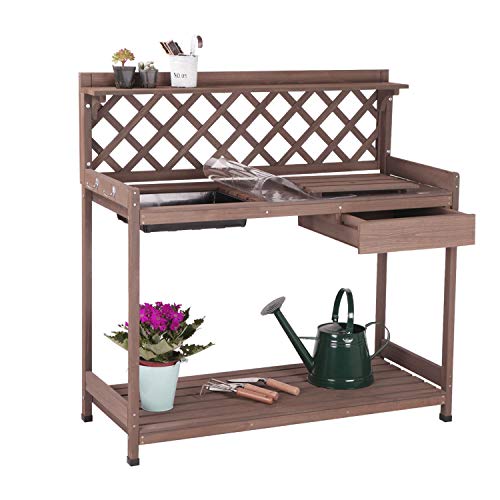
Aivituvin Potting Bench with PVC Layer and Sink

HNXTYAOB Foldable Waterproof Repotting Mat 27″x27″

Outdoor Cedar Storage Cabinet with Metal Tabletop

PetsCosset Mobile Potting Bench with Storage and Wheels

GDLF Solid Wood Potting Bench with Storage Cabinet

GUTINNEEN Potting Bench with PVC Layer, Sink, Lid
A Breakdown Of The Leading Choices
If you want a single piece of furniture that handles the messy middle of gardening, this Best Choice Products bench earns its place by combining a metal work surface with enclosed storage. The metal-plated tabletop resists rust and wipes clean after soil spills, which is the kind of practical detail that matters when you’re transplanting flats of annuals on a Saturday morning.
Compared to the cedar cabinet you’ll meet later, this one leans more toward general garden duty than natural wood aesthetics. For most backyard gardeners running a few beds and a collection of pots, the combination of cabinet, drawer, and bottom shelf covers the basics without forcing you to upgrade right away.
What Works In Its Favor
- Metal tabletop wipes down quickly after muddy transplanting sessions
- Storage cabinet keeps bags of soil and gloves out of the rain
- Sliding drawer stashes hand tools within arm’s reach
- Lower shelf handles larger pots, fertilizer bags, or a watering can
- Pre-stained finish goes out of the box ready for the patio
Points To Keep In Mind
- The pre-stained finish may need a refresh after a couple of seasons outdoors
- Assembly takes time and a second pair of hands helps
Who It Suits Best
Backyard growers who repot often and want one organized station for tools, soil, and starter pots.
Consider Something Else When
You’d rather roll your workbench around the patio, in which case the LUMISOL workstation with lockable wheels is the better fit.
The LUMISOL workstation stands a full 65 inches tall, which puts the working surface right around waist height for most adults. That detail matters more than it sounds: you spend hours at a bench during peak transplant season, and a taller setup takes pressure off your lower back.
Lockable wheels set this apart from the stationary Best Choice Products bench reviewed earlier. You can roll it from a sun-soaked corner to a shaded patio when the weather shifts, then lock the casters in place once you’ve found your spot.
Positive Points
- 65-inch height saves your back during long potting sessions
- Lockable wheels let you reposition without lifting
- Drawers and cabinets store tools, seeds, and small pots separately
- Fir wood frame gives a natural look that blends into a garden setting
Less Ideal Details
- At nearly 73 pounds, it’s heavier to move even with wheels on flat ground
- The tabletop weight limit of around 75 pounds rules out stacking heavy terracotta pots
- Natural fir benefits from a weather-sealing treatment after a season outside
Feature Snapshot
The Right Fit
Older gardeners and anyone who dreads stooping will appreciate the taller profile most.
A Better Fit Elsewhere
If you mainly pot small succulents and herbs on a balcony, the foldable HNXTYAOB repotting mat is a simpler choice.
The Aivituvin bench brings something different to the lineup: a built-in plastic sink with a lid that doubles as extra work surface. For wet tasks like rinsing root balls or filling watering cans, that’s a real workflow upgrade over a plain tabletop.
The PVC layer across the work surface keeps water from soaking into the wood underneath, which is one of the most common reasons outdoor benches fail early. Compared to the LUMISOL workstation, this one is more about mess management than mobility.
What Makes Sense
- Built-in sink saves trips to the outdoor spigot
- Lid converts the sink into usable table space when you need it
- 45-inch height reduces stooping during long sessions
- Hooks on each side keep trowels and pruners close at hand
- Fir wood takes paint or stain if you want to customize the look
Trade Offs
- The plastic sink is best for light rinsing, not heavy scrubbing
- You’ll want to drain and cover the sink in freezing weather
Best Suited To
Vegetable gardeners who start seeds, rinse produce, and transplant frequently will use every inch of this bench.
Swap It Out When
You mostly do dry tasks like arranging pots and don’t need running water, where the Mederla cedar cabinet is plenty.
The HNXTYAOB mat isn’t a bench at all, and that’s exactly the point. For apartment dwellers, balcony gardeners, or anyone working at a folding table indoors, this 27-by-27-inch waterproof tray folds flat and stores in a drawer when you’re done.
Compared to the larger wooden benches on this list, the mat trades workspace size for portability. You won’t repot a full flat of tomatoes here, but you’ll handle a small succulent or two without leaving a soil ring on the kitchen counter.
A Few Strong Suits
- Folds flat for storage in a closet or drawer
- Waterproof PE fabric contains spills and soil mess
- Thickened fabric resists tearing through repeated folding
- No assembly, no tools, no waiting
Worth Bearing In Mind
- The 27-inch square suits small plants, not large container repotting
- Lacks any built-in storage or work height
Quick Facts
Made For
Balcony gardeners and indoor plant owners who only need a small, clean spot for occasional repotting.
Not Your Match When
You’re building a serious outdoor garden, where the GDLF solid wood bench offers real workspace instead.
The Mederla cabinet takes a more refined approach: cedar wood instead of fir, a smaller footprint, and a clean look that suits a tidy patio. Cedar naturally resists rot, which is why outdoor furniture makers reach for it season after season.
The 31-inch-wide design means it fits against a fence or wall where wider benches wouldn’t, though you sacrifice some planting space for that compact profile.
Practical Advantages
- Cedar wood naturally resists weather and insects
- Water-based protective finish is friendlier to refinish later
- Compact 31-by-17-inch footprint fits tight patios
- Metal tabletop handles messy work and cleans up fast
- Interior cabinet hides clutter behind closed doors
Things To Consider
- Smaller work surface than the Best Choice Products or GDLF benches
- No built-in sink for rinsing
- Cedar will gray outdoors without occasional oiling
Perfect Match For
Patio gardeners with limited square footage who want an attractive, weather-tough workstation.
Reach For A Different Pick When
You need a sink for rinsing root balls, where the Aivituvin bench is the right call.
Mobile and renter-friendly sums up the PetsCosset bench. Four casters, two of which lock, let you roll it out of the way for a patio dinner or into the sun for an afternoon of seed-starting. You may find this flexibility more valuable than a heavier, stationary setup.
The metal tabletop doubles as prep space for grill tools or beverage service, which is a thoughtful bonus for small outdoor spaces where furniture has to multitask.
Where It Excels
- Lockable wheels handle smooth patio and deck surfaces
- Waterproof metal top wipes clean after any task
- 33.5-inch work height works for most adults without much stooping
- Compact 18-by-18-inch footprint fits small corners
Honest Caveats
- Smaller surface limits the number of trays you can stage at once
- Wheels work best on flat, hard surfaces
- Less enclosed storage than cabinet-style benches
Product Snapshot
Whose Shelf It Belongs On
Renters and apartment dwellers who want a bench they can move and store without permanent setup.
Look Elsewhere When
You want one large, sturdy workspace for high-volume potting sessions, where the GDLF bench delivers more surface area.
The GDLF bench goes wide. This is one of the larger work surfaces in the roundup, built for gardeners who stage flats, pots, and tools all at once rather than playing musical chairs with limited table space. The solid wood frame supports heavier loads without wobble.
Adjustable foot covers handle uneven patio slabs, a small detail that prevents the rocking and racking that wears joints loose over time. The removable lower shelf adapts when you need to slide a large bag of soil or a tall planter underneath.
The Helpful Details
- Wide work surface handles multiple trays and pots at once
- Solid wood frame supports heavier gardening projects
- Adjustable foot covers stabilize the bench on uneven ground
- Removable lower shelf accommodates tall items
- Enclosed storage cabinet hides clutter when guests visit
Some Limits To Know
- Larger footprint requires dedicated patio space
- Solid wood needs weather protection for multi-year outdoor life
- Heavier to assemble and reposition than mobile options
Built With In Mind
Serious home gardeners who start dozens of seedlings, prune, and repot in long weekend sessions.
Another Choice May Suit
Small patio owners who don’t need that much surface should look at the Mederla cedar cabinet instead.
The GUTINNEEN bench shares the same sink-and-lid concept as the Aivituvin, with a PVC work layer that keeps water away from the drawer and cabinet below. The lid-over-sink trick is the kind of design that, once you have it, you can’t imagine going back to a flat-top bench.
It appeals most to gardeners who mix wet and dry tasks in the same session: rinsing transplants, draining pots, then moving to a clean dry area for labeling and arranging. Compared to the cedar cabinet from Mederla, you trade pure aesthetics for a more functional work zone.
Useful Highlights
- Lidded sink doubles as workspace when not in use
- PVC layer protects the wood underneath from water damage
- Sliding drawer organizes small tools and seed packets
- Side hooks keep frequently used tools within reach
- Lower shelf handles soil bags and larger pots
Practical Considerations
- Drain the sink before freezing weather to avoid cracking
- PVC layer may show scuffs over time
Feature Rundown
Who Should Grab It
Gardeners who want a single station for rinsing, potting, and tool storage in one place.
Skip It When
You don’t actually need a sink, where the Best Choice Products bench keeps things simpler and lower-profile.
What To Weigh Before Choosing Your Potting Bench
Work height shapes how a bench feels more than any other spec. A surface around 33 to 45 inches suits most adults for standing tasks, while taller 60-plus-inch models spare your back during marathon transplanting days. Measure your own comfort zone by mimicking the motion at a kitchen counter before committing.
Storage separates basic tables from real workstations. Cabinets hide clutter when guests visit the patio, while open shelves make tools grab-and-go. Drawers earn their keep for small items like pruners, seed packets, and plant labels that disappear into the soil otherwise. In our view, gardeners who already own a tool shed can skip the closed storage and prioritize workspace instead.
Materials matter for outdoor life. Cedar and fir both take weather reasonably well, though cedar naturally resists rot and fir needs more frequent sealing. Metal tabletops wipe clean after muddy work, while PVC work layers protect the wood underneath from the constant splash of watering cans and rinsed roots.
Size should match your available patio space. A 31-inch-wide cabinet like the Mederla slides into tight corners, while the GDLF bench needs a dedicated stretch of patio to spread out. For renters or anyone who might move soon, mobile options like the PetsCosset on wheels keep your options open.
Common Pitfalls Worth Dodging
Where Shoppers Go Wrong
The biggest mistake is buying a bench sized for an imagined garden rather than the one you actually have. Measure your patio or deck space before you fall for a wide, deep model that ends up crowding a seating area or blocking a walkway. A bench that gets pushed into the corner and ignored helps no one.
Another common slip is ignoring the work height. In our experience, shoppers focus on looks and storage and forget to check whether the surface meets their waist or sits awkwardly low. Stand in a potting motion at a similar height in your kitchen before ordering, since most returns come down to that one detail.
The Case For Spending Up
Higher-tier benches tend to use cedar instead of fir, include weather-sealed finishes, and add features like built-in sinks or locking wheels. Whether the upgrade is worth it depends on how often you garden. Daily or weekend gardeners who treat the bench like a workshop will recoup the difference through durability alone, while casual planters can stick with a basic design and save the money for plants instead.
Frequently Asked Questions
What size potting bench fits a small patio?
A bench around 30 to 35 inches wide fits most small patios without crowding seating areas. Look for designs that use vertical space with shelves or hooks to maximize storage without claiming extra floor room.
Is cedar or fir better for outdoor potting benches?
Cedar naturally resists rot and insects, making it the longer-lasting choice with less maintenance. Fir is more affordable and takes paint or stain well, though it benefits from a yearly sealant to hold up outdoors.
Do I need a potting bench with a sink?
A built-in sink helps if you frequently rinse root balls, wash produce, or fill watering cans at the bench. For gardeners who mainly do dry work like arranging pots and labeling, a sink is a nice extra but not essential.
How do I protect a wooden potting bench from weather?
Apply a water-based sealant or exterior oil at the start of each season, and cover or move the bench into a shed during heavy winter storms. Metal tabletops need far less maintenance, though wiping them down prevents water spots and grime buildup.
Can a potting bench double as a grill prep station?
Yes, especially mobile models with metal tops like the PetsCosset option. The waterproof surface handles food prep, and lockable wheels let you roll the bench wherever you need it for cookouts or cleanup.
Closing Thoughts
The right potting bench comes down to your space, your soil habits, and how often you’re elbow-deep in transplant work. Compact patios favor narrower cabinets or mobile carts, while serious gardeners get the most from wider wood benches with enclosed storage. Match the bench to your actual routine, and the tool earns its spot in your garden for years.
