

Sunscald, frost cracks, rodent gnaw marks, and the inevitable lawnmower nick show up on trunks in every region, and the fix is rarely one-size-fits-all. A suburban orchardist protecting young apple whips needs something different than a rosarian sealing a graft union, and a homeowner with a Mexican fan palm in the front yard cares about color, not chemistry. The picks below cover painted sealants, brush-on wound dressings, breathable wraps, and colorants, so you can match the product to the problem instead of guessing at the garden center.
A Fast Comparison Of The Options

Treekote 3″x50′ Tree Wrap for Frost and Sun

Meuvcol 500g Tree Wound Sealer for Pruning and Grafting

IV Organic 3-in-1 Plant Guard, 1 Pint (Green)
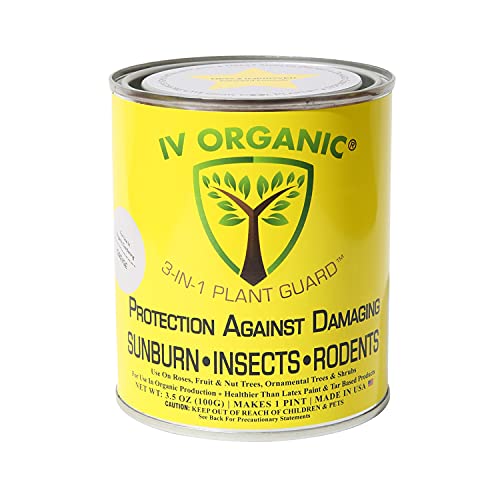
IV Organic 3-in-1 Plant Guard, 1 Pint (Greige)

Dupli-Color Trunk Paint, Gray & White, 11 oz

Konload 500g Tree Wound Sealer (Brown)
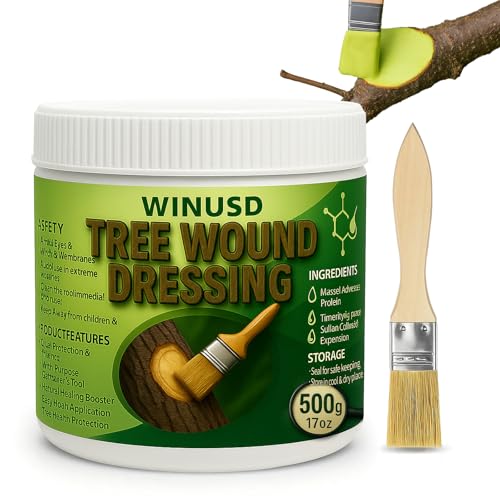
WINUSD 500g Tree Wound Sealer Paste (Green)

More Details On Our Top Picks
Treekote is technically a wrap rather than a paint, but it earns a spot on this list because new transplants often need both: a painted sealant on established cuts plus a physical barrier around thin juvenile bark. The roll is crepe-style paper with a coated finish that breathes, which matters because wrapped bark that cannot vent moisture tends to develop fungal issues by spring.
Application is the simplest of any pick on this list. Anchor the end at the base, spiral upward with slight overlap, and tie off with twine. For most home growers tending a half-dozen fruit trees, a single roll handles the entire orchard for one winter.
Well-Handled Touches
- Breathable coated crepe paper reduces trapped moisture and mildew risk under the wrap.
- Reflects winter sun to prevent the southwest bark split that shows up on young maples and cherries.
- Replaces a layer of messy paint for homeowners who would rather wrap than brush.
- Non-toxic composition suits organic orchards where copper or latex coatings are off the table.
Things To Consider
- Crepe paper typically needs replacement after roughly six months of weather exposure, so plan on seasonal re-wrapping.
- Doesn’t seal wounds, so combine it with a separate dressing for any open pruning cuts.
- Thin juvenile trunks are the natural fit; mature trees with rough bark won’t gain much from a wrap.
Feature Snapshot
Whose Yard It Belongs On
Home orchardists with newly planted fruit whips, citrus saplings, or grafted shrubs in cold-winter zones.
Look Elsewhere When
Growers sealing exposed pruning cuts should reach for Meuvcol 500g Tree Wound Sealer for Pruning and Grafting instead.
Meuvcol’s pitch is the 2X concentrated paste formula, which is a way of saying a little goes further than thin latex sealants. For orchardists with a long winter pruning list, that thickness is the whole point: one brushed coat over a cut edge resists wash-out through fall and spring rains.
The brown tint blends with bark, so finished cuts look like an old callus rather than a stripe of fresh paint. You’ll brush it on with a putty knife or gloved finger rather than spraying.
Everyday Wins
- Thick paste lays down a continuous moisture-resistant film over irregular cut edges.
- Stretches with bark movement, so it doesn’t flake off the first time the trunk flexes in wind.
- Suitable for grafting sites where you want the union to set without drying out.
Worth Noting
- Working time in the pot is limited, so you’ll want to brush smaller sections rather than dipping repeatedly.
- Brush-on application is slower than spray-on alternatives when covering many small cuts.
Built With In Mind
Backyard orchardists sealing standard pruning cuts on apples, pears, stone fruit, and ornamental trees after winter trimming.
Swap It Out When
Rosarians and bonsai growers handling small-diameter cuts may prefer Konload 500g Tree Wound Sealer (Brown) for finer brush work.
IV Organic’s 3-in-1 formula aims at three problems in one coat: winter sunscald, summer sunburn, and pest pressure on the lower trunk. The green tint is the giveaway that this is a paint, not a clear sealant, and that’s intentional because the colored layer reflects light away from thin or newly exposed bark.
Application looks like whitewashing but acts more like a horticultural oil: the label notes a blend of natural oils designed to deter rodents and insects from climbing the trunk. For edible landscapes where you don’t want synthetic latex anywhere near fruit, the organic pitch is the main draw.
Positive Points
- Patented organic blend avoids the tar and latex bases many growers want to keep off edible trees.
- Green tint blends into foliage rather than reading as bright paint.
- Brush-on application suits irregular bark better than spray.
- One pint covers several young trees or a long run of shrub roses.
Trade Offs
- Reapplication is typically annual for the best protection, which adds up over a large orchard.
- Brush-only application is slower than aerosols when treating long fence-row plantings.
Feature Card
Right Fit For
Growers managing fruit and nut trees in regions with hot summers plus rodent pressure near the lower trunk.
Where Another Pick Suits Better
For trees where you’d rather have a color that disappears into mulch beds, the greige variant from the same brand may suit your eye better.
This is the same IV Organic 3-in-1 formula in a different color, but the greige tone matters more than it sounds. On a front-yard maple or a street-side ornamental, the green variant can read as a deliberate splash; greige settles into the bark visually so neighbors don’t ask why you painted the tree.
Performance matches the green pint for protection against sunscald, insect pressure, and rodent browsing. The trade-off is purely aesthetic, and that’s exactly why this is the right pick when appearance is the deciding factor.
Practical Advantages
- Greige tone reads as natural bark rather than as a painted stripe.
- Same organic formula means no tar- or latex-based exposure on edible trees.
- Pint container sizes make sense for two or three front-yard specimens.
Honest Caveats
- Color-matched to greige bark, so it shows more obviously on darker tree species like cherry or plum.
- Annual reapplication still applies, just as with the green pint.
Made For
Homeowners with visible landscape trees who care about curb appeal along with trunk protection.
Not Your Match When
Edible orchard owners who don’t care about color should consider IV Organic 3-in-1 Plant Guard (Green) at the same pint size.
Strictly speaking, this Dupli-Color product is an automotive trunk paint rather than a horticultural one. It earns a place on the list because searches for “trunk paint” sometimes lead shoppers here, and the wrong can in the garden wastes an afternoon.
The high-build spray is formulated to recreate the speckled gray and white finish of factory trunk interiors. It covers scuffs, spray texture, and bare metal in one or two passes.
Everyday Perks
- Multicolor spatter effect duplicates OEM-style trunk finishes without custom mixing.
- Water-resistant film holds up against condensation and grocery-haul drips.
- Touch-dry in roughly an hour under normal shop conditions.
- High-build formula covers small dents and abrasions in fewer passes.
Points To Note
- Not formulated for plant tissue, so this is the wrong pick for any tree-care application.
- Aerosol format limits control on broad trunk floors compared with brush-on automotive paints.
Best Suited To
Garage tinkerers refreshing the trunk interior on a daily driver or restoring a project car’s cargo area.
Skip It When
Anyone sealing pruning cuts on fruit trees should reach for Meuvcol 500g Tree Wound Sealer for Pruning and Grafting instead.
Konload leans into the cosmetic side of wound sealing. The brown shade is darker than many competitors, which means sealed cuts on mature bark stop looking like bright patches and start looking like natural callus growth.
The 500-gram tub ships with brushes and gloves in some bundles, so you can get straight to sealing without hunting for applicators. For hobby growers with a few prized bonsai or a small rose bed, that convenience matters more than bulk pricing.
What Works In Its Favor
- Earth-tone finish blends with mature bark so treated cuts don’t look freshly painted.
- Brush-and-gloves bundle (where included) speeds up small-diameter work.
- Suitable for bonsai, roses, and grafting unions on ornamentals.
Some Limits To Know
- Smaller container size than orchard-scale options, so it’s not the most efficient for large properties.
- Working time in the tub is limited once opened, so plan on finishing the container within a season or two.
Who Should Grab It
Bonsai enthusiasts, rosarians, and ornamental gardeners working on small-diameter cuts where appearance matters.
Reach For A Different Pick When
Orchardists sealing dozens of pruning cuts per season will find WINUSD 500g Tree Wound Sealer Paste (Green) more efficient by volume.
WINUSD positions itself around an elastic polymer base, which is the language of flexibility rather than rigidity. Tree bark expands and contracts with temperature and moisture, and a stiff sealant tends to crack off at the edges within weeks. An elastic film moves with the trunk, so the seal stays continuous longer.
The green tint is the giveaway that this is meant for visible cuts on landscape trees rather than hidden orchard work. After a storm recovery or grafting session, brushing this on helps lock in moisture at the wound margin.
What It Does Well
- Elastic polymer base flexes with bark expansion through seasonal swings.
- Waterproof seal stands up to extended rain through the healing window.
- Works for grafting, pruning, and storm-damage cuts on the same property.
- 500-gram tub covers a long pruning list without constant refills.
Practical Considerations
- Green color shows against darker bark, which may bother gardeners aiming for a natural look.
- Brush-on paste takes longer to apply over many small cuts than spray alternatives.
Quick Facts
Who Will Love This
Homeowners recovering from storm damage or running a late-winter pruning session on a mixed landscape with fruit and ornamental trees.
Consider Something Else When
Rosarians prioritizing color blending with mature bark may prefer Konload 500g Tree Wound Sealer (Brown).
Endurant is a palm-specific colorant rather than a generic wound sealer. It tints the fibrous palm trunk a more uniform shade while adding a non-toxic barrier against sunscald on freshly exposed bark. The 32-ounce size fits a couple of mature palms per application, which matches the once-a-year maintenance window on the label.
The honest read is that this only makes sense in landscapes where palms are the focal point. In a mixed temperate orchard, you’d be paying a premium for a colorant designed around a very different trunk texture.
Real Benefits
- Non-toxic formula designed around palm bark rather than broadleaf species.
- Single annual application aligns with typical palm maintenance routines.
- Enhances the visible appearance of tropical landscape specimens.
- Shields against the sunscald that hits newly exposed palm bark after frond removal.
Room For Improvement
- Specialized use case means it has little value outside palm-focused landscapes.
- Colorant effect depends on the existing trunk shade and may look uneven on heavily weathered palms.
Perfect Match For
Homeowners with queen palms, Mexican fans, or other tropical species where trunk appearance and sun protection both matter.
A Better Fit Elsewhere
Growers tending deciduous fruit trees should look at Meuvcol 500g Tree Wound Sealer for Pruning and Grafting for wound-focused work.
Choosing The Right Match For Your Trunks
Match The Product To The Problem
Start with the question you actually need answered. Sunscald prevention on a thin-barked maple is a different job than sealing a freshly cut branch stub, and the wrong product wastes time and money. Wound sealants like Meuvcol, Konload, and WINUSD cure open cuts, while reflective wraps like Treekote prevent future damage. Colorants like Endurant change appearance, and organic guards like IV Organic 3-in-1 sit somewhere between prevention and pest deterrence.
Climate Drives The Schedule
Cold-winter regions need winter protection before the first hard frost, while hot-summer landscapes need reflective coatings before the strongest UV months. Sunscald is essentially a freeze-thaw and UV issue, so the same product can solve both problems when applied correctly. For most home growers, a single late-fall application plus one mid-winter inspection covers the critical window.
Color And Visibility
Painted trunks stand out, and not every homeowner wants that look. Greige and brown sealants blend into mature bark, while green variants match foliage better than they match trunks. Reflective wraps are nearly invisible after installation but do add a textured band you can see up close.
Volume And Container Math
A 500-gram tub covers a long pruning list on a backyard orchard, while a 1-pint can of organic guard handles a few trees or a dozen-plus roses. Annual reapplication is the rule rather than the exception, so buy for next year too.
Key Considerations Across These Picks
Where Shoppers Go Wrong
The most common slip is reaching for a wound sealant when the real problem is sunscald prevention. Sealing healthy bark with a thick paste traps moisture and can cause the exact rot you’re trying to prevent. The other trip-up is grabbing an automotive trunk paint, which solves a completely different problem on a completely different surface. Match the chemistry to the species and the season before anything else.
What The Higher Tier Buys
Paying more for a larger tub mostly buys volume, but some upgrades earn the price. Elastic polymer bases like WINUSD’s flex with bark instead of cracking at the edges. Organic formulas like IV Organic 3-in-1 avoid tar and latex on edible species. Color-matched sealants like Konload’s brown save you from staring at bright paint lines for a year. The honest read is that the upgrade pays off when you care about long-term seal integrity, food safety, or appearance, and not much when you just need a quick cover on a hidden cut.
Frequently Asked Questions
Do trunk paints really prevent sunscald?
Yes, when applied to thin or newly exposed bark before the high-UV season. White and light-tinted coatings reflect solar radiation that warms bark unevenly during winter days and refreezes at night.
Can I use wound sealant on healthy bark?
It’s not recommended. Sealants are designed for open cuts, and applying them over intact bark traps moisture against the cambium layer, which is the living tissue just under the surface. That trapped moisture invites rot rather than preventing it.
How often do these need to be reapplied?
Most trunk paints and sealants need annual reapplication. Reflective wraps like Treekote typically last about six months before weather exposure degrades them. Colorants like Endurant are designed around a once-a-year cycle.
Are organic trunk paints safe around fruit trees?
The IV Organic 3-in-1 formula is positioned as an alternative to tar- and latex-based coatings, so it suits growers who avoid synthetic films near edible species. Always check the label for your specific crop before applying.
Can I paint over a fresh pruning cut the same day?
Yes, and most growers do. Brush on a thin coat right after the cut so the seal forms before rain or insects reach the exposed wood. For larger cuts, a second coat after the first dries adds insurance.
Wrap Up
Trunk protection looks like a single category until you actually need to fix a problem, and then it splits into sealants, wraps, colorants, and reflective coatings. Match the job to the product, plan on annual reapplication, and treat edible species with formulas designed for them. The right pick on this list will save you a season of cracked bark or a lost graft union, and that’s worth the small investment in a quality container.
