

Planting a pecan tree is a long game. You pick a spot, commit a decade of patience, and hope the harvest shows up like it did for your grandparents. The picks below cover every stage of that arc: potted starters for the impatient grower, raw seeds for hands-on propagators, and the soil amendments that decide whether your tree eventually fills a bushel basket or stays a twig.
Your Options, Compared

Mavis’s Diary 2-Pack 3ft Artificial Cedar Trees
CZ Grain Black Walnut Tree Live Plant Seedlings (3 Trees)

SouthernGRO Pecan & Fruit Tree Fertilizer 10lb Bag

Farmer’s Secret Fruit Tree Booster Fertilizer 32oz

6 Pecan Tree Seeds for Planting (Carya illinoinensis)

2 Hardy Pecan Nut Trees (6-12″ Seedlings)

Pecan Tree Live Plant 6-12″ Tall Seedling
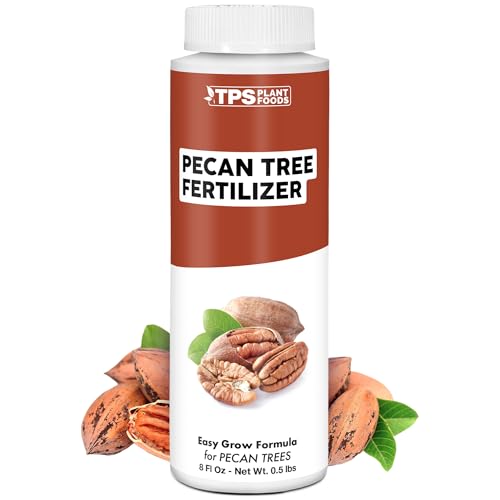
TPS Nutrients Pecan Tree Liquid Fertilizer 8 oz
What Each Pick Brings To The Table
Technically, these faux cedars aren’t pecan trees at all, but they belong on this list for anyone wanting the stately entryway look without the decade-long wait. The Mavis’s Diary pair arrives at three feet tall in weighted pots, with TPE (thermoplastic elastomer) foliage that holds up under UV exposure better than bargain-bin plastic. Drop them in matching planters flanking a front door and you get the symmetrical, evergreen visual that gardeners with real cedars work toward for years.
For renters, condo owners, or anyone tired of watering, these solve the empty-urn problem permanently. You get curb appeal that reads as mature landscaping without the soil testing, pruning, or squirrel negotiations. Most owners find the weighted base holds firm through windstorms, though you may want to anchor them in exposed courtyards.
The Good Stuff
- UV-treated foliage resists fading through full sun exposure over multiple seasons
- Weighted pot (combined 14.93 lbs) keeps the pair upright in breezy conditions
- Three-foot height slots neatly into standard porch urns without dominating the entryway
- Zero maintenance: no watering, no pruning, no seasonal leaf drop to sweep
- TPE leaves carry a soft, matte texture that reads as real from a conversational distance
Things To Consider
- Not a living tree, so no shade canopy, nut harvest, or pollinator benefit over time
- Heavy urns or extra ballast may be needed for rooftops or high-wind balconies
Who It Suits Best
Renters, seasonal decorators, or anyone wanting the look of a mature entryway on day one.
Look Elsewhere When
If your goal is a real, harvestable pecan tree for a yard with room to grow, the 2 Hardy Pecan Nut Trees from Pick 6 makes more sense as a living alternative.
Black walnut isn’t a pecan, but the two cousins share the same Carya genus and nearly identical care patterns, so this trio lands here as a companion recommendation for orchardists expanding beyond pecans. The set ships three seedlings, which gives you the pollination buffer that nut trees demand. Plant them 40 to 60 feet apart and you’ll have a windbreak that doubles as a future nut source.
The trade-off is juglone, a natural chemical black walnut roots release that suppresses nearby plant growth. Most owners don’t realize this until their tomatoes or blueberries stall a season later, so site selection matters more than the seedlings themselves. Check what grows within the root zone before you commit.
What Pays Off
- Three seedlings give you built-in cross-pollination without buying singles
- Mature trees produce dense wood valued by woodworkers and furniture makers
- Deep taproot helps the tree survive drought once established
- Provides heavy summer shade in suburban lots with adequate spacing
Trade Offs
- Juglone in soil limits what you can grow within the root spread
- Walnut hulls stain driveways and decks, requiring seasonal cleanup
- Not a true pecan, so it doesn’t satisfy shoppers specifically wanting Carya illinoinensis
Best Suited To
Large-acreage planters building a mixed hardwood grove or windbreak with patience to spare.
Consider Something Else When
Backyard gardeners tight on space should grab the 2 Hardy Pecan Nut Trees (Pick 6) for a true pecan in a tighter footprint.
If your pecan is already in the ground and over ten inches around the trunk, you’re past the seedling stage and into the feeding years. SouthernGRO’s 10-pound granular formula uses a 12-4-4 NPK ratio (a fertilizer label showing nitrogen, phosphorus, and potassium percentages) with added sulfur and zinc, the two micronutrients pecans crave but most backyard soil lacks. The bag covers established trees up to about ten inches in trunk diameter, which fits most homeowner-scale plantings.
Granular fertilizer takes some patience. You broadcast it under the drip line (the imaginary circle on the ground directly below the outermost branches), water it in, and wait for the soil microbes to break it down over weeks. Compare that to the TPS Nutrients liquid option in Pick 8, which delivers nutrients through a watering can almost immediately.
The Value In It
- 12-4-4 NPK matches the nitrogen-heavy profile pecans need during vegetative growth
- Added zinc addresses the most common deficiency in alkaline pecan-growing regions
- 10-pound size covers multiple trees or several seasons of one large specimen
- Slow-release granular format feeds steadily through spring and summer
Points To Note
- Granular feeding takes weeks to break down, so it’s not a quick fix for yellowing leaves
- Smaller yards may not need 10 pounds at once; storage in a dry shed is required
Who It Suits Best
Orchard owners with multiple established trees who prefer set-and-forget granular feeding.
Skip It When
Solo-tree owners wanting faster nutrient uptake may prefer the liquid TPS Nutrients option covered in Pick 8.
Farmer’s Secret sits on the opposite end of the fertilizer spectrum from SouthernGRO. Where the granular bag feeds soil over weeks, this phosphorus-rich concentrate targets the early growth window after dormancy breaks and before buds set. One 32-ounce bottle dilutes into many gallons of feeding solution, so the upfront size pays off across multiple trees and multiple seasons.
Phosphorus is the nutrient that drives root development and flower set, so timing matters. Apply it after the last frost when you see green tips swelling but well before the tree pushes out leaves. Miss that two-week window and you’re better off waiting until next spring.
The Helpful Details
- Phosphorus-heavy formula supports root development during the critical early growth phase
- Liquid concentrate dilutes easily for application through standard watering cans
- 32-ounce bottle stretches across multiple trees or a full growing season for one specimen
- Works on a wide range of fruit trees beyond pecans, including apple, peach, and citrus
Honest Caveats
- Narrow application window after dormancy means you must plan timing carefully
- Smaller bottle may not suit orchard owners with dozens of trees to feed
Made For
Home orchardists with one to five fruit trees who want a targeted spring boost without overcomplicating the routine.
A Better Fit Elsewhere
Large-property growers feeding multiple mature pecans across the season should look at the SouthernGRO 10lb bag in Pick 3 for broader coverage.
Starting pecans from seed is the slowest path to a harvestable tree, but it’s also the cheapest and the most instructive. This CZ Grain pack includes six Carya illinoinensis seeds, enough to absorb the inevitable germination failures that come with first attempts. If half sprout, you still have a viable planting pair.
The catch is stratification, a cold-moisture treatment that breaks seed dormancy. Pecan seeds need 8 to 12 weeks in a refrigerator wrapped in damp paper towels, then transplanting into deep pots because the taproot shoots straight down fast. Most beginners miss this step and wonder why nothing germinates.
Real-World Strengths
- Six seeds give you multiple chances through the germination and stratification process
- Seed-grown trees develop stronger taproots than transplanted seedlings in many cases
- Lowest entry cost for someone curious about pecan cultivation without a big commitment
- Teaches the full propagation cycle for hobbyists who want to learn every stage
Things To Weigh
- Seed-grown pecans don’t grow true to parent variety, so nut quality is unpredictable
- Stratification adds 2 to 3 months of prep before you ever see a sprout
- Takes 7 to 10 years from seed to first harvestable crop
Who Will Love This
Patient hobbyists, classroom gardeners, and curious growers who enjoy the propagation process more than the harvest timeline.
Swap It Out When
Shoppers wanting a faster route to a real pecan tree should choose the 2 Hardy Pecan Nut Trees (Pick 6) for an established-root start.
Two seedlings in quart pots solve the pollination problem in a single box. Pecans are wind-pollinated and partially self-incompatible, meaning a single tree often drops its nuts before they mature because no compatible pollen lands at the right moment. Planting two trees within a few hundred feet gives you cross-pollination without needing a neighbor’s tree.
The 6-to-12-inch size means you’re starting with a pencil-thick seedling, dormant and leafless at shipping. That looks discouraging, but dormant planting is actually preferred: roots establish quietly through winter, then push growth hard in spring. Most owners see 12 to 24 inches of new height by the end of the first growing season.
Real Benefits
- Two trees delivered together solve the cross-pollination requirement in one order
- Quart-pot size keeps shipping manageable while still being a transplantable size
- Dormant shipping reduces transplant shock compared to actively growing stock
- Mature trees reach 70+ feet, providing substantial shade and property value
Practical Considerations
- Dormant leafless seedlings can look dead on arrival, requiring faith during the first weeks
- Mature trees need significant yard space, typically a 40-foot spacing minimum
Perfect Match For
Suburban homeowners with full sun and at least half an acre who want a true pecan orchard start without nursery hunting.
Where Another Pick Suits Better
Condo owners or anyone without planting space should look at the artificial cedar pair (Pick 1) for a maintenance-free entryway visual.
This single-stem starter fits a specific shopper: someone who already has one pecan tree and wants to add a pollination partner. The 6-to-12-inch size matches the Hardy Pecan pair in Pick 6, so the two can plant together as a coordinated orchard start. Buying solo keeps the cost lower if you only need one.
The trade-off is the same pollination caveat. Plant a lone pecan and expect sparse harvests. Most first-time growers learn this after a decade of waiting for nuts that never fill out, so pairing this seedling with an existing tree, a neighbor’s tree, or a second order is critical.
The Practical Payoff
- Single-tree option lowers cost when adding to an existing orchard or grove
- Standard 6-to-12-inch transplant size handles well in quart containers
- True Carya illinoinensis species suitable for USDA zones 6 through 9 in most regions
- Compact shipping reduces damage risk versus larger bare-root stock
Potential Drawbacks
- One tree alone won’t pollinate itself reliably in most climates
- Generic branding means less variety information than nursery-labeled stock
- Dormant leafless arrival can confuse first-time planters
Whose Shelf It Belongs On
Existing pecan owners needing a pollination partner, or shoppers planning to order two.
Reach For A Different Pick When
First-time planters wanting a built-in pollination pair from one shipment should grab the 2 Hardy Pecan Nut Trees from Pick 6.
Small bottle, focused purpose. TPS Nutrients makes an 8-ounce liquid formulated specifically for pecan nut production, and the smaller size actually suits the audience better than a bulk jug would. Homeowners with one or two trees don’t need 32 ounces of concentrate. You pour, dilute, feed through a watering can, and store the bottle in a shed for next season.
Liquid feeding gives you faster visible results than granular. Yellowing leaves from nitrogen deficiency often green up within weeks rather than months. The catch is that liquid doses wash through the root zone faster, so you’ll reapply more often across the growing season.
Points In Its Favor
- Pecan-specific formulation targets nut production rather than generic tree feeding
- Liquid format delivers nutrients faster than granular for visible results within weeks
- Compact 8-ounce bottle fits easily in a garden shed or garage shelf
- Easy mixing with standard watering cans requires no special equipment
Where It May Fall Short
- Small bottle requires multiple purchases for orchard-scale feeding
- Liquid nutrients leach through soil faster, requiring more frequent applications
The Right Fit
Single-tree homeowners wanting a targeted, no-fuss liquid feed without buying in bulk.
Not Your Match When
Growers managing multiple mature pecans across a season should step up to the SouthernGRO 10-pound bag in Pick 3 for better per-tree economics.
Factors To Consider When Choosing Pecan Trees
Start with your space. Pecans mature into 70-to-100-foot canopy trees, and most varieties need a 40-foot spacing minimum between specimens. Anything under half an acre rules out a productive orchard, though a single specimen still works as a shade tree with occasional nut harvest.
Climate matters more than variety hype. USDA zones 6 through 9 cover most commercial pecan territory, but northern growers in zone 5 need cold-hardy cultivars and accept smaller harvests. Soil pH (the measure of acidity or alkalinity on a 1-14 scale) between 6.0 and 7.0 is the sweet spot, and zinc availability drops sharply in alkaline soils above 7.5, which is why dedicated pecan fertilizers include zinc supplements.
Pollination trips up more first-time growers than any other factor. Pecans are wind-pollinated and partially self-incompatible, meaning a lone tree often drops immature nuts because compatible pollen never arrived at the right moment. Plan for two trees from different variety groups within 300 feet, or coordinate with a neighbor’s tree to ensure cross-pollination actually happens.
Finally, think about your timeline honestly. Seed-grown trees take 7 to 10 years to first harvest. Transplanted seedlings in quart pots shave that to 4 to 6 years under good care. Grafting a mature variety onto a rootstock cuts it further. Match the starting point to your patience, because replanting a pecan you waited on for half a decade stings twice.
Smart Buying Advice
Common Shopping Slip Ups
The biggest mistake is planting a single pecan tree and expecting a full harvest. Wind-pollinated nuts need cross-compatible pollen, and self-pollination in pecans produces small, undeveloped nuts that drop in late summer. Always plan for at least two trees from different variety groups, or confirm a compatible neighbor’s tree sits within 300 feet before you commit.
Another trap is underestimating mature size. A 12-inch seedling looks manageable in a quart pot, but a ten-year-old pecan casts a 30-foot shade circle and drops enough debris to clog gutters twice a year. Site selection based on mature canopy, not current pot size, prevents the awkward removal conversations a decade down the road.
Where The Extra Money Goes
Premium pricing on pecan trees usually buys rootstock quality and cultivar selection. Named varieties like ‘Pawnee’ or ‘Desirable’ produce predictable nut size and disease resistance, while generic seedlings grow true-to-species but unpredictable in nut quality. Grafting (joining a scion from a named variety onto a hardy rootstock) costs more upfront but compresses the wait to first harvest by several years and guarantees the nuts you want.
Frequently Asked Questions
How long until a pecan tree produces nuts?
Seed-grown pecans typically take 7 to 10 years to first harvest, while grafted nursery stock can produce in 4 to 6 years under good care. Climate, soil quality, and pollination all influence the timeline.
Do I need more than one pecan tree?
Yes, in most cases. Pecans are wind-pollinated and benefit from cross-pollination between compatible varieties. A single isolated tree often drops immature nuts because compatible pollen never arrives during the brief receptive window.
What soil do pecan trees prefer?
Pecans thrive in deep, well-drained loam with a pH between 6.0 and 7.0. Alkaline soils above 7.5 often cause zinc deficiency, which shows up as small leaves and shortened shoots, and typically requires zinc-enriched fertilizer to correct.
Can pecans grow in containers?
For the first few years, yes. Quart pots or small containers work until the tree reaches 2 to 3 feet. Beyond that, the taproot demands deep soil, and most container-grown pecans struggle past five years without constant root pruning.
When is the best time to plant pecan trees?
Late winter through early spring, while the tree is still dormant, is the standard planting window. This gives roots time to establish before the summer heat stress arrives.
Bottom Line
A pecan tree is one of the few landscape investments you plant for the next generation. Pick your starting point based on your patience: seeds for the curious, seedlings for the committed, fertilizer for the established. Match the right combination to your space and your soil, and the tree will outlast the decade it took to bear.
