

Carpenter ants don’t march across your kitchen floor the way common ants do. They tunnel quietly through wood framing, deck joists, and window sills, and by the time you spot frass or hear faint rustling in the walls, a satellite colony has often settled in. Treating them means reaching the nest, not just the scouts you see. This roundup gathers eight products that tackle that job through different routes: contact sprays, slow-acting concentrates, dusts for void injection, foams, and outdoor bait granules.
Each pick is matched to a realistic scenario: a homeowner spotting ants in a damp bathroom, a gardener defending a wooden pergola, a DIYer chasing activity through wall voids. You’ll find concentrates for perimeter barriers, dusts for tight spaces, and aerosols for fast knockdown. Read the label before mixing, and consider your infestation site before choosing a delivery form.
A Snapshot Of The Selections
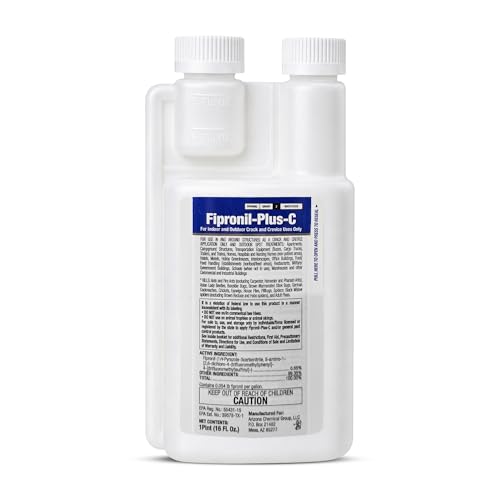
Fipronil Plus-C Insecticide Concentrate, 16 oz
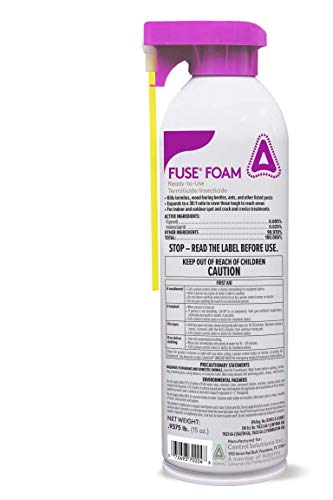
Control Solutions Fuse Foam Termiticide/Insecticide

Atticus Tirade 1% Dust Insecticide 1.25 lb

Spectracide Terminate Termite & Carpenter Ant Killer 32 oz

Neudorff Outdoor Ant Killer Bait Granules 1 lb

Bonide Revenge Termite & Carpenter Ant Killer 32 oz

TERRO 16 oz Carpenter Ant & Termite Killer Aerosol

Bonide REVENGE Termite & Carpenter Ant Killer 15 oz Aerosol
The Strengths Of Each Pick
A 16-ounce bottle of Fipronil Plus-C dilutes into roughly 21 gallons of finished spray, which puts it in a different class than the ready-to-use aerosols further down this list. Fipronil is a non-repellent active ingredient, meaning foraging ants don’t detect the treated zone and simply walk across it. Once contaminated, they carry traces back to the colony and pass them along through contact, eventually reaching the queen.
This transfer effect is what sets it apart from a basic repellent spray, which only displaces ants to another area of your home. For a homeowner who has spotted repeated trails coming from a single wall or sill, that colony-level reach can shorten a months-long battle into a few weeks of follow-up.
Standout Benefits
- Non-repellent fipronil allows ants to unknowingly track the active ingredient back to the nest.
- One bottle dilutes to roughly 21 gallons, enough for perimeter sprays and spot treatments across a typical house.
- Works against both visible foragers and the hidden colony, so you don’t just push the problem somewhere else.
- Compatible with standard pump sprayers, which most homeowners already own.
- Suited to DIYers treating foundation walls, sill plates, and known entry points.
Things To Consider
- You supply the sprayer and do the measuring, which adds setup time versus an aerosol.
- Results take days as the transfer chain works through the colony, so patience matters.
- Leftover mixed solution has a limited window of usefulness, depending on storage conditions.
Key Specs
Made For
Homeowners dealing with a recurring carpenter ant trail and willing to mix a concentrate for colony-level reach.
Consider Something Else When
You need a no-mix option for a small indoor spot, in which case the TERRO 16 oz Carpenter Ant & Termite Killer Aerosol is a simpler reach.
Control Solutions’ Fuse Foam is a ready-to-use injectable foam, the rare product on this list that gets into the kind of voids where carpenter ant galleries actually run. You drill a small access hole or work through an existing opening, then inject the foam into wall voids, structural cavities, or directly into a known nest site.
It carries two non-repellent active ingredients, fipronil at 0.005% and imidacloprid at 0.02% (a second common non-repellent chemistry), so ants moving through the foam pick up residue and share it with nestmates. For homeowners who have traced activity to a specific wall section but can’t open the drywall, foam fills a gap that liquid sprays can’t.
What Works In Its Favor
- Expands inside voids, coating surfaces that a liquid spray would miss.
- Two non-repellent active ingredients work together against foraging ants and nestmates.
- Targets termites, ants, and wood-boring beetles with the same canister.
- No mixing required; the can is the applicator.
Worth Noting
- Not available for shipment to Alaska, California, Connecticut, or Puerto Rico.
- Best results depend on locating the gallery first, so some detective work is part of the deal.
- Requires a small drill bit or access point you may not already have on hand.
Feature Snapshot
Best Suited To
Homeowners who have narrowed activity to a specific wall or beam and want to treat the void without ripping out drywall.
Reach For A Different Pick When
You’d rather treat a wide perimeter from the outside, in which case the Fipronil Plus-C concentrate from pick 1 is more efficient.
Tirade is a 1% cyfluthrin dust, a pyrethroid chemistry that comes ready to apply with no measuring. The 1.25-pound canister is sized for projects bigger than a single wall: think garden shed rafters, outbuildings, a woodpile border, or the gap behind a porch column.
Dust has a unique advantage over liquid in dry, enclosed spaces. It clings to surfaces where ants travel and stays in place through vibration and temperature swings that would cause a wet spray to drip. For DIYers treating a known void or dusting along sill plates, the dry formulation gets into crevices a spray tip can’t reach.
Practical Advantages
- No mixing; just puff the canister and work the dust into the gap.
- Dry formula clings to surfaces in enclosed voids, resisting drips and runoff.
- Covers wasps, bees, ants, and other listed pests, useful around sheds and eaves.
- 1.25-pound size suits multi-site treatments across a property.
Trade Offs
- Not ideal for wet or exposed outdoor surfaces where rain could wash it away.
- Cyfluthrin is a contact chemistry rather than a slow transfer agent, so you need to dust the dust where ants actually travel.
- Some users report the puff action can drift in a breeze, so indoor application calls for calm conditions.
Whose Shelf It Belongs On
Property owners with multiple outbuildings, sheds, or exposed wood framing who want a dry product that holds in voids.
Where Another Pick Suits Better
For a single small wall void, the Control Solutions Fuse Foam from pick 2 expands and coats more thoroughly than dust alone.
Spectracide’s Terminate concentrate is a 32-ounce bottle aimed at perimeter and soil treatment, the larger sibling to the Fipronil Plus-C bottle covered earlier. The bigger volume makes sense when you’re treating the full perimeter of a house rather than a single entry point.
It’s a spray concentrate you mix with water and apply through a pump or hose-end sprayer. For homeowners who want one jug that can stretch across foundation walls, fence posts, and soil bands around a deck, the size keeps you from running out halfway through the job.
The Good Stuff
- 32-ounce size covers full-perimeter treatments without mid-job refills.
- Targets both termites and carpenter ants in one jug.
- Spray concentrate format lets you dial dilution to the site.
- Suited to outdoor soil, lawn edges, and foundation bands.
Honest Caveats
- Heavier bottle to ship, store, and handle than smaller concentrates.
- Not the right pick if your infestation is a single small indoor void.
Feature Rundown
Who Will Love This
Homeowners with a larger lot or a recurring perimeter pressure who want one jug that finishes the job.
Not Your Match When
You’re dealing with one interior wall trail, where the Fipronil Plus-C concentrate from pick 1 is a better-sized starter.
Neudorff’s bait granules are positioned for organic gardening use, and that’s the profile that matters here. Rather than spraying a chemical barrier, you scatter the granules around the outside perimeter and let foraging ants carry the bait back to share.
For gardeners who don’t want to treat vegetable beds, fruit bushes, or play areas with a synthetic spray, the granules offer a different approach. The activity window stretches across several weeks, and the product is listed for use against a wide range of common outdoor ant species, which matters because carpenter ants share territory with pavement ants, Argentine ants, and others that compete at the same feeding sites.
Positive Points
- Listed for use in organic gardening contexts.
- Targets foraging ants outside, so they don’t cross the threshold into your home.
- One-pound bag covers a typical home perimeter with room to spare.
- Broad activity against sweet-feeding ants, pavement ants, and others that share outdoor sites with carpenter ants.
Points To Note
- Bait approach is slower than a contact spray; plan on a few weeks of activity.
- Best used dry; rain or heavy watering can reduce effectiveness.
Right Fit For
Vegetable gardeners and homeowners who want perimeter control without spraying near edible plants.
A Better Fit Elsewhere
For an active nest inside the structure, the Bonide Revenge Termite & Carpenter Ant Killer concentrate from pick 6 reaches the colony faster.
Bonide’s Revenge concentrate is the soil-and-perimeter workhorse of the list, suited to applying a treated barrier around the foundation, lawn edges, and ornamental beds where carpenter ant trails first show up. The 32-ounce format and broad insect label put it in the same league as the Spectracide option covered earlier.
Its defining claim is a long soil barrier, listed as up to several years for subterranean termite protection when the treated soil is left undisturbed. For homeowners laying down a perimeter band around a deck, foundation, or garden border, that staying power is the main reason to choose this jug.
Features That Help
- Listed for a wide insect range including carpenter ants, termites, carpenter bees, and more.
- Suitable for lawns, flower gardens, ornamental trees, and outside building surfaces.
- Long soil persistence when the treated band is left undisturbed.
- Contact plus residual activity for both immediate knockdown and ongoing defense.
- Mixes readily with water and applies through a sprinkler can or low-pressure sprayer.
Small Caveats
- Soil longevity depends on not disturbing the treated band, so it’s not suited to active garden beds that get tilled.
- Requires a sprayer or sprinkler can you supply separately.
- Concentrate form means careful label reading before mixing.
Spec Overview
Perfect Match For
Homeowners laying down a long-lasting foundation barrier who don’t plan to disturb the treated soil for years.
Skip It When
You want a quick indoor spot spray, in which case the TERRO aerosol from pick 7 is a simpler reach.
TERRO’s aerosol is built for precision rather than volume. The 16-ounce can ships with a two-way nozzle that flips between a broad spray and a narrow precision tube, so you can fan across an exposed sill plate or thread the tube deep into a crack along a baseboard.
You use it both indoors and outdoors, with a contact kill for ants you see plus residual activity that lasts up to four weeks on treated surfaces. For homeowners handling a small recurring trail, this can is the grab-and-go option that doesn’t require a sprayer, measuring cup, or protective equipment beyond basic ventilation.
Well-Handled Touches
- Two-way nozzle switches between wide spray and precision tube without extra parts.
- Residual control up to four weeks on treated surfaces.
- No mixing or sprayer to clean afterward.
- Works both indoors and outdoors, so one can covers multiple sites.
Factors To Consider
- 16-ounce can runs out faster than a concentrate, depending on how many voids you treat.
- Contact kill doesn’t transfer back to the colony the way a non-repellent does.
Who Should Grab It
Renters and homeowners who want a quick indoor fix without buying a sprayer or mixing chemicals.
Look Elsewhere When
You’re chasing a colony inside a wall, where the Control Solutions Fuse Foam from pick 2 reaches deeper into voids.
The 15-ounce REVENGE aerosol is the ready-to-use counterpart to the Bonide concentrate covered earlier, sized for indoor and outdoor spot work where mixing a jug would be overkill. It kills on contact and leaves residual activity on the treated surface for a window of several weeks.
A snorkel tube attachment lets you direct spray into holes, narrow gaps, and tight crevices, which is exactly where carpenter ant scouts travel along a sill plate or window frame. For apartment dwellers, condo owners, or anyone who doesn’t want a pump sprayer in the closet, this can handles the basics without setup.
The Upside
- No-mix convenience, suited to renters and smaller spaces.
- Snorkel tube reaches holes and crevices that broad sprays miss.
- Contact plus residual action handles both visible ants and later returnees.
- Indoor and outdoor label covers a range of small jobs.
Room For Improvement
- Smaller can than the 32-ounce concentrates, so big perimeter jobs call for backup product.
- Limited to surface treatment, not a void-filling foam.
Built With In Mind
Apartment residents and condo owners who want contact control without storage of concentrate or sprayers.
Swap It Out When
The trail points to a wall void, where the Control Solutions Fuse Foam from pick 2 expands into the cavity.
Choosing The Right Pesticide Format For Your Infestation
Before picking a product, match the delivery form to where you’ve actually seen activity. A non-repellent concentrate like Fipronil Plus-C works when you can spray a trail or entry zone and let ants carry the residue back. Foam is the right call when activity is hidden inside a wall, ceiling, or beam. Dust suits dry voids in sheds, porches, and outbuildings. Granular bait makes sense outdoors, especially around edible gardens. Aerosol cans handle quick, visible infestations where mixing isn’t practical.
Think about whether you want immediate knockdown or colony-level reach. Contact products kill the ants you hit but rarely reach the queen. Non-repellent and bait products take longer but address the source. Many homeowners combine formats: a perimeter concentrate plus an indoor aerosol, for instance. Read the label for the pests listed, the dilution rates, and any surface restrictions. A 32-ounce concentrate is overkill for one crack, while a 15-ounce aerosol will run out halfway through a full perimeter treatment.
Key Considerations Across These Picks
Pitfalls Shoppers Hit
A common misstep is grabbing a repellent spray because it’s familiar, only to find that the ants simply relocate to another wall and the colony persists. Another is treating only the trail you see while ignoring the moisture issue that drew the ants in the first place. Leaky gutters, damp crawl spaces, and rotting wood near grade all attract carpenter ants; treating without addressing the moisture invites them back. Finally, mixing delivery formats without reading labels can cancel out a product’s effectiveness, so follow each label’s instructions on its own.
Where The Extra Money Goes
Higher-tier options tend to buy two things: longer residual activity in the treated zone, and non-repellent chemistry that the ants cannot detect. A budget concentrate may kill on contact but leave the colony intact, while a more expensive non-repellent jug spreads through the nest over days. Foam and dust products also cost more because they reach spaces liquids can’t, which is often the deciding factor in a wall-void infestation.
Frequently Asked Questions
What’s the difference between contact killers and non-repellent products?
Contact killers kill ants you spray directly but don’t transfer through the colony. Non-repellent products use active ingredients ants can’t detect, so they walk through the treated zone, pick up residue, and share it with nestmates. For visible trails, contact works fast. For whole-colony elimination, non-repellent is the longer play.
Can I use outdoor products inside?
Not without checking the label. Outdoor concentrates are often labeled for lawns, foundations, and exterior surfaces only. Indoor aerosols and foams are formulated for enclosed spaces and lower odor. Always read the label and use the product only on the sites it lists.
How do I find the nest?
Follow the trail during daylight and watch for frass (sawdust-like debris) near baseboards, sills, or window frames. Tap suspected wood and listen for hollow sound. Carpenter ants are most active at night, so a flashlight check after dark often reveals the trail’s direction.
Is foam better than dust for wall voids?
Foam expands and coats surfaces, which suits larger cavities. Dust stays put in tight, dry voids and resists moisture. For a known wall cavity with no moisture issue, foam reaches more surface area. For narrow cracks and dry spaces like sill plate gaps, dust often sticks better.
How long does it take to see results?
Contact aerosols produce visible knockdown within minutes. Non-repellent concentrates and foams take several days to a few weeks as the transfer chain works through the colony. Bait granules can take a similar window, depending on foraging pressure. Re-treatment is often part of the process.
Bottom Line
Carpenter ants reward a targeted approach. Match the format to the site, choose non-repellent chemistry when you want colony-level reach, and address any moisture or wood-rot issue that invited them in. The right pick depends on whether you’re treating a wall void, a perimeter band, or a small indoor trail.
