

Petunias look simple until you’ve tried coaxing a hanging basket to bloom through August. The right feed changes everything, turning pale, leggy plants into the kind that spill color over a porch rail. Pick the formula that matches your setup, your water routine, and the kind of display you’re after, and you’ll spend less time troubleshooting yellow leaves.
A Snapshot Of The Selections

SUNDAY Lawn Kickstart Liquid Fertilizer 2 Pack

Miracle-Gro Water Soluble Azalea & Camellia 5 lb.

TPS Nutrients Petunia Fertilizer Liquid 8 oz

TPS Nutrients Petunia Fertilizer Liquid 32 oz
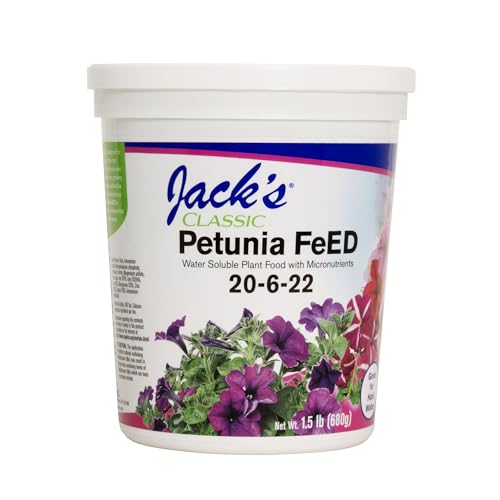
Jack’s Classic 20-6-22 Petunia Feed 1.5 lb

Miracle-Gro Water Soluble Bloom Booster 1 lb

Jack’s Classic 20-6-22 Petunia Feed 4 lb
More On The Choices That Made The List
SUNDAY’s Liquid Lawn Fertilizer lands on this list as an outlier worth knowing about. It’s marketed for turf, but the included sprayer and 22-0-2 nitrogen-led ratio (NPK, or the nitrogen-phosphorus-potassium content printed on every fertilizer label) doubles as a fast green-up for any flowering annual if you dial back the dose. The bonus sprayer alone removes the most common point of failure: bad coverage.
If you’ve ever rigged a spray bottle with mixed results, this kit hands you a working wand out of the box. Consider it a crossover pick for gardeners juggling petunias and patchy lawn sections at the same time.
Everyday Perks
- Ready-to-attach sprayer included, no extra gear to source
- Liquid form mixes fast and leaves little sediment in the tank
- Nitrogen-led ratio pushes leaf and stem vigor during recovery
- Two-pack format covers a full growing season for small setups
Things To Consider
- Ratio is built for turf, so bloom-heavy petunias need lighter dilution
- Sprayer head owners commonly report clogs if the bottle sits unused for weeks
Feature Snapshot
Who Will Love This
You tend a small mixed yard with both turf and a few annual flower beds, and you want one hose-end routine.
Skip It When
The dedicated TPS Nutrients Petunia Fertilizer Liquid 8 oz is a cleaner fit for strict petunia-only feeding.
This water-soluble powder targets acid-loving plants, the kind that sulk when soil pH climbs above their comfort range. Petunias tolerate a wide pH, but if your bed already hosts azaleas, gardenias, or hydrangeas, you can feed everything from one bucket without juggling products.
The 5 lb jug stretches across a full season of container work. Compared with SUNDAY’s turf-focused blend above, this is a far better cultural match for flowering shrubs that share soil with petunias.
Benefits That Matter
- Water-soluble powder dissolves in minutes with no shaking
- Multi-plant versatility across azaleas, gardenias, and similar shrubs
- Large tub covers dozens of feedings for container gardeners
Trade Offs
- Not petunia-specific, so flowering performance depends on existing soil pH
- Bulk size is heavy to lug if you only run a balcony setup
Who Will Love This
You maintain a shade border with mixed acid-loving shrubs and want one feeder that handles all of them.
Reach For A Different Pick When
Jack’s Classic 20-6-22 Petunia Feed 1.5 lb is purpose-built for petunias and skips the pH juggling.
The 8 oz bottle from TPS Nutrients is the smallest petunia-targeted option on this list, and that’s exactly why it earns a slot. Beginners tend to over-buy fertilizer, let it sit past its window, and end up feeding with stale product. A smaller bottle keeps you honest.
It’s formulated for beds, hanging baskets, and patio containers, which covers the three most common petunia placements. If your setup is one or two baskets on a south-facing porch, this is enough.
A Few Highlights
- Petunia-specific blend avoids guesswork
- Works across beds, baskets, and containers
- Compact bottle fits a junk drawer or small gardening tote
Honest Caveats
- Small volume means frequent reorders for anyone running more than a basket or two
- Liquid formulas typically call for more frequent applications than powders
Who Should Grab It
You run a couple of patio pots and want a no-fuss, purpose-built liquid without committing to a larger jug.
Consider Something Else When
TPS Nutrients Petunia Fertilizer Liquid 32 oz is the better match for gardeners tending several baskets at once.
The 32 oz sibling to the 8 oz bottle above solves the reordering problem. Same petunia-targeted formulation, four times the volume, and a price-per-ounce that rewards anyone feeding more than a pair of pots. The bottle shape stays manageable on a shelf.
For gardeners with a row of porch containers or a window-box lineup, this is the format that actually pays off. The liquid stays easy to measure, and you can split feedings across different baskets without recalibrating dry scoops.
What Pays Off
- Larger bottle stretches through a full bloom season for multiple containers
- Liquid format mixes evenly with no chalky residue in the watering can
- Same trusted blend as the smaller TPS bottle
Things To Consider
- Heavy to carry once you get below the halfway mark with a full fill
- Shelf life on opened liquid fertilizer is shorter than dry powders
Who It Suits Best
You run several hanging baskets and patio containers and would rather refill once a season than chase small bottles.
Look Elsewhere When
Jack’s Classic 20-6-22 Petunia Feed 1.5 lb suits gardeners who prefer a powder over liquid measuring.
Jack’s Classic has a quiet following among growers who push for repeat blooms. The 20-6-22 ratio leans on potassium, the middle number is phosphorus for blooms, and the final figure (potassium) supports overall plant vigor, which helps petunias set new buds after each trim. The powder dissolves in water and works as either a root drench or a foliar spray (misted directly onto leaves).
Versatility is the headline here. You can alternate root and foliar feeding through the season depending on what your baskets need. Compared with the TPS liquids earlier, this is a heavier-duty, hobbyist-grade option.
What Earns Its Place
- Dual-purpose: root drench or foliar spray from the same jar
- Compact powder form keeps weight and storage footprint low
- Targeted ratio suits heavy-feeding petunia varieties
Points To Keep In Mind
- Foliar feeding requires a clean mister; spray heads often clog with hard-water residue
- Continuous-feed systems call for more frequent mixing than pre-mixed liquids
Quick Facts
The Right Fit
You already deadhead and rotate baskets weekly and want a feed that matches that level of attention.
Swap It Out When
Miracle-Gro Water Soluble Bloom Booster 1 lb is the lower-effort path for anyone who wants fewer mixing steps.
The Bloom Booster is the high-phosphorus option, with a 10-52-10 ratio aimed squarely at flower production. Petunias aren’t as phosphorus-demanding as some annuals, but a mid-season boost helps window boxes that have started to slow down.
It’s the easiest transition if you’ve already used a standard Miracle-Gro feeder. The 1 lb pouch is light, shelf-stable, and forgiving if you occasionally over-dilute.
Useful Highlights
- High phosphorus ratio pushes flower bud formation
- Familiar Miracle-Gro packaging fits standard garden feeders
- Light 1 lb pouch is easy to store in a shed or garage
Small Caveats
- Raised-phosphorus feeds can build up in container soil over multiple seasons
- Not designed for long-term feeding as a stand-alone routine
Best Suited To
You keep petunias in window boxes and want a quick mid-summer push when blooms thin out.
A Better Fit Elsewhere
Jack’s Classic 20-6-22 Petunia Feed 1.5 lb handles season-long feeding without the phosphorus buildup risk.
The 4 lb jar is the larger sibling to the 1.5 lb version reviewed earlier. Same 20-6-22 ratio, same foliar-or-root flexibility, just enough powder to last a full bloom season across a generous bed or a long run of baskets.
For gardeners running a serious petunia display, the bigger jar cuts down on reordering without forcing a switch to liquid. Storage is the trade-off; you’ll want a dry corner of the shed.
Positive Points
- Bulk jar minimizes mid-season reordering
- Works as foliar feed or root drench from the same scoop
- Potassium-leaning ratio supports repeat blooming through summer
Practical Considerations
- Bulk powder needs a dry storage spot to avoid caking
- Heavier jar is awkward to carry once opened, depending on your shed setup
Details At A Glance
Whose Shelf It Belongs On
You maintain a wide petunia bed alongside multiple containers and feed on a tight schedule.
Not Your Match When
TPS Nutrients Petunia Fertilizer Liquid 8 oz suits anyone who only tends a small patio setup.
Matching Petunia Fertilizers To Your Routine
Petunia feeding looks simple until you realize there are three distinct product families competing for the same shelf space. Liquid concentrates mix fast but call for frequent applications, usually every week or two. Water-soluble powders, like Jack’s Classic, dissolve into a concentrate that stretches further and stores drier. Acid-loving blends, such as the Miracle-Gro Azalea formula, work when petunias share soil with shrubs that prefer low pH (a soil acidity reading below 7.0).
Container gardeners run a tighter feeding loop than in-ground beds because watering leaches nutrients out through drainage holes. A hanging basket in full sun can lose nitrogen in days, which is why weekly liquid feeds are common in summer. Beds with mulch hold nutrients longer, so a powder drench every two to three weeks is usually enough. Pick a format that fits your watering rhythm; otherwise, you’ll skip feedings and wonder why blooms fade early.
Where The NPK Numbers Actually Matter
The three numbers on every fertilizer bag represent nitrogen, phosphorus, and potassium by weight. Nitrogen pushes leaf and stem growth, which is why the SUNDAY turf blend above leans heavily on it. Phosphorus drives bud formation, the headline benefit of the Miracle-Gro Bloom Booster. Potassium rounds out the plant’s overall hardiness and water regulation, which is why Jack’s Classic 20-6-22 finishes strong in that middle digit.
For petunias specifically, an even or potassium-leaning ratio covers most needs. Phosphorus-only blends make sense as a short-term nudge, not as a season-long foundation.
When Liquid Beats Powder, and Vice Versa
Liquid wins for beginners because the measurement is forgiving and the feed goes straight to the roots. Powder wins for anyone feeding a large setup because shipping weight is lower and shelf life is longer. If you’ve ever found a forgotten bottle of liquid fertilizer with a chalky film across the top, you already understand why dry formats have a quiet edge.
Pitfalls Shoppers Hit And How To Dodge Them
The most common mistake is buying a high-phosphorus bloom booster and using it as the only feed all season. Phosphorus builds up in container soil and eventually blocks uptake of other nutrients, leaving you with yellowing leaves despite faithful feeding. Rotate between a balanced blend and a bloom booster rather than stacking them.
The second trap is ignoring pot size. A 10-inch basket with three petunia plants drinks faster than a wide in-ground bed, and the same feeding schedule does not fit both. Scale your dose down for smaller containers rather than halving intervals on a standard feed.
What Separates Premium From Basic
Premium petunia fertilizers, like Jack’s Classic, justify the price through flexibility. A single jar works as foliar, root drench, or continuous-feed injection, and the concentrate ratio means a small jar lasts longer than a comparably priced liquid. Basic products do one thing well, which is fine for simple setups, but you’ll outgrow them the moment you start mixing baskets and beds.
Common Shopping Slip Ups
Walking into the fertilizer aisle and grabbing any bottle labeled “for flowers” works in a pinch, but it ignores your soil’s actual state. Petunias in alkaline soil (pH above 7.0) struggle with iron uptake, no matter how much phosphorus you throw at them. A quick pH test before buying saves the wasted spend later.
Another misstep is treating the smallest bottle as a starter kit. Beginners often pick the 8 oz liquid, use half, forget about it for a month, and return to a separated bottle with reduced potency. Either commit to using it quickly or step up to a larger volume you’ll actually finish.
Where The Extra Money Goes
Higher-priced petunia fertilizers typically fund better-quality chelation, the process that keeps minerals available to roots instead of locked in the soil. Cheaper blends often skip this step, which is why you can feed faithfully and still see pale leaves. The upgrade shows up in steadier color and fewer yellowing episodes mid-summer.
Frequently Asked Questions
How often should petunias be fed during peak summer?
Weekly feeding with a liquid or biweekly with a water-soluble powder covers most in-ground beds. Hanging baskets in full sun often need a mid-week touch-up because watering leaches nitrogen fast.
Can the same fertilizer be used for petunias and other annuals?
Yes, a balanced 20-6-22 ratio works for most flowering annuals, including calibrachoa, verbena, and lobelia. Specialty feeders only matter when you’re growing acid-loving shrubs alongside petunias.
Is a bloom booster necessary, or will a balanced feed work?
A balanced feed is enough for steady color. A bloom booster earns its place mid-season when established plants start slowing down and need a quick phosphorus nudge.
What’s the difference between foliar and root feeding?
Root feeding delivers nutrients through the soil and is the default method. Foliar feeding sprays diluted fertilizer onto leaves for faster uptake, useful when roots are stressed or compacted.
Do petunias need different fertilizer in containers versus beds?
Containers leach nutrients faster, so liquid feeds at shorter intervals tend to outperform powders. Beds hold moisture and nutrients longer, so a powder drench every two to three weeks usually suffices.
Wrap Up
The right petunia fertilizer comes down to matching format and ratio to your watering rhythm and bed size. Small-container gardeners will find the TPS Nutrients liquids easy to live with, while serious bed growers benefit from the flexibility of Jack’s Classic powders. Choose the format you’ll actually use consistently, and your petunias will reward you all season.
