

Azaleas reward the right feeding with vivid spring color, but their appetite for acidic soil and steady nutrition leaves a lot of gardeners guessing. Walk down any fertilizer aisle and the choices blur fast, from slow-release granules to water-soluble mixes and iron-rich blends. This guide sorts eight solid plant foods for azaleas that match different budgets, garden sizes, and soil conditions, so you can spend less time reading labels and more time enjoying blooms.
The Essentials At A Glance

Fertilome Azalea/Evergreen Food Plus Systemic 9-15-13, 10 lbs

GARDENWISE 8-4-8 Acidic Fertilizer 12 OZ

Earth Science Fast Acting Sulfur Granules, 5 lb

Ironite Plus Shrubs, Trees Plant Food Granular 12-10-10, 3 Lb

Espoma Organic Holly-Tone 4-3-4 Evergreen & Azalea Plant Food, 4 lb. (Pack of 2)
Espoma Organic Holly-Tone 4-3-4 Evergreen & Azalea Plant Food, 4 lb.

Miracle-Gro Water Soluble Azalea, Camellia, Rhododendron Plant Food, 5 lb.
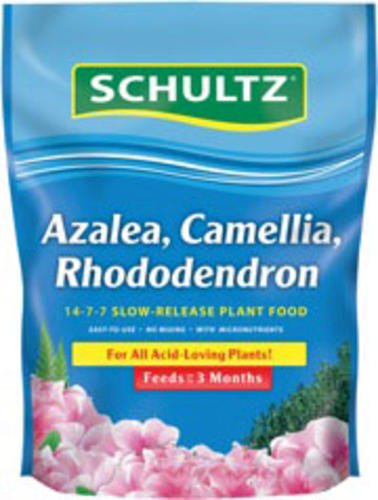
Schultz Azalea, Camellia, Rhododendron ACR 14-7-7 Slow Release Plant Food
More Details On Our Top Picks
Azaleas rarely suffer from feeding problems alone. Aphids show up on tender new growth, whiteflies linger under leaves, and caterpillars chew through buds before you notice them. Fertilome tackles both jobs in one granular pass, which is why it earns the top slot for gardeners who’d rather skip a separate spraying routine.
The 9-15-13 ratio leans heavily on phosphorus, the middle number that supports strong bloom set and root development. For established landscape beds with roses, azaleas, and flowering shrubs, that ratio gives you vivid color without forcing excessive leafy growth. You won’t want to use it anywhere near a vegetable garden, since the systemic insecticide targets pests across the whole plant.
Everyday Advantages
- Combines fertilizer and pest control, cutting two chores down to one application
- The 9-15-13 ratio delivers the bloom-boosting phosphorus azaleas crave during the growing season
- A 10 lb bag covers a meaningful stretch of landscape, so you won’t run out mid-season on multi-bed properties
- Targets common pests like aphids and whiteflies that routinely plague azalea foliage
Things To Consider
- Contains a systemic insecticide, so it’s strictly for ornamental beds and not safe around edible crops
- Granular format means you’ll need to water it in for the active ingredients to activate
Whose Garden It Belongs In
Homeowners managing established landscape beds with recurring pest pressure and flowering shrubs will get the most out of this dual-purpose formula.
Reach For A Different Pick When
Vegetable gardeners or anyone wanting a pure organic approach should look at Espoma Holly-Tone 4-3-4 instead.
Mixed borders rarely play host to just azaleas. Camellias, hydrangeas, gardenias, and blueberries often share the same bed, and they all want acidic soil and steady iron. GARDENWISE 8-4-8 was built for exactly that scenario, with magnesium, iron, and manganese worked into a balanced acid-leaning formula.
The 8-4-8 ratio is gentler than the Fertilome blend above, which makes it a calmer choice for young shrubs that haven’t built up root mass yet. The micronutrient package helps prevent chlorosis, the yellow-leaf condition that shows up when acid-loving plants can’t pull enough iron from alkaline soil. For gardeners who treat their shrub border as one interconnected ecosystem, that broader compatibility matters.
Well-Handled Touches
- Iron and manganese content directly targets chlorosis, a common azalea problem in alkaline regions
- Safe across a long list of acid-lovers, so one bag covers camellias, hydrangeas, and blueberries too
- The moderate 8-4-8 ratio avoids burning tender young roots during early establishment
Worth Noting
- At 12 oz, the package is smaller than most competitors, so larger properties may need multiple jars per feeding cycle
- Micronutrient claims are best paired with a confirmed soil pH test, since iron availability drops sharply above pH 6.5
Built With In Mind
Gardeners tending mixed borders of azaleas, camellias, and hydrangeas will appreciate the broad compatibility.
Swap It Out When
If your soil test shows a severe pH imbalance rather than a mild nutrient gap, Earth Science Fast Acting Sulfur Granules is the better first move.
Fertilizer alone won’t save azaleas planted in soil that’s too alkaline. Earth Science skips the NPK conversation and focuses on the foundational problem: pH. The fast-acting sulfur granules start working immediately to bring acidic-loving plants into a happier root zone.
Lowering soil pH is the kind of fix that pays off across years, since proper acidity unlocks nutrients that already exist in the ground. You may find that pairing this with a milder fertilizer like Schultz ACR 14-7-7 down the line gives you stronger, greener growth than feeding alone ever could.
Features That Help
- Targets the underlying soil chemistry rather than masking nutrient deficiencies with surface-level feeding
- A 5 lb bag treats a substantial planting area, useful for gardeners working with established alkaline beds
- Reduces nutrient runoff, which matters in sloped yards where heavy rain washes amendments downhill
Honest Caveats
- This is a soil conditioner, not a complete fertilizer, so you’ll need a complementary feed for macronutrients
- Over-application can swing pH too far, so soil testing before and after is worth the effort
Key Specs
Made For
Gardeners who have tested their soil and confirmed a high pH that regular fertilizer can’t fix on its own.
A Better Fit Elsewhere
For straightforward feeding without pH worries, GARDENWISE 8-4-8 Acidic Fertilizer covers the basics more simply.
Yellowing leaves on an azalea rarely mean the plant needs more nitrogen. The usual culprit is iron deficiency, which locks up chlorophyll production and leaves you with pale foliage even in good growing conditions. Ironite Plus is essentially an iron-and-nutrient supplement built to address that exact problem.
The 2% iron content is the headline feature, and it works alongside a 12-10-10 NPK foundation that supports overall vigor. For shrubs and trees with persistent chlorosis, that iron push can green up foliage within a few weeks. Compared to GARDENWISE’s broader micronutrient blend, Ironite is more narrowly targeted, which makes it useful as a corrective tool rather than a year-round staple.
Advantages To Know
- The 2% iron concentration directly addresses chlorosis, restoring leaf color in deficient plants
- Fast-acting nutrients show visible results sooner than slow-release organic alternatives
- Works on the broader shrub and tree category, so one bag handles mixed landscape plantings
Points To Keep In Mind
- Won’t fix alkaline soil on its own, so pairing with pH correction makes the iron bioavailable
- Granules can stain concrete walkways and stepping stones if spilled, so application care matters
Best Suited To
Gardeners dealing with persistent yellowing on azaleas despite regular feeding should reach for this as a corrective supplement.
Look Elsewhere When
For a complete feeding program with iron already balanced in, Espoma Holly-Tone 4-3-4 covers the gap without needing separate applications.
Organic gardening and azaleas are a natural pairing, since acid-soil feeders respond beautifully to slow nutrient release. Holly-Tone is the original organic option in this space, and the two-bag pack gives serious gardeners enough volume to work through a full season without reordering mid-summer.
The 4-3-4 ratio is mild by design, leaning on natural ingredients and Espoma’s Bio-tone formula to feed soil microbes alongside roots. The 5% sulfur content helps maintain acidity in beds that already lean acidic. For gardeners who treat their shrub borders as a long-term ecosystem rather than a quick-fix project, that organic approach pays compounding dividends.
A Strong Showing
- Slow-release organic nutrients feed plants steadily over weeks rather than forcing a quick flush
- The two-bag format provides enough material for larger properties without constant reordering
- Compatible with a wide range of acid-lovers, from blueberries to camellias, simplifying multi-species feeding
- No toxic ingredients, making it safer around pets and children who share the yard
Room For Improvement
- Organic release means slower visible correction if plants are already severely nutrient-starved
- The mild 4-3-4 ratio requires more frequent applications than higher-analysis synthetic feeds
Key Specs
Who Will Love This
Long-term organic gardeners with established azalea beds will appreciate the slow-release feeding philosophy and pet-safe formulation.
Not Your Match When
Gardeners wanting fast correction of yellowing leaves should pair this with Ironite Plus or switch to Miracle-Gro Water Soluble for quicker results.
The single-bag version of Holly-Tone delivers the same trusted formula as the two-pack, just in a more approachable size for new plantings or smaller yards. For someone setting out their first shrub border, that smaller commitment lowers the barrier to trying an organic approach.
The 4-3-4 analysis still works for new azalea installations, where aggressive synthetic feeding can shock young roots. The Bio-tone blend supports the soil ecosystem those new plants depend on, which matters more during the first couple of seasons when roots are still establishing.
Good Reasons To Consider
- Right-sized packaging for small yards or single azalea plantings without overbuying
- Same proven organic formula as the larger pack, just in a single 4 lb bag
- Safe around children, pets, and pollinator-friendly gardens
Softer Spots
- You’ll need to reorder more often if you’re feeding a large landscape, since 4 lb won’t stretch far
- Mild NPK means patience is required before seeing dramatic visual changes
Perfect Match For
First-time azalea planters and small-yard gardeners will find this single-bag format a sensible starting point.
Consider Something Else When
Anyone managing a larger property should step up to the two-pack version above for better value per pound.
Some gardeners want to see results this weekend, not next month. Water-soluble formulas deliver nutrients directly through foliage and roots almost immediately, which is why this Miracle-Gro blend earns its spot for active growing-season boosts.
The formula covers a notably wide list of acid-lovers, from azaleas to orchids, hibiscus, and gardenias. Mixed feeding schedules are simple when one container handles every acid-thriving plant on the property. The catch is the routine: water-soluble feeding requires mixing and applying on a regular cadence, which doesn’t suit forgetful gardeners.
Useful Highlights
- Water-soluble delivery means nutrients are available almost immediately after application
- Covers an unusually broad plant list, from azaleas and camellias to orchids and hibiscus
- A 5 lb container provides many feeding sessions per purchase for typical home gardens
Trade Offs
- Requires mixing and repeated application, adding routine work compared to granular slow-release options
- Faster nutrient delivery also means faster depletion, so skipping applications shows in plant performance quickly
Key Specs
Who Should Grab It
Active gardeners who enjoy a regular feeding routine and want visible results within days will get the most from this format.
Skip It When
Low-maintenance gardeners should choose Schultz ACR 14-7-7 Slow Release Plant Food instead, since it feeds for months without reapplication.
Forgetful gardeners, busy professionals, and anyone who simply prefers a set-it-and-forget-it routine will appreciate Schultz ACR 14-7-7. The slow-release nitrogen feeds azaleas and their acid-loving cousins for up to three months from a single application, with no mixing or measuring required.
The 14-7-7 ratio is notably higher in nitrogen than the other picks on this list, which supports the leafy green growth azaleas put on after their spring bloom flush. Compared to Miracle-Gro’s water-soluble approach, Schultz trades immediacy for convenience, which suits weekend gardeners who don’t want a feeding schedule dictating their calendar.
What It Does Well
- Slow-release nitrogen delivers up to three months of feeding per application, cutting maintenance frequency
- No mixing required, so application is as simple as scattering granules and watering in
- Includes micronutrients to support overall plant health beyond basic NPK feeding
- Works for both indoor and outdoor acid-loving plants, covering houseplants and landscape shrubs alike
Potential Compromises
- Higher nitrogen ratio may push leafy growth at the expense of blooms if applied too aggressively
- Slow release means slower correction if plants already show severe deficiency symptoms
Right Fit For
Busy homeowners and weekend gardeners who want consistent feeding without a strict schedule will appreciate the three-month release window.
Where Another Pick Suits Better
Gardeners focused on organic soil building should choose Espoma Holly-Tone 4-3-4 instead for its biologically active approach.
Matching Plant Foods to Your Azaleas
Choosing between acid-loving plant foods comes down to three core decisions: your soil’s current pH, the time you want to spend on feeding routines, and whether organic or synthetic inputs fit your gardening philosophy. Soil pH matters most because azaleas struggle to absorb iron and other micronutrients when pH climbs above 6.0, so a soil test before buying any fertilizer saves money and frustration.
Gardeners in regions with naturally acidic soil, like the Pacific Northwest or parts of the Southeast, can lean on balanced fertilizers like Holly-Tone or Schultz ACR without worrying about pH correction. Those in alkaline regions like the Southwest or areas with heavy clay should pair any feeding program with Earth Science Fast Acting Sulfur to keep pH in the right range.
The NPK ratio on the label tells you what the fertilizer emphasizes. Nitrogen, the first number, drives leafy growth. Phosphorus, the middle number, supports blooms and root development. Potassium, the last number, contributes to overall plant health. For azaleas specifically, a moderate-to-high phosphorus content helps with flower set, while too much nitrogen can suppress blooms in favor of leaves. The ratio should match whether you’re trying to establish a young plant, maintain a mature shrub, or correct a specific deficiency.
Release format changes your maintenance rhythm significantly. Slow-release granular products like Holly-Tone or Schultz ACR feed steadily for weeks or months, which suits gardeners who prefer occasional applications. Water-soluble options like Miracle-Gro deliver nutrients immediately but require more frequent feeding. Your available time and attention to the garden matters more than any spec sheet suggests.
Key Considerations Across These Picks
Pitfalls Shoppers Hit
Buying fertilizer without testing soil pH first is the most common mistake. Azaleas in alkaline soil will struggle no matter how premium the fertilizer, since locked-out iron can’t reach the plant. A basic home pH test kit costs very little and tells you whether you need a pH adjuster like Earth Science Fast Acting Sulfur alongside your feed.
Choosing high-nitrogen synthetic fertilizers for established blooming shrubs is another frequent misstep. Excess nitrogen pushes lush green growth but often at the expense of flower production. For mature azaleas, balanced or phosphorus-leaning ratios like the Fertilome 9-15-13 above give better bloom results.
What The Higher Tier Buys
Premium organic options like Espoma Holly-Tone cost more per pound than basic synthetic feeds, but the price reflects biological complexity. The Bio-tone blend feeds soil microbes that gradually improve soil health over seasons, so the return compounds year after year rather than delivering a one-time nutrient hit.
Higher-analysis synthetic blends like Schultz ACR 14-7-7 also command a slight premium, justified by longer release windows and included micronutrients. For gardeners managing large properties, the labor savings from three-month feeding cycles quickly offset the higher upfront cost compared to budget options that require monthly reapplication.
Frequently Asked Questions
How often should you feed azaleas during the growing season?
Most azaleas benefit from feeding once in early spring as new growth begins, with a possible second light application after spring blooms fade. Slow-release options like Schultz ACR 14-7-7 can stretch that single application across three months, while water-soluble feeds like Miracle-Gro typically need reapplication every two to four weeks during active growth.
Can you use azalea fertilizer on other acid-loving plants?
Yes, most azalea fertilizers work across the full acid-loving category, including camellias, rhododendrons, gardenias, hydrangeas, and blueberries. GARDENWISE 8-4-8 and Espoma Holly-Tone both list these companion plants on their packaging, so one product can feed a mixed shrub border without issue.
What’s the difference between azalea fertilizer and regular plant food?
Azalea fertilizers are formulated for acidic soil conditions and typically include iron and sulfur to maintain proper pH and micronutrient availability. Regular all-purpose plant foods often lean alkaline or neutral in their effect, which can gradually raise soil pH and lock out nutrients azaleas need to thrive.
Should you fertilize azaleas in fall?
Light fall feeding with a low-nitrogen formula can help root development before winter dormancy, but high-nitrogen fertilizers should be avoided late in the season. Fresh nitrogen pushes tender new growth that won’t harden off before frost, often causing winter damage to the newest stems and buds.
How long does it take to see results from azalea fertilizer?
Water-soluble feeds like Miracle-Gro can show visible improvement within one to two weeks, while granular slow-release options typically take four to six weeks for full effect. Organic fertilizers like Holly-Tone work on the slowest timeline, often requiring a full growing season before dramatic changes appear, but the results tend to be more sustained.
Closing Remarks
The right plant food for your azaleas depends on soil chemistry, garden size, and how much feeding routine you actually want to maintain. Start with a soil test, match the NPK ratio to your plant’s age and condition, and pick a release format that fits your schedule. Healthy azaleas repay the effort with years of reliable spring color.
