

A windowsill rarely delivers enough light through winter, and most houseplants quietly stretch toward the glass in response. Plant growing lights fix that gap, and the current generation of LEDs covers everything from a single herb pot to a full 5×5 grow tent. This roundup pulls together the strongest options for shelves, stands, and serious tent setups, so you can match wattage, spectrum, and form factor to the space you actually grow in.
A Closer Look At The Lineup

YUYMIKA Clip-On LED Grow Light 2-Pack

Spider Farmer SE1500 LED Grow Light 150W

GLOWRIUM 48W Grow Light with Stand

HLG 600 Rspec FR 600W Quantum Board

Barrina 4FT 5000K T8 Grow Light 6-Pack

VIIVUU Clip-On Grow Light 1 Pack

Spider Farmer SE3000 LED Grow Light 300W
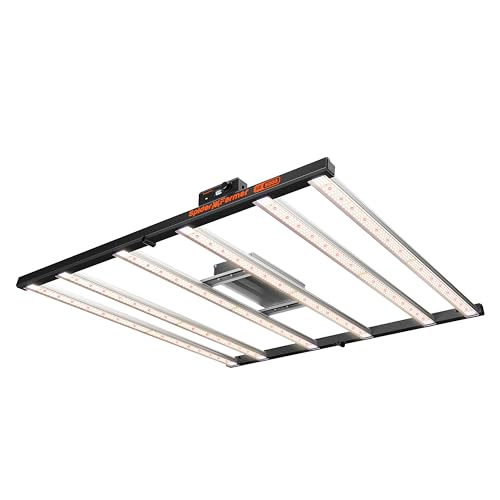
Spider Farmer SE5000 LED Grow Light 480W

VIPARSPECTRA 70W Dimmable Grow Light

Spider Farmer SE7000 Commercial LED Grow Light
A Deeper Look At The Lineup
The YUYMIKA clip-on pair works well for renters with a handful of low-light houseplants. The clamp grips a shelf edge or pot rim, and the gooseneck bends into awkward corners where a flat panel would never sit flush. Most folks keep one on a kitchen herb shelf and the second on a dark bookshelf in the next room.
Each head runs a full spectrum output (light covering the wavelengths plants use for photosynthesis, from blue through red), and the inline timer offers 3, 6, and 12-hour settings. Ten dimming steps let you match the output to a fern that prefers shade or a succulent that wants more kick.
Notable Gains
- Two fixtures spread across rooms for the cost of one premium unit
- Built-in timer removes the daily on-off ritual
- Dimming curve lets you tune output to species without swapping bulbs
- Compact clamp footprint fits narrow shelves where the Barrina tubes would not hang
Things To Consider
- Not strong enough for fruiting or flowering plants that demand high PPFD (photosynthetic photon flux density, the measure of usable light reaching the canopy)
- Owners commonly report the gooseneck loosening after several months of repositioning
Who It Suits Best
Apartment dwellers tending pothos, snake plants, and a small herb cluster will get the most from this set without overpaying.
Reach For A Different Pick When
The Spider Farmer SE1500 is the better match for anyone running a sealed 2×2 tent for vegetables or compact flowers.
Compared to YUYMIKA’s clip-on pair, the Spider Farmer SE1500 steps up to a serious bar-style fixture built for a real 2×2 grow tent. The bridgelux diodes (high-output LED chips known for efficient photon delivery) push a genuine 150 watts, and the bar layout spreads light edge to edge instead of leaving hot spots under the center.
App control is the headline feature, letting you dim and schedule from your phone instead of reaching behind the tent. For most growers running a 2×2, the SE1500 hits a sweet spot of output, footprint, and noise (the driver is passively cooled and silent).
Noteworthy Benefits
- App control removes the bending-and-dimming routine during daily checks
- Bar geometry produces even coverage across the full 2×2 footprint
- Passive cooling means no fan noise in a bedroom-adjacent space
- Efficient diode output trims electricity costs on long photoperiods (daily light-on windows)
Worth Noting
- You will need a 2×2 tent to get the most from the design
- App setup requires a stable 2.4 GHz Wi-Fi signal at the tent location
Key Specs
Made For
Intermediate growers running a 2×2 tent for leafy greens, herbs, or compact flowering plants will appreciate the balance of power and precision.
Skip It When
The GLOWRIUM 48W stand makes more sense for a corner of the living room with no tent infrastructure at all.
The GLOWRIUM solves a problem the clip-on lights cannot: a tall plant that lives on the floor. The four-section pole telescopes up to about 79 inches, and the wide lamp head covers a generous footprint without a clamp or shelf in sight.
Stepless dimming (continuous brightness adjustment with no fixed steps) and three spectrum modes give you real control over seedlings versus leafy houseplants. Most owners slide the head height up as monstera and fiddle leaf figs gain inches through summer.
What Helps Most
- Floor-standing design reaches tall specimens that clip-ons cannot
- Stepless dimming avoids the jumpy steps of cheaper controllers
- Enlarged lamp head covers a wider pot cluster in one pass
Points To Keep In Mind
- Base footprint is larger than a clamp, so plan a corner with stable flooring
- 48W is enough for foliage but light on the output heavy-flowering crops need
Right Fit For
Plant parents with one or two statement floor plants in low-light rooms will find this stand a clean alternative to clamping a grow lamp to a bookshelf.
Consider Something Else When
Seedling growers starting dozens of trays should look at the Barrina 6-pack for the same money and far broader coverage.
The HLG 600 Rspec FR is the kind of fixture that turns a 4×4 tent into a serious flowering room. Quantum board design (a flat panel of low-power LEDs spread across a large aluminum PCB) gives the canopy deep, even penetration that point-source panels struggle to match.
You give up app control and spectrum switching, since HLG focuses on raw efficiency (2.60 µmol/J, meaning each joule of electricity converts into 2.60 micromoles of usable photons). For experienced growers who want to push dense flowers and trust their own timer, the trade usually feels worth it.
Useful Touches
- High efficacy (light output per watt) keeps heat and power bills in check on long photoperiods
- Far-red addition helps trigger flowering responses in photoperiod-sensitive plants (those that bloom based on day length)
- ETL certification (a North American electrical safety standard) for the driver adds peace of mind in an enclosed tent
- Quantum board form factor spreads light deep into the canopy
Trade Offs
- No app integration, so dimming happens on the driver manually
- Overkill for a casual houseplant shelf or a single herb pot
At A Glance
Whose Shelf It Belongs On
Serious growers running a 4×4 flowering tent and managing their own timers and dimmers will appreciate the raw efficiency.
Where Another Pick Suits Better
For a smaller 2×2 space, the Spider Farmer SE1500 is easier to dial in and far cheaper to run.
Where the HLG focuses on a single high-output panel, the Barrina 6-pack goes the other direction: six four-foot tubes you link across a shelf or rack. Most people run them on a wire rack in a basement or closet, daisy-chained from a single outlet.
The 5000K daylight color leans toward the blue-heavy end of the spectrum, which is well suited to seedlings and leafy greens. The included connector cables make layout fast, and replacement parts are widely available if a tube eventually fails.
Features That Help
- Linkable cables let you expand shelf coverage as your seed-starting habit grows
- T8 form factor (a slim one-inch tube diameter) fits standard shop light fixtures
- Six tubes cover a full nursery shelf for less than many single-fixture setups
- Easy installation with snap-in mounting hardware
Honest Caveats
- 5000K color is light on the red wavelengths that drive flowering
- Not water-resistant, so avoid spots where humidity or spills are common
Best Suited To
Backyard gardeners and hobby propagators running seedling racks through late winter will find this 6-pack a workhorse.
A Better Fit Elsewhere
The Spider Farmer SE3000 covers a 3×3 tent with a single fixture if you need a more compact flower-ready setup.
The VIIVUU is the simplest entry point on the list, and a fair comparison to the YUYMIKA pair if you only have one plant that needs help. The clamp is the strong point: it bites onto a thick pot rim or shelf edge without slipping.
You also get a soil-insertion stake, which is handy for short pots where a clamp would not reach. The hollow ring head is light enough to leave in place without tipping the pot.
Benefits That Matter
- Strong clamp grips thick rims that cheaper clip-ons tend to slip off
- Soil stake option adds flexibility for low-profile pots
- Single-pack price is friendly for someone testing the grow-light idea
Some Limits To Know
- Single light means you scale up by buying more, not by extending one fixture
- Lower output than the YUYMIKA pair, so it suits a single specimen rather than a row
Feature Snapshot
Perfect Match For
First-time plant owners with one struggling windowsill specimen will find this the least intimidating way to start.
Not Your Match When
Anyone with a multi-plant shelf will stretch a single clip faster than it can cover, and the Barrina 6-pack becomes the smarter buy.
The SE3000 is the natural step up from the SE1500. Same bar layout, same app control, but with double the wattage and a footprint designed for a 3×3 tent. Most people land on this model when a 2×2 has run out of room but a 4×4 still feels oversized.
Heat output is well managed for the wattage, and the bridgelux diode array keeps PPFD (photosynthetic photon flux density) consistent from the center of the tent out to the corners. That even spread matters once a canopy fills in.
The Good Stuff
- Bar geometry delivers uniform PPFD across a 3×3 canopy
- App scheduling and dimming scale to multi-fixture setups later
- Lower heat per photon keeps leaf-tip burn at bay at close mounting heights
Room For Improvement
- Requires a dedicated 3×3 tent to justify the output
- App-only control may frustrate growers who prefer a hardware knob
Who Will Love This
Mid-tier hobbyists running a 3×3 veg-to-flower rotation will appreciate the SE3000’s balance of size, output, and smart control.
Where A Sibling Pick Shines
The HLG 600 Rspec FR delivers more raw efficiency per watt if you do not need app control.
The SE5000 is purpose-built for a 4×4 tent, and you feel that the moment the canopy fills in. The bar layout pushes light wall to wall, and the digital display on the driver makes it easy to dial in a precise dimming percentage instead of guessing at a knob.
Output sits at 480 watts with a bridgelux diode array rated at 1420 µmol/s. For a home grower running a full flower cycle in a 4×4, that lands in the productive range without crossing into commercial territory.
What It Does Well
- Digital dimming display removes the guesswork from intensity adjustments
- Even coverage across a 4×4 keeps corner plants from stretching
- App control integrates with the rest of the Spider Farmer SE family
Worth Bearing In Mind
- Heat load in a 4×4 tent may require an inline fan to keep canopy temps stable
- You will need a 4×4 footprint to make the most of the design
Feature Rundown
Who Should Grab It
Dedicated home growers running a 4×4 flower tent and wanting app-driven control will find the SE5000 a strong fit.
Swap It Out When
The HLG 600 Rspec FR is a meaningful alternative for growers who prefer a higher-efficacy quantum board over app features.
VIPARSPECTRA built this 70W unit for the seedling and early veg stage, and the diode layout reflects that focus. Output is rated around 11,000 lumens (a measure of total visible light the lamp emits), which is generous for a 2×2 footprint at low mounting heights.
Dimming is the headline feature at this price point, and the high-performance driver keeps heat under control. For most home growers starting seeds on a shelf, the unit sits in a useful sweet spot between cheap panels and full tent fixtures.
Everyday Perks
- Dimming knob lets you drop intensity for freshly germinated seedlings
- 70W draws modest power for a long photoperiod setup
- Balanced 660nm red and 3000K/5000K white spectrum suits vegetative growth
Practical Considerations
- Not strong enough on its own to drive a heavy flowering cycle
- Fan-cooled design adds a small amount of background noise
Right Fit For
Budget-focused growers running a 2×2 veg space or a small seedling tray will get reliable results from this dimmable workhorse.
Another Choice May Suit
The YUYMIKA clip-on pair makes more sense if you want flexibility to move lights room to room rather than mount a fixed panel.
The SE7000 is the largest fixture in the Spider Farmer SE line, designed for a 5×5 footprint. At 730 watts with Osram red diodes added to the bridgelux array, it is built for full-cycle, high-yield runs where every photon matters.
Where the SE5000 handles a serious home 4×4, the SE7000 is a step toward commercial territory. You will need a 5×5 tent, robust ventilation, and a 240V outlet in most cases, so this is a fixture for committed growers, not casual shelf setups.
A Few Highlights
- 6-bar geometry eliminates hot spots across a 5×5 canopy
- Osram red addition boosts flowering response in photoperiod crops
- App control scales to multi-fixture rooms through the same ecosystem
Where It Is Less Suited
- Overkill for anything smaller than a 5×5 footprint
- Power and heat output demand strong ventilation and proper circuit planning
Built With In Mind
Serious hobbyists and small commercial growers running a 5×5 tent for full-cycle production will benefit from the SE7000’s scale.
Look Elsewhere When
The SE5000 covers a 4×4 footprint with far less infrastructure if you do not need the extra coverage area.
What To Weigh Before Choosing Plant Growing Lights
Match Wattage To Your Footprint
Wattage is a useful starting point, but footprint matters more. A 70W panel mounted two feet above a tray of seedlings will outperform a 300W fixture hung five feet high over a single plant. Tent growers should aim for roughly 30 to 40 watts per square foot during vegetative growth, and closer to 40 to 50 during flowering. Shelf and floor setups can run lower since the light mounts close to the canopy and most houseplants do not need flowering intensity.
Spectrum And Dimming Controls
Full spectrum output (covering blue through red wavelengths) handles the widest range of plants, from seedlings to leafy greens and many houseplants. Dimming matters just as much, because freshly germinated seedlings and shade-tolerant ferns want a fraction of the intensity that fruiting crops demand. A unit with both spectrum modes and a smooth dimmer will outlast a basic on/off panel as your collection grows.
Form Factor And Ventilation
Clip-on fixtures fit anywhere a shelf or pot rim can hold them, while stand-mounted models like the GLOWRIUM reach tall floor plants. Quantum boards and bar-style panels belong in a tent with proper ventilation, since the wattage generates real heat. Always check the manufacturer’s recommended mounting height, and assume a 15-amp household circuit can safely run one large fixture plus a small fan.
Key Considerations Across These Picks
Common Shopping Slip Ups
The most common mistake is buying a high-wattage panel for a small houseplant shelf and running it at full intensity. Leaf burn shows up within days, and the fix is dimming or raising the light, not returning the fixture. Another trap is choosing a flowering-spectrum panel for a seedling rack, where the heavy red output stretches young stems. Match the spectrum and output to the growth stage you actually run, and leave room to add a second fixture later instead of overbuying one oversized unit on day one.
What The Higher Tier Buys
Stepping up to the HLG 600 Rspec FR or the Spider Farmer SE5000 and SE7000 brings higher µmol/J efficacy, meaning more usable light per watt of electricity, plus better canopy penetration through bar or quantum board designs. The upgrade pays off when you are running a sealed tent with mature plants, where dimming precision and even coverage translate into measurable yield gains. For a casual shelf of pothos and herbs, the lower-tier clip-ons and tubes deliver nearly all the benefit at a fraction of the upfront cost and electricity draw.
Frequently Asked Questions
How far should a grow light hang above houseplants?
Most LED panels work well at six to twelve inches above the canopy for foliage plants, and twelve to eighteen inches for light-sensitive species. Clip-on goose-neck lights sit closer because their output is much lower, and you generally want the head within four to six inches of the leaves. Adjust based on leaf response: pale, stretched leaves mean more light, while yellowing or curling leaves mean the fixture is too close.
Do full spectrum lights work for all growth stages?
Full spectrum LEDs cover the blue and red wavelengths plants use through seedling, vegetative, and flowering stages. A balanced spectrum like 3000K to 5000K handles seedlings and leafy greens without any tuning. Fruiting and flowering crops benefit from extra red and far-red, which is where dedicated flowering panels and Rspec models earn their premium.
Can a single grow light cover an entire shelf?
Linkable T8 tubes like the Barrina 6-pack are designed for this, and most people space them every six to eight inches across the shelf. A single panel rarely covers a full shelf evenly, especially at the edges where output drops off. For wider shelves, plan on two or more fixtures daisy-chained together.
How much electricity does a grow light use?
A 70W dimmable panel running 16 hours a day pulls around 1.1 kWh (kilowatt-hours) per day, while a 600W quantum board on the same schedule pulls closer to 9.6 kWh. Most home growers find that running lower-wattage fixtures on a timer for twelve to sixteen hours fits comfortably into a normal household electricity budget, while the high-wattage tent fixtures add noticeable cost on long photoperiods.
Do grow lights need a special timer?
Basic outlet timers handle most setups, and the built-in timers on the YUYMIKA pair and similar clip-ons remove the need for a separate device. App-controlled fixtures like the Spider Farmer SE line schedule themselves through Wi-Fi. The only time you need a heavy-duty timer is with a large quantum board on a 240V circuit, where a properly rated contactor or smart plug is worth the upgrade.
Closing Remarks
The right grow light depends less on wattage than on the footprint you actually light. Houseplant keepers can stay with clip-ons or stand-mounted panels, while tent growers will get the most from bar-style and quantum board fixtures sized to the canopy. Match the spectrum and output to the plants you keep now, and leave yourself room to expand when the collection grows.
