

A south-facing patio, a sun-soaked balcony, a backyard line of herbs that gets scorched every July. A planter that thrives in full sun has to do more than hold soil. It needs to resist UV breakdown, handle heat without drying the root zone into concrete, and drain well enough that sudden summer storms don’t drown the plant. Material, depth, and reservoir design all matter more here than they do in a shaded porch setup.
This lineup covers tall modern tapers, large rectangular raised boxes for vegetable rows, and a whimsical accent piece for the front step. Each pick is matched to a real sun-exposed situation, so you can shop by space, by plant type, and by how much hands-on watering you actually want to do.
A Side-By-Side Look
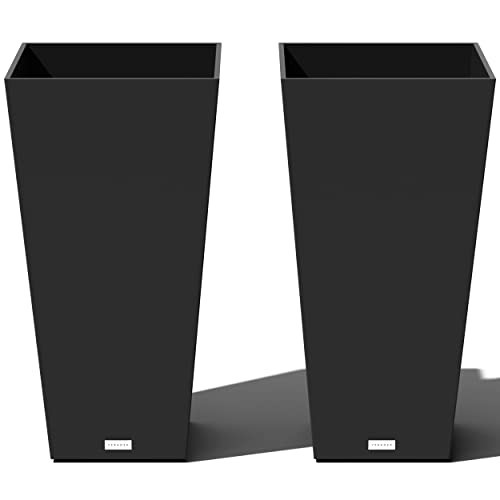
Veradek Pure Series Taper Planter with Shelf
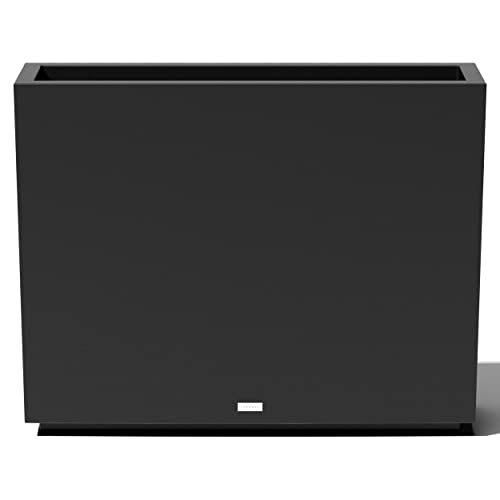
Veradek Block Series Span Tall Rectangular Planter

LAUGOKEBE Smiley Face Sunflower Planter

TooCust 20″ Tall Planter Box 47.2″ Set of 3

TooCust 14″ Tall Planter Box 47.2″ Set of 3

TooCust 20″ Tall Planter Box 94.4″ Set of 6

TooCust 20″ Tall Planter Box 78.7″ Set of 5

TooCust 14″ Tall Planter Box 62.9″ Set of 4

TooCust Extra Large Rattan Self-Watering Planter 95″

TooCust 20″ Tall Planter Box 62.9″ Set of 4
The Strengths Of Each Pick
The Veradek Pure Series Taper Planter reads as modern architecture first, planter second, which is exactly why it earns the lead spot. The molded single-wall body in a polypropylene composite keeps the silhouette clean and the weight manageable, so you can actually move it once the soil is in.
Pair that with the integrated lower shelf, and the planter becomes a small display surface for pots, a watering can, or a stack of river stones. The scratch-resistant finish shrugs off the kind of incidental contact that happens on a busy patio, and the smooth surface wipes clean with a damp cloth rather than trapping grime the way textured stone or concrete does.
Bright Spots
- Lightweight composite body stays manageable even after soil and water are added, so seasonal repositioning stays realistic.
- Sharp modern taper pairs with contemporary siding, brick, and stucco without clashing, which matters at the entryway where eyes tend to land.
- Integrated shelf gives you a usable surface for a small herb pot, a solar light, or seasonal decor.
- Smooth, scratch-resistant finish wipes down quickly after a dusty week.
Things To Consider
- Single-wall construction means soil temperatures track closer to ambient air, so heat-sensitive roots may struggle in extreme afternoon sun without a liner.
- Larger root systems will outgrow the interior volume, limiting it to ornamentals and medium-sized ornamentals rather than small trees.
Key Specs
Made For
Homeowners who want a tall, modern statement piece at the front door or flanking a patio seating area where the planter’s look matters as much as its function.
Look Elsewhere When
You want a long row of self-watering vegetable beds; the TooCust 20″ Tall Planter Box 47.2″ set of 3 is the better fit for a kitchen-garden setup.
The Veradek Block Series Span Planter takes everything the Pure Taper offers and stretches it into a privacy-scale rectangle. Built from high-grade plastic in a double-walled construction, it is rated to handle a wide climate window, so a cold snap followed by a hot afternoon should not crack the body.
Rectangular form factors are practical for tight patios, where you can line two or three along a railing to create a soft, green divider without losing floor space. For people who want the modern aesthetic of a tall planter but need more horizontal growing room for screening plants like bamboo, ornamental grasses, or small evergreens, this Span design lands as a purposeful middle ground.
Useful Strengths
- Double-walled build creates a buffer between hot exterior surfaces and the root zone, protecting roots from the worst of summer heat.
- Wide climate tolerance means the same planter can stay outside year-round in most regions, no garage shuffle required.
- Long rectangular shape is efficient for creating a natural privacy screen with screening plants.
Points To Keep In Mind
- Long horizontal run requires more soil volume to fill, which adds weight and increases watering frequency in full sun.
- Empty weight is heavier than a single-wall equivalent, so plan the placement before filling.
Who It Suits Best
Patio dwellers in mild-to-cold climates who want a year-round screen of greenery and prefer a rectangular silhouette over a round tapered form.
Reach For A Different Pick When
You are growing shallow-rooted herbs and want built-in watering; the TooCust 14″ Tall Planter Box 47.2″ set of 3 handles that role more economically.
The LAUGOKEBE Smiley Face Sunflower Planter is the personality pick of the list. Cast in resin with a cheerful sunflower face, it adds a small dose of character to a front step, a kid’s garden corner, or a side patio where a tall rectangular box would feel out of place.
Resin construction means it shrugs off rain and sun without the cracking problems that plague cheaper ceramic novelty pieces. The smaller footprint also makes it easy to bring indoors for the worst heat waves or winter snaps, which is useful if you live somewhere with extreme seasonal swings. For shoppers who want a planter that doubles as a conversation piece, this is a clear choice over another beige cylinder.
A Strong Showing
- Resin body holds up to direct sun and rain better than ceramic novelty pots of similar style.
- Compact size fits narrow stoops, kid’s garden nooks, and shelf-style plant displays.
- Sunflower face brings a playful accent that a plain tapered or rectangular planter cannot match.
- Lightweight body is easy to move between indoor and outdoor spots as weather shifts.
Honest Caveats
- Smaller interior volume limits use to small annuals, succulents, or a single small herb, not larger ornamentals.
- Decorative face means the planter pairs with casual garden styles rather than formal landscapes.
Perfect Match For
Gift-givers, families with young gardeners, and anyone who wants a whimsical accent piece rather than a structural planter.
Swap It Out When
You need a tall privacy screen for the patio; the Veradek Block Series Span Planter handles that scenario far more effectively.
The TooCust 20″ Tall Planter Box shifts the conversation from decorative accents to functional food gardening. Each box measures roughly 47.2″ long and 19.7″ tall, which gives root systems enough depth for peppers, lettuces, herbs, and smaller root vegetables, while the trio format lets you create a small dedicated row on a patio or driveway edge.
The standout engineering is the two-layer self-watering system: a drainage hole plate separates the soil from a reservoir at the bottom, and a transparent plug cap vents the reservoir so you can actually see how much water remains. That visibility matters more in full sun than in a shaded bed, because plants drink faster and a dry reservoir can swing the soil from moist to bone-dry in a single afternoon.
What It Does Well
- 19.7″ depth supports real root vegetables and larger pepper or tomato plants, not just shallow greens.
- Transparent reservoir cap lets you monitor water without digging or guessing, which reduces overwatering mistakes.
- Set of three creates a defined garden row without committing to a full raised-bed build.
Trade Offs
- Long rectangular footprint requires a dedicated stretch of patio or yard, not a small corner.
- Reservoir adds a small amount of assembly compared to a single-pot design, though most owners report the steps are straightforward.
Best Suited To
Patio gardeners who want a manageable vegetable or herb row with self-watering built in, especially those new to raised-bed growing.
Not Your Match When
You need a single tall decorative piece for the front entry; the Veradek Pure Series Taper Planter is the cleaner fit there.
The TooCust 14″ Tall Planter Box is the shorter sibling of the 20″ trio, and the lower height changes the use case in a useful way. At 14.2″ of soil depth, this set is dialed in for shallow-rooted crops: salad greens, basil, parsley, chives, and strawberries, all of which actually prefer a less-deep root zone.
That shorter body also means easier reach across the full 47.2″ length without straining, which matters in a real backyard where you tend by hand rather than with long-handled tools. The same self-watering reservoir system is here, so the moisture management advantage carries over from the deeper model.
The Case For It
- Lower height puts the soil surface within comfortable reach for hand-watering, weeding, and harvesting.
- Two-layer reservoir and drainage plate prevent the over-drying cycles that punish greens in full sun.
- Three-box set fits a standard patio edge without dominating the space.
Where It May Fall Short
- 14.2″ depth rules out deep taproots like full-size carrots or large tomatoes, so the planting palette is narrower than the 20″ set.
- Same long-footprint constraint as the deeper version, just shorter.
Feature Snapshot
Who Should Grab It
Salad-garden and herb-plot growers who want a low, reachable bed system without committing to deeper root-zone volume.
A Better Fit Elsewhere
You plan to grow tomatoes or large root vegetables; the TooCust 20″ Tall Planter Box 47.2″ set of 3 gives you the depth those crops need.
The 94.4″ TooCust set is the heavy-duty choice in the lineup. Six planter boxes give you serious square footage, which is closer to a traditional backyard row garden than a small patio setup. If you have the open yard space, this is the one that lets you grow enough produce to actually matter at the dinner table.
The 19.7″ depth returns here, so root vegetables and full-size tomato plants are back on the menu. Owners commonly find the reservoirs most valuable in late summer, when daily watering can otherwise take over a weekend. The set ships in multiple boxes, so unpacking and placement is a project, not a quick decision.
Useful Highlights
- Six-box layout provides roughly 94 linear feet of planting row, a real food-garden footprint.
- 19.7″ depth supports tomatoes, peppers, and root crops without constraint.
- Self-watering reservoirs cut down on daily hand-watering during heat waves.
Practical Considerations
- Requires a sizable flat stretch of yard, not a balcony or small patio.
- Initial filling and placement is a multi-hour project the first time, so plan ahead.
Quick Facts
The Right Fit
Suburban homeowners with full-sun yard space who want a legitimate raised-bed garden without building one from lumber.
Skip It When
You only have a small patio or balcony; the three-box 47.2″ set is the more honest scale for tight spaces.
The 78.7″ TooCust set lands between the compact trio and the long six-box version. Five boxes give a family-sized garden row without the full commitment of the 94.4″ setup, which makes it a sensible middle ground for backyards that have decent sun but not unlimited square footage.
With the same 19.7″ soil depth and self-watering reservoir, the planting palette is broad enough for a full kitchen-garden rotation: tomatoes in one box, root crops in another, herbs in a third. The two-layer drainage design helps prevent the rot problems that come from sudden downpours in summer storm season.
Good Reasons To Consider
- Mid-length row fits a typical suburban side yard or a wide patio edge.
- 19.7″ depth supports the same crop variety as the larger six-box set.
- Self-watering reservoirs reduce daily maintenance in peak heat.
Some Limits To Know
- Still requires dedicated yard or patio length that smaller balconies simply do not have.
- Plastic construction can show scuffs over years of direct UV exposure, depending on the climate.
Who Will Love This
Home gardeners who want a meaningful food-growing footprint but do not need the full 94.4″ row the larger set provides.
Another Choice May Suit
You mostly want greens and herbs; the 14″ TooCust 62.9″ set of 4 keeps the build smaller and shallower.
The TooCust 14″ set of four is the practical choice for gardeners who want four boxes instead of three, and a slightly longer combined row. The 14.2″ depth keeps the build focused on shallow-rooted crops, which is the right call for a mixed herb and greens garden.
Four boxes also offers better crop rotation, since you can dedicate one to legumes, one to leafy greens, and so on, without overcommitting any single box. Owners commonly appreciate the transparent reservoir plug in this format because it lets them check each box at a glance rather than testing soil with a finger.
Positive Points
- Four-box layout gives more planting diversity without stepping up to a five-box set.
- Shallow 14.2″ depth matches the root needs of greens, herbs, and strawberries.
- Reservoir visibility takes the guesswork out of summer watering.
- Lower height keeps all four boxes within easy reach for hand maintenance.
Soft Spots
- Limited to shallow-rooted crops, so it cannot serve as your only garden bed if you also want tomatoes or root vegetables.
- Same plastic-body considerations as the other TooCust sets, with UV exposure a long-term factor in hot climates.
Right Fit For
Backyard cooks who want a steady supply of salad greens, herbs, and small fruits without committing to a deep raised bed.
Where A Sibling Pick Shines
You need depth for full-size tomatoes; the TooCust 20″ Tall Planter Box 62.9″ set of 4 matches this four-box layout but adds the deeper root zone.
The Extra Large Rattan Planter is the upgrade pick of the lineup, and it earns that label on three counts: a 17.7″ deep soil profile, a 5-gallon self-watering reservoir, and a woven 3D rattan finish that looks more like indoor furniture than outdoor plastic. At 95″ long, it suits a fence line or the back of a patio where it doubles as a visual divider.
The 200-lb load capacity gives you flexibility to grow heavy-fruiting plants like tomatoes or compact shrubs, while the elevated design means less bending during the season. The drain outlet is the practical detail that makes the elevated format work: it prevents the waterlogging that can hit other self-watering systems if the reservoir overfills after a heavy rain.
Real Benefits
- 17.7″ depth supports tomatoes, potatoes, and small shrubs, not just greens.
- 5-gallon reservoir sustains plants for longer stretches between refills, useful for hot or travel-heavy weeks.
- Rattan-look finish reads as furniture-grade, which suits a finished patio better than plain plastic.
- Elevated height reduces bending and helps deter some ground pests.
Possible Compromises
- One long box limits crop rotation compared to a multi-box set.
- Higher upfront cost than the standard TooCust rectangular boxes, though the build and finish justify it for some shoppers.
Spec Overview
Whose Shelf It Belongs On
Homeowners who want a single statement planter with a built-in reservoir and enough depth to grow a real food garden in a tight footprint.
Consider Something Else When
You want multiple separate boxes for crop rotation; the TooCust 20″ Tall Planter Box 94.4″ set of 6 splits the same growing volume into manageable units.
The TooCust 20″ set of four rounds out the list as the practical small-garden option. Four boxes at 19.7″ deep give a useful crop range, while the 62.9″ combined length is short enough to fit along a fence, a driveway edge, or a wide patio where the 94.4″ and 78.7″ sets would be too long.
This configuration is a good starting point for a new gardener who is not sure how much space they want to commit. The self-watering reservoir helps smooth the learning curve, since watering mistakes are the most common early-season failure for full-sun growers.
Everyday Perks
- Four-box layout balances planting variety with manageable scale.
- 19.7″ depth supports tomatoes, peppers, and root crops.
- Reservoir system reduces the watering mistakes that hit new gardeners hardest.
Details To Watch
- Plastic surfaces can weather over years of direct UV, especially in southern climates.
- Still requires a flat, sun-receiving run of yard to lay out four boxes side by side.
Built With In Mind
First-time raised-bed gardeners who want a four-box starter layout with full-sun crop versatility and a forgiving watering system.
Not Your Match When
You want a single decorative entryway piece; the LAUGOKEBE Smiley Face Sunflower Planter serves the decorative side of the category better.
What To Weigh Before Choosing Planters For Full Sun
Material and UV Resistance
Full-sun planters live a harder life than their shaded counterparts. UV exposure, heat cycling, and freeze-thaw swings break down weak plastics quickly, so material choice matters more here than in any other spot in the garden. Polypropylene composite, high-grade plastic, and quality resin are the common materials in this category, and each handles the sun differently. Composite and high-grade plastic typically resist fading and cracking better than lower-cost resin, though resin pieces can still hold up well when they are properly formulated for outdoor use.
Look for planters that explicitly mention UV resistance, climate tolerance, or all-season use, since those cues usually point to a more durable formulation. Darker colors absorb more heat, which can stress the root zone in midsummer, so a lighter color can keep soil temperatures a few degrees cooler in extreme climates.
Depth and Root Zone Needs
Soil depth is the single biggest predictor of what you can actually grow. Shallow-rooted crops like lettuce, basil, and strawberries thrive in 12″ to 14″ of soil, while tomatoes, peppers, and root vegetables generally need 18″ or more to develop a healthy root system. Match the planter depth to the plant, not the other way around, since plants that run out of root room tend to underperform regardless of how much sun they get.
A taller planter also holds more water in reserve, which matters in full sun where the soil can dry out quickly. A 19.7″ deep box does not just give roots more room; it also gives you more buffer between waterings.
Drainage and Water Management
Drainage in a full-sun planter is a careful balance. The soil needs to drain well enough that the roots do not rot, but the planter needs to hold enough moisture that the plant does not wilt every afternoon. Two-layer self-watering designs solve both problems at once: a drainage plate keeps roots out of standing water, while a reservoir below the soil lets the plant drink up through capillary action as the soil dries.
Transparent vent plugs on the reservoir are a small but useful feature, since they let you check water levels without disturbing the soil. In full sun, where daily watering can turn into a chore, that kind of visibility saves real time over a season.
Form Factor and Placement
Planter shape matters as much as planter size. Tall tapers and rectangular privacy planters create visual structure and can screen a patio from neighbors, but they also tend to be heavier and harder to move. Long horizontal boxes maximize growing area per square foot of patio, but they require a flat, sun-receiving run of space that smaller balconies do not have.
A practical move: measure the sun-receiving stretch of your patio or yard before picking a planter length. The 47.2″ three-box sets fit a typical apartment balcony. The 94.4″ six-box set needs a real backyard edge. Picking a planter that matches your actual sun line avoids the disappointment of trying to squeeze a long box into a small space.
Key Considerations Across These Picks
Mistakes Worth Dodging
A common error is choosing a planter by appearance before checking the soil depth. A beautiful tall taper can quickly disappoint if you try to grow anything beyond ornamentals in it. The reverse is also true: a deep box with no drainage plate can waterlog roots after a heavy rain. Match the planter to the plant, and confirm the drainage design before ordering.
Another frequent miss is underestimating the full-sun water demand. Even with a self-watering reservoir, the first hot stretch of summer will test any planter. Plan for a watering routine that fits your schedule, or pick a larger reservoir design like the 5-gallon TooCust Rattan planter that forgives a missed day or two.
What The Higher Tier Buys
Premium planters in this category earn their position through better materials, deeper root zones, and more refined finishes. The Veradek Block Series Span Planter, for example, uses a double-walled construction that buffers the root zone from extreme heat, and the TooCust Rattan planter pairs a 5-gallon reservoir with a furniture-grade woven finish. Those upgrades show up in longevity, in how often you need to water, and in how the planter looks against a finished patio.
The trade-off is cost, and the question is whether those features matter to your setup. For a basic herb planter on a sunny stoop, a standard TooCust set does the job. For a privacy screen or a high-visibility patio focal point, the premium pick pays back in durability and appearance.
Frequently Asked Questions
How deep should a planter be for full sun vegetables?
For full-sun vegetables, aim for at least 14″ of soil for greens and herbs, and 18″ or more for tomatoes, peppers, and root vegetables. Deeper soil also holds more water between waterings, which is helpful in direct sun.
Do resin and plastic planters hold up in direct sun?
Quality resin and high-grade plastic planters are formulated for outdoor use and resist UV breakdown better than lower-cost materials. Look for planters that mention UV resistance, all-season use, or specific climate tolerance ranges for the longest service life.
What is a self-watering reservoir, and is it worth it?
A self-watering reservoir is a water chamber below the soil, separated by a drainage plate, that lets plant roots draw moisture upward as the soil dries. It is worth it for most full-sun setups, since it smooths out the wet-dry cycle that stresses plants in hot weather.
How many planter boxes do I need for a family of four?
For a family of four focused on herbs, greens, and a few tomato or pepper plants, four to six boxes at 47″ to 62″ each is a practical starting point. That gives you enough variety for daily cooking without a backyard overhaul.
Can these planters stay outside year-round?
Most planters in this category are designed for year-round outdoor use, but a quick check of the manufacturer’s climate tolerance rating is wise. Plastic and resin handle freeze-thaw better than ceramic, and double-walled builds add extra protection in extreme temperatures.
Closing Remarks
The right full-sun planter comes down to matching depth, material, and form factor to your space and your plants. Tall modern tapers work for entryway accents. Long self-watering boxes work for serious food gardening. A whimsical resin piece works for a small decorative moment. Pick the one that matches your actual sun line, and let the rest of the design follow from there.
