

A healthy orchid depends on what surrounds its roots more than most people realize. Phalaenopsis and similar epiphytic orchids (plants that naturally grip tree bark in the wild) need a container that lets water escape fast and lets air reach the roots. The wrong pot holds moisture too long, and root rot follows within weeks. Choosing a planter built around drainage and airflow, rather than just looks, sets the stage for reblooms, sturdy leaves, and roots that stay firm and green instead of mushy and brown.
A Fast Comparison Of The Options

W&W Orchid Pot with Holes and Saucer, Cream White, 7″

W&W Orchid Pot with Holes and Saucer, Green Mix, 7″

W&W Orchid Pot with Holes and Saucer, White and Blue, 7″

Terracotta Pots, 8+6 Inch Plant Pots, 2 Pcs with Drainage Holes
rePotme 4 inch Plant Pots, 6 Pack (Crystal Clear)
Phoenix Vine 8 Inch Clear Acrylic Planter Pot with Tray

Koolkatkoo 8 Inch Cat Ceramic Succulent Planter Pot with Tray

Vanslogreen 6 Inch Orchid Pots with Holes, 3 Pack Self Watering
Vanslogreen 6 Inch Orchid Pots with Holes, Self Watering, 2 Pack

Vanslogreen 6 Inch Orchid Pots with Holes, 3 Pack Self Watering (Multicolor)
A Deeper Look At The Lineup
Glazed ceramic anchors the W&W cream white pot, giving it a clean, weighty feel that suits a windowsill or a kitchen counter. The 7-inch size fits a mature Phalaenopsis comfortably, with a saucer that catches overflow without letting the roots sit in standing water. Compared to the bare plastic nursery pots most orchids arrive in, this one trades up on presentation without sacrificing drainage.
For most homes, the neutral cream tone disappears into the background, letting blooms take the spotlight. Beginners benefit most, since the wide base keeps the pot stable even when top-heavy spikes lean outward.
Strong Points
- Glazed ceramic resists mineral staining and wipes clean with a damp cloth.
- Built-in saucer keeps the floor dry during weekly watering.
- Neutral cream color works across most interior styles.
- Weight and wide base prevent tipping with tall flower spikes.
Points To Keep In Mind
- Ceramic is heavier than plastic, so moving the plant between windows gets harder as it grows.
- Glazed walls hold moisture longer than porous terracotta, so you’ll water less often.
Feature Snapshot
Right Fit For
First-time orchid growers who want a stable, attractive pot that forgives occasional overwatering.
Swap It Out When
You’d rather see root activity directly, in which case the rePotme 4 inch clear slotted pots let you watch root growth in real time.
Same ceramic build as the cream white sibling, this version swaps in a green-toned glaze that blends with foliage-heavy plant shelves. The 7-inch frame and matching saucer stay consistent, so sizing and drainage behavior are essentially identical to the cream pot above. Where it differs is purely visual, picking up a leafy hue that disappears among Monstera and pothos neighbors.
For a person styling a plant corner where plain white would feel stark, the green glaze adds warmth without competing with flower color. You get the same forgiving setup, just dressed in a different palette.
Where It Helps
- Green glaze complements foliage and earthy interiors.
- Same drainage geometry as the cream white version, so watering habits transfer easily.
- Weighty ceramic base reduces tipping for top-heavy orchids.
Trade-Offs To Consider
- Green tone can clash with pink or white blooms, depending on your taste.
- Ceramic still demands careful handling during repotting to avoid chips on the rim.
Best Suited To
Plant collectors styling a green-heavy shelf who want the pot to recede rather than stand out.
Where Another Pick Suits Better
For a bright, statement look, the W&W White and Blue pot covers the same role with a more decorative finish.
Pattern lovers get a turn with the white and blue W&W pot, which carries a two-tone ceramic finish onto the same drainage platform as the previous W&W picks. The painted accents are fired into the glaze, so the look stays through years of misting and watering. Compared to the solid green mix, this one reads more decorative than recessive.
It earns its place on a bathroom shelf, a kitchen nook, or anywhere a pop of color matters. The trade-off is the same as the other W&W ceramics: heavier than plastic, and the glaze will keep moisture in longer than unglazed terracotta would.
Standout Benefits
- Decorative two-tone glaze acts as a built-in accent piece.
- Same 7-inch footprint and saucer setup as siblings, simplifying sizing decisions.
- Patterned surface hides minor water spots and dust between cleanings.
Honest Caveats
- Pattern may fight with patterned wallpaper or busy shelves in smaller rooms.
- Heavier to lift during weekly watering than the plastic Vanslogreen alternatives later in the list.
Who Should Grab It
Anyone furnishing a coastal, cottage, or eclectic space who treats the pot as part of the decor.
Look Elsewhere When
You’d rather see roots directly through clear walls, where the Phoenix Vine 8 inch clear acrylic pot fits that brief better.
Terracotta steps in for growers who prefer a porous, breathable wall over a sealed glaze. The YBX YIBOXUAN set ships two sizes, an 8-inch and a 6-inch pot, so a small collection can sit at mixed heights without buying separately. Drainage holes come pre-drilled at the base, and mesh pads are included to keep mix from washing out.
The clay wicks moisture outward, which is helpful for overwaterers and dry indoor air alike. You give up some smoothness on the surface, since terracotta is unglazed, but you gain the kind of fast drying that orchids appreciate between waterings.
What Helps Most
- Two-size pair covers both mature and starter plants in one purchase.
- Porous clay walls pull excess moisture away from roots, lowering rot risk.
- Included mesh pads stop soil from spilling through drainage holes.
- Handmade character gives each pot a slightly different look.
Practical Considerations
- Terracotta dries out faster, so you’ll water more often than with glazed ceramic.
- Mineral salts can leave white residue on the outside over time, requiring an occasional wipe.
Feature Snapshot
Whose Shelf It Belongs On
Multi-plant owners who water from the kitchen sink and want a forgiving, breathable container.
Consider Something Else When
You’d rather not water as often, since the W&W cream white ceramic pot holds moisture longer.
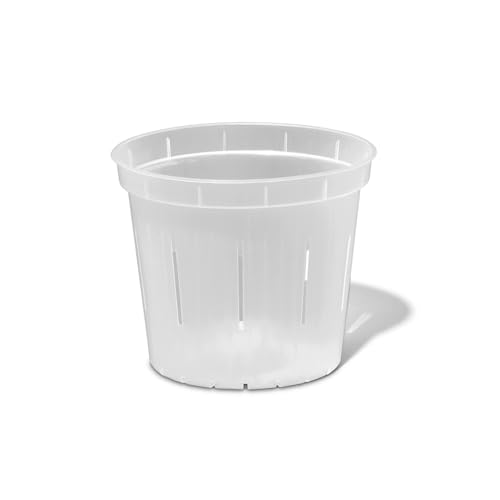
Clear plastic is a different conversation entirely, and the rePotme 4-inch set makes that case clearly. The slotted walls let air reach roots from every direction, while the transparent body shows root color and moisture levels without unpotting. Six pots arrive in a single pack, which is enough for a starter collection or a propagation project.
Growers who constantly lift the pot to peek at roots get an honest look without disturbing the plant. Compared to the decorative W&W ceramics earlier, this is a working tool more than a display piece, though the crystal finish looks neat on a sunlit shelf.
The Case For It
- Slotted sides deliver airflow, which is rare in standard plastic pots.
- Clear walls let you monitor root health at a glance.
- Six-pack value covers multiple orchids or houseplants in one order.
- UV-protected plastic resists yellowing in bright windows.
Less-Strong Areas
- Plastic walls hold moisture longer than terracotta, so you may need to extend drying time.
- Clear surface shows mineral buildup between rinses, so cleaning matters more.
Perfect Match For
Curious growers who like to watch what’s happening beneath the surface and adjust watering to match.
Not Your Match When
You want a heavier, decorative pot for a formal living room, where the Phoenix Vine 8 inch acrylic pot strikes a better balance.
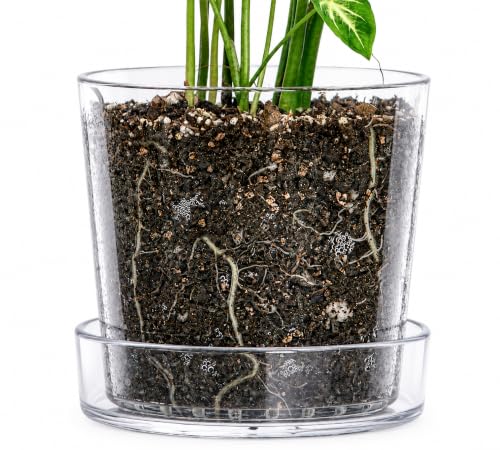
Acrylic brings a sturdier feel than standard plastic, and the Phoenix Vine pot leans into that with a thick-walled, break-resistant build. The 8-inch size gives a mature orchid room to spread, and the deep saucer is built for bottom-watering sessions where the pot soaks up moisture from below rather than getting drenched from the top.
You get the same root-watching transparency as the rePotme clear pots above, but in a larger, more substantial frame. The trade-off shows up in weight, which is still light, but heavier than a thin nursery pot, and the size may dwarf smaller starter plants.
A Strong Showing
- Acrylic build resists cracks and stays lighter than ceramic at this size.
- Deep saucer supports bottom-watering routines that reduce crown rot risk.
- Clear walls let you spot root issues before leaves show stress.
Potential Compromises
- 8-inch diameter is too large for compact mini-Phalaenopsis or young plants.
- Acrylic can scratch if scrubbed with abrasive pads, so soft cloths work best.
Feature Snapshot
Made For
Orchid owners who prefer bottom-watering and want a clear view of root progress at the same time.
A Better Fit Elsewhere
Smaller plants call for the rePotme 4 inch clear six-pack, which scales down without losing the root-watch feature.
The Koolkatkoo pot takes a different angle on orchid-friendly containers by leaning into character. The shallow ceramic body sits at 8 inches across with a cat-themed silhouette and a drainage hole, paired with a matching tray. For someone gifting an orchid to a cat-loving friend, the theme is half the appeal.
Functionally, it works as a basic orchid pot: ceramic body, drainage hole, included tray. The shallow depth, though, is more aligned with succulents, and you may find orchids in active growth need deeper room for new roots.
What Pays Off
- Decorative cat silhouette makes it a ready-to-give present.
- Ceramic build feels sturdy on a desk or shelf.
- Included tray catches overflow during watering.
A Few Limitations
- Shallow profile is better suited to small succulents than deep orchid root systems.
- Themed design limits flexibility if your style shifts later.
Who Will Love This
Anyone shopping for a small gift plant for a cat owner who enjoys themed decor.
Skip It When
You want a deeper, no-frills orchid pot, in which case the YBX YIBOXUAN terracotta pair gives more root space for a similar price range.
Self-watering planters tackle a different problem, the one where a plant sits dry for a week because nobody remembered. Vanslogreen’s 6-inch orchid pots add a reservoir base that wicks moisture up into the root zone, while perforated sides keep airflow steady. The three-pack format suits a small orchid collection or grouped gifting.
For someone who travels often, the reservoir offers a buffer. The catch is the same as other self-watering setups: you still need to check reservoir levels and refill, so it’s a tool, not a set-and-forget fix.
Real Benefits
- Reservoir base buys a few extra days between manual waterings.
- Perforated sides deliver airflow alongside the moisture control.
- Three-pack covers a small collection in one purchase.
- Lightweight plastic makes repositioning simple.
Worth Noting
- Reservoir needs regular refilling and occasional cleaning to prevent algae.
- Plastic finish shows water spots unless wiped between fills.
The Right Fit
Busy plant parents and frequent travelers who can’t keep a strict weekly watering schedule.
Reach For A Different Pick When
You prefer a low-maintenance setup with no reservoir cleaning, where the rePotme clear slotted pots stay simpler.
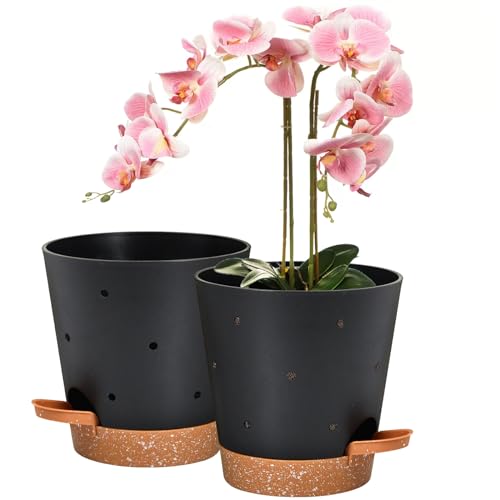
The two-pack sibling strips the Vanslogreen idea down to a starter set: two 6-inch self-watering pots with multiple ventilation holes and the same reservoir base. It fits a single shelf or a small gift nicely, without committing to the larger three-pack further up the list.
The functional profile mirrors the three-pack, so the same trade-offs apply: you gain flexibility on watering days and lose some simplicity compared to a basic slotted pot. For a beginner, the two-pack is a comfortable entry point.
The Helpful Details
- Reservoir base reduces the chance of dried-out plants during short trips.
- Multiple ventilation holes keep air moving around roots.
- Two-pack suits a first orchid or a paired display.
Points To Note
- Reservoir still demands occasional emptying and rinsing.
- 6-inch size may need an upgrade once a Phalaenopsis matures past its starter size.
Feature Snapshot
Built With In Mind
New orchid owners looking to test self-watering without buying a larger multi-pack upfront.
Another Choice May Suit
For a one-pot trial, the Koolkatkoo ceramic cat planter is a memorable alternative if the gift angle matters more than watering convenience.
The multicolor version keeps the Vanslogreen formula but splits the three-pack across different finishes, useful when you want variety on a shelf or you’re gifting each pot to a different person. The plastic body stays light, the perforated sides keep air moving, and the self-watering base offers the same buffer as the prior Vanslogreen picks.
Compared to the single-tone three-pack, this one trades a uniform look for visual variety. The honest read is that you may find the colors don’t match your room, so it helps to like at least two of the included shades.
Positive Takeaways
- Color variety brightens grouped displays and gift sets.
- Self-watering base reduces watering-day pressure.
- Same ventilation approach as the other Vanslogreen options.
Things To Weigh
- Multicolor finish may not suit a coordinated interior.
- Reservoir maintenance still applies across all three pots.
Who It Suits Best
Shoppers splitting a multi-pack into separate gifts or setting up a casual, colorful plant corner.
Where A Sibling Pick Shines
For a single coordinated look, the Vanslogreen two-pack keeps the finish consistent across both pots.
What To Weigh Before Choosing Your Orchid Planter
Drainage And Airflow Are Non-Negotiable
Orchids in the wild grow on tree bark with roots exposed to moving air, so the closer a pot mimics that, the better the plant performs. Drainage holes at the base let water escape, and slotted or perforated sides let air reach roots from the sides too. Without both, water sits and roots suffocate. Glazed ceramic works because of the holes, not in spite of the glaze.
Match The Pot Size To The Root Mass, Not The Plant
A common move is sizing up to a “roomier” pot, but orchids actually prefer a snug fit. A pot that’s roughly the same width as the leaf span keeps the root zone from staying wet too long. The rePotme 4-inch clear pots and the Vanslogreen 6-inch packs work well for younger plants, while the 7- and 8-inch options suit mature orchids that have outgrown their starter container.
Material Choice Shapes Your Watering Rhythm
Terracotta wicks moisture outward and demands more frequent watering, which suits overwaterers who want a forgiving medium. Glazed ceramic and acrylic hold moisture longer, so you’ll water less. Plastic sits in the middle, light and easy to move, though it can show mineral spots and may need cleaning between refills. Choose based on how often you actually remember to water.
Visibility Helps You Catch Problems Early
Clear pots, whether the rePotme slotted set or the Phoenix Vine acrylic, let you see root color, moisture level, and any rot before it spreads. Opaque pots hide trouble until leaves yellow. For a learning orchid keeper, the visibility advantage is hard to overstate.
Pitfalls Worth Dodging And When To Spend More
Where Shoppers Go Wrong
The most common mistake is choosing a decorative pot without drainage and dropping the nursery pot inside, which sounds safe but actually keeps the inner pot sitting in a pool of runoff. Another is sizing up too early, giving roots more wet mix than they can dry between waterings. Pots without side ventilation also limit airflow, and orchids in dim corners need every bit of air movement they can get.
What The Higher Tier Buys
Spending more typically gets you better build quality, like thicker acrylic walls on the Phoenix Vine pot, or a coordinated saucer included with the W&W ceramics. Premium tier also tends to mean thoughtful proportions, deeper saucers for bottom watering, and finishes that resist mineral staining. For a single, long-term orchid, the upgrade often pays for itself in fewer repots and longer bloom cycles.
Frequently Asked Questions
Do Orchids Need Pots With Holes?
Yes, orchids rely on drainage holes to prevent root rot, since their roots rot quickly when left in standing water. Most orchid-friendly pots have holes at the base, and many add side slots for extra airflow.
What Size Pot Works For A Phalaenopsis Orchid?
A pot roughly the same width as the plant’s leaf span, usually 4 to 7 inches for a mature Phalaenopsis, is a good starting point. Going much larger holds too much moisture for the root mass to dry between waterings.
Is Clear Plastic Better Than Ceramic For Orchids?
Clear plastic lets you monitor root health, which is helpful for beginners. Ceramic offers weight, stability, and a more decorative look. Both work well, so the choice comes down to whether you value visibility or presentation more.
Can Regular Potting Soil Be Used In These Pots?
No, orchids need a chunky, well-draining mix like bark, perlite, and charcoal rather than standard potting soil. The specialized mix lets air reach the roots the way their natural environment would.
How Often Should Orchids Be Repotted?
Most orchids benefit from repotting every one to two years, ideally after flowering. Fresh mix and a clean pot reduce salt buildup and give new roots room to develop.
Closing Remarks
A great orchid planter is one that disappears into the routine: it drains, it breathes, and it doesn’t demand constant fuss. The right pick depends on your watering habits, your decor, and how visible you want the roots to be. Pick the material and size that match your space, and your orchid will reward you with sturdier leaves and longer-lasting blooms.
