

A patchy lawn that sheds water and turns hard by midsummer usually points to one underlying problem: compacted soil. Plug aerators tackle that problem at the root zone by pulling small cores of earth out of the ground, which is why turf enthusiasts and homeowners tackling a struggling yard lean on them year after year. The picks below cover manual step-in tools, rolling drum designs, heavy-duty push styles, and tow-behind attachments suited to everything from a townhouse strip to a half-acre lot. Each option targets a different kind of user, so the right match depends on how much ground you cover, how thick the clay is, and whether you prefer a workout or a leisurely pass behind the mower.
The Lineup, Simplified

Landzie Rolling Lawn Aerator, Manual Core

Landzie Rolling Lawn Aerator Duo, Manual Core

RAEOHE Manual Core Aerator 4 Hollow Tines

Landzie Lawn Aerator Tool 42″ Hollow Tine

Landzie Tow Behind Spike Roller Aerator

Landzie Lawn Aerator Tool 42″ Set, Hollow & Spike Tines
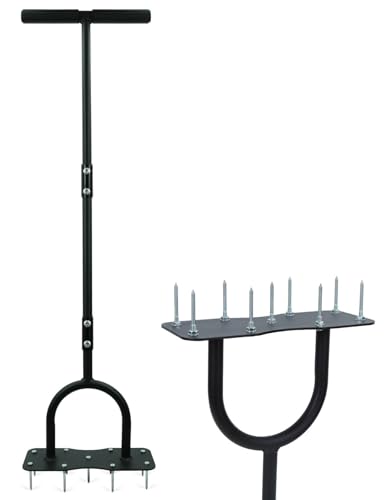
MILLUXXi Aerator Lawn Tool 2″ Spikes Dual-Screw

LawnVigor Rolling Aerator Non-Clogging Hollow Tine

Agri-Fab 45-0474 SmartLink Plug Aerator, 40 Inch
A Closer Look At Each Pick
The Landzie Rolling Lawn Aerator brings a different feel to a chore most people associate with sore knees. Instead of stepping down on a tine, you walk the drum across the turf and let the weight of the tool do the work. Seven hollow stainless tines bite into the soil and lift out small cores, leaving a satisfying pattern of holes that catch water and fertilizer.
For a typical quarter-acre lawn, this tool lands in a sweet spot between effort and output. Compared to the step-in RAEOHE pick below, you trade a bit of targeted depth for noticeably faster coverage on flat ground.
Where It Excels
- Seven stainless hollow tines pull cores without much pushing effort on the operator.
- Rolling design covers ground quickly, making it practical for yards that feel too large to aerate by hand.
- Core removal improves water infiltration within a single pass, so fall overseeding projects get a head start.
- Stainless construction helps the tines hold up across multiple seasons of clay-heavy use.
Things To Consider
- Hilly or uneven terrain makes the rolling motion harder to sustain, and users with sloped lots may find it tiring.
- Owners commonly report needing to clear soil from tines after every few feet in wet conditions, so a small stick or screwdriver becomes part of the routine.
Who It Suits Best
Homeowners with a flat, mid-size lawn who want genuine core removal without committing to a tow-behind setup.
Where Another Pick Suits Better
If your yard is small and the budget is tight, the RAEOHE Manual Core Aerator with 4 Hollow Tines is a simpler step-in option that needs almost no storage space.
The Duo takes the same rolling-drum approach as the standard Landzie and roughly doubles the working hardware. Fourteen stainless hollow tines line up in two rows, which sounds modest on paper but shows up clearly in coverage rate once you start pushing. Each pass lifts more cores, and the lawn gets the spongy, opened-up feel that signals the job is done.
Where the single drum feels just right for a small yard, the Duo starts to make sense once the lawn stretches past a quarter acre. Filling a water drum is part of the setup, so you trade a small loading step for serious weight and deeper tine penetration in dense soil.
Useful Touches
- Double row of fourteen tines pulls noticeably more cores per linear foot than single-row rollers.
- Water-fillable drum lets you dial in added weight for stubborn clay without hauling concrete blocks.
- Stainless tine material resists bending in compacted ground over multiple seasons.
Worth Noting
- The empty drum is light, and users commonly report the unit skipping or bouncing on hard soil until it is properly weighted.
- Two full rows of tines mean twice the cleaning pauses, so plan to stop every few passes in damp turf.
- Storage footprint grows because the drum is longer, which matters for anyone with a cramped shed.
Key Specs
Made For
Homeowners with half-acre or larger lawns who want manual control but refuse to spend an entire Saturday on a single aeration pass.
Look Elsewhere When
Tight garden sheds and modest yard sizes make the Landzie Rolling Lawn Aerator the more practical everyday pick.
Sometimes the simplest tool is the one that actually gets used. The RAEOHE Manual Core Aerator strips aeration down to a foot step and a handle pull, with four hollow tines that sink up to 3.94 inches into compacted ground. There is no drum to fill, no assembly project, and no wrestling a heavy frame through a gate.
It works best on small lawns, repair patches, and stubborn trouble spots where the rolling picks above would feel oversized. The trade-off is real: you supply the leg power, and large yards turn into a workout.
Useful Strengths
- 4 hollow tines reach roughly 3.94 inches down, putting air and water into the root zone where it counts.
- Side-opening design helps soil eject cleanly, which is a common pain point on cheaper step-in aerators.
- Compact build hangs on a wall hook and disappears in a closet, ideal for small-space living.
Trade Offs
- Four tines per step means a lot of stepping on larger lawns, and depending on your soil the work can feel repetitive.
- The single-user design lacks any leverage assist, so clay-heavy yards may need pre-watering the day before.
Best Suited To
First-time aerators with a small lawn or targeted repair patches who want an inexpensive, no-storage-hassle tool.
Skip It When
Anyone with more than a few hundred square feet to cover will save time with the Landzie Rolling Lawn Aerator.
Anyone who has spent a Saturday bent over a step-in aerator will appreciate what a 42-inch handle does for the lower back. Landzie takes the manual concept and lifts it to standing height, with three solid stainless tines arranged to break up soil and push old material up and out as you press down. The beveled tine design is built to reduce the clogging that frustrates first-time users.
It sits between the compact step-in picks and the rolling drums, trading raw speed for upright comfort. For gardeners managing compaction around flower beds or along fence lines, the long handle reaches awkward spots without crawling on hands and knees.
Advantages To Know
- 42-inch handle keeps the work upright, saving knees and lower back across a full afternoon session.
- Beveled tine design targets clogging, which is the most common complaint owners raise about manual coring tools.
- Stainless tine material holds an edge in dense soil and resists bending over multiple seasons of use.
Honest Caveats
- Three tines per push means slower coverage than the seven-tine Landzie Rolling Lawn Aerator on open ground.
- The longer handle helps with reach but adds storage length, so measure your shed before committing.
Feature Snapshot
Right Fit For
Gardeners who want core aeration without kneeling, especially those with raised bed borders or decorative lawn edges to navigate.
Swap It Out When
Large open lawns are faster to aerate with the rolling drum picks earlier in the lineup.
Not every aerator needs your legs. The Landzie Tow Behind Spike Roller hooks up to a riding mower, lawn tractor, or ATV and turns the job into a slow cruise around the yard. The water-fillable drum adds weight on demand, and a flip-to-tow setup means you set it down once and let the mower pull it through compacted turf.
Where spike aerators differ from core aerators matters here: spikes punch holes rather than removing plugs, so they work well as a lighter seasonal pass between deeper core treatments. Anyone hoping for plug removal will want to revisit the rolling drum picks above.
Noteworthy Benefits
- Tow-behind design scales easily to large properties, freeing the operator from pushing or stepping.
- Water-fillable drum lets you tune the weight for soft topsoil or stubborn clay without permanent modification.
- Spike pattern opens the surface for water and seed, which pairs well with fall overseeding routines.
Points To Keep In Mind
- Spike action compacts soil at the edges of each hole, which is why most turf pros alternate between spike and core aeration across seasons.
- Requires a riding mower or ATV, so it is not a fit for small push-mower households.
Who Should Grab It
Riding mower owners with expansive lawns who want fast, low-effort coverage and already plan to seed afterward.
Consider Something Else When
Homeowners who specifically need plug removal should look at the Landzie Rolling Lawn Aerator or the Agri-Fab 45-0474 SmartLink Plug Aerator instead.
The 42-inch Set is the kind of tool that adapts as your soil changes through the year. Hollow tines pull cores for the deeper fall work, while solid spike tines handle the lighter spring poke-through when the ground is too dry for clean core removal. Switching between them takes minutes, and the long handle keeps the work upright.
Versatility comes with a small footprint cost, and owners commonly report that having two tine styles on hand means they actually aerate more often rather than putting it off until conditions are perfect.
Notable Gains
- Interchangeable tines cover both core removal and spike aeration with a single handle assembly.
- 42-inch upright posture protects the lower back during longer sessions, which makes aeration a routine rather than a project.
- One tool replaces two, simplifying storage and reducing the cost of buying separate units later.
Small Caveats
- Switching tines requires some hands-on time, and users with limited grip strength may find the swap fiddly.
- The set costs more than single-purpose picks, so the upgrade only pays off if you actually use both tine styles.
Core Details
Who Will Love This
All-season lawn caretakers whose soil swings between hard summer clay and workable spring moisture.
Reach For A Different Pick When
Anyone who only needs plug removal in stable conditions can save money with the single-purpose Landzie Lawn Aerator Tool 42″ Hollow Tine.
The MILLUXXi focuses on the failure point that wrecks most budget aerators: the handle joint. A dual-screw reinforced interface replaces the single-bolt connection that snaps under heavy use, and nine pre-installed 2-inch spikes spread across a wider gap to keep mud from gluing the head into a single clump.
It is a manual spike tool rather than a core remover, so think of it as a soil-loosening pass rather than a plug-pulling project. For repair patches and overseeding prep, that distinction is often exactly what the lawn needs.
What Earns Its Place
- Dual-screw reinforced handle joint resists bending and snapping in dense clay, the most common failure in budget picks.
- Nine-spike layout with wider gaps reduces mud adhesion, so each pull comes out cleaner.
- Pre-installed spikes mean the tool is ready to use the moment it arrives, no setup project required.
Room For Improvement
- Spike action compacts soil around each hole, so it suits a yearly routine more than deep renovation work.
- Manual stepping still demands real leg effort across larger lawns, and users with joint issues may want a rolling option.
Feature Rundown
Perfect Match For
Homeowners fighting heavy clay patches who have broken cheaper aerators at the handle and want something sturdier without jumping to a rolling drum.
A Better Fit Elsewhere
Anyone needing true plug removal will get more meaningful results from the RAEOHE Manual Core Aerator with 4 Hollow Tines.
The LawnVigor Rolling Aerator focuses on the single most annoying part of drum aeration: clogged tines. Six replaceable hollow tines sit on a non-clogging design aimed at keeping soil moving through the head rather than packing into a solid plug, and the roller glides across compacted ground with steady pressure.
For yards in regions with sticky clay or frequent rain, that anti-clog approach is the difference between finishing the lawn and giving up halfway through. Owners commonly report fewer mid-pass cleaning stops compared to budget rolling picks.
Real Benefits
- Non-clogging tine design keeps soil moving through the head, so the rolling pace holds up across long passes.
- Replaceable tines extend the tool’s working life, a meaningful upgrade over fixed-tine rollers that go dull and retire together.
- Six tines balance depth with rolling speed, pulling cores without slowing the operator down on flat ground.
Where It May Fall Short
- On the steepest slopes, the rolling motion becomes harder to control, and walking uphill can feel like a workout.
- Six tines per pass is fewer than the Landzie Rolling Lawn Aerator Duo, so very large yards take longer to cover.
Built With In Mind
Homeowners in wet or clay-heavy regions who have struggled with clogged budget aerators in past seasons.
Not Your Match When
Anyone needing maximum coverage per pass should consider the Landzie Rolling Lawn Aerator Duo’s double-row setup.
The Agri-Fab 45-0474 plays a different game than the rest of the list. Rather than a stand-alone tool, it is a 40-inch attachment designed to snap into the Agri-Fab 45-0473 SmartLink Master Platform, which means it shares hardware with other SmartLink attachments you may already own or plan to add. Twenty-four rustproof aerator knives line the bottom, pulling cores across a working width that covers ground quickly.
Vertical storage is part of the design, so the unit hangs on a wall or sits upright in a corner when not in use. For anyone building out a modular yard-care system, that integration is the real selling point.
Strong Points
- Twenty-four rustproof knives handle wide passes in a single trip, which shortens the time spent on larger properties.
- Modular SmartLink design lets the same platform host other attachments, reducing overall storage clutter.
- Vertical storage footprint keeps the shed or garage floor clear during the off-season.
Points To Note
- Requires the separate SmartLink Master Platform, which adds cost if you do not already own one.
- As a tow-style unit, it assumes you have a compatible riding mower, so push-mower households will not benefit.
Feature Snapshot
Whose Shelf It Belongs On
Homeowners already invested in the Agri-Fab SmartLink system or planning to build a modular yard-care setup around it.
Where A Sibling Pick Shines
Anyone without the SmartLink platform gets a more straightforward entry point with the Landzie Tow Behind Spike Roller Aerator.
What Matters Most Before Choosing Plug Aerators
Match the Tool to Your Lawn Size
A 500-square-foot patch and a half-acre lawn do not need the same tool. Step-in manual picks are honest, affordable, and quick to store, but they punish you across larger areas. Rolling drum aerators cover more ground per pass, and tow-behind units remove the operator from the equation entirely once the mower is running. The honest read is that buying up a size category only pays off if you would actually use the extra capacity; an oversized drum in a small yard just takes up shed space.
Hollow Tines vs Spike Tines
Hollow tines remove a small cylinder of soil, which is the textbook way to relieve compaction. Spike tines push soil aside to create a hole, which is faster but tends to compact the surrounding area. Most turf care guides recommend hollow tines for serious compaction work and spike passes as a lighter seasonal supplement. The Landzie 42-inch Set and the Agri-Fab 45-0474 cover both styles, which is why they show up repeatedly in mixed-soil regions.
Handle Length and Operator Comfort
Anything that requires stepping down gets old on the knees and lower back, especially in tight passes around beds and borders. Long-handle tools like the 42-inch Landzie picks keep you upright, while rolling drums keep you walking but reduce the per-step impact. Choosing between them usually comes down to how much lawn you cover and how much storage space you have to spare.
Durability and Maintenance
Stainless steel tines, reinforced handle joints, and replaceable parts all extend the working life of a tool. The MILLUXXi dual-screw handle is a clear example of a design choice that targets the most common failure point. Owners commonly report that rinsing tines after use and storing the tool dry keeps corrosion at bay across multiple seasons, which is worth a few minutes at the end of each session.
Key Considerations Across These Picks
Pitfalls Shoppers Hit
The most common misstep is buying a spike aerator when the lawn actually needs plug removal, or vice versa. Spike tools feel easier to use, and that ease can mask the fact that compacted soil stays compacted at the edges of each hole. Another trap is underestimating storage. A 42-inch handle or a 40-inch platform attachment sounds modest until you measure the shed wall, so check the dimensions before clicking through. Finally, skipping pre-watering on dry clay turns even a good manual aerator into a back-breaking exercise, and a light soak the day before saves a lot of frustration.
What The Higher Tier Buys
The jump from a budget spike pick to a hollow-tine rolling drum is mostly about soil cores rather than holes. Core removal physically takes material out of the ground, which lets air, water, and nutrients reach deeper into the root zone. Higher-tier rolling picks also tend to add replaceable tines, water-fillable drums, and stainless construction, all of which extend working life and reduce mid-pass cleaning. For most homeowners, the upgrade makes sense once the lawn exceeds a small patch and the soil shows signs of serious compaction.
Frequently Asked Questions
How often should I aerate my lawn with a plug aerator?
Most cool-season lawns benefit from annual aeration in early fall, while warm-season grasses do best in late spring or early summer. Aerating more than once a year is usually unnecessary unless the soil is severely compacted from construction or heavy equipment.
Can I aerate right after overseeding?
It works better to aerate first, then spread seed so the seeds settle into the fresh holes. Aerating after seeding tends to disturb the new seed and reduce germination rates.
Should I water the lawn before using a manual plug aerator?
Yes, a light watering the day before softens the top layer and helps tines sink in cleanly. Overly wet soil, however, can clog hollow tines, so aim for moist rather than saturated ground.
What is the difference between spike and plug aerators?
Spike aerators push soil aside to make holes, while plug aerators pull small cores of soil out of the ground. Plug aerators relieve compaction more thoroughly, while spike picks work better as a lighter, more frequent pass.
Do I need to clean up the soil cores afterward?
Leaving the cores on the surface is standard practice, since they break down naturally and return nutrients to the lawn. Raking them up is optional and usually only done on formal turf where appearance matters.
The Takeaway
Healthy turf starts underneath, and the right plug aerator is the tool that gets air and water back into the root zone without a contractor’s invoice. Small lawns and repair patches do well with a manual step-in or a compact rolling pick, while larger properties benefit from drum or tow-behind designs. Match the tool to your soil, your storage, and your tolerance for a workout, and the lawn will thank you through the next growing season.
