

A patchy lawn in July tells you what your watering setup can’t handle. Pops up sprinklers fix the uneven-coverage problem because the heads stay buried until the system fires, then rise just high enough to throw a clean, even arc across the grass and drop back down so you can mow right over them. The list below pulls together a mix of in-ground rotors, spike-based lawn sprinklers, hose-end nozzles, and oscillating units, so you can match a tool to the size of your yard and the way you actually water it.
A Snapshot Of The Selections

K Rain ProPlus 3/4″ Reclaimed Water Gear Drive Rotor Sprinkler 4 1/2″ Pop-Up (4 Pack)

HOSUN 100% Metal Garden Hose Nozzle Sprayer (Orange)

FANHAO 3-Pack Heavy-Duty Metal Lawn Sprinkler 360° Adjustable

Orbit 55661 Voyager II Professional 4″ Pop-Up Gear Drive Rotor
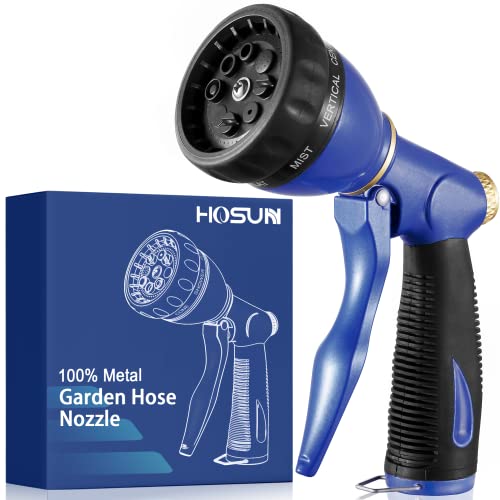
HOSUN Garden Hose Sprayer Nozzle 100% Metal 8 Patterns (Blue)
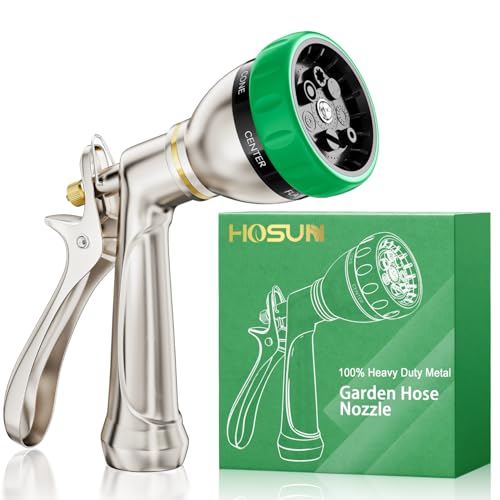
HOSUN 100% Metal Heavy Duty Garden Hose Nozzle Sprayer

HOSUN Heavy Duty Garden Hose Nozzle, Adjustable Metal (Blue)

HOSUN Heavy Duty Garden Hose Nozzle 100% Metal Adjustable

HOSUN Fire Hose Nozzle Heavy Duty Fireman Style (Black)
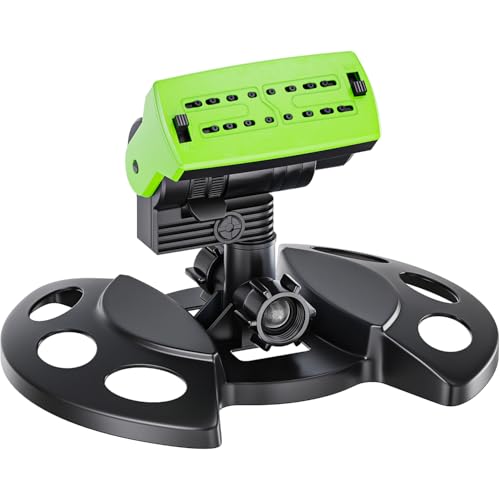
HOSUN Oscillating Lawn Sprinkler 3-Way Adjustable
Inside Each Recommended Option
This K Rain rotor is built for the yard where a small spray head just won’t reach. The 4 1/2-inch pop-up tower clears tall fescue and St. Augustine cleanly, and the gear-drive stream throws 22 to 50 feet depending on pressure and nozzle choice. A reclaimed-water (RCW) marking means the purple cap signals non-potable water, which is helpful for anyone splitting irrigation between city water and greywater or lake-fed pumps.
The body drops into standard Rain Bird 1800 cans, so swapping a tired rotor for this one usually takes a single unscrew and a hand-tighten. Arc adjustment runs from 40 degrees up to a full 360, giving you a single head to stock for corners, side strips, and wide open turf. For most suburban lots larger than 2,000 square feet, this is the rotor you’ll actually spec on a zone map.
A Few Strong Suits
- Gear-drive mechanism delivers a slow, even rotation that resists wind drift better than spray heads
- 22 to 50 foot throw covers a wide radius from a single head, reducing the count of heads per zone
- Fits Rain Bird 1800 cans, so retrofit work doesn’t require re-trenching or new swing assemblies
- Full-circle and part-circle modes in one head, useful when a zone wraps around a curved bed
- Reclaimed-water cap is a clear visual tag for non-potable supply lines
Things To Consider
- Requires a working pressure of roughly 30 to 50 PSI to hit the upper end of the distance range
- Four-pack is sensible for a multi-zone install but heavier than a single replacement head
Who It Suits Best
Homeowners with an existing in-ground system on Rain Bird 1800 cans who want longer throws and a reclaimed-water-ready rotor.
A Better Fit Elsewhere
For smaller lawns where trenching new poly isn’t on the table, the HOSUN Oscillating Lawn Sprinkler is a less invasive option.
Where the K Rain rotor hides underground, this HOSUN nozzle lives in your hand. The all-metal body is built around a zinc alloy core with a soft rubber overmold, so the grip stays warm in cool weather and won’t skate when your hands are wet. The bright orange finish makes it easy to find at the bottom of a yard cart after a long day of watering.
Multiple spray patterns are dialed in by twisting the head, and the squeeze trigger has a contour that reduces fatigue during the kind of slow, methodical watering that a delicate annual bed actually needs. The metal construction also resists the cracking that plastic nozzles pick up after one winter on a hose reel.
What It Does Well
- Rubberized grip cuts hand strain on long watering sessions
- Zinc-alloy body shrugs off the drops that split plastic nozzles
- Multiple spray settings cover mist for seedlings to jet for washing tools
- High-visibility orange is hard to lose in the grass
Worth Noting
- Trigger lock isn’t built into this model, so extended use keeps the squeeze engaged
- Pattern names aren’t printed on the dial, which means a short learning curve to find the right setting by feel
Right Fit For
Gardeners with raised beds and container plants who want a comfortable, drop-resistant nozzle for hand watering.
Skip It When
Reach for the HOSUN 100% Metal Heavy Duty Garden Hose Nozzle Sprayer instead, since it adds a lockable rear trigger for hands-free flow.
The FANHAO bundle is a practical way to cover a yard without committing to trench work. Each head is a metal spike that drives into soft soil, and three of them let you rotate positions across a weekend to chase the dry spots. The 360-degree rotation disperses water in a wide circle, and the all-metal and brass build is set up to handle season after season on the lawn.
Unlike the in-ground rotor at the top of this list, this one is a hose-fed portable. You can move it to a new zone every 30 minutes and still finish watering before lunch. For someone renting a home or working with a yard that hasn’t been mapped for irrigation yet, the flexibility is the real story.
Positive Points
- Three heads in one box lets you split a yard into overlapping zones without extra trips to the store
- All-metal and brass construction handles daily watering, summer heat, and winter storage without rust creep
- 360-degree rotation covers a circular footprint in a single placement
- Spike base anchors securely in soft soil, so the head stays put on uneven turf
Trade Offs
- Spike bases can struggle in hard or rocky soil without pre-watering the spot
- Coverage distance varies with household water pressure, so low-PSI homes may see a shorter throw than expected
- Three heads running at once may split a single hose flow, reducing per-head distance
Best Suited To
Renters and homeowners without an irrigation system who want a movable, multi-zone setup they can deploy and pack away.
Look Elsewhere When
You want a fully buried permanent system; the K Rain ProPlus 3/4″ Reclaimed Water Gear Drive Rotor Sprinkler is built for that role.
The Voyager II is the head you’d reach for on a custom install where matched precipitation matters. Matched precipitation means each head in a zone delivers the same depth of water across its throw, so a 90-degree corner head and a 180-degree side strip water the lawn at the same rate. That’s a small detail that shows up as a healthier, more even turf over a season.
A 4-inch pop-up height clears tall grass without leaving a stubble of dry rings, and the included rack of nine nozzles covers standard, low-angle, and pasture applications. The arc range matches the K Rain’s 40 to 360 degrees, but the extra nozzles give you finer control over flow at the head.
Notable Upsides
- Matched-precipitation nozzle set keeps every head in a zone applying the same depth
- 35-foot typical radius suits mid-sized residential zones
- Low-angle nozzles cut wind drift on exposed lots
- Adjustable arc from 40 to 360 degrees in a single body
Honest Caveats
- Ten included nozzles mean you may spend an afternoon matching the right one to each head
- 4-inch pop-up is shorter than the K Rain ProPlus’s 4 1/2-inch tower, so very tall grass can clip the stream
Made For
DIY installers designing a new zone layout who want to fine-tune flow per head and avoid dry patches along rotor edges.
Swap It Out When
Your lawn is small enough that one hose-fed sprinkler does the job, in which case the HOSUN Oscillating Lawn Sprinkler is a simpler pick.
The pattern count is what makes this HOSUN stand out. Eight modes give you a mist for seedlings, a flat fan for rinsing siding, a jet for filling buckets, and a soaker for established shrubs, all in one nozzle. The zinc-alloy body is finished with a baked enamel and anodized coating, so it looks closer to a piece of hardware than a plastic yard tool.
Switching modes is a twist of the head, and the click between patterns is firm enough to stay put under pressure. Compared to the HOSUN orange nozzle reviewed earlier, this one trades the rubber overmold for a more traditional metal grip and adds two extra patterns. The blue color also makes it easier to spot in a tool shed.
Useful Strengths
- Eight spray patterns cover the range from delicate mist to flat rinse
- Anodized finish resists corrosion in humid coastal climates
- Baked enamel surface wipes clean of mud and mineral deposits
Points To Note
- All-metal body can feel cold in early-morning watering sessions
- Pattern selector can stiffen after long storage with hard-water mineral buildup; a quick rinse usually clears it
Who Should Grab It
Households that use one hose nozzle for watering, washing the car, and rinsing outdoor furniture, and want one tool to handle it all.
Not Your Match When
You mainly need high-volume soaking, in which case the HOSUN Fire Hose Nozzle delivers a more aggressive stream.
The standout feature here is the lockable rear trigger, a small lever that holds the trigger down so you don’t have to. For an hour of bed watering or a deep soak on a new tree, that lock means the difference between a relaxed hand and a cramped one. The body is solid zinc alloy with a rubberized head that absorbs the shock when the nozzle hits the patio.
The trade-off is fewer pattern options than the 8-pattern HOSUN reviewed above, but the core spray modes cover what most yards actually need. Owners commonly report that the trigger lock becomes the feature they miss most when they pick up a different nozzle.
What Makes Sense
- Lockable rear trigger eliminates constant squeezing during long watering tasks
- Solid zinc-alloy body resists rust and corrosion over multiple seasons
- Rubberized bezel absorbs the impact of a drop on concrete
Room For Improvement
- Fewer spray patterns than the 8-pattern HOSUN model
- Lock lever can be a little stiff when the nozzle is brand new, loosening up after a few uses
Perfect Match For
Anyone who waters deep and slow, such as soaking new plantings or filling a kiddie pool, and wants to keep the water on without holding the trigger.
Another Choice May Suit
For pattern variety on a smaller watering chore, the HOSUN Garden Hose Sprayer Nozzle 100% Metal 8 Patterns is a better fit.
This blue HOSUN leans hard on drop protection. The bezel dial is wrapped in a shock-absorbing rubber that takes the hit when the nozzle slips off a hose reel or a workbench. The body underneath is zinc alloy, the same corrosion-resistant material used in the other HOSUNs on this list, so the long-term story is the same.
Seven adjustable spray patterns cover the bases: mist for new seed, shower for hanging baskets, jet for cleanup, and a few in between. Compared to the 8-pattern model earlier, you trade one mode for a more forgiving outer rim. For households where the nozzle has a habit of taking a beating, that bezel dial is the reason to choose this one.
What Helps Most
- Rubberized bezel dial cushions the impact from drops onto hard surfaces
- Zinc-alloy body handles humidity and hose-bib splash zones without surface pitting
- Seven patterns cover the typical yard and wash-down tasks
Less Ideal Details
- One fewer pattern than the 8-mode HOSUN, so the rarest modes are missing
- Rubber bezel can collect grit from a dusty tool shed, so a quick wipe keeps the dial moving smoothly
Whose Shelf It Belongs On
Busy households, families with kids who help in the yard, and anyone whose gear tends to end up on the driveway.
Where A Sibling Pick Shines
For a lockable trigger on long soaks, the HOSUN 100% Metal Heavy Duty Garden Hose Nozzle Sprayer is the stronger option.
This is the most stripped-down HOSUN on the list, and that is also the appeal. The whole body is zinc alloy with a rubberized sprayer head for impact protection, and there are no frills that complicate the dial. For someone replacing a cracked plastic nozzle that finally gave up, the upgrade path is short: screw it on, twist to the pattern you need, and water.
The adjustable head covers a useful range from a focused stream to a wide fan, and the metal body takes the temperature swings of a winter hose reel without the brittleness that cracks ABS plastic. It’s a workhorse nozzle, not a flagship.
Strengths Worth Knowing
- 100% metal body eliminates the cracking failure mode common to plastic nozzles
- Rubberized sprayer head reduces damage from accidental drops
- Straightforward adjustment keeps the learning curve short
Small Caveats
- Fewer spray settings than the 7- or 8-pattern HOSUN models
- No trigger lock, so extended use keeps the squeeze engaged
Built With In Mind
Shoppers who want a metal upgrade over a basic plastic nozzle without paying for pattern variety they won’t use.
Reach For A Different Pick When
For lockable continuous flow, the HOSUN 100% Metal Heavy Duty Garden Hose Nozzle Sprayer is the better fit.
The fireman-style nozzle is the most forceful hose-end tool on this list. Twisting the barrel adjusts the stream from a tight, high-volume jet all the way out to a wide, gentle fan, and the difference between the two extremes is wider than on a standard adjustable nozzle. That range makes it well suited to fast fills (a wheelbarrow, a stock tank, a pool) and to deep soaking without disturbing the mulch around a plant.
The build follows the rest of the HOSUN metal lineup, with a heavy body that holds up to repeated drops. The trade-off is weight: a long session with this nozzle will tire your hand faster than a lighter plastic model. If you want a more ergonomic grip, the HOSUN orange nozzle with the rubber overmold is the friendlier option for everyday bed watering.
Key Advantages
- Wide adjustment range covers a slow drizzle and a high-volume jet in one tool
- Boosts perceived water pressure, useful on homes with marginal supply pressure
- Heavy-duty body suits fast fill tasks like topping off a pool or washing a deck
Potential Drawbacks
- Heavier than standard nozzles, which adds hand fatigue on long sessions
- Full jet can be too aggressive for tender seedlings, so a gentler setting is required around new growth
The Right Fit
Yards with deep-rooted trees, fast fill tasks, and homeowners who want one nozzle that can also wash a car or rinse a deck.
Not Your Match When
For precise pattern work on flower beds, the HOSUN Garden Hose Sprayer Nozzle 100% Metal 8 Patterns is a more controlled option.
The oscillating sprinkler closes out the list with the cleanest fit for a rectangular lawn. The swing arm sweeps back and forth, laying down a rain-like pattern that matches the shape of most suburban yards, where rotors sometimes overshoot fences and waste water on the driveway. Three independent adjustments cover spray width, swing range, and flow rate.
The unit connects to a standard 3/4-inch garden hose, the same fitting you’ll find on most outdoor spigots. The flow control is the underappreciated dial here: it lets you dial back output on a low-pressure well system or ramp it up when you’re running off city water. Owners commonly report the simple setup and the way the wide sweep covers a strip of lawn in one placement.
The Value In It
- Three-way adjustment matches the spray footprint to a rectangular yard
- Standard 3/4-inch hose connection fits typical outdoor spigots
- Automatic swing arm covers a wide area without repositioning
- Flow control helps when running on a low-pressure well or rainwater system
Worth Bearing In Mind
- Not as wind-tolerant as a low-angle rotor, so gusty afternoons can drift the spray
- Footprint assumes an open rectangular lawn; oddly shaped yards may leave dry corners
Who Will Love This
Homeowners with a typical rectangular yard who don’t want to install an in-ground system and prefer a single, simple placement.
Swap It Out When
You have curved beds or a multi-zone layout, in which case the FANHAO 3-Pack Heavy-Duty Metal Lawn Sprinkler gives more flexible coverage.
What To Weigh Before Buying Pops Up Sprinklers
Yard Shape And Throw Distance
A long, narrow lawn rewards a rotor with a tight arc and a long throw, like the K Rain ProPlus or the Orbit Voyager II, while a square lot often does better with an oscillating pattern. Match the head’s reach to the actual dimensions of the zone, not the size of the lot on paper. A head that overshoots a fence line wastes water and can stain concrete or siding.
For smaller beds, a hose-end nozzle with adjustable patterns is usually enough. For anything over 2,000 square feet of turf, plan on either a portable spike-based sprinkler or a permanent in-ground rotor system, depending on how much digging you want to take on.
Water Pressure And Supply
Rotor heads typically need 30 to 50 PSI to deliver their rated throw. Check the static pressure at your hose bib before sizing a system. A low-pressure well may need a booster pump or a sprinkler design that doesn’t depend on long throw, like the oscillating option at the bottom of this list.
Match nozzles to your available pressure, and avoid running too many heads on one zone, since splitting flow across multiple heads reduces each head’s reach. The Orbit Voyager II’s matched-precipitation nozzles are designed to keep depth even across heads in the same zone.
Durability And Maintenance
Plastic nozzles are the first thing to crack in a cold snap or a hard drop. Metal bodies, like the zinc-alloy HOSUNs and the FANHAO metal heads, last longer on a hose reel left outside. Pop-up rotors need occasional lift-and-clean cycles to flush debris from the riser, especially after a mow when clippings collect around the cap.
If you have reclaimed water, look for a purple cap or an RCW marking like the one on the K Rain ProPlus. That visual cue helps anyone working on the system later identify non-potable lines quickly.
Installation And Portability
Permanent in-ground rotors require trenching, swing assemblies, and a valve manifold. The trade-off is a hands-free system that runs on a timer. Portable spike sprinklers and hose-end nozzles install in seconds and store in a shed, which suits renters or anyone with a yard that isn’t fully landscaped yet.
Decide upfront how permanent you want the system to be. Moving spike sprinklers around the yard every week is realistic for a season, but if you’re tired of the routine, it’s a sign the next step is a buried rotor layout.
Picking The Right Tier For Your Lawn
Where Shoppers Go Wrong
The most common slip is buying a rotor head rated for 50 feet of throw and then running it on 25 PSI household pressure, which trims the effective reach to 30 feet and leaves dry rings at the edge of the zone. Always check the operating pressure range before sizing a system.
Another trap is mixing head types in the same zone. A spray head and a rotor in one zone deliver water at very different rates, so the lawn gets uneven coverage and a portion of the turf stays thirsty. Keep matched-precipitation heads together on one zone, and run rotors on their own circuit.
What The Higher Tier Buys
Spending more on a gear-drive rotor usually nets you matched-precipitation nozzles, a stronger spring for cleaner pop-down, and a body that holds calibration through several seasons. For a yard under 1,500 square feet, that upgrade rarely pays back in healthier grass. For anything over a half-acre with multiple zones, the higher tier tends to show up as fewer dry patches and less time adjusting heads by hand.
On the hose-nozzle side, the higher tier buys metal bodies, rubber impact bezels, and trigger locks. Those features matter most for daily users and households that treat the nozzle as a long-term tool rather than a seasonal disposable.
Frequently Asked Questions
What is a pop-up sprinkler and how is it different from a hose-end sprinkler?
A pop-up sprinkler is buried in the ground and rises on a small riser when the irrigation valve opens, then drops back below grade when the cycle ends. A hose-end sprinkler stays on the surface and connects to a garden hose, so you move it by hand. Pop-ups are best for permanent systems, while hose-end models suit renters and small yards.
How far should a residential pop-up rotor throw?
Most rotors on a standard home system throw between 20 and 35 feet. The K Rain ProPlus and the Orbit Voyager II both fall in this range, with longer throws available at higher pressure. Match the throw to the size of the zone, not the size of the yard.
Can I mix spray heads and rotors on the same zone?
No, mixing them delivers different precipitation rates and leaves parts of the lawn over- or under-watered. Run rotors on their own zone, and keep spray heads on a separate circuit. The Orbit Voyager II’s matched-precipitation nozzle set helps when you want different arcs on the same zone.
How often do pop-up sprinklers need maintenance?
Twice a year is a reasonable cadence. Lift the riser and flush the head, clear any debris from the screen, and check the arc adjustment. After a mow, a quick visual check for clogged nozzles saves you from a dry patch in mid-July.
Are metal hose nozzles worth the upgrade over plastic?
For most households, yes. The HOSUN metal nozzles reviewed above all use zinc-alloy bodies that resist the cracking and the leaking that come with age on plastic models. The trade-off is weight, so if you have hand or wrist fatigue, look for a rubber-grip model like the HOSUN orange nozzle.
Closing Thoughts
The right sprinkler comes down to yard size, layout, and how permanent you want the install. A rotor system like the K Rain ProPlus or the Orbit Voyager II is a solid answer for larger lots with a valve manifold in place. A hose-end or oscillating tool like the HOSUN oscillating sprinkler or the FANHAO 3-pack covers the rest of us without a weekend of trenching. Pick the one that matches your watering reality, and the lawn usually takes care of itself from there.
