

Setting fence posts by hand gets old fast, especially when the soil leans rocky or the line runs long. A good post-driver turns a sweaty afternoon into a manageable one, whether you’re stretching wire across a pasture or anchoring a row of T-posts along a garden edge. This lineup covers manual pounders for quick solo jobs and gas-powered units built for serious acreage, so you can match the tool to the workload.
The Picks In Brief

VEVOR Fence T Post Driver 4.11″ Carbon Steel
MTB Supply 24″ Fence Post Driver 12LB

Gtongoko 8LB Fence Post Driver Black

Gtongoko 12LB T Post Driver 17″ Black

Gtongoko 12LB T Post Driver 17″ Red
Gtongoko 8LB Fence Post Driver Red

32.6CC 2-Stroke Gas Powered T-Post Driver

52CC 2-Stroke Gas Powered T Post Driver

37.7CC 4-Stroke Gas T-Post Driver
A Deeper Look At The Lineup
This is the heavyweight manual pounder of the group, with a 22-pound carbon steel body that delivers serious downward force on every lift. The 4.11-inch inner diameter swallows U-channel posts, sign poles, and standard wooden posts without wobble, and the loop-style handles make repeated strikes manageable for a solo operator working a long line. Owners commonly note that the plastic-spray coating holds up well against rust through wet stretches, which matters when the tool spends more time leaning against a fence than in a dry shed.
Where it earns its place is on tougher ground, where lighter drivers bounce off instead of biting in. If your project involves driving posts into compacted clay or rocky pasture, the extra weight translates into fewer strikes per hole and less fatigue by the end of the day.
Why It Works Well
- The 22-pound drive weight powers through compacted soil that stops lighter drivers cold.
- The 4.11-inch inner diameter fits a wide range of post profiles, from U-channel to square wooden stakes.
- Loop handles convert lift energy into hammering force, reducing strain on wrists and shoulders.
- The plastic-spray coating holds up to repeated outdoor exposure and resists rust.
- Carbon steel construction handles the repeated impact without deforming at the head.
Things To Consider
- At 22 pounds, repeated lifting across hundreds of posts will wear on most arms, so pacing matters.
- Loop handles can feel narrow for users with larger hands or thick work gloves.
Key Specs
Who It Suits Best
Solo operators fencing pastures, orchards, or large garden boundaries on tougher soil will appreciate the extra weight and the wide 4.11-inch opening.
Consider Something Else When
For very short runs or soft topsoil, the lighter MTB Supply 24″ Fence Post Driver 12LB saves effort without overdriving smaller posts.
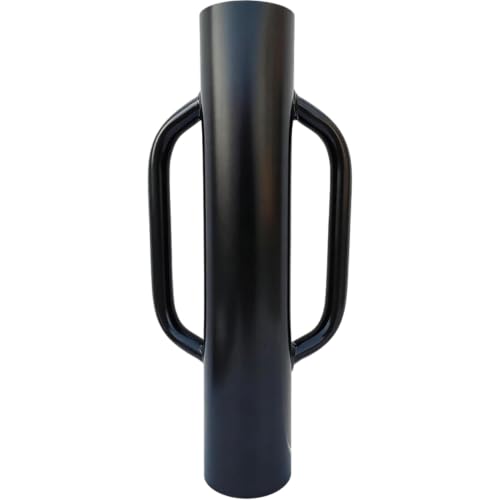
The MTB Supply driver is the short, light option in this lineup, with a 24-inch overall length and a 12-pound drive weight that’s manageable for almost anyone. The 2.67-inch inside diameter targets U-posts and similar profiles rather than oversized wooden stakes, so this tool works best in tight, repetitive situations where control matters more than raw impact. The solid round body and dual handles keep strikes straight, which matters when you’re setting a perfectly aligned garden row.
It slots in naturally as the lighter counterpart to the VEVOR above, trading weight for ease of use. For short fence repairs or a single weekend project, the lower mass saves your shoulders without giving up real driving power in soft to moderate soil.
A Favorable Mix
- The 12-pound lift weight stays comfortable across a full afternoon of post work.
- The 24-inch length gives good clearance without feeling unwieldy overhead.
- Twin handles help keep strikes plumb so posts set straight the first time.
- Solid round steel body focuses impact energy directly onto the post head.
- Compact size suits gardeners and homeowners with limited storage space.
Worth Noting
- The narrower 2.67-inch opening will not accept larger wooden posts or thick sign poles.
- Lighter mass means more strikes per post on hard, compacted, or rocky ground.
Built With In Mind
Homeowners running short garden fence lines or a few U-posts for a trellis will find this driver’s weight and length easy to handle.
A Better Fit Elsewhere
The Gtongoko 8LB Fence Post Driver Black is a comparable lightweight alternative with a wider range of compatible post sizes.
Gtongoko’s 8-pound entry sets the bar low for effort, which makes it appealing for first-time users or anyone who doesn’t want a heavy lift on every post. The corrosion-resistant powder-coated black finish shrugs off weather and keeps the tool looking fresh after seasons of leaning in the rain. Like the MTB Supply above, it’s a single-post hand pounder, but the lower weight means you can pace yourself across long runs without dreading the next lift.
The trade-off shows up in tougher soil, where 8 pounds may bounce more than bite. Think of it as a tidy, no-fuss starter tool for light fencing rather than a pasture workhorse.
Where It Delivers
- At 8 pounds, even beginners can drive a full line of T-posts without arm fatigue.
- The black powder-coat finish resists rust, fading, and scratches in outdoor storage.
- Loop handles keep grip secure through repeated strikes.
- Compact form factor stores easily on a shelf or in a small shed.
Trade Offs
- Lighter mass requires more strikes per post on hard or rocky ground.
- Loop handles can dig into gloved hands during extended sessions.
Right Fit For
Beginners and homeowners fencing small garden plots or property lines in soft to moderate soil will appreciate the easy-lift design.
Look Elsewhere When
The Gtongoko 12LB T Post Driver 17″ Black is the natural step up when the soil gets tougher or the posts get longer.
This 17-inch Gtongoko lands in the practical middle of the manual category at 12 pounds, which is enough mass to drive T-posts into firm ground without wearing out a casual user. The corrosion-resistant black powder coating matches the smaller 8-pound version above, so the two stack nicely if you own both. It’s a dependable pick when you need something more capable than a starter tool but don’t want to wrestle with a 20-plus-pound rammer.
For ranchettes, hobby farms, and large garden boundaries, this driver covers the common cases without specialization in either direction. It’s the kind of tool most people reach for first and regret not buying sooner.
What It Does Well
- The 12-pound drive weight balances impact force and lift effort across long sessions.
- Works with T-posts, U-channel, metal posts, and sign poles in standard sizes.
- Powder-coated steel holds up through repeated outdoor exposure.
- Loop handles give a controlled grip for accurate post alignment.
- Manageable 17-inch length keeps the tool overhead-friendly on taller posts.
Honest Caveats
- Midweight design still demands real effort on dense or rocky ground.
- Loop handles may feel narrow for users with larger hands.
Key Specs
Made For
Ranch owners and serious gardeners running multi-section fence lines will find this the most balanced manual pick in the lineup.
Skip It When
The 52CC 2-Stroke Gas Powered T Post Driver is the better match for very long fence runs where arm fatigue becomes the limiting factor.
The red variant of Gtongoko’s 17-inch, 12-pound driver delivers identical performance to the black model covered above, with the only meaningful change being the finish color. That red powder coat isn’t purely cosmetic. A brightly colored tool is easier to spot in tall grass, along a fenceline, or in a busy trailer, which cuts down on the small but real annoyance of misplaced equipment after a long day.
For crews who share tools across multiple properties or job sites, the visibility alone can justify the choice. Functionally, this is the same midweight pounder as its black sibling.
What Stands Out
- The red finish is easy to spot in tall grass, brush, or loaded trailers.
- Same 12-pound drive weight as the black version, so performance carries over.
- Corrosion-resistant powder coat protects against weather and fading.
- Loop handles support accurate, repeatable strikes.
Points To Note
- Identical specifications to the black version mean no functional upgrade for choosing the red finish.
- Red coating may show scuffs and chips more visibly than darker finishes over time.
Best Suited To
Working crews and contractors who need to find tools fast on a busy site will appreciate the high-visibility finish.
Another Choice May Suit
The VEVOR Fence T Post Driver 4.11″ Carbon Steel suits solo operators who want more driving weight than this 12-pound tool provides.
This red version of Gtongoko’s 8-pound pounder rounds out the lightweight manual lineup, matching the black 8-pound model in specs while adding the same high-visibility finish as the larger red driver above. At 8 pounds, it’s the easiest tool here to lift repeatedly, which suits anyone with shoulder or wrist concerns or anyone setting posts across a long garden row at a steady pace. The compact size also makes it friendly to store in a crowded shed corner or hang from a pegboard.
You’re choosing this over the black 8-pound Gtongoko mainly for visibility on the worksite. Functionally, the two are interchangeable.
The Upside
- The 8-pound lift weight reduces fatigue across long stretches of fencing.
- Red powder-coat finish is easy to find in tall grass or low light.
- Corrosion-resistant coating holds up through seasons of outdoor exposure.
- Loop handles provide a controlled, repeatable grip.
- Compact footprint fits small storage spaces and crowded tool racks.
Possible Compromises
- Light weight means more strikes per post on compacted or rocky soil.
- Smaller mass delivers less driving force than 12- and 22-pound options in the lineup.
Key Specs
Who Should Grab It
Homeowners with softer soil or anyone who wants the lightest possible lift across many posts will find this an easy, low-effort choice.
Reach For A Different Pick When
The Gtongoko 12LB T Post Driver 17″ Black handles denser ground with fewer strikes per post.
Stepping into gas-powered territory, this 32.6cc two-stroke unit delivers impact energy and high-frequency hammering that no manual driver can match, while keeping weight and complexity manageable for first-time power-tool users. The single-cylinder air-cooled engine (air-cooled means heat is shed through external vents rather than a liquid system) keeps the running temperature in check during extended sessions, and the portable form factor travels well to remote fence lines.
For property owners ready to leave manual pounding behind, this is the lightest, simplest entry into gas-powered post driving.
Features That Help
- The 32.6cc engine drives posts into firm ground far faster than any manual tool.
- Air-cooled single-cylinder design supports longer working sessions without overheating.
- Portable form factor makes transport to remote fence lines manageable.
- Two-stroke simplicity keeps maintenance approachable for casual users.
A Few Limitations
- Two-stroke engines require fuel-oil mixing, which adds a step versus four-stroke units.
- Higher noise and vibration levels compared to manual drivers.
Key Specs
Perfect Match For
Property owners setting posts across small acreages who want the speed of a gas driver without the complexity of a larger engine.
Swap It Out When
The 52CC 2-Stroke Gas Powered T Post Driver delivers more impact for longer commercial runs.
The 52cc two-stroke is the muscle option of the gas-powered group, packing the highest output here alongside an aluminum drive housing that keeps overall weight manageable. Soft rubberized sponge handles absorb a meaningful share of the recoil, which matters when you’re driving post after post on a long fence day. Two interchangeable driving heads arrive in the box, letting you switch between post sizes without hunting for separate adapters.
Where this driver earns its keep is on longer runs where speed and impact force directly translate into finished fence line. You trade portability for power, but for serious acreage, the trade is worth it.
The Practical Payoff
- The 52cc engine delivers the highest impact energy in the lineup.
- Aluminum drive housing lightens the load without sacrificing durability.
- Rubberized sponge handles reduce recoil fatigue during long sessions.
- Two driving heads support different post profiles out of the box.
- Air-cooled single-cylinder design sustains performance over hours of work.
Things To Weigh
- Two-stroke fuel mixing adds a maintenance step versus four-stroke units.
- Larger engine means more noise, vibration, and weight than the 32.6cc alternative.
Key Specs
Whose Shelf It Belongs On
Contractors and large-property owners running hundreds of posts will see the most value from this driver’s impact and accessory heads.
Not Your Match When
The 37.7CC 4-Stroke Gas T-Post Driver fits users who prefer no fuel mixing and appreciate the included storage case.
Closing out the lineup, this 37.7cc four-stroke unit trades the fuel-mixing hassle of two-strokes for a cleaner-burning engine that runs on straight gasoline. The air-cooled body with multiple cooling vents keeps temperatures in line across long workdays, and the included storage case makes transport between sites or seasons much easier. For anyone put off by two-stroke oil-and-gas measuring, this is the more user-friendly gas option.
It pairs nicely with the manual tools in this roundup as a step-up when a property’s needs grow beyond what arms alone can manage.
The Case For It
- Four-stroke engine runs on straight gasoline, eliminating fuel-mixing steps.
- Air-cooled body with multiple vents sustains performance over long sessions.
- Included storage case protects the tool during transport and off-season storage.
- Mid-range 37.7cc displacement balances power and handling.
- Plastic, iron, and aluminum construction offers durability without excess weight.
Points To Keep In Mind
- Heavier than the 32.6cc two-stroke entry, which can affect portability.
- Higher upfront cost than manual drivers in this lineup.
Built With In Mind
Ranchers and homeowners who want gas-powered speed without the two-stroke mixing routine will appreciate this clean-burning option.
Where Another Pick Suits Better
The 52CC 2-Stroke Gas Powered T Post Driver delivers more impact when raw power matters more than engine simplicity.
Picking The Right Post-Driver For Your Project
Choosing a post-driver comes down to matching the tool’s effort level to your project size, soil type, and physical comfort. Manual drivers split into three useful tiers: light (around 8 pounds) for short runs and soft ground, midweight (12 pounds) for the typical backyard or ranchette job, and heavy (20-plus pounds) for tougher soils and larger posts. Drive weight, which is the mass the tool uses to strike the post, matters more than overall tool weight when you want posts driven deep in fewer strikes.
Post compatibility is the other big lever. U-channel and T-posts slip into the narrower openings on most manual drivers, while wooden posts and thicker sign poles need a wider inner diameter. If your project mixes post types, a wider 4-inch-plus opening like the VEVOR’s saves you from buying two tools.
For projects that exceed a few dozen posts, gas-powered drivers shift the math entirely. They cost more upfront, but they remove the manual effort that limits how much fence line one person can set in a day. Two-stroke engines are lighter and simpler internally, while four-stroke engines run on straight gasoline, which many people prefer.
Smart Considerations Across These Picks
Where Shoppers Go Wrong
A common slip is choosing the lightest driver without checking post compatibility, then discovering that thicker wooden or sign posts won’t seat properly. Always confirm the inner diameter of the driver against the post profile you plan to use, not just the listed weight class. Another trap is underestimating how fatigue accumulates across a full fence line. What feels easy on post five can feel miserable by post fifty, especially with heavier manual tools.
What The Higher Tier Buys
Stepping up from a light manual driver to a heavy manual or gas-powered model buys impact force, post-type flexibility, and time savings across long runs. The heavier and more powerful tools cost more and demand more respect in storage and handling, but for serious acreage they pay back through fewer strikes, faster completion, and wider post compatibility. The honest read is that the upgrade is worth it once your project crosses a few dozen posts or includes harder soil conditions.
Frequently Asked Questions
What size post-driver do I need for T-posts?
Standard T-posts fit through any driver with an inner diameter of roughly 1.75 to 2 inches, so almost every manual driver on this list handles them. For deeper driving or tougher ground, a heavier manual pounder or a gas-powered unit reduces the number of strikes per post.
Can a manual post-driver handle rocky soil?
A heavier manual driver (20 pounds or more) can manage rocky soil if you’re patient, but in heavily compacted or rocky ground, a gas-powered driver is far more efficient. Repeated light strikes against rock tend to bounce and tire the operator without making real progress.
Are gas-powered post-drivers difficult to maintain?
Two-stroke units require fuel-oil mixing, while four-stroke models run on straight gasoline but need occasional oil checks and air-filter cleaning. Owners commonly report that keeping cooling vents clear and the air filter clean is the most important routine for engine life.
How deep can a post-driver drive a post?
Most drivers can set standard fence posts to their full length on typical ground, but the limiting factor is usually soil resistance rather than driver reach. Expect deeper driving in soft or previously worked soil and shallower, harder driving in compacted clay or gravel.
What’s the difference between a 2-stroke and 4-stroke post-driver?
A two-stroke engine combines fuel and oil in the tank and is lighter and simpler, while a four-stroke engine uses separate oil and gasoline and runs cleaner but weighs more. For most homeowners, the choice comes down to whether you prefer lighter handling or the convenience of straight gasoline fueling.
Wrap Up
A good post-driver turns fence work from a grudge task into a manageable project, and the right pick depends on the scale of your line and the ground underfoot. Match the tool’s weight and power to the soil, confirm post compatibility, and the rest takes care of itself. Whichever tier fits your property, the picks above cover the common scenarios you’ll run into across a typical fence season.
