

A pot is a pot, until you try to anchor a six-foot palm on a windy patio and watch the whole thing lean like it’s trying to leave. Palm roots run deep, and they hate being cramped, so the container you choose quietly decides whether your tree looks like a resort accent or a stressed houseplant in a drum.
The right pot does three jobs at once: it gives roots room to stretch, it drains well enough to stop root rot, and it doesn’t require two people to move it when the seasons turn. This list collects ten containers, from rolling steel workhorses built for serious trees down to small ceramic accent pots, that each solve that problem in a slightly different way.
The Choices Worth Comparing

Vego garden Rolling Metal Citrus Tree Planter 21″ Round 2 Pack (Olive Green)
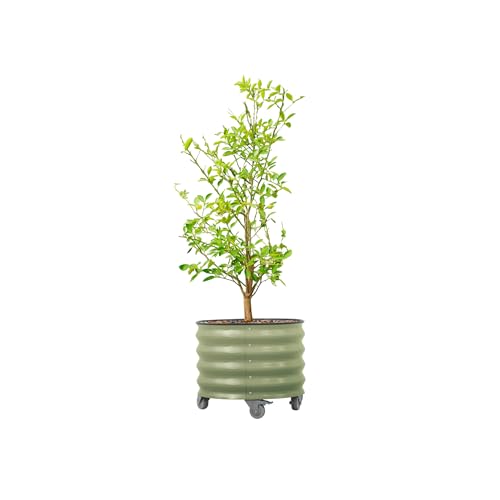
Vego garden Rolling Metal Citrus Tree Planter 21″ Round 20 Gallon (Olive Green)

Vego garden Rolling Metal Citrus Tree Planter 24″ Round 30 Gallon (Pearl White)

Vego garden Gen 3 Self-Watering 24″ Rolling Citrus Tree Planter 30 Gallon (Pearl White)

Veradek Demi Series Large Round Outdoor Planter

Vego garden Rolling Metal Citrus Tree Planter 27″ Round 45 Gallon (Olive Green)

Vego garden Classic Rolling Citrus Tree Planter 1.75′ Metal Raised Bed (Olive Green)

D’vine Dev 6.5″ Ceramic Planter Pot (Olive)
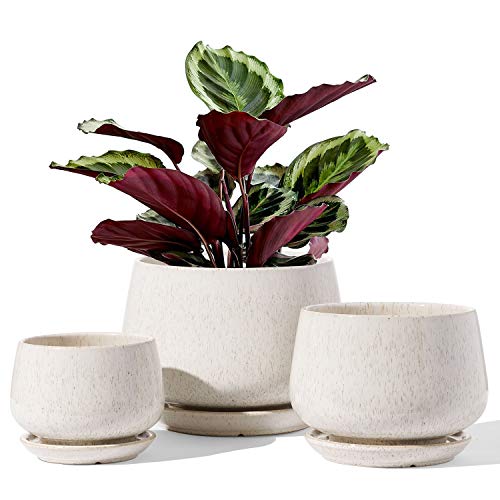
LE TAUCI Plant Pots 4.1+5.1+6.5″ Set of 3 (Reactive Glaze Beige)

LE TAUCI 12″ Ceramic Planter (Reactive Glaze Beige)
Meet The Standout Selections
Two matching steel planters that frame a patio like bookends, without the awkward “I only need one” problem that haunts single-purchase decisions. The 21-inch rounded-square footprint slips into corners where a 27-inch round would crowd everything, and the locking wheels mean you can chase morning sun on one side of the deck and shade on the other without dragging wood over concrete.
Each pot holds 20 gallons of soil, which is enough root volume for a juvenile palm in the 3 to 5 foot range, or a pair of matching citrus or olive trees if palms aren’t your plan. Compared to the single-pack version further down this list, the value angle is the headline: you get symmetry for a front entryway or flanking pool deck, and the second planter absorbs any “what if one cracks” anxiety.
What Stands Out
- Matching pair lets you anchor symmetric spaces without buying a second one later
- Locking caster wheels prevent the slow drift down a sloped patio
- 20-gallon capacity comfortably supports a young parlor or majesty palm
- Olive green finish hides mineral staining and water spots better than white
- Drainage holes at the base cut down on the guesswork of watering frequency
Worth Noting
- Steel can heat up in direct summer sun, so palms with sensitive root systems may need shade for the pot itself
- Two planters require a level surface, since casters roll freely until locked
Feature Snapshot
Whose Patio It Belongs On
Shoppers planting a pair of palms or dwarf fruit trees and who want a finished, symmetrical look on day one.
Reach For A Different Pick When
The Veradek Demi Series Planter suits anyone who would rather have a stationary, concrete-look accent than a rolling steel pair.
The solo version of the 21-inch steel design, aimed at anyone who only has room for one statement tree. It shares the same footprint, the same caster system, and the same drainage approach as the pair earlier, just without the second planter showing up on your doorstep.
For a single parlor palm on an apartment patio or a young majesty palm by the front door, the 20-gallon volume is the practical sweet spot. You get enough soil mass to keep watering intervals reasonable without making the planter a workout to reposition.
Useful Strengths
- Single-pack price point is friendlier if you only need one accent
- Locking wheels let you rotate toward the sun through the day
- Drainage holes cut down on root rot risk in heavy summer rains
- Olive green hides hard-water marks on the side walls
Points To Note
- Not tall enough for very large or top-heavy palms that need a deeper soil column
- Steel construction can scuff decking if dragged without engaging the wheels
Made For
Apartment or condo gardeners working with a single corner of patio that needs one well-finished palm in a movable container.
Look Elsewhere When
The Vego garden Gen 3 Self-Watering 24″ Rolling Citrus Tree Planter suits you better if forgetting to water is a recurring problem.
Step up from the 21-inch models and the soil volume jumps from 20 to 30 gallons, which sounds modest on paper but feels like a real upgrade once a palm’s root ball has had a season to fill out. The Pearl White finish reads more like a modern design object than a steel drum, and it shows up in HOA-sensitive neighborhoods that tend to push back on industrial-looking hardware.
Where the 21-inch pots suit juvenile trees, the 30-gallon capacity is where established, in-their-prime palms finally stop tipping after a strong gust. You can also go bigger soil mass with mature tropicals, like a windmill palm pushing four feet of trunk, without the canopy getting top-heavy for the planter beneath it.
The Good Stuff
- 30-gallon volume supports mature palms that outgrow 20-gallon pots
- Pearl White finish complements lighter siding, stucco, and stone
- Locking casters still make repositioning a one-person job despite the size
- Drainage design prevents the soggy-bottom problem common in deeper pots
Honest Caveats
- Larger size requires more soil to fill, so plan on heavier bags and a helper at setup
- White finish shows dirt splashes more than the olive green alternative
Right Fit For
Homeowners upgrading from a starter pot to something that can support a palm for several seasons without biannual root pruning.
Skip It When
The Vego garden Rolling Metal Citrus Tree Planter 27″ Round 45 Gallon (Olive Green) makes more sense if your palm has already outgrown a 30-gallon container.
The same 24-inch rolling footprint as the previous pick, but with a built-in reservoir that pulls water up to the roots through a wicking system. A water gauge on the side tells you when to refill, so the usual “did I water it yesterday or the day before” anxiety mostly disappears.
The body uses VZ 2.0 coated steel with stainless hardware, which addresses one of the bigger complaints about outdoor steel planters, the rust creeping out of the seams after two winters. Food-safe materials also matter if you ever pivot to an edible plant in the same pot.
Where It Helps
- Integrated reservoir cuts watering frequency in half for most palms
- Water gauge takes the guesswork out of refills and prevents overwatering
- Corrosion-resistant VZ 2.0 steel finish holds up through multi-season outdoor exposure
- Locking caster wheels make it easy to follow seasonal sun or move before a storm
- Refill tube means you don’t disturb the soil surface to top off the reservoir
Some Limits To Know
- Reservoir needs a winterizing routine in freezing climates to avoid cracking the internal wicking components
- Higher complexity means more parts that can eventually need replacement compared to a plain steel drum
Feature Snapshot
Who Should Grab It
Busy plant parents and travelers who want a self-regulating water supply for a palm they can’t check on every day.
Consider Something Else When
The Veradek Demi Series Planter is a more straightforward pick for shoppers who don’t want to winterize a reservoir system.
The break from rolling steel, and a deliberate one. The Demi Series uses a patented concrete-plastic composite that looks like poured concrete but weighs a fraction of it, so the visual weight of a stone urn doesn’t come with the same back strain at delivery.
Where the Vego steel models shout “modern industrial,” this one whispers “designer hotel lobby.” It also skips the wheels entirely, which can be a feature if you’d rather the planter stay put and never drift a quarter inch on a sloped surface.
Benefits That Matter
- Concrete-plastic composite reads as premium stonework without the weight
- Weather- and fade-resistant surface holds color through multi-season exposure
- Modern lines pair well with both contemporary and traditional architecture
- No assembly required, so you can place it the day it arrives
Trade Offs
- Smaller volume than the 30- and 45-gallon Vego options, so mature palms may outgrow it quickly
- No wheels, so once it’s filled with soil it stays where you put it
Quick Technical Notes
Best Suited To
Style-focused patios and entryways where a stationary, decorative planter matters more than raw soil volume.
Not Your Match When
The Vego garden Rolling Metal Citrus Tree Planter 27″ Round 45 Gallon (Olive Green) is the right call if a mature, root-heavy palm needs maximum volume.
The biggest of the rolling steel family, and the one you reach for when a palm has graduated from “patio accent” to “centerpiece tree.” Forty-five gallons of soil is the kind of root volume that lets a windmill, sago, or young date palm settle in for a long stay without constant root pruning.
Even with casters, a 27-inch pot filled with damp soil is genuinely heavy, so the wheels earn their keep on moving day. The trade-off is real estate: this thing needs space, and it will not politely shrink in a tight corner.
A Strong Showing
- 45-gallon capacity supports mature palms for multiple growing seasons
- Heavy-duty locking casters make an otherwise immovable planter manageable
- Drainage design prevents the soggy-bottom problem that kills palms in deep containers
- Olive green finish blends into foliage-heavy backyard settings
Practical Considerations
- Large footprint crowds smaller patios, so measure the space before committing
- Steel walls can transmit heat to roots in full afternoon sun during heat waves
Feature Snapshot
Who Will Love This
Homeowners with the patio space for a statement tree and who want a planter that can stay put for years between repottings.
Where Another Pick Suits Better
The Vego garden Classic Rolling Citrus Tree Planter 1.75′ Metal Raised Bed works better for tight balcony corners where a 27-inch round simply won’t fit.
A different shape for a different problem. The 1.75-foot square footprint was built for the narrow side yard or the awkward balcony corner that a round pot would waste. With raised-bed depth, the soil column is generous enough for a small palm or for clustering several smaller tropicals together.
Wheels keep it mobile, so you can still chase the sun or roll it under an eave when a summer storm rolls through. The square corners also give you a flat surface to set a watering can or a small tray of fertilizer without it sliding off.
Standout Benefits
- Square shape fits narrow balconies and side yards that round pots waste
- Raised-bed depth gives roots more vertical room than shallow patio pots
- Locking wheels maintain mobility despite the deeper soil column
- Olive green finish blends with foliage-heavy outdoor settings
Factors To Consider
- Smaller total volume than the 24- or 27-inch round Vego options, so single large palms may outgrow it
- Square corners can collect leaves and debris in the seams, requiring occasional clearing
The Right Fit
Balcony and rooftop gardeners working with limited square footage who still want raised-bed depth for healthy root growth.
Swap It Out When
The Vego garden Gen 3 Self-Watering 24″ Rolling Citrus Tree Planter is the better match for shoppers who want built-in watering automation.
Smaller scale, very different purpose. The 6.5-inch glazed ceramic is built for a palm seedling, a propagated pup, or a tabletop parlor palm that still has years of growing to do. The included saucer and drainage mesh handle the mess of indoor watering, and the high-temperature-fired glaze keeps the color from fading on a sunny windowsill.
For a mature patio palm, this is far too small, but for the early years before transplanting up to a 20- or 30-gallon rolling steel pot, it does the job without spending a fortune.
A Favorable Mix
- Glazed ceramic with a matching saucer keeps indoor surfaces dry
- Drainage hole plus mesh net prevents compacted soil from clogging the opening
- Compact 6.5″ footprint fits any windowsill or side table
- High-temperature firing gives the glaze long-term fade resistance
Where It May Fall Short
- Too small for any established palm, so it only suits seedlings and juveniles
- Ceramic weighs more than plastic, so moving it between rooms takes more effort than expected
Who It Suits Best
Indoor gardeners starting palm seedlings or tabletop varieties who want a polished ceramic finish rather than a nursery pot.
Another Choice May Suit When
The LE TAUCI Plant Pots 4.1+5.1+6.5″ Set of 3 is a better match for shoppers wanting a matched trio of small ceramic pots.
Three graduated ceramic pots in one box, which solves the “buy one, then buy a bigger one, then buy a bigger one” cycle that palm propagation tends to create. The reactive glaze gives each pot a slightly different finish, so the set reads as collected rather than matchy-matchy.
For palms still in their juvenile or propagule stage, having three sizes on hand means you can pot up gradually without scrambling to find a matching container at the last minute. They also work well as a grouped display on a sunporch or living room corner.
Key Advantages
- Three graduated sizes support staged palm growth from pup to juvenile
- Reactive glaze gives each pot subtle, unique variation
- Drainage holes prevent the soggy bottom that kills young palm roots
- Ceramic weight keeps top-heavy juvenile palms from tipping over
Less Ideal Details
- Small sizes limit long-term use, so expect to graduate to a larger planter within a couple of seasons
- Ceramic material is breakable if knocked off a high shelf or windowsill
Right Fit For
Beginners propagating palm pups or starting seedlings who want a matched trio they can pot up through without re-buying ceramics each step.
Consider Something Else When
The LE TAUCI 12″ Ceramic Planter is a better match once a palm has outgrown the 6.5-inch size and needs a single roomier home.
A truncated cone shape, wider at the base than the rim, which is a quietly smart design choice. The wider base gives a top-heavy juvenile palm more stability than a straight-sided pot of the same rim diameter, and the reactive glaze ties it to the smaller LE TAUCI set earlier in the list if you want a coordinated indoor display.
At 12 inches, this is firmly an indoor or covered-porch planter, not a patio workhorse. Think floor lamp corner in a sunroom rather than anchoring a backyard.
Points In Its Favor
- Truncated cone shape provides a stable base for top-heavy juvenile palms
- Real ceramic construction feels substantial and resists fading
- Reactive glaze coordinates with the smaller LE TAUCI set for a matched indoor look
- Wide opening makes repotting less of a wrestling match
Worth Bearing In Mind
- Not suited for outdoor use in freezing climates, where ceramic can crack from freeze-thaw cycles
- Smaller volume than the rolling steel options, so it suits mid-size indoor palms only
Who Should Grab It
Indoor plant owners who want a single, mid-size ceramic pot with a designer silhouette for a parlor or majesty palm in a living room or sunroom.
Look Elsewhere When
The Vego garden Rolling Metal Citrus Tree Planter 24″ Round 30 Gallon (Pearl White) makes more sense for anyone needing a patio-rated, weatherproof option.
What To Weigh Before Picking A Palm Tree Container
Match Soil Volume To Root Age
Palm roots run deeper than people expect, and a cramped container forces the tree to dry out faster than it should. A juvenile parlor palm does fine in 6 to 12 inches of pot for its first year, but once the root ball fills the space, a 20- to 30-gallon rolling steel pot keeps the watering interval reasonable.
Mature palms, especially in windy spots, want 30 to 45 gallons so the canopy weight doesn’t overpower the soil mass. The honest read is that a too-small pot creates more work, not less, because you’re watering constantly and watching for tip burn.
Material And Drainage Drive Long-Term Health
Coated steel, glazed ceramic, and concrete-plastic composites each handle weather differently, and “drainage” means more than just a hole. Look for built-in feet or a raised base that lets water escape, because palms sitting in standing water are usually the first to go yellow.
For outdoor use, freeze-thaw resistance matters. Ceramic looks great indoors but can crack outdoors in zones with real winter, which is where the coated steel and concrete-plastic options earn their place.
Mobility And Weight Trade Offs
Locking caster wheels solve the “I can’t move this once it’s full of soil” problem, but they only help on level surfaces and they add cost. Stationary stone-look planters are fine when you’ve found the permanent spot, and they’re often less expensive up front.
If your patio gets summer windstorms or you like to rearrange seasonally, mobility is worth paying for. For a fixed front entryway that never changes, skip the wheels and save the budget for a bigger size.
Key Considerations Across These Picks
Where Shoppers Go Wrong
Underestimating mature size is the most common misstep. A palm that fits a 20-gallon pot today will need 30 or 45 gallons in two to three years, and buying twice costs more than sizing up once.
Overlooking drainage is the second slip. A pot without a clear path for water to escape, or one sitting flat on a deck with no airflow underneath, will eventually suffocate the roots even if the soil is perfect.
What Separates Premium From Basic
The jump from a basic planter to a premium one usually buys corrosion-resistant coatings, integrated drainage, and self-watering reservoirs. For someone who travels or forgets to water, the reservoir alone can pay for itself in saved plants.
For a single tree in a sheltered patio that gets daily attention, the basics are usually enough. The upgrade makes more sense when you have multiple pots, harsh weather, or a schedule that doesn’t let you check soil moisture every day.
Frequently Asked Questions
How big should a pot be for a palm tree?
Aim for at least 20 gallons for a young palm in its first outdoor pot, and size up to 30 or 45 gallons as the root ball matures. The general rule is to leave two to three inches between the root ball and the pot wall on every side.
Do palm trees need drainage holes in their pots?
Yes, palms hate sitting in standing water, and a drainage hole is the simplest way to prevent root rot. If a pot lacks a hole, drill one or use it only as a decorative outer cover over a functional nursery pot inside.
Can ceramic pots stay outdoors year-round?
Glazed ceramic holds up in mild climates, but in zones with freezing winters, water absorbed into the clay can expand and crack the pot. For four-season outdoor use, coated steel or concrete-plastic composite is the safer pick.
How often should you repot a palm tree?
Most palms need repotting every two to three years while they’re actively growing, then less often once they reach their mature size. A root ball circling the pot or roots pushing out of drainage holes are the clearest signs it’s time to size up.
Are rolling planters worth the extra cost?
For palms over 20 gallons, wheels turn a back-breaking move into a one-person job, especially when storms threaten and you need to roll a heavy pot under cover. For smaller tabletop pots, the wheels add cost without much real benefit.
Closing Remarks
The right pot for a palm comes down to matching soil volume, drainage, and mobility to the spot you have in mind. Roll the larger steel planters into place before you fill them, and remember that upgrading size once is cheaper than fighting a too-small pot for years.
