

Growing strawberries in containers changes everything for anyone without a backyard bed. The right pot keeps roots cool, drains well, and lets fruit hang over the edge instead of rotting against damp soil. With so many fabric bags, stackable towers, and decorative barrels on the market, narrowing down the right fit comes down to your space, climate, and how many plants you want to feed. The picks below cover everything from apartment balconies to full patio gardens, so you can find a setup that matches how you actually grow.
Your Options, Compared

PAMAZY 20-Gallon Grow Bag With Harvest Window

Songrey 10-Pack 10 Gallon Grow Bags

Gardzen 20-Pack 2 Gallon Grow Bags

GROWSCAPE Jameson Whiskey Barrel Planter

FEED GARDEN 5 Gallon Grow Bags 4 Pack

FEED GARDEN 10 Gallon Grow Bags 4 Pack

FEED GARDEN 15 Gallon Grow Bags 4 Pack

Mr. Stacky 5-Tier Pink Strawberry Planter

Mr. Stacky Smart Farm Vertical Tower
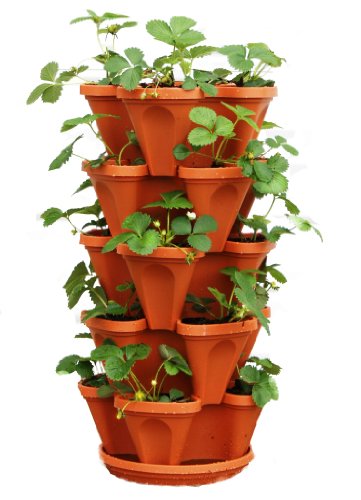
Mr. Stacky 5 Tier Stackable Vertical Planter
Meet The Standout Selections
A 20-gallon fabric grow bag sounds oversized for strawberries, but the generous soil volume lets you tuck a cluster of plants around the sides and top, mimicking the matted-row spacing of an in-ground patch. The standout feature is the hinged harvest window near the base, which flips open so you can peek at root growth or check moisture without digging through the topsoil.
Reinforced handles run along the sides, stitched from the bottom for confident lifting when the bag is fully loaded. For most patios, the footprint stays manageable, though filled soil gets heavy. Pair it with a wheeled plant caddy and the weight becomes a non-issue for anyone rearranging their setup seasonally.
Why It Works Well
- Built-in window lets you monitor soil moisture and ripeness without disturbing roots.
- 20-gallon capacity supports multiple strawberry crowns in a single bag.
- Reinforced handles handle the weight of saturated soil.
- Fabric construction promotes air pruning, which encourages denser root branching.
Points To Keep In Mind
- Bags this large need a sturdy surface; wet soil can exceed 40 pounds.
- Window flaps can collect debris, so a quick brush-off during harvest helps.
Key Specs
Best Suited To
Garden growers who want a multi-plant fabric bed and value being able to peek at soil without disturbing the canopy.
Consider Something Else When
The Gardzen 20-Pack 2 Gallon Grow Bags works better if you prefer spreading plants across many smaller pots rather than one large bed.
Ten grow bags in a single bundle opens the door to running a proper strawberry rotation across a backyard or allotment. The nonwoven fabric is thick enough to hold a 10-gallon soil load without sagging, and the breathable weave handles drainage so you won’t need to drill extra holes.
Where this set really earns its keep is in the flexibility it offers. You can group bags along a fence for a berry hedge, line a walkway, or set them up in raised-bed tiers. The trade-off is that ten bags mean a lot of soil to source and fill on day one.
Practical Advantages
- Ten-bag bundle supports crop rotation or staggered planting across a season.
- BPA-free, thick nonwoven fabric holds shape through multiple seasons.
- Air-pruning effect on roots prevents the circling common in plastic pots.
- Washable and reusable, so end-of-season cleanup is straightforward.
Trade-Offs
- Filling ten bags takes planning; bag up potting mix in batches to save time.
- Fabric fade is common after a couple of seasons in direct sun, depending on exposure.
Made For
Growers running multiple berry varieties or a rotating patch who want one bulk purchase instead of piecing bags together over time.
Skip It When
The FEED GARDEN 15 Gallon Plant Grow Bags 4 Pack fits better if you prefer fewer, larger containers rather than spreading plants across ten mid-size bags.
Twenty small bags might sound excessive until you realize how strawberry runners multiply. A single mother plant can fill several bags by season’s end, so a bulk pack lets you pot up runners as they root rather than crowding them into shared containers.
The 2-gallon size suits younger crowns and first-year plantings, giving roots room to develop without sitting in soggy soil. Compare that to the PAMAZY 20-Gallon Grow Bag With Harvest Window, which targets larger established clumps, and you see how these bags fill a different role.
Positive Points
- Twenty-bag count handles runner propagation across a full growing season.
- Compact 2-gallon size keeps soil from staying wet too long around young roots.
- Handles on each bag make moving individual pots simple as plants outgrow their spot.
- Fluffy fabric is washable and reusable for multiple seasons.
Things To Consider
- Storing twenty empty bags takes shelf space in smaller homes.
- Smaller volume means more frequent watering in peak summer heat.
The Right Fit
Propagators and patient gardeners building a berry patch one runner at a time without rushing to fill a big container.
Look Elsewhere When
The Mr. Stacky 5-Tier Pink Strawberry Planter makes more sense if you want a single vertical column rather than twenty separate pots.
The whiskey barrel look has become shorthand for “classic porch planter,” and this distressed-oak resin version captures that aesthetic without the maintenance headaches of real wood. At 20.5 inches across and 12.5 inches tall, the barrel holds enough soil for a generous strawberry planting.
Pre-drilled drainage holes mean you can set it up the day it arrives, no drill required. The resin build keeps the weight manageable, so moving the planter around the patio takes two hands rather than a hand truck. You may find the look works best as a feature piece rather than a workhorse container.
What Makes Sense
- Aged oak finish reads as authentic wood without the cracking or sealing routine.
- Resin build resists weather damage far better than real oak barrels.
- Pre-drilled drainage prevents the soggy roots that strawberry plants dislike.
- Generous 20.5-inch diameter supports a dozen or more strawberry crowns.
Honest Caveats
- Resin can fade under intense direct sun after several seasons.
- More decorative than practical for growers prioritizing pure function.
Feature Snapshot
Who Should Grab It
Front-porch decorators who want a strawberry planter that doubles as a visual centerpiece rather than blending into the background.
A Better Fit Elsewhere
The FEED GARDEN 10 Gallon Grow Bags 4 Pack suits a better fit for growers focused on maximizing yield per square foot of patio over curb appeal.
A 300-gram fabric weight puts these bags a step above the entry-level nonwoven options that sag after a season. The thicker walls hold their shape when filled, which matters when you’re planting through the side slits common in strawberry-specific bags.
Four bags strike a balance between enough variety to stagger harvest and a small enough footprint to keep a first-time setup manageable. Double-stitched handles support lifting, and the breathable weave keeps roots from circling the way they do in plastic pots.
The Practical Payoff
- 300G fabric outlasts thinner bags through multiple seasons.
- Fold-flat storage makes off-season cleanup simple in apartments.
- Double-stitched handles handle saturated soil loads without tearing.
- Breathable walls prevent root rot in strawberries that hate wet feet.
Worth Bearing In Mind
- Five-gallon size needs more frequent watering than larger bags in midsummer.
- Side planting pockets, if used, demand careful root placement to avoid breakage.
Right Fit For
First-time strawberry growers who want a manageable four-bag setup with fabric durable enough to last beyond a single season.
Reach For A Different Pick When
The Gardzen 20-Pack 2 Gallon Grow Bags makes more sense for propagators focused on runner multiplication rather than a smaller mother-plant rotation.
Stepping up to 10 gallons per bag gives strawberry roots the depth they prefer without taking on the weight and space of a 20-gallon bed. The same 300G fabric build that defines the smaller FEED GARDEN bags carries over here, so multi-season use stays realistic.
Reinforced handles support the heavier load, and the breathable construction keeps soil from becoming waterlogged after heavy rain. Compared to the Songrey 10-Pack 10 Gallon Grow Bags, this option trades bulk quantity for thicker fabric walls and a smaller bag count that’s easier to position around a patio.
Everyday Advantages
- 10-gallon depth supports mature strawberry root systems comfortably.
- Thick 300G walls resist the deformation common in cheaper bags.
- Reinforced handles manage the wet-soil weight during relocation.
- Breathable fabric encourages air pruning and stronger root branching.
A Few Limitations
- Four bags means sourcing soil in moderate batches, not tiny amounts.
- Larger filled bags require placement near the final growing spot to avoid moving heavy containers.
Whose Shelf It Belongs On
Mid-size garden growers who want durable fabric containers that balance capacity against manageable weight and handling.
Another Choice May Suit
The FEED GARDEN 5 Gallon Grow Bags 4 Pack fits a tighter balcony where four smaller bags work better than four larger ones.
At 15 gallons, these bags bridge the gap between the smaller fabric options and the heaviest 20-gallon beds. Strawberry crowns send out runners that root wherever they touch soil, so the wider soil surface gives new plants room to establish without competing with the mother plant.
The 300G fabric walls handle the heavier soil load without bowing, and reinforced double-stitched handles give you a fighting chance at moving the bag when full. Depending on your strength, filled bags at this size may be best left in place after the initial setup.
Standout Benefits
- 15-gallon capacity gives strawberry runners space to root naturally.
- Thick 300G fabric prevents the bulging seen in thinner bags.
- Reinforced handles manage the substantial wet-soil weight.
- Multi-season durability supports year-over-year use without replacement.
Practical Considerations
- Filled weight exceeds 50 pounds per bag, so plan placement before filling.
- Requires significant soil volume to fill all four bags on day one.
Perfect Match For
Garden growers who want generous soil volume for established berry beds and don’t mind committing the bags to one spot for the season.
Swap It Out When
The PAMAZY 20-Gallon Grow Bag With Harvest Window makes a better fit if you also want a built-in peek window for monitoring soil moisture.
Vertical strawberry growing makes sense when ground space disappears but sunlight still hits a balcony or patio corner. This five-tier stackable planter holds twenty plants in roughly one square foot, which is the kind of math that matters in tight urban setups.
The pink color leans decorative, but the planter itself is functional. Watering from the top trickles down through each tier, and the bottom saucer catches the runoff so you don’t end up with a wet balcony floor. A single cubic foot of potting mix fills all five tiers according to the spec sheet.
Everyday Wins
- Twenty plants fit in a one-square-foot footprint.
- Top-down watering simplifies the daily routine.
- No-tools assembly means setup takes minutes.
- Stackable design keeps fruit off the ground and away from slugs.
Potential Drawbacks
- Limited soil volume per pocket restricts root depth.
- Taller stacks can tip on windy balconies without a weighted base.
At A Glance
Made For
Apartment and condo growers who count square feet carefully and want a single decorative column rather than a sprawl of individual pots.
Where Another Pick Suits Better
The GROWSCAPE Jameson Whiskey Barrel Planter fits better for growers who want a single wide container with room for sprawling roots instead of stacked tiers.
The Smart Farm tower takes the stackable strawberry concept and adds a recirculating reservoir, a timer, and a pump that automates daily watering. For anyone who travels, works long hours, or simply forgets, that automation changes whether the plants survive a hot week.
The setup runs soil-based or hydroponic, depending on how you configure it, and the 16-gallon tank holds enough water to last a couple of weeks unattended. The honest read is that the upfront assembly takes patience, but the payoff shows up the first time you come back from vacation to thriving plants.
Strong Points
- Built-in pump and timer automate daily watering routines.
- 16-gallon reservoir keeps plants hydrated during short absences.
- Recirculating design reduces water waste compared to open-pot growing.
- Works with soil or hydroponic configurations depending on preference.
Where It Is Less Suited
- Pump and timer add mechanical parts that can fail over time.
- Setup takes longer than passive stackable planters.
Built With In Mind
Frequent travelers and busy growers who want a self-sustaining system that doesn’t punish a missed watering day.
Not Your Match When
The Mr. Stacky 5-Tier Pink Strawberry Planter suits better if you want a simple passive stack with no pump, timer, or reservoir to manage.
The original Mr. Stacky five-tier planter has stuck around for a reason. At roughly 12 by 12 inches wide and 28 inches tall, it concentrates twenty planting pockets into a footprint that disappears against a wall or fence corner.
The flow-through design lets excess water drain from the top down through each tier, protecting roots from the overwatering that strawberries dislike. The bottom drip tray catches runoff, which keeps indoor and balcony setups clean. You may find the soil volume per pocket limits how large individual plants grow, so pick berry varieties bred for containers.
Features That Help
- Twenty-plant capacity in a compact vertical column.
- Flow-through design prevents root rot from standing water.
- Lightweight construction makes repositioning simple.
- Bottom drip tray catches water for cleaner indoor setups.
Some Limits To Know
- Limited soil per pocket restricts root depth.
- Standard potting mix recommended; garden soil compacts poorly in these pockets.
Feature Snapshot
Who Will Love This
Compact-space growers who want a tidy vertical column that handles strawberries, herbs, and flowers without spreading across the patio.
Consider Something Else When
The FEED GARDEN 10 Gallon Grow Bags 4 Pack makes more sense if you want traditional horizontal containers rather than a vertical stack.
What To Weigh Before Picking Strawberry Containers
Drainage And Airflow Matter Most
Strawberries hate sitting in wet soil, so any container you choose needs reliable drainage. Nonwoven fabric naturally lets excess water escape through the sides, which also encourages air pruning, a process where roots stop circling when they hit dry air, producing denser root branching.
Plastic and resin planters depend on pre-drilled holes for the same effect. Solid-sided pots without drainage turn into root rot traps within a week of heavy rain. For most climates, breathable fabric or well-drained resin beats decorative ceramic without holes.
Size The Container To The Root System
Strawberry crowns send out shallow roots, but the mother plant multiplies through runners that need somewhere to root. Smaller 2-gallon bags suit young plants and runner propagation, while 10- to 20-gallon beds give established clumps room to spread.
Vertical stackable planters trade depth for footprint, keeping fruit off the ground at the cost of limited per-pocket soil. Choosing the right size depends on whether you prioritize a few large plants or many smaller ones in a tight space.
Material Choice Affects Maintenance
Fabric bags fold flat for off-season storage and can be washed and reused for multiple seasons. Resin planters like the GROWSCAPE Jameson Whiskey Barrel Planter resist weather but fade over years in direct sun. Stackable plastic tiers last longest indoors or on covered patios.
Heavier materials stay put in wind but require commitment to placement. Lightweight fabric and stackable plastic suit renters and anyone rearranging their setup seasonally.
Match The Setup To Your Routine
Frequent travelers benefit from self-watering systems like the Mr. Stacky Smart Farm Vertical Tower, which automates daily hydration. Hands-on gardeners who enjoy daily checks may prefer passive fabric bags that respond directly to manual watering schedules.
Key Considerations Across These Picks
Where Shoppers Go Wrong
Picking a container based on appearance alone is the most common slip-up. Decorative planters without proper drainage or with too-small soil volume look good for a month, then struggle through fruit set. Always check that drainage is built in and the soil volume matches the mature plant size you expect.
Underestimating filled weight causes problems too. A 15-gallon fabric bag can exceed 50 pounds once watered, and stacked planters concentrate that weight at the base. Place heavy containers near their final growing spot before filling.
Where The Extra Money Goes
Thicker fabric (300G and above), reinforced stitching, and built-in automation all add cost, but each reduces a real problem. Thicker fabric means fewer replacements. Reinforced stitching prevents torn handles mid-season. Self-watering systems free you from the daily watering chore.
The upgrade is worth it for growers planning multi-season use. Casual one-season experimenters often do fine with entry-level fabric bags and a manual watering routine.
Frequently Asked Questions
What Size Container Works Best For Strawberries?
Aim for at least 5 gallons per cluster of two to three plants, with 10 gallons or more giving roots room to spread. Smaller 2-gallon bags suit young plants and runner propagation rather than mature fruiting beds.
Do Fabric Grow Bags Drain Well Enough For Strawberries?
Yes, breathable nonwoven fabric lets excess water escape through the sides rather than pooling at the base, which is exactly what strawberries prefer. The same airflow encourages air pruning, where roots stop circling and branch more densely.
Can Strawberries Grow in Vertical Stackable Planters?
Vertical stackable planters like the Mr. Stacky 5-Tier Pink Strawberry Planter work well for compact spaces, though per-pocket soil volume limits root depth. Choose strawberry varieties bred for containers and water more frequently than in-ground or wide-bag setups.
How Many Strawberry Plants Fit In One Grow Bag?
A 5-gallon bag fits two to three strawberry crowns comfortably, while a 10- to 15-gallon bag supports four to six plants. Vertical stackable planters hold twenty small plants across five tiers in roughly one square foot.
Should I Choose Fabric, Resin, Or Plastic For Strawberry Pots?
Fabric offers the best drainage and airflow, resin provides decorative appeal with decent drainage, and plastic stackables maximize plant count in tight spaces. Choose based on whether your priority is root health, aesthetics, or compact footprint.
Closing Thoughts
Container choice shapes everything from how often you water to how much fruit you harvest at season’s end. Match the pot to your space, climate, and routine rather than chasing the most decorative option. Whether you go with breathable fabric, a resin barrel, or a vertical stack, the right setup turns a small patio into a productive strawberry patch that rewards attention all season long.
