

A potted tree changes the feel of a porch in about ten minutes. The right container holds the root system, drains properly, rolls with the seasons, and doesn’t crack the first time temperatures swing. The wrong one tips over in a gust, drowns the roots, or rusts out before the lemon tree ever fruits. The ten picks below cover rolling metal planters, self-watering setups, lightweight resin, ceramic accents, and bulk plastic sets for starter trees. You’ll see real dimensions, real capacities, and honest trade-offs so you can match the container to the spot and the species.
Your Options, Compared

Vego garden Rolling Metal Citrus Tree Planter 2-Pack (Olive Green)
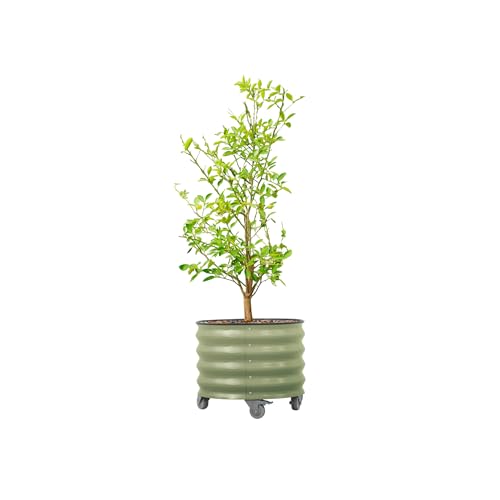
Vego garden Rolling Metal Citrus Tree Planter 21″ (Olive Green)

Vego garden Rolling Metal Citrus Tree Planter 24″ (Pearl White)

Rolling Citrus Tree Planter Gen 3 Self-Watering 24″ 30 Gallon

D’vine Dev Beaded Ceramic Pot with Saucer 4″ (Smoked White)

Vego garden Rolling Metal Citrus Tree Planter 27″ 45 Gallon

Vego garden Classic Rolling Citrus Tree Planter 1.75′ x 1.75′
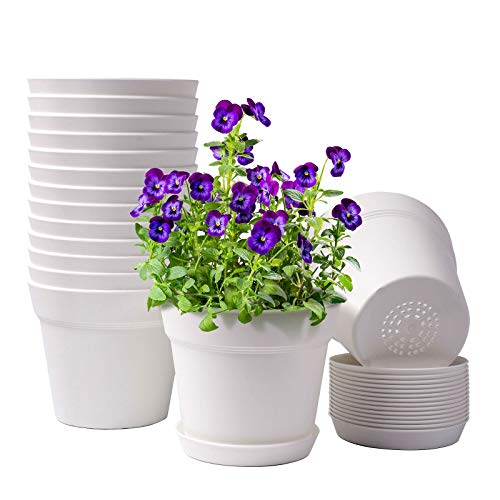
homenote 6 Inch Plastic Plant Pots with Drainage (15 Pcs)

Heyzier Wide Resin Round Planter Set of 2 (Black, 20″ D)
Upper Stone Living 14.5″ Round Resin Planter with Drainage & Plug
Taking A Closer Look At The Options
Two olive green metal planters in one bundle, sized to flank a doorway or line the edge of a patio. Each pot holds 20 gallons, runs roughly 21 inches across, and sits on locking caster wheels so you can chase the sun through the day without dragging a heavy pot across the deck. The steel body and drainage holes handle outdoor weather without turning into a rust patch.
If you’ve been struggling to find a matching pair, this set solves the symmetry problem in one box. Compared to the single 21″ option below, you’re paying a slight premium per pot for the convenience of an exact color and size match.
Well-Handled Touches
- Two matching olive green pots remove the guesswork from symmetrical setups
- 20-gallon capacity suits young citrus, dwarf olive, or patio fig trees
- Locking wheels let you reposition the pot without lifting the full weight
- Metal construction handles sun and rain without cracking like terracotta
Things To Consider
- Two large pots take up a lot of patio square footage once filled with soil
- Drainage holes mean a saucer or tray underneath is helpful indoors
At A Glance
Whose Porch It Belongs On
Patio growers who want two matching containers for a symmetrical olive or citrus pair.
Look Elsewhere When
The Vego garden 27″ 45 Gallon suits shoppers who need a single oversized pot for one mature tree.
This is the single-pot version of the 2-pack above, identical in build and footprint. The 21-inch steel pot, olive green finish, 20-gallon capacity, and locking wheels all carry over, so you get the same look and feel without buying the second container.
Solo-tree gardeners tend to land here, whether the plan is a Meyer lemon by the front door or a small olive in a courtyard. The trade-off versus the bundle is simple: less per-pot value, but no leftover pot eating patio space.
Positive Takeaways
- Same locking-wheel system as the bundle, easier to chase seasonal sun
- Olive green color blends with foliage instead of competing with it
- Steel build holds up to rain and temperature swings across seasons
Worth Noting
- Per-pot cost runs higher than the 2-pack version
- At 20 gallons, mature full-size citrus trees may need repotting within a few years
- Drainage holes leave wet marks on wood decks without a tray
Made For
Homeowners planting one feature tree on a porch or balcony without committing to a pair.
Consider Something Else When
The Vego garden Classic Rolling Citrus Tree Planter 1.75′ x 1.75′ is the better fit for square raised-bed layouts in tight corners.
Step up in size and shift in color, this 24-inch pearl white pot holds 30 gallons of soil. The lighter finish reads cleaner against dark green foliage and works well on porches where the dark olive looks too heavy. Same metal build, same locking wheels, same drainage pattern as the smaller 21-inch version.
The size jump is meaningful: that extra 10 gallons gives the root ball more room before it hits the wall of the container. Compared to the 21″ pot, expect to fill more soil and need a stronger back to move it before the wheels take over.
Real Benefits
- Pearl white finish brightens shaded patios and contrasts with green foliage
- 30-gallon volume supports root development for longer before repotting
- Locking wheels still work despite the larger soil load
Trade Offs
- Lighter color shows water spots and soil splash more readily
- Larger footprint may not fit narrow balcony rail planters
Who It Suits Best
Gardeners who want a mid-size rolling pot in a brighter colorway for a contemporary patio.
Skip It When
The Rolling Citrus Tree Planter Gen 3 Self-Watering 24″ makes more sense for anyone who forgets to water on schedule.
The most feature-heavy option in the roundup, and the one that thinks hardest about water management. The Gen 3 ships with a 30-gallon capacity in a 24-inch-wide rolling body, plus a built-in reservoir, a wicking system, a refill tube, and a water level gauge. The steel uses a corrosion-resistant VZ 2.0 coating with stainless steel hardware.
For most travelers and forgetful waterers, that reservoir is the headline feature. The trade-off is complexity: more parts, more things to learn, slightly more assembly than a plain rolling pot.
The Case For It
- Integrated reservoir and wick reduce watering frequency for busy owners
- Water level gauge prevents the most common container failure: overwatering
- VZ 2.0 coated steel and stainless hardware are built for multi-season outdoor use
- Locking wheels still allow repositioning despite the larger 30-gallon capacity
- Food-safe materials support edible planting like citrus and figs
Honest Caveats
- Reservoir and wick add cost compared to a plain rolling pot of the same size
- Self-watering systems require occasional cleaning to prevent algae in the reservoir
Technical Sheet
Right Fit For
Frequent travelers and citrus growers who need a forgiving watering system without giving up on outdoor placement.
Where Another Pick Suits Better
The Heyzier Wide Resin Round Planter Set of 2 is a better match for shoppers who want two lightweight decorative pots and don’t need a self-watering reservoir.
Drop the scale to a totally different use case. This D’vine Dev ceramic is a 4-inch decorative pot with a smoked white beaded finish, sized for a single small sapling, succulent, or starter seedling rather than a full tree. The matching ceramic saucer catches drips, and a stainless steel mesh net sits in the drainage hole to keep soil from washing out.
It’s a different category than the rolling metal planters above, and that matters. This pot is for the early years of a tree’s life indoors, or for a windowsill herb. Anyone with a mature lemon tree should look back at the larger metal and resin options.
What Earns Its Place
- Beaded ceramic finish looks more decorative than plain plastic starter pots
- Included saucer protects windowsills and shelves from drainage runoff
- Stainless mesh keeps soil inside while letting water drain freely
- Compact 4-inch footprint fits countertops and narrow shelves
Soft Spots
- Too small for any established tree, only useful for seedlings and saplings
- Ceramic can chip if dropped on a hard floor
Feature Snapshot
Best Suited To
Indoor gardeners starting tree saplings from seed or nursery transplant before moving them to a larger outdoor pot.
Reach For A Different Pick When
The Vego garden Rolling Metal Citrus Tree Planter 21″ is the right step once a sapling outgrows a 4-inch starter pot.
The largest of the rolling metal planters in this roundup, a 27-inch round body holding 45 gallons. The rounded square footprint uses the same locking-wheel system as the smaller 21-inch and 24-inch versions, so even at this scale, a single person can reposition the pot once the wheels are unlocked.
For mature citrus, full-size fig, or a small ornamental tree, 45 gallons is the kind of soil volume that keeps the root system from circling and stressing. The honest trade-off is soil weight and the size of the empty footprint during setup.
What Works In Its Favor
- 45-gallon capacity supports mature trees without annual repotting
- Same wheel system as smaller models keeps mobility intact at this scale
- Steel build is rated for outdoor exposure in changing seasons
Room For Improvement
- Empty footprint is large enough to dominate small patios
- Filling requires a significant volume of soil and a planned approach
Who Will Love This
Growers planting a single mature tree and willing to commit the patio real estate that 45 gallons of soil demands.
Not Your Match When
The Heyzier Wide Resin Round Planter Set of 2 suits shoppers who want lighter pots for rearranging rather than anchoring a single large tree.
Switch from round to square with this 1.75-foot-by-1.75-foot rolling metal raised bed. It’s a different product category from the round pots above, more like a mobile raised garden bed that happens to be sized for a small tree or a cluster of larger herbs and vegetables. The deep planting space gives roots room to grow downward.
For tight urban balconies, the square profile tends to fit corners better than a round pot. The wheels still allow seasonal repositioning, which matters when winter hits and a tree needs to come closer to a wall for shelter.
Notable Gains
- Square footprint fits corners and tight balcony layouts that round pots waste
- Deep profile encourages stronger vertical root development
- Mobile design keeps the option open to chase sun or dodge weather
Points To Note
- Smaller overall volume than the 30-gallon or 45-gallon round options
- Square shape can look out of place next to traditional round patio pots
Quick Facts
Perfect Match For
Balcony and rooftop growers working with limited square footage and a corner-shaped layout.
A Better Fit Elsewhere
The Upper Stone Living 14.5″ Round Resin Planter is a smarter pick for anyone who prefers a round silhouette and faux-stone texture over a square metal bed.
Drop back to the seedling stage. This set ships 15 plastic nursery pots and 15 matching trays, each 6 inches across, with multi-hole drainage designed to resist clogging. It’s the kind of bulk pack that makes sense when you’re starting trees from seed, rooting cuttings, or housing young nursery stock before transplant.
The plastic build is light, the trays catch drips, and the small per-pot footprint lets you line up a whole propagation bench on a single shelf. Compared to the D’vine Dev ceramic, these are utilitarian rather than decorative.
Useful Highlights
- Multi-hole drainage pattern reduces the chance of a single hole clogging
- Matching trays protect shelves and windowsills from water stains
- Fifteen-pots-in-one-pack covers a full propagation round without reordering
Practical Considerations
- Plastic feels thinner and less decorative than the ceramic or metal options
- At 6 inches, these are seedling-stage containers, not final-tree homes
Who Should Grab It
Propagators and nursery growers starting multiple trees or cuttings at once before stepping up to larger pots.
Where A Sibling Pick Shines
The D’vine Dev Beaded Ceramic Pot with Saucer 4″ makes more sense for a single decorative indoor sapling.
Two round resin planters in a black finish, each running 20 inches in diameter. The resin plastic-stone composite is hand-polished, weather resistant, and lighter than ceramic or concrete in similar sizes. Drainage holes with removable rubber plugs give control over water flow.
Compared to the metal rolling pots, this set trades wheels for weight. You can still move the pots, but you’ll lift rather than roll. The trade is a quieter look that suits entryways and formal front porches.
Reasons It Performs
- Resin construction handles sun, rain, and UV without cracking like terracotta
- Removable drainage plugs let you control indoor versus outdoor watering
- Two matching pots in one box simplify symmetrical front-porch setups
Some Limits To Know
- No wheels, so repositioning means lifting once soil is added
- Resin finish can scratch under rough handling
Built With In Mind
Front porch decorators who want a matched pair with a clean, modern finish and don’t need to move the pots often.
Swap It Out When
The Vego garden Rolling Metal Citrus Tree Planter 2-Pack suits gardeners who need to wheel their trees around for sun and weather changes.
The final pick leans fully into the faux-stone aesthetic. The 14.5-inch round resin planter is textured to mimic cut stone or concrete, but the resin build runs roughly 80 percent lighter than real stone. That difference matters at delivery and at every seasonal rearrangement after.
The trade-off is exactly what you’d expect: you trade the weight and crack-resistance of real stone for a lighter pot that won’t survive a heavy impact. For most patios, decks, and entryways, the lighter weight wins.
Advantages To Know
- Stone-like texture gives a high-end look without the heavy lifting
- UV-resistant and frost-proof material handles year-round outdoor placement
- Built-in drainage supports healthy root systems for trees and large shrubs
What To Weigh
- Resin won’t tolerate hard impacts the way real stone can
- At 14.5 inches, smaller than the metal rolling options for mature trees
Feature Card
The Right Fit
Entryway and deck decorators who want the stone aesthetic in a manageable weight, especially for trees that don’t need to be wheeled around.
Where Another Pick Suits Better
The Vego garden Rolling Metal Citrus Tree Planter 24″ is a smarter choice for shoppers who want a larger rolling pot in a clean white finish.
Choosing The Right Container For Your Tree
Match Soil Volume To The Tree’s Root System
A tree’s roots need room to spread without circling the wall of the pot. Young citrus, dwarf olive, and patio fig trees usually settle into a 20- to 30-gallon container for their first few years. Mature specimens and full-size fruit trees push toward 45 gallons or more. Undersized containers dry out fast and stunt growth, while oversized ones hold excess moisture that suffocates roots.
Prioritize Drainage And Material Longevity
Every tree in a container needs a way for excess water to escape. Drainage holes at the base, sometimes paired with a mesh filter, prevent the waterlogged soil that causes root rot. Material matters for how long the drainage stays functional: steel planters with a corrosion-resistant coating hold up across seasons, while thinner plastic can warp and crack after a few winters.
Decide Whether Mobility Actually Matters
Rolling wheels earn their cost when you need to chase the sun, dodge a frost, or rearrange a patio. Locking casters keep a fully watered tree from drifting across the deck in a stiff breeze. If the spot is permanent and the tree won’t be moved for years, a stationary resin or stone-style planter avoids the cost and the wheel hardware.
Factor In The Real Soil Weight
A 20-gallon pot filled with moist potting mix can weigh 150 pounds or more. That’s manageable to roll, but awkward to lift. For upper-level balconies, lighter resin builds cut the structural load and the moving-day back strain. Ground-level patios can handle the heavier metal and ceramic options without thinking twice.
Key Considerations Across These Picks
Pitfalls Shoppers Hit
The most common mistake is sizing the pot to the tree above the soil line, not the root ball underneath. A small sapling with a deep tap root still wants 20 gallons or more. The second slip is buying a pot without checking the drainage setup, then finding out the deck is stained after the first rain. The third is choosing a finish before checking the spot. White and pearl finishes show water spots and soil splash more than dark olive or black, and that matters for low-maintenance outdoor setups.
Where The Extra Money Goes
The jump from a basic plastic set to a self-watering metal rolling planter pays for three real things: a corrosion-resistant steel body that survives multiple winters, an integrated reservoir and gauge that reduce watering chores, and locking wheels that let one person move a fully planted tree. For owners who travel, have physical limits, or just want to water less, the upgrade typically pays back in time and tree health within the first season.
Frequently Asked Questions
What Size Pot Does A Potted Tree Need?
Young patio trees usually start in 15- to 20-gallon containers and step up to 30 or 45 gallons as they mature. The general rule is to allow roughly one gallon of soil volume per foot of expected tree height.
Do Tree Pots Need Drainage Holes?
Yes, every outdoor tree container needs drainage at the base to prevent waterlogged soil and root rot. Plugs that can be removed for indoor use give you the best of both worlds.
Are Rolling Planters Worth The Cost?
Rolling planters earn their cost when you actually move the tree for sun, frost protection, or seasonal rearranging. For a tree in a permanent spot, stationary resin or stone-style pots save money.
How Long Do Metal Tree Planters Last Outdoors?
Steel planters with a corrosion-resistant coating and stainless steel hardware typically last several outdoor seasons. Plain steel without protection tends to rust within a couple of winters.
Can You Grow A Full-Size Fruit Tree In A Container?
Dwarf and semi-dwarf varieties do well in large containers of 30 gallons or more, but standard full-size fruit trees struggle with the limited root space and usually stay smaller and less productive.
Wrap Up
Container growing rewards a match between tree, pot, and placement. Pick the soil volume to the species, choose drainage you can trust, and decide whether mobility is part of the plan. The ten options above cover the main paths: rolling metal for flexibility, self-watering for low maintenance, lightweight resin for easy rearranging, ceramic for early saplings, and bulk plastic for propagation. Walk through your space, think about how often you’ll actually move the pot, and the right pick tends to surface on its own.
